Categories
Corporate

Carlyle invests ₹2,100 cr in Edelweiss unit

Shares of Edelweiss Financial Services surged nearly 9% on Tuesday following a sharp rise in quarterly profit and a major investment by global private equity firm The Carlyle Group.

Edelweiss reported a consolidated net profit of ₹264 crore for the December quarter, more than double the ₹125 crore earned in the same period last year. While interest income saw a slight decline, overall performance exceeded market expectations, boosting investor confidence.

The standout development was Carlyle’s agreement to invest ₹2,100 crore in Nido Home Finance, Edelweiss’s housing finance subsidiary. Under the deal, Carlyle funds will acquire a 45% stake in Nido, including ₹1,500 crore in primary equity and the rest through secondary share purchase. On a fully diluted basis, Carlyle and co-investors are expected to hold around 73% of Nido, making them the strategic majority backers.

Founded in 2010, Nido focuses on home loans for the affordable and mass-market segments, with an asset base of ₹4,804 crore and presence in over 800 talukas across India. The partnership with Carlyle is expected to strengthen Nido’s growth and expand its reach to underserved semi-urban and rural customers.

Edelweiss said the deal is part of its broader strategy to unlock value from subsidiaries and bring strong partners on board to scale key businesses. Carlyle’s involvement reflects continuing interest from global investors in India’s housing finance sector, driven by rising affordability and policy support.

Veteran banker Aditya Puri, senior advisor to Carlyle in Asia and former CEO of HDFC Bank, will also participate as a co-investor in Nido. The investment is subject to approvals from the Reserve Bank of India, National Housing Bank, and the Competition Commission of India.

Also Read: L&T wins ₹2,500 crore Dubai road project
Categories
1 Minute-Read

L&T wins ₹2,500 crore Dubai road project

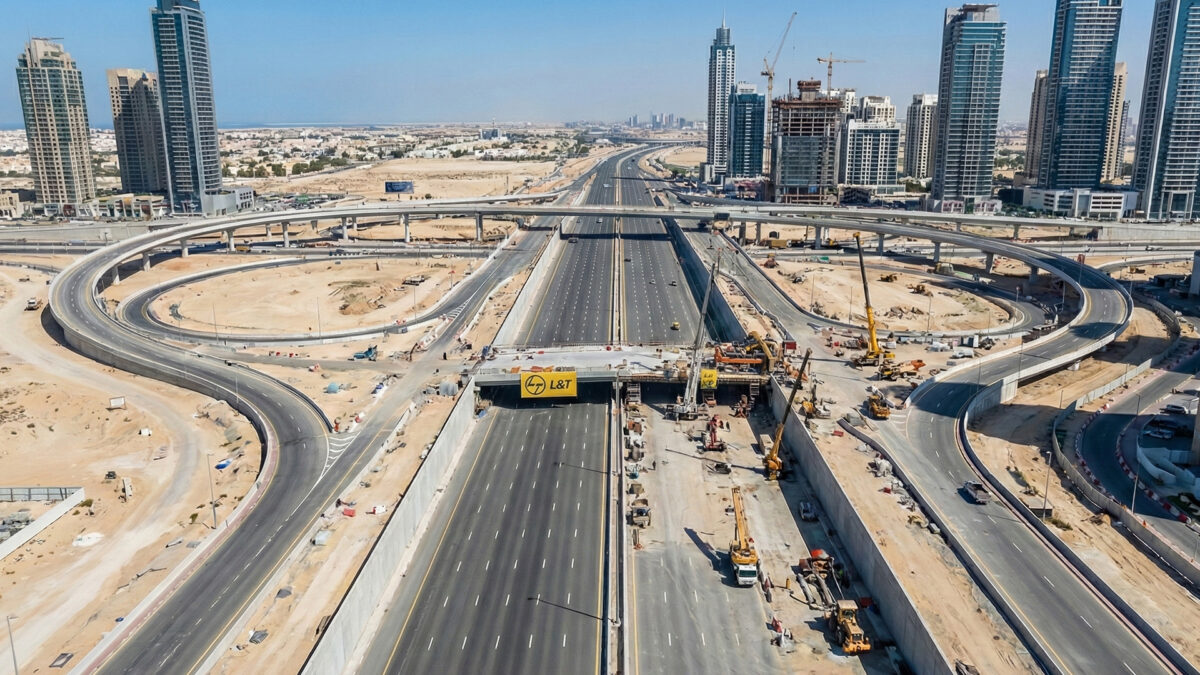
Larsen & Toubro (L&T) has won a significant road development contract in Dubai, valued between ₹1,000 crore and ₹2,500 crore.

The project covers Phase‑1 of Latifa Bint Hamdan Street, including widening the existing road into four lanes in each direction and constructing a major interchange at Sheikh Mohammed Bin Zayed Road (E311).

L&T will also build extended carriageways and improve connectivity for U-turns and local access. The project is slated for completion within 36 months, strengthening L&T’s presence in the UAE infrastructure sector.

Categories
Corporate

Sensex slips slightly, Nifty steadies at 25,900

On Wednesday, the BSE Sensex closed marginally lower, while the Nifty 50 held steady above 25,900, reflecting a session of consolidation after recent gains.

After opening with positive momentum, supported by modest gains in global markets, profit-booking in select stocks tempered the rally. Volatility remained moderate, with investors selectively buying into defensive sectors while booking profits in high-flying stocks.

Among individual stocks, SBI, Reliance Industries (RIL), and ICICI Bank emerged as top gainers, rising 2–3% during the session. These gains partially offset losses in other sectors and helped the indices hold key levels.

On the other hand, IT stocks came under pressure, with TCS, Infosys, and Wipro recording declines of 2–3%, reflecting profit-taking and rotation into banking and PSU stocks. Other laggards included HDFC Bank and HCL Tech, which also slipped amid sectoral weakness.

Market breadth was mixed, with auto and pharma stocks attracting selective buying, while mid-cap and IT names saw selling pressure. Foreign institutional investors were cautious, with some selective buying in large-cap stocks noted. The Indian rupee remained stable against the U.S. dollar, and commodity markets saw moderate inflows into safe-haven assets like gold.

Global cues were mixed, with Asian markets posting modest gains, while U.S. and European futures indicated slight upside. Analysts noted that the market is consolidating near technical support levels, and investors are awaiting fresh triggers for a sustained breakout.

Also Read: Sensex up 50 points, Nifty holds above 25,950

Categories
Technology

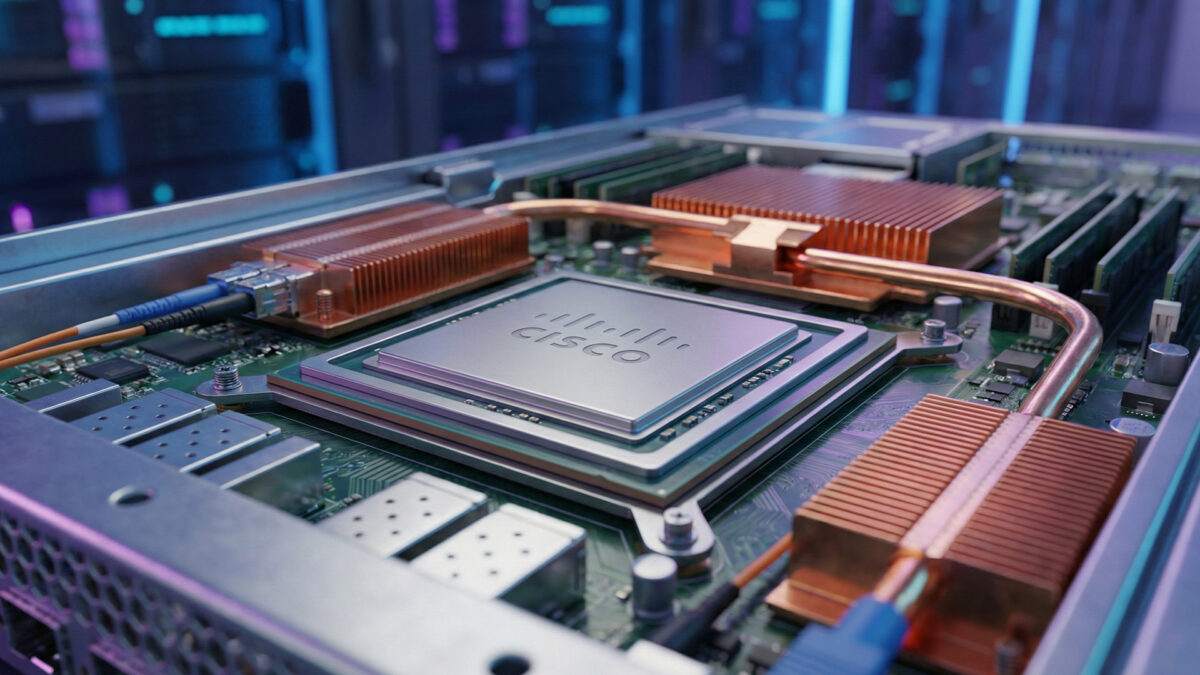
Cisco launches AI networking chip

Cisco Systems has introduced a new networking chip and router designed to meet the growing demands of artificial intelligence workloads, positioning itself against rivals Nvidia and Broadcom.

The new chip, called Silicon One G300, is a high‑capacity switch chip that helps move massive amounts of data quickly and efficiently inside AI data centres. These environments require seamless communication between thousands of AI processors, and delays can slow down training and inference tasks.

Manufactured using 3‑nanometer technology by TSMC, the G300 is expected to be commercially available in the second half of 2026. Cisco says the chip includes built-in features to handle sudden spikes in network traffic, which it calls “shock absorber” capabilities. These features can automatically reroute data to prevent bottlenecks, improving performance for some AI tasks by up to 28%.

Cisco’s move highlights the growing importance of networking technology in the AI industry. While GPUs and AI accelerators get most of the attention, efficient data movement between devices is critical for large-scale AI systems to work effectively.

The G300 competes directly with Broadcom’s Tomahawk series and Nvidia’s AI networking chips. Cisco is targeting both large cloud providers and enterprises building their own AI clusters, betting that better network performance will be a key advantage as demand for AI infrastructure grows.

It is said that AI workloads are driving a surge in demand for faster, more reliable networking solutions. By focusing on high-speed chip design and intelligent traffic management, Cisco aims to capture a share of the $600 billion AI infrastructure market.

Also Read: Eicher Motors rises to ₹7,200 after Q3 profit jump

Categories
Corporate

Eicher Motors rises to ₹7,200 after Q3 profit jump

Eicher Motors Ltd. saw its shares hit a record ₹7,200 on Wednesday after reporting strong results for the third quarter of 2025–26. The stock rose 6–7% in early trade, driven by healthy earnings and revenue growth.

For the quarter ended December 31, 2025, the company posted a net profit of around ₹1,421 crore, up 21% from the same period last year. Revenue grew about 23% to ₹6,114 crore, while EBITDA rose nearly 30% to ₹1,557 crore, reflecting better operational performance.

The growth was led by Royal Enfield motorcycles, which sold 325,773 units, a 21% increase from last year. Demand for mid‑size bikes and increased production capacity supported these strong numbers. The commercial vehicle division, VE Commercial Vehicles, also contributed with higher revenue and improved profits. To meet future demand, the board approved a ₹958 crore expansion of its Cheyyar plant in Tamil Nadu.

Despite the strong performance, broker views are mixed. Choice Institutional Equities upgraded the stock to ‘Add’ with a target of ₹7,650, citing growth and a strong product line. Motilal Oswal Financial Services maintained a ‘Sell’ rating, pointing to normalising demand and limited margin gains. Nuvama Institutional Equities kept a ‘Hold’ rating, raising its target to ₹8,100 based on higher sales expectations.

Also Read: Government to sell 5% stake in BHEL at ₹254

Categories
Corporate

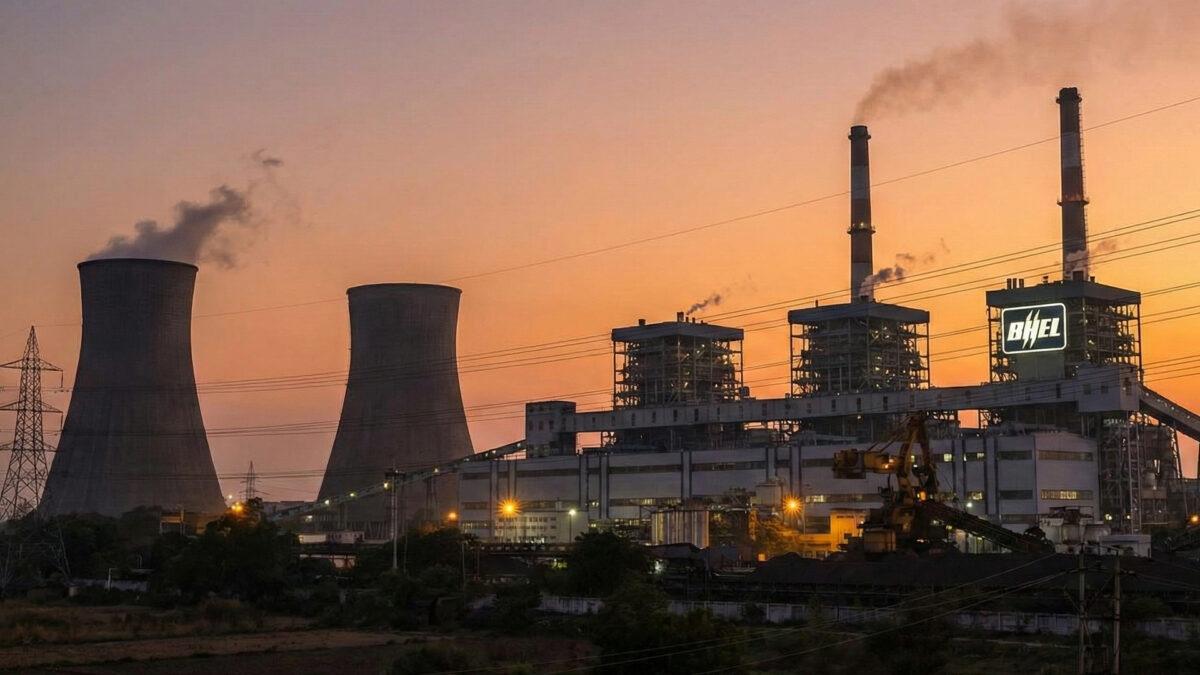
Government to sell 5% stake in BHEL at ₹254

The Government of India has announced an Offer for Sale (OFS) to sell up to 5 per cent of its stake in Bharat Heavy Electricals Ltd (BHEL). This move is part of the government’s ongoing plan to reduce holdings in public sector companies and raise funds.

Under the offer, the government will first sell 3 per cent, with an option to sell another 2 per cent if demand is strong. The floor price is set at ₹254 per share, about 8 per cent lower than BHEL’s previous closing price. If fully sold, the divestment could generate around ₹4,422 crore.

Bids for institutional investors opened first, followed by retail investors. The government currently holds a 63 per cent majority stake in BHEL. This OFS is aimed at increasing public shareholding and market liquidity while helping the government meet its fiscal targets.

After the announcement, BHEL shares fell about 5–6 per cent in early trading, reflecting the market’s reaction to the discounted price and additional shares being offered.

BHEL is a key company in India’s power and infrastructure sectors, supplying electrical equipment and engineering services. Investors are closely watching the OFS as it affects both the stock price and overall market activity.

Also Read: Tata Motors, Stellantis strengthen 20-year partnership

Categories
Corporate

Tata Motors, Stellantis strengthen 20-year partnership

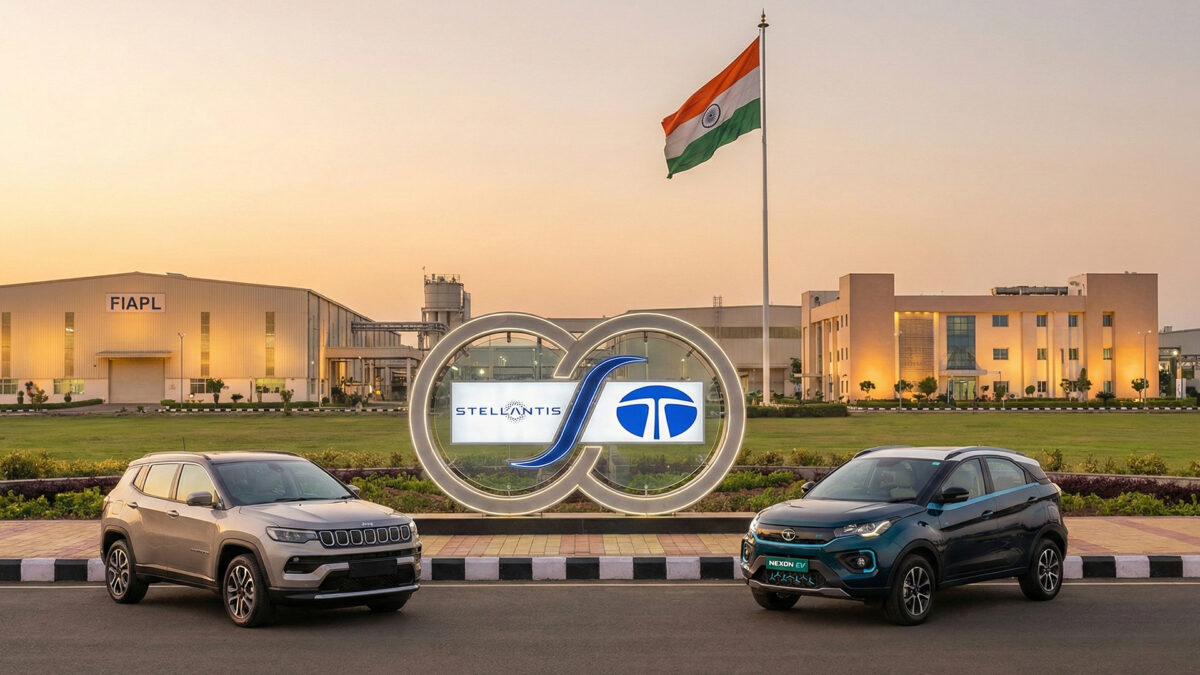
Tata Motors Passenger Vehicles (TMPV) and global auto major Stellantis have completed 20 years of their 50:50 joint venture and signed a fresh Memorandum of Understanding (MoU) to strengthen and expand their partnership.

The joint venture, Fiat India Automobiles Private Limited (FIAPL), was established in 2006 and operates an integrated manufacturing facility at Ranjangaon near Pune. Over the past two decades, the plant has produced more than 1.37 million vehicles. It currently has an annual production capacity of around 2.22 lakh units and employs nearly 5,000 people.

The Ranjangaon facility manufactures several models for both companies. For Stellantis, it produces vehicles such as the Jeep Compass and Meridian, along with CKD versions of the Jeep Grand Cherokee and Wrangler. For Tata Motors, models including the Nexon, Altroz and Curvv are built at the plant. The facility also manufactures engines, transmissions and traction motors, with some output exported to international markets including Japan and South Africa.

To mark the milestone, the two companies signed an MoU on February 10, 2026. Under the new agreement, Tata Motors and Stellantis will explore opportunities for future collaboration across manufacturing, engineering and supply chain operations in India as well as overseas. While specific projects were not detailed, the move signals intent to build on the long-standing industrial alliance.

Stellantis Asia Pacific COO Grégoire Olivier said the partnership demonstrates what two strong organisations can achieve together and will continue to focus on innovation and future-ready manufacturing. Tata Motors Passenger Vehicles MD and CEO Shailesh Chandra described the joint venture as a relationship built on trust and shared vision, adding that both companies remain committed to strengthening the alliance further.

Also Read: Akasa Air co-founder Praveen Iyer quits

Categories
Beyond

Rupee declines 6 paise to ₹90.62 in early trade

The Indian rupee edged lower in morning trade on Wednesday, falling 6 paise to ₹90.62 against the US dollar, as continued demand for the greenback and cautious global cues weighed on sentiment. The currency opened at ₹90.56 in the interbank foreign exchange market but slipped further during early deals.

Currency dealers attributed the decline mainly to sustained dollar buying by importers, particularly oil companies, which require large volumes of dollars to settle overseas payments. This demand for the US currency has kept the rupee under pressure in recent sessions.

The rupee had ended the previous session 10 paise higher at ₹90.56, recovering marginally after earlier weakness. However, the rebound was short-lived as fresh demand for dollars and cautious investor sentiment weighed on the domestic unit in early trade.

Global developments have also contributed to the rupee’s weakness. A firm US dollar in international markets, coupled with geopolitical concerns and uncertainty around trade-related matters, has affected emerging market currencies, including the rupee. Market participants remain watchful of developments related to India-US trade discussions, as well as global economic signals that could influence currency movements.

A weaker rupee has mixed consequences for the economy. On the positive side, it can make Indian exports more competitive in global markets, as goods priced in rupees become cheaper for foreign buyers. On the downside, it increases the cost of imports, especially crude oil and other essential commodities, which can add to inflationary pressures.

Also Read: Gold at ₹1,58,790, Silver slips to ₹2,89,900

Categories
Beyond

Gold at ₹1,58,790, Silver slips to ₹2,89,900

Gold prices in India witnessed a marginal rise on Wednesday, while silver prices edged lower. The price of 24-carat gold increased by ₹10, taking the rate of 10 grams to ₹1,58,790 in key markets such as Mumbai and Kolkata. In Delhi, gold was priced slightly higher at ₹1,58,940, while Chennai recorded ₹1,59,050 for the same quantity.

Similarly, 22-carat gold prices also moved up by ₹10. Ten grams of 22-carat gold were priced at ₹1,45,560 in cities including Mumbai, Kolkata, Bengaluru and Hyderabad. In Delhi, the rate stood at ₹1,45,710, while Chennai saw a slightly higher price of ₹1,45,790.

In contrast, silver prices softened during the session. The price of one kilogram of silver fell by ₹100 to ₹2,89,900 in Delhi, Mumbai and Kolkata. In Chennai, silver continued to trade at a premium, priced at ₹2,99,900 per kilogram.

Market participants attributed the mixed trend to cautious investor sentiment and global economic cues. Gold continues to attract steady demand as a traditional safe-haven asset, especially during periods of uncertainty. However, the gains remain limited due to fluctuating global factors and profit booking at higher levels.

Silver, which has both investment and industrial demand components, tends to experience sharper price movements. The slight dip reflects subdued buying interest in the domestic market.

Also Read: Sensex up 50 points, Nifty holds above 25,950

Categories
Corporate

Sensex up 50 points, Nifty holds above 25,950

The equity benchmarks traded in a narrow range on 11 February 2026, with the BSE Sensex posting modest gains and the Nifty holding firm above the 25,950 mark. The session began on a positive note, supported by firm global cues and steady trends across Asian markets, but momentum remained stock-specific as the day progressed.

Investor sentiment was aided by softer US bond yields and stable commodity prices, though caution persisted ahead of key global economic data. Gold and silver prices edged higher, reflecting a defensive undertone in global markets.

Sectorally, automobile, metal and energy counters led the advance, attracting buying interest on the back of earnings expectations and improved demand outlook. Select consumer stocks also saw steady traction. However, IT and financial stocks faced mild selling pressure, limiting the broader market’s upside.

Among the prominent gainers, Eternal Ltd rallied sharply, while Tata Steel and ONGC recorded healthy gains. Auto majors such as Bajaj Auto and Mahindra & Mahindra also traded in the green, contributing to the positive bias in the indices.

On the downside, HCL Technologies declined amid weakness in the IT pack, while Bajaj Finance witnessed profit booking. Stocks such as Dr Reddy’s Laboratories and Shriram Finance also closed lower, reflecting selective selling in pharma and NBFC counters.

Meanwhile, institutional activity remained strong, with major financial institutions including HUDCO, NaBFID and SIDBI announcing plans to raise funds through bond issuances. Changes in global index constituents also remained on investors’ radar.

Also Read: Tata Motors launches ₹9,000 cr JLR plant in Tamil Nadu