Categories
Corporate

South Korean stocks fall 12% in historic sell‑off

South Korea’s stock market suffered a historic sell-off on 4 March 2026, with the Kospi index plunging over 12 %, marking its largest single-day drop ever. The slide came as investors reacted to escalating tensions between Iran, the US, and Israel, which have raised concerns about global energy supply and economic stability.

The Kosdaq index, representing smaller tech and growth companies, fell about 14 %, indicating a broad-based market decline. Major firms such as Samsung Electronics, SK Hynix, and Hyundai Motor recorded significant losses, driving overall market sentiment downward. Rising oil prices amid the conflict added to investor anxiety, prompting both foreign and domestic investors to sell equities rapidly.

Trading was highly volatile, with the Korea Exchange temporarily halting operations after circuit breakers were triggered due to the sharp losses. The Korean won weakened, reflecting increased risk aversion and broader financial stress. Analysts noted that the sudden drop underscores the vulnerability of markets to geopolitical tensions, particularly for countries like South Korea, which depend heavily on imported energy.

Authorities, including the Bank of Korea and the Financial Services Commission, are monitoring the situation closely and have indicated readiness to intervene if volatility continues. Experts warn that further corrections are likely until tensions in the Middle East ease and global oil prices stabilize.

Investors worldwide are watching developments closely, as South Korea plays a critical role in global technology supply chains. The crash demonstrates how international conflicts can have far-reaching impacts on stock markets, currencies, and investor confidence.

As the market attempts to stabilize, traders and policymakers remain cautious. The sell-off serves as a reminder of the interconnected nature of global geopolitics and financial markets, showing how regional conflicts can quickly affect economic stability across continents.

Also Read: ‘X’ launches paid partnership label for creators

Categories
Corporate

Dynamatic Technologies joins Hutchinson to boost India’s aerospace manufacturing

Dynamatic Technologies, a leading Indian engineering firm, has entered into a strategic collaboration with Hutchinson Aerospace, a global aerospace parts supplier, to strengthen India’s aerospace manufacturing capabilities. The partnership is designed to enhance production of critical components for aircraft and support India’s push to become a key player in the global aerospace supply chain.

Under the agreement, the two companies will work together on design, development, testing, and production of high-precision aerospace components. These parts will serve both civil and defence aviation sectors, meeting stringent global standards required by major aircraft manufacturers worldwide.

According to company sources, the collaboration will leverage Dynamatic’s manufacturing expertise and Hutchinson’s global technology base. Dynamatic has longstanding experience in machining and assembly of aero parts, while Hutchinson brings advanced engineering skills and deep aerospace market knowledge. This complementary mix is expected to accelerate technology transfer and quality enhancement of critical products.

The partnership also aims to expand local production in India under the government’s “Aatmanirbhar Bharat” (self-reliant India) initiative, which encourages domestic firms to reduce dependence on imports and build competitive capabilities locally. With rising demand for aircraft parts in both commercial and military aviation, India’s aerospace sector is poised for growth, and collaborations such as this are seen as key enablers.

Officials from both companies say the agreement will also focus on workforce training and capability building, enabling Indian engineers to work with cutting-edge manufacturing processes and technologies. This is expected to have broader benefits for the country’s engineering ecosystem over time.

The Dynamatic-Hutchinson tie-up adds momentum to this trend by demonstrating how Indian firms can collaborate effectively with global players to deliver high-quality aerospace products.

Also Read: Rupee slumps to record low of ₹92.18 against dollar

Categories
Corporate

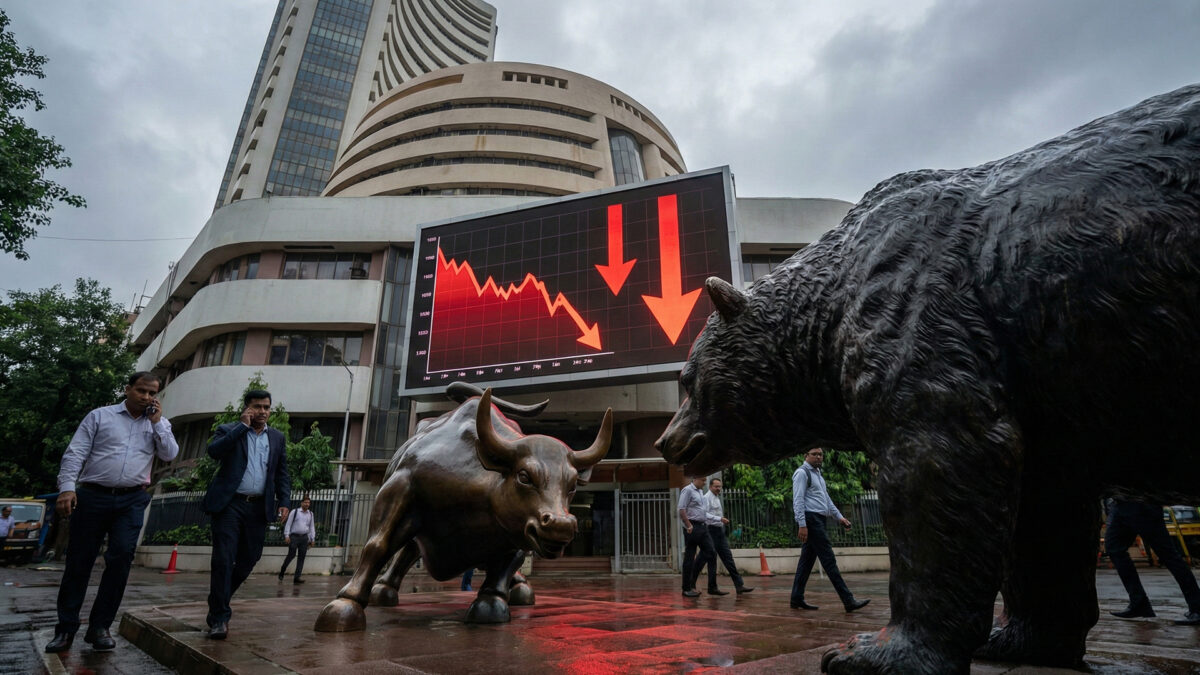
Sensex falls 1,650 and Nifty 470 points, Indian markets drop 2%

Stock markets opened sharply lower on Wednesday, 4 March 2026, amid rising tensions between Iran and Israel. The BSE Sensex dropped around 1,650 points, while the NSE Nifty50 fell about 470 points, marking one of the steepest declines in recent months.

The sell-off was broad-based. Financials, automobile, and consumer goods stocks, including HDFC Bank, ICICI Bank, Maruti Suzuki, and Tata Motors, led the losses. Meanwhile, some IT and pharmaceutical stocks, such as TCS, Infosys, and Sun Pharma, managed to post modest gains, providing limited support to the indices.

Global cues added to the pressure on Indian markets. Asian indices, including Japan’s Nikkei and South Korea’s Kospi, traded lower, while US futures showed declines overnight. The Indian rupee weakened against the dollar, reflecting elevated risk aversion among investors.

Rising crude oil prices remain a key concern, as fears of a prolonged Middle East conflict could disrupt supplies. India, as a major oil importer, faces higher import costs, which may increase inflationary pressures and dampen investor sentiment.

Analysts expect volatility to continue in the near term until geopolitical tensions ease. A senior executive at a leading global bank warned that it could take “a couple of weeks” for markets to fully absorb the economic impact of the Iran‑Israel conflict.

Also Read: Sunil Bharti Mittal wins GSMA lifetime award

Categories
Technology

Apple debuts iPhone 17e with upgraded features

Apple has launched the iPhone 17e, its latest budget-friendly model in the iPhone 17 series, combining popular premium features with an accessible price. The announcement came on 2 March 2026, with pre-orders starting on 4 March and retail availability on 11 March.

The phone is powered by Apple’s A19 chip, built on a 3-nanometer process, delivering faster performance for apps, gaming, and everyday tasks. It also features the new C1X modem, which doubles cellular data speeds compared to previous models while being more energy-efficient.

A key upgrade is base storage doubling to 256 GB, allowing users to store more photos, videos, and apps without paying extra. The iPhone 17e comes in 256 GB and 512 GB variants, starting at ₹64,900 in India.

Apple has added MagSafe support, enabling magnetic accessories, wallets, and faster wireless charging, a first for its entry-level iPhone.

The camera system has also been upgraded, with a 48 MP Fusion camera, 2× optical-quality telephoto zoom, and Dolby Vision 4K video recording. The 6.1-inch Super Retina XDR display offers improved brightness and scratch resistance.

Other highlights include satellite-based Emergency SOS, allowing users to contact help without cellular coverage, and iOS 26, bringing smarter AI-powered features for translation, visual search, and messaging.

Apple says the iPhone 17e offers “powerful performance and popular features at an affordable price,” aiming to provide a premium experience for budget-conscious users.

Also Read: India secures Russian oil as Hormuz supply risks rise

Categories
Leaders

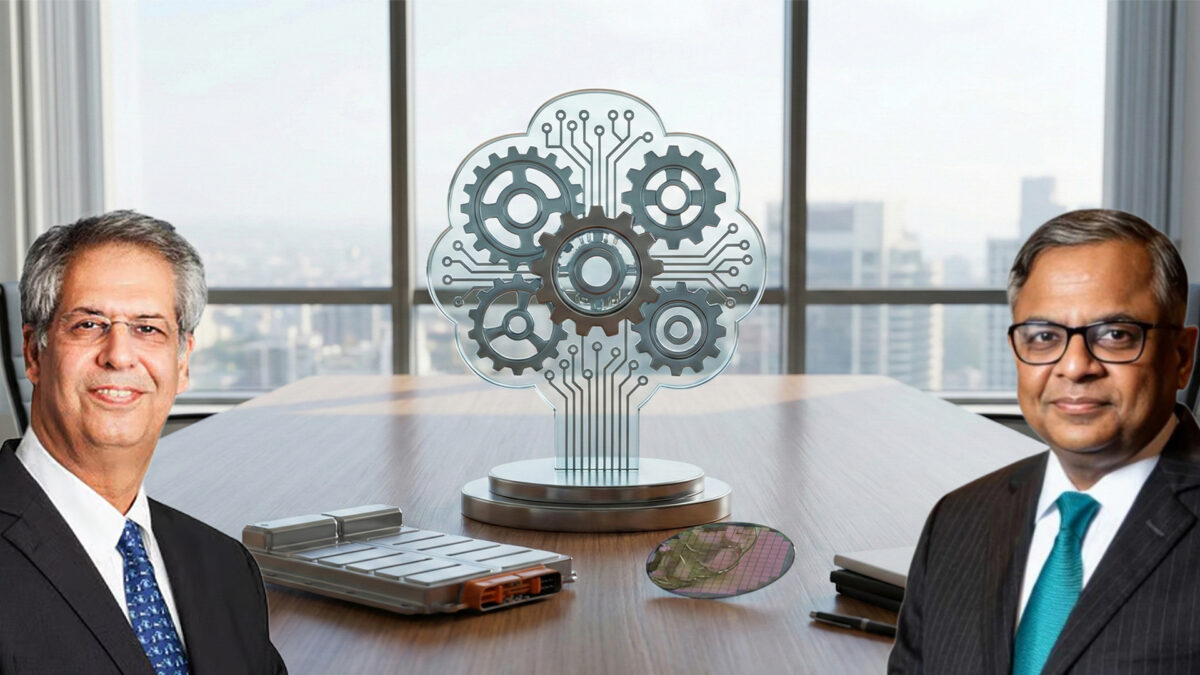
Tata Trusts stand firm on Chandrasekaran’s leadership

The Tata Trusts have reiterated their support for Natarajan Chandrasekaran as chairman of Tata Sons, saying their earlier resolution backing his third term remains unchanged.

The clarification comes after reports that Noel Tata raised concerns about certain business issues and the group’s future structure. The Trusts, which hold a majority stake in Tata Sons, said there has been no review of their decision.

The move signals continuity in leadership as the conglomerate navigates strategic and structural challenges.

Categories
Corporate

Amazon India cuts seller referral fees to boost growth

Amazon India has announced a reduction in the referral fees it charges sellers on its platform as part of a strategy to strengthen its retail business and encourage more merchants to sell online.

Referral fees are charges that Amazon collects from sellers for each item they sell on the marketplace. By lowering these fees across selected product categories, Amazon is making it cheaper for small and large sellers alike to do business on its platform.

Under the new structure, referral fees will be reduced for a range of categories including apparel, footwear, home goods and other consumer products. In some cases, fees have been cut by several percentage points. Amazon says the change will help sellers improve their profit margins and reinvest more into pricing, selection and customer service. The adjusted fee system is expected to take effect from March 2026 and will be reviewed periodically.

In a statement, Amazon pointed out that the Indian e-commerce market is highly competitive, with several players vying for market share. By lowering fees, Amazon aims to attract more sellers and deepen its product offerings, particularly in categories that are important for everyday shopping. This move is also part of Amazon’s broader plan to grow its retail sales and strengthen customer loyalty in India, where online shopping has been rapidly expanding.

Market analysts say that cutting referral fees could benefit thousands of existing sellers and encourage new ones to join the platform. Lower costs could help sellers offer better prices to customers, potentially driving higher sales volumes for Amazon overall. However, the impact on Amazon’s profitability remains to be seen, as reduced fee income could weigh on short-term earnings.

The decision comes at a time when global e-commerce growth is slowing compared with the rapid expansion seen during the pandemic years. In India, while online retail continues to grow, margins are tight and competition from other marketplaces and social commerce players is intense. Amazon’s fee cuts are seen as a strategic move to reinforce its position and build long-term seller partnerships.

Sellers on the platform have generally welcomed the changes, saying that lower fees will help them scale their business and remain competitive on price. Some sellers also noted that simplification of fee structures could reduce accounting complexity.

Also Read: Shree Ram Twistex shares slump up to 35% on debut

Categories
Corporate

AWS cloud outage hits UAE and Bahrain after Iranian strikes

Cloud services across parts of the Gulf faced major disruption after facilities operated by Amazon Web Services (AWS) were damaged amid escalating regional tensions.

The company confirmed that two data centres in the United Arab Emirates and one in Bahrain were affected by power and connectivity issues. At one UAE site, objects struck infrastructure linked to power systems, triggering a fire. Emergency teams cut electricity, including backup generators, to contain the blaze, leading to an outage in the affected availability zone.

Following the incident, customers in the region reported error messages, delays and difficulty accessing key AWS services. Core functions such as virtual servers, storage systems and networking tools were impacted, particularly in the Middle East cloud region cluster. Some users experienced problems launching new computing instances, while others saw increased latency and incomplete processing.

AWS said recovery efforts were underway but warned that full restoration could take several hours or longer. The company advised customers to shift workloads to other AWS regions or activate backup systems to reduce disruption.

The incident comes amid heightened tensions involving Iran and its regional rivals, with drone and missile activity reported across parts of the Gulf. While AWS did not directly attribute the damage to a specific military strike, it acknowledged that regional instability could continue to affect operations.

The disruption highlights how geopolitical conflicts are increasingly impacting critical digital infrastructure. Data centres power banking systems, government platforms, retail services and communication networks. Any prolonged outage can have ripple effects across businesses and public services.

As restoration continues, companies relying on cloud infrastructure in the region are closely monitoring the situation, with contingency planning now a key focus amid ongoing uncertainty.

Also Read: India, Canada sign $2.6 billion uranium deal

Categories
Beyond

India, Canada sign $2.6 billion uranium deal

India and Canada have signed a major uranium supply agreement worth $2.6 billion, marking a significant step in strengthening ties between the two countries. The deal will see Canadian mining company Cameco supply uranium ore to India over several years to fuel its civilian nuclear power plants.

The agreement was finalised during high-level talks between Prime Minister Narendra Modi and Canadian Prime Minister Mark Carney. The uranium supply is expected to support India’s growing nuclear energy programme and help ensure long-term energy security.

Apart from the uranium deal, both sides signed agreements to cooperate in critical minerals, renewable energy and other strategic sectors. Critical minerals are essential for clean energy technologies, electric vehicles and advanced manufacturing, making them a key focus area for both countries.

India and Canada also agreed to accelerate talks on a Comprehensive Economic Partnership Agreement (CEPA), effectively reviving efforts toward a free trade deal. The two nations have set an ambitious target of increasing bilateral trade to $50 billion by 2030, a sharp rise from current levels.

Leaders from both sides described the agreements as a step toward deepening economic and strategic cooperation. They emphasised the importance of building reliable supply chains, boosting investments and creating new opportunities for businesses.

The renewed engagement signals a positive turn in India-Canada relations, with energy security, trade expansion and cooperation in emerging sectors forming the core of the partnership. If negotiations on the trade pact progress smoothly, businesses in both countries could benefit from reduced tariffs and easier market access in the coming years

Also Read: Rupee falls 42 paise to settle at ₹91.50 a dollar


Categories
Technology

Airtel + Google bring AI spam protection to RCS

Bharti Airtel and Google have teamed up to fight spam and fraud on RCS messaging, the upgraded messaging platform that allows users to share media, chat interactively, and receive messages from verified businesses. The partnership uses Airtel’s AI-powered spam detection to screen messages in real time, blocking unwanted or malicious content and ensuring a safer user experience.

With billions of spam calls and SMS already blocked by Airtel, the collaboration brings similar protections to enhanced messaging. Messages from verified businesses are clearly identified, while messages violating Do Not Disturb (DND) settings or containing suspicious links are filtered automatically.

Google said the partnership strengthens trust in RCS and encourages safe adoption of new messaging features. Airtel highlighted that AI-based spam detection at the network level can significantly reduce fraud and protect users from phishing attempts, unsafe links, and unwanted promotions.

The initiative is especially relevant in India, where millions rely on messaging platforms for personal and business communication. By blocking spam before it reaches users’ phones, the system provides peace of mind while making enhanced messaging more reliable.

In addition to filtering spam, the system ensures faster and more secure delivery of legitimate messages. Consumers can now interact with businesses safely, access interactive features, and trust that RCS messaging remains free from malicious content.

Experts say the collaboration sets a global example for integrating carrier-level AI security into messaging platforms. With billions of daily messages, Airtel and Google aim to make RCS safer, smarter, and more user-friendly, positioning India as a leader in secure next-generation messaging technologies.

Also Read: Magellan to merge with Barrenjoey in $1.1bn deal

Categories
Corporate

Sensex falls 1,000 points, Nifty at  24,865 on Middle East tension

Indian stock markets fell sharply on March 2, 2026 as worries over tensions in the Middle East and rising crude oil prices spooked investors. The BSE Sensex dropped nearly 1,048 points to 80,239, and the Nifty 50 slipped 313 points to 24,866, hitting multi-week lows.

Major companies including Larsen & Toubro (L&T), InterGlobe Aviation, Adani Ports, Tata Motors Passenger Vehicles, and Adani Enterprises saw the biggest losses. Investors sold shares in these sectors due to global uncertainty and high oil prices.

On the other hand, safer and defensive stocks gained. Bharat Electronics, Sun Pharmaceutical Industries, ONGC, and Dr Reddy’s Laboratories were among the top performers, as they are less affected by global events.

Rising crude prices and conflict worries also weakened the Indian rupee. that closed at 91.47 per US dollar, down from its previous close. Investors preferred safe assets like gold and the US dollar, while the broader market saw more losers than winners.

Analysts say that market volatility may continue as geopolitical tensions and high oil prices persist. They advised watching key support and resistance levels in the coming days, as global events will likely influence Indian markets further.

Important Update –  NSE and BSE will remain closed tomorrow due to a public holiday, pausing trading until normal sessions resume.

Also Read: Sensex down 1,100 points, Nifty falls to 24,876