Categories
Leaders

Sundar Pichai to address Stanford graduates

Stanford University has announced that Sundar Pichai, CEO of Google and Alphabet, will deliver the 135th Commencement address on June 14, 2026, at Stanford Stadium. A Stanford alumnus, Pichai earned his master’s degree in materials science and engineering in 1995 and described returning to his alma mater as a “privilege” and an honor.

This will be Pichai’s first in-person Stanford commencement speech. He previously addressed the Class of 2020 virtually amid the COVID-19 pandemic. Stanford praised him as a thoughtful leader whose career demonstrates how technology can improve lives and transform society.

Born and raised in Chennai, India, Pichai joined Google in 2004. He played a key role in the development of Google Chrome and other products before becoming CEO of Google in 2015 and CEO of Alphabet in 2019. Under his leadership, the company has expanded into artificial intelligence, cloud computing, and autonomous technology, solidifying its place as a global tech leader.

Stanford’s president and student leaders welcomed Pichai’s selection, highlighting his journey from graduate student to head of one of the world’s most influential tech companies as a powerful example for new graduates. His story underscores the impact of education, innovation, and perseverance, offering inspiration to those about to embark on their professional journeys.

The university also noted that Pichai’s return highlights the strong bond between Stanford and its alumni network, many of whom have become global leaders in technology, business, and research.

Also Read: FDA clears new daily weight-loss pill ‘Foundayo’

Categories
Beyond

Rupee jumps to 93.53 after RBI action

The Indian rupee saw a sharp rebound on April 2, rising 1.3% to 93.53 against the US dollar, after the Reserve Bank of India (RBI) introduced new measures to tighten control over the forex market.

The central bank’s latest steps focus on reducing speculative trading that had been putting pressure on the rupee. By restricting non-deliverable forward (NDF) trades and preventing companies from rebooking cancelled derivative contracts, the RBI effectively limited opportunities for traders to bet against the currency.

This triggered a rapid unwinding of existing dollar positions. As traders rushed to exit these bets, dollar supply increased while demand for the rupee improved, leading to the sharp appreciation.

The move comes after a period of weakness for the rupee, driven by rising oil prices, global uncertainty, and continued outflows by foreign investors. These factors had pushed the currency to record lows in recent sessions.

Also Read: OpenAI raises $122 billion for AI expansion


Categories
Beyond

Gold jumps to ₹1.52 lakh, Silver rises to ₹2.55 lakh

Gold prices in India moved sharply higher on April 1, reflecting strong demand as investors turned cautious amid global uncertainties. Silver prices also edged up, although the trend remained less stable compared to gold.

In the domestic market, 24-carat gold prices climbed to around ₹1.52 lakh per 10 grams, marking a noticeable jump during the day. Similarly, 22-carat gold rose to nearly ₹1.38 lakh per 10 grams across major cities like Delhi and Mumbai. The increase was driven largely by global factors, including a softer US dollar and continued geopolitical tensions, which typically push investors towards safer assets like gold.

The rise in gold prices was not sudden but part of a broader upward trend. Over the past few days, bullion has seen steady gains, supported by expectations that global interest rates may remain stable and that economic uncertainties could persist. This has kept investor interest in gold strong, both globally and in India.

Silver, on the other hand, showed a mixed performance. In the physical market, prices rose slightly by about ₹100, taking the rate to around ₹2.55 lakh per kilogram. However, unlike gold, silver saw some fluctuations during the day, especially in futures trading, where prices moved up and down due to profit booking and changing global cues.

Market experts say that both gold and silver are currently being influenced by global developments, especially geopolitical tensions and movements in crude oil prices. While gold is benefiting more clearly from its safe-haven appeal, silver is reacting to both industrial demand and investment trends, making its movement less predictable.

Also Read: Sensex falls 1,500 points, Nifty slips below 22,250

Categories
Corporate

Sensex jumps 2000 points, Nifty above 22,650

Markets closed sharply higher on April 1, with strong buying across key sectors helping benchmarks end the day in positive territory. Sensex closed near to 2000 points higher at 73,134, while Nifty rose 348 points to end the session at 22,679.

The BSE Sensex climbed steadily throughout the session, driven by strong demand in banking, auto, and telecom stocks. Investors were optimistic, with financials leading the gains.

Among the top performers were State Bank of India, HDFC Bank, IndusInd Bank, and Axis Bank, boosting the financial sector. Auto shares such as Tata Motors, Mahindra & Mahindra, and Maruti Suzuki also saw strong buying, reflecting optimism about vehicle sales and industry growth. Telecom stocks, led by Bharti Airtel and Reliance Industries, added further momentum to the rally.

Technology stocks contributed positively as well, with Infosys and Tata Consultancy Services drawing investor interest. Gains in IT reflected steady corporate performance and strong demand for software services.

Energy and commodity stocks underperformed, with Coal India, ONGC, and BPCL lagging due to subdued crude oil prices, which affected sector sentiment. However, these losses were outweighed by gains in other sectors.

Midcap and smallcap stocks participated actively, indicating broader market strength and rising investor confidence beyond large-cap stocks.

Market analysts said the rally was supported by Foreign Institutional Investor (FII) inflows, stable domestic liquidity, and positive global cues. The Indian Rupee strengthened slightly against the US Dollar, which also helped market sentiment.

Also Read: India boosts chip manufacturing with Gujarat

Categories
Beyond

India boosts chip manufacturing with Gujarat

India has taken another step toward strengthening its semiconductor ecosystem with the inauguration of a new chip facility in Gujarat by Prime Minister Narendra Modi.

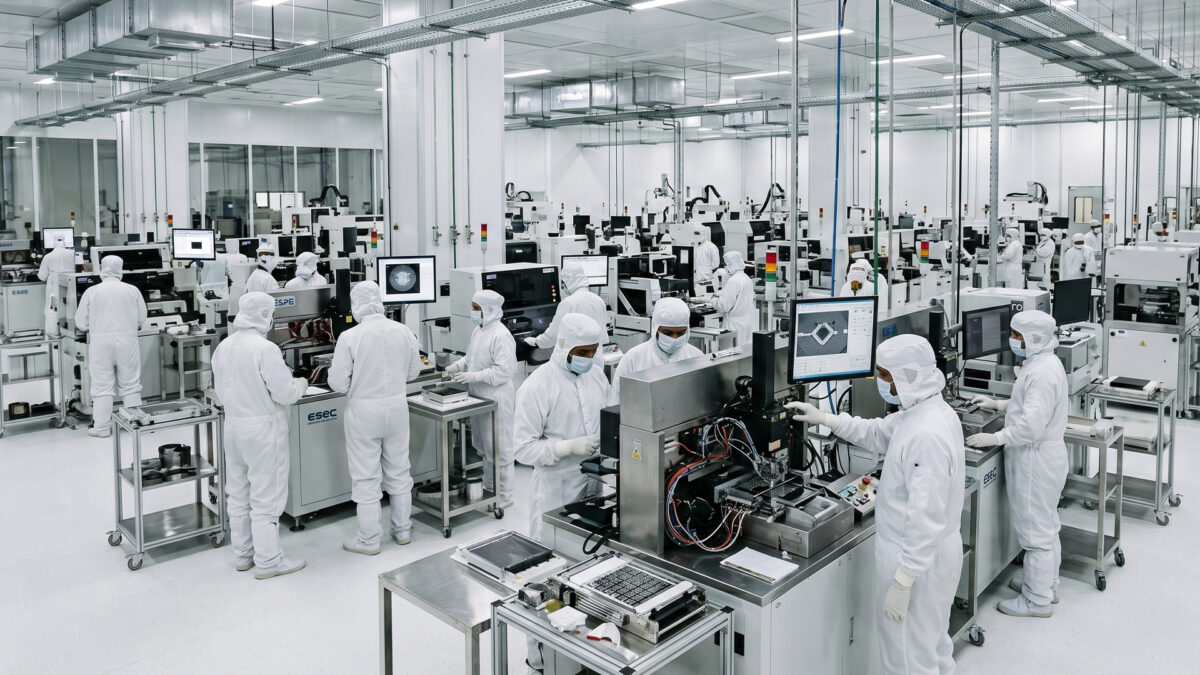
The unit, developed by Kaynes Technology in Sanand, will focus on assembling and testing semiconductor chips. This segment is critical in the chip value chain and helps prepare semiconductors for commercial use.

The project, valued at ₹3,300 crore, reflects the government’s broader plan to build local capacity in a sector that has traditionally relied heavily on imports.

India’s semiconductor demand is rising rapidly, driven by growth in consumer electronics, electric vehicles, and digital infrastructure. By investing in such facilities, the country aims to secure supply chains and reduce risks linked to global disruptions.

The inauguration also coincided with the launch of multiple infrastructure projects worth around ₹20,000 crore, underlining Gujarat’s growing importance as a manufacturing hub.

Also Read: UAE fuel prices surge sharply, diesel jumps over 70%

Categories
Corporate

Unilever–McCormick $65 billion food deal

Unilever has announced a major plan to combine its food business with US-based McCormick in a deal worth about $65 billion. The merger will bring together some of the world’s most popular food brands, creating a large global player in the packaged food and condiments market.

Unilever’s food division includes well-known products like Knorr soups and Hellmann’s mayonnaise, while McCormick is famous for its spices and seasonings. By joining forces, the two companies aim to expand their global reach and strengthen their position in the food industry.

As part of the deal, Unilever will receive cash as well as shares in the new combined company. Unilever shareholders are expected to own a majority stake, giving them significant control in the merged business.

This move is part of Unilever’s broader strategy to reshape its business. In recent years, the company has been focusing more on its beauty, personal care, and home products, which are growing faster and generating higher profits. The food segment, on the other hand, has seen slower growth, prompting the company to rethink its approach.

For McCormick, the deal offers an opportunity to scale up its operations and enter new markets with a stronger product portfolio. The combined company is expected to generate billions in revenue and achieve cost savings over time through better efficiency and integration.

However, the announcement has also led to some caution among investors, with initial market reactions being slightly negative due to the size and complexity of the deal.

Also Read: UAE fuel prices surge sharply, diesel jumps over 70%

Categories
1 Minute-Read

UAE fuel prices surge sharply, diesel jumps over 70%

Fuel prices in the UAE have gone up sharply in April as tensions in the Middle East push global oil prices higher. Petrol prices have increased by around 30%, while diesel has risen by more than 70%, making transport more expensive.

This has created concern about possible price increases in daily goods. However, supermarket retailers say they will not raise prices immediately. They are working to manage the extra cost through better planning, efficient deliveries, and improved supply systems.

Experts say if fuel prices stay high for a long time, businesses may have no choice but to pass on the added costs to customers.

Categories
Corporate

Starcloud raises $170mn for space data centers

Starcloud, a US-based space infrastructure startup, has raised $170 million in a Series A funding round, giving it a valuation of $1.1 billion. The round was led by Benchmark and EQT Ventures, reflecting strong investor interest in off-Earth computing solutions.

The company plans to use the funding to develop orbital data centers capable of running AI workloads in space. These data centers aim to ease the pressure on ground-based infrastructure, which faces growing energy and cooling demands due to AI’s rapid expansion. By operating in low Earth orbit, Starcloud can take advantage of near-continuous solar power and the cold of space, potentially improving efficiency and reducing some terrestrial limitations.

Starcloud has already demonstrated its technology. In November 2025, it launched a satellite equipped with an Nvidia H100 GPU, successfully performing AI training in orbit. Its next satellite, Starcloud 2, is expected to carry multiple GPUs, including Nvidia’s next-generation chips and an AWS server blade, later this year.

The startup also plans to expand manufacturing and secure more launch contracts, moving toward commercial operations. Its long-term vision includes building a constellation of up to 88,000 satellites, creating a large-scale space-based compute network.

Starcloud’s progress comes as part of a broader “AI space race,” with other companies like SpaceX and Blue Origin exploring orbital computing. SpaceX has announced plans for its own orbital AI data network following its acquisition of the AI startup xAI.

Also Read: iOS 26.5 Beta 1 adds RCS security, maps ad

Categories
Corporate

Spire Global sends 10 satellites into orbit

Spire Global has successfully launched 10 satellites as part of a rideshare mission operated by SpaceX, marking a significant step in expanding its satellite network.

The satellites were carried aboard a Falcon 9 rocket under SpaceX’s Transporter-16 mission, which lifted off from Vandenberg Space Force Base in California. The mission included multiple payloads from different companies, highlighting the growing use of shared launches to reduce costs.

The newly deployed satellites have been placed into low Earth orbit and will become part of Spire’s existing constellation. These satellites are designed to collect data used in weather forecasting, aviation tracking, maritime monitoring, and radio frequency analysis.

With this addition, Spire aims to enhance its ability to deliver real-time data and insights to customers across industries. The company provides space-based data services to governments and businesses that rely on accurate and timely information.

Spire follows a vertically integrated model, building and testing its satellites in-house. This approach helps reduce costs and allows for faster deployment of new satellites, enabling the company to scale its operations efficiently.

The latest launch also received support from the Government of Luxembourg through collaboration with the European Space Agency, reflecting international cooperation in advancing space technology and data services.

Spire operates one of the world’s largest fleets of nanosatellites. These small satellites play a crucial role in monitoring global activities such as ship movements, aircraft positions, and atmospheric conditions.

The Transporter-16 mission once again demonstrated the importance of rideshare launches, where multiple satellites are deployed in a single mission. This method has become increasingly popular as it offers a more affordable way for companies to access space.

Also Read: Eli Lilly inks $2 bn AI drug development deal

Categories
Corporate

Airtel raises $1 bn for Nxtra

Bharti Airtel has raised $1 billion in fresh funding for its data centre arm, Nxtra, to expand capacity and strengthen its position in the fast-growing digital infrastructure space.

The investment round is led by Alpha Wave Global, with participation from existing investor Carlyle Group and Anchorage Capital. Airtel will also invest in the business and continue to hold a majority stake, ensuring control over its operations.

The funding values Nxtra at around $3 billion, reflecting strong investor confidence in India’s data centre market. The company plans to use the capital to significantly expand its infrastructure and meet rising demand for cloud services, artificial intelligence, and data storage.

Nxtra currently operates a widespread network of data centres across India, catering to enterprises, government clients, and large technology companies. With digital adoption accelerating, the need for reliable and scalable data infrastructure is growing rapidly.

As part of its expansion strategy, Nxtra aims to increase its capacity from around 300 megawatts to nearly 1 gigawatt over the next few years. This scale-up is expected to support increasing workloads driven by AI applications and data-intensive services.

India’s data centre sector is witnessing strong growth due to rising internet usage, digital payments, and expansion by global cloud providers. This has led to increased investments from both domestic and international players looking to tap into the opportunity.

Also Read: Aluminium stocks rises 5% on Middle East tensions