Categories
Corporate

FirstClub valuation doubles to $255 mn

FirstClub has raised fresh funding at a valuation of $255 million, more than doubling its valuation in just nine months. The latest investment reflects growing investor confidence in the startup’s quality-first approach to grocery delivery, a market largely dominated by speed-focused quick-commerce players.

The funding round was led by existing and new investors, including Peak XV Partners and Sofina. The company plans to use the capital to strengthen its supply chain, expand into new product categories and scale operations across key markets.

Unlike many quick-commerce platforms that compete primarily on delivery speed, FirstClub has positioned itself around product quality and customer trust. The company focuses on sourcing premium groceries, fresh produce and household essentials while maintaining strict quality standards.

FirstClub’s founders believe consumers are increasingly willing to prioritise product quality over ultra-fast delivery times. The startup aims to build long-term customer loyalty by offering a more curated shopping experience rather than competing solely on discounts and rapid fulfilment.

The fresh funding comes at a time when India’s quick-commerce sector is attracting significant investor interest. Companies are competing to capture a larger share of the rapidly growing online grocery market, which has seen increased adoption among urban consumers.

FirstClub said it will invest heavily in technology, logistics and category expansion to support future growth. The company is also looking to enhance customer experience through better inventory management and personalised offerings.

The company has witnessed strong growth in recent months, driven by rising demand for reliable grocery delivery services. It has expanded its product range and strengthened partnerships with suppliers to improve consistency and availability.

With fresh capital and a rapidly growing customer base, the startup is aiming to strengthen its position in India’s evolving grocery delivery market and compete with larger players through its quality-driven approach.

While many players focus on delivery speed, FirstClub is betting that quality, trust and product selection will become equally important factors for consumers.

Also Read: Coralogix raises $200 mn during AI boom
Categories
Corporate

Sensex dips beyond 100 points, Nifty slips below 23,400

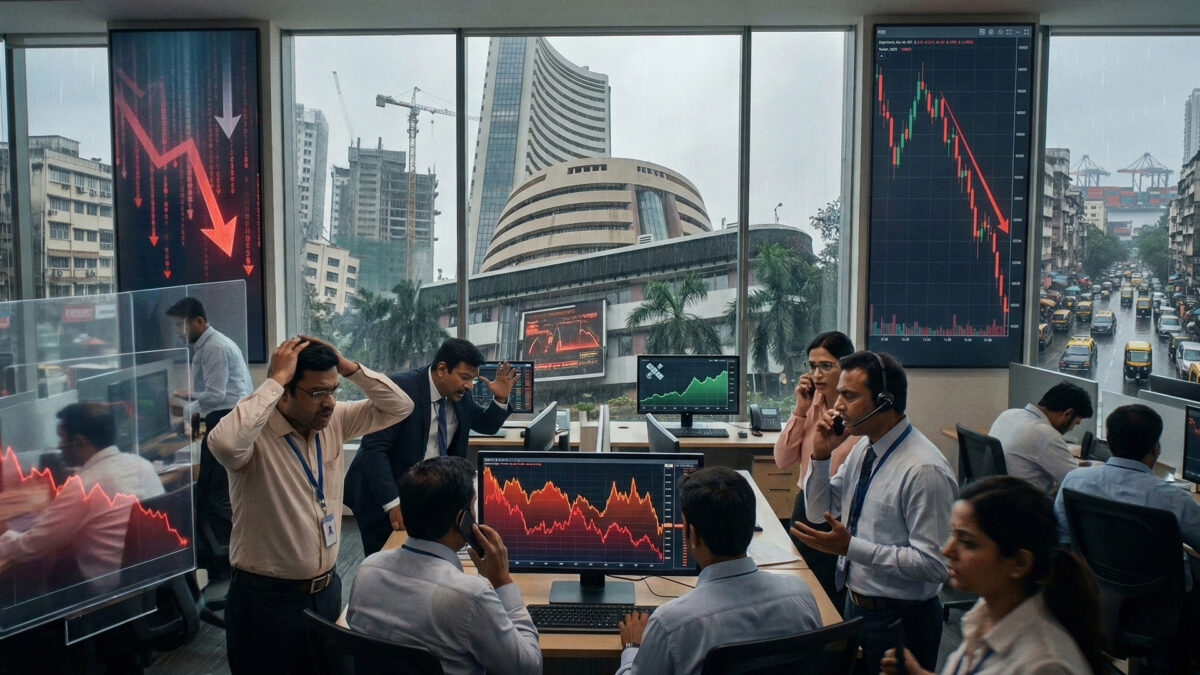
Indian benchmark stock indices opened lower on Thursday as the BSE Sensex fell by more than 100 points, while the NSE Nifty slipped below the 23,400 mark during volatile trading.

Among individual stocks, Tata Steel and ONGC were among the notable gainers, supported by sector-specific buying and strength in commodity-linked counters. On the other hand, Infosys, HCLTech and Tech Mahindra were among the major laggards, dragging the indices lower amid weakness in information technology stocks.

Higher crude oil prices are a major concern for India, which imports most of its energy needs. Rising oil costs can increase inflationary pressures and impact corporate earnings. Brent crude remained elevated, keeping investors on edge. At the same time, the Indian rupee came under pressure against the US dollar, adding to market worries.

Foreign institutional investors (FIIs) continued to remain cautious, with persistent selling activity affecting market sentiment. Traders also preferred to stay on the sidelines ahead of the RBI’s policy announcement, where the central bank is expected to provide guidance on interest rates, inflation, liquidity and economic growth. Most economists expect the RBI to keep the repo rate unchanged.

Sector-wise, weakness was seen in several heavyweight stocks, particularly in information technology and other rate-sensitive sectors. However, broader markets showed some resilience, with select mid-cap and small-cap stocks attracting buying interest.

Market sentiment remained weak as concerns over the escalating conflict between the United States and Iran continued to affect global financial markets. Investors feared that further tensions could disrupt oil supplies and push crude oil prices higher.

Global markets also remained under pressure as investors shifted towards safer assets amid uncertainty surrounding the Middle East conflict.

Also Read: HUL launches Unilever Fragrance Hub in Mumbai

Categories
Leaders

Wipro CEO Srinivas Pallia earns nearly ₹50 cr in FY26

Wipro Chief Executive Officer Srinivas Pallia earned nearly ₹50 crore in FY26, placing him among the highest-paid leaders in India’s IT industry.

According to Wipro’s annual report, Pallia received total compensation of around ₹49.5 crore during the financial year. His package included salary, performance-linked bonuses, allowances and stock-based incentives.

The CEO’s earnings were significantly higher than those of Wipro Chairman Rishad Premji, who received about ₹7 crore in FY26. Premji’s remuneration was nearly 50% lower than the previous year, making Pallia’s compensation almost seven times larger.

Pallia took charge as Wipro’s CEO in April 2024 following the exit of Thierry Delaporte. Since then, he has focused on improving efficiency, strengthening customer relationships and steering the company through a challenging global technology market.

The latest disclosures have renewed attention on executive compensation across India’s IT sector. Many technology firms increasingly tie leadership pay to business performance, shareholder value and long-term growth objectives.

The gap highlights how executive pay is structured at major technology companies, where a large portion of compensation is often linked to performance targets and long-term stock awards.

Compensation levels also vary widely across the industry depending on company size, financial performance and the structure of stock incentive programmes. Recent reports show that top executives at leading Indian IT firms continue to receive sizeable pay packages despite a challenging business environment.

The figures come at a time when the IT sector is navigating mixed market conditions. While demand for artificial intelligence, cloud services and digital transformation remains strong, companies continue to face cautious spending by clients and broader economic uncertainty.

Also Read: India’s tyre exports cross record ₹27,300 cr

Categories
Beyond

India’s tyre exports cross record ₹27,300 cr

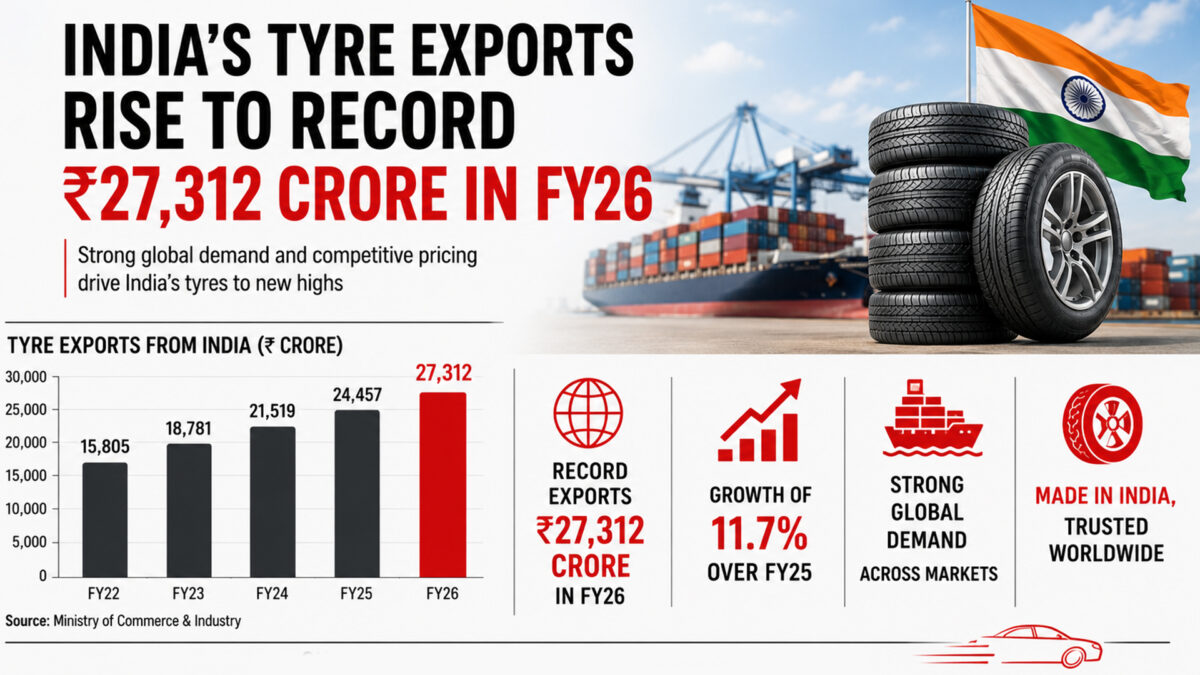
India’s tyre industry has achieved a record-breaking export performance, with overseas shipments reaching ₹27,312 crore in FY26, reflecting a 9% increase over the previous year’s ₹25,057 crore. The achievement comes despite global trade uncertainties, rising logistics costs and higher tariffs imposed by the United States, one of the industry’s key export markets.

The United States remained the largest destination for Indian tyre exports, accounting for ₹4,082 crore, or 15% of total export value. However, the country’s share declined from 17% a year earlier after the US raised tariffs on Indian tyre imports from 25% to 50% in August 2025. The tariff increase made Indian products less competitive compared to those from several rival exporting nations.

Despite this setback, Indian manufacturers successfully expanded their presence in other international markets. Germany emerged as the second-largest export destination, followed by Italy, Brazil and France. Industry data shows Indian tyres are now exported to more than 170 countries, highlighting the sector’s growing global reach.

Industry body Automotive Tyre Manufacturers Association (ATMA) credited the strong performance to market diversification, improved competitiveness and sustained investments in manufacturing capacity. Over the past four to five years, tyre companies have invested nearly ₹30,000 crore in greenfield and brownfield expansion projects to boost production and strengthen export capabilities.

The industry also received some relief when the US reduced tariffs on most Indian goods to 18% in February 2026. Industry leaders believe the move could support export growth in the coming months and improve India’s competitiveness in the American market.

With an annual turnover of around ₹1 lakh crore, the tyre sector remains one of India’s leading manufacturing industries.

Also Read: South Korea tops India as World’s sixth-largest stock market

Categories
Corporate

South Korea tops India as World’s sixth-largest stock market

South Korea has overtaken India to become the world’s sixth-largest stock market by market capitalisation, driven by a strong rally in technology and semiconductor stocks.

Statistical reports show the combined value of companies listed in South Korea has crossed $5 trillion, ahead of India’s market capitalisation of about $4.8 trillion. The shift has pushed India to seventh place in global stock market rankings.

The rise has largely been powered by the global artificial intelligence boom. South Korean chipmakers such as Samsung Electronics and SK Hynix have attracted strong investor interest as demand for AI-related chips and data-centre infrastructure continues to grow.

Indian markets, meanwhile, have faced pressure from weaker corporate earnings, foreign investor outflows and a weaker rupee. The absence of major AI-focused companies in benchmark indices has also limited gains compared with technology-heavy markets.

The latest development comes shortly after Taiwan moved ahead of India in global market rankings, causing India to slip from fifth to seventh position within a relatively short period.

The rankings underline the growing impact of AI-driven investments on global markets, with countries that have strong semiconductor industries benefiting the most from the ongoing technology boom.

Despite the decline, analysts remain positive about India’s long-term outlook. They point to strong economic growth, rising domestic participation in equities and continued infrastructure investment as key strengths supporting future market expansion.

Also Read: OYO parent gets SEBI approval for ₹6,500 cr IPO

Categories
Beyond

OYO parent gets SEBI approval for ₹6,500 cr IPO

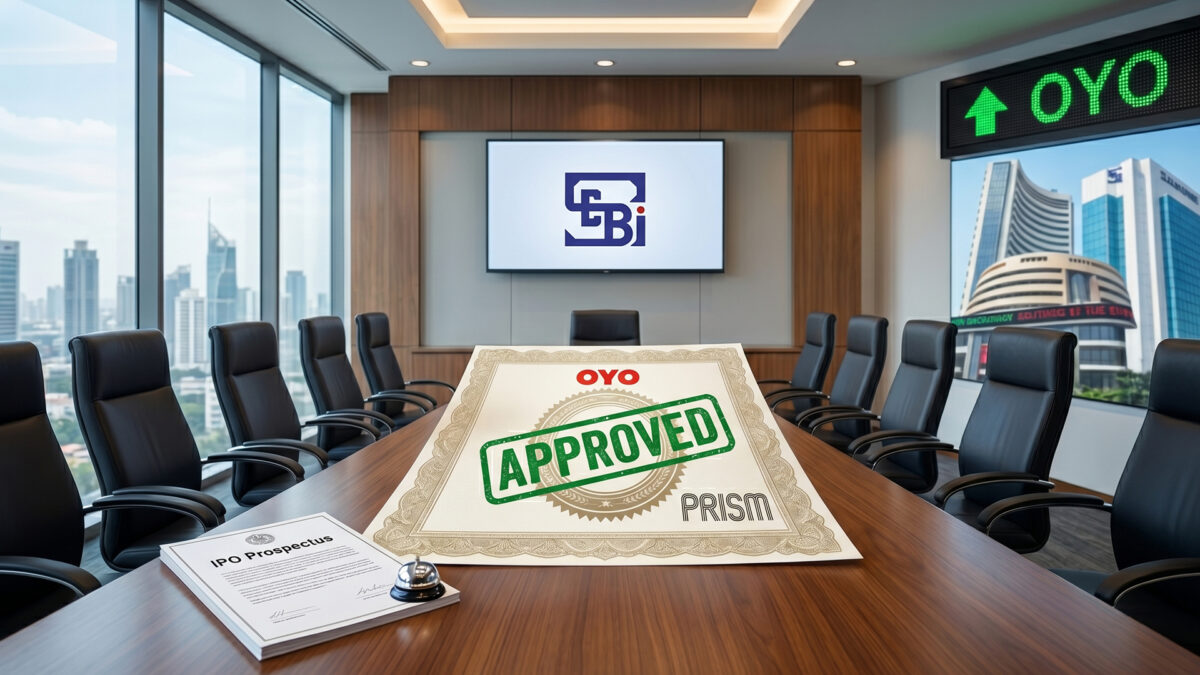
Oravel Stays Ltd, the parent company of hospitality and travel platform OYO, has received approval from the Securities and Exchange Board of India (SEBI) to launch its much-awaited initial public offering (IPO).

The company plans to raise around ₹6,500 crore through the public issue, marking a major step in its journey towards becoming a publicly listed company. The approval comes after multiple attempts by OYO to enter the stock market over the past few years.

According to reports, the IPO will include a fresh issue of shares as well as an offer-for-sale component. The funds raised are expected to be used for business expansion, debt reduction, technology investments and other corporate requirements.

Founded by entrepreneur Ritesh Agarwal in 2013, OYO has grown from a budget hotel aggregation platform into one of the world’s largest hospitality technology companies. The company operates hotels, homes and vacation rentals across several countries and has built a significant presence in India and international markets.

In recent years, OYO has focused on improving profitability, streamlining operations and strengthening its balance sheet. The company has reported better financial performance, supported by higher occupancy rates, stronger demand for travel and cost-control measures. These improvements are believed to have helped the company secure regulatory approval for its IPO plans.

The proposed public offering comes at a time when India’s primary market remains active, with investors showing interest in companies that have demonstrated a clear path to profitability. Market participants will closely watch OYO’s valuation, growth strategy and financial performance as details of the IPO emerge.

With SEBI’s approval now in hand, OYO is expected to move ahead with the next stages of the IPO process, including finalising issue details and launch timelines. The offering is likely to be among the most closely watched public issues in India’s startup ecosystem this year.

Also Read: Alphabet plans $80 bn fundraise to accelerate AI expansion

Categories
Beyond

Wholesale Price Index to replace Producer Price Index

In a major overhaul of India’s inflation measurement system, the government will begin rolling out a new Producer Price Index (PPI) framework from June 15, gradually replacing the Wholesale Price Index (WPI) over the next five years. The move is aimed at modernising the country’s pricing data system and aligning it with global best practices.

The Department for Promotion of Industry and Internal Trade (DPIIT) will release a revised WPI series with a new base year of 2022-23, replacing the current 2011-12 series. Alongside it, the government will introduce new Producer Price Indices, including the Output Producer Price Index (OPPI), Trial Input Producer Price Index (IPPI) and Service Producer Price Index (Service PPI).

Unlike the WPI, which primarily tracks the prices of goods at the wholesale level, the PPI will provide a more comprehensive view of producer-level inflation by covering output prices, input costs and selected services. Initially, the services index will cover sectors such as banking, insurance, securities transactions, pension fund management, railways, air passenger transport and telecommunications.

To ensure a smooth transition, both WPI and PPI will be published simultaneously for five years. The WPI will then be phased out, giving businesses and institutions adequate time to shift to the new system. The government noted that WPI remains widely used in contracts and price-escalation clauses, making a gradual transition necessary.

The revised WPI series will also feature an expanded basket of items, increasing coverage from 697 to 957 products. The update includes emerging sectors and newer economic activities, making the index more representative of the current economy.

Officials believe the new framework will help policymakers, businesses and economists better understand inflation trends across different stages of production. By tracking changes in production costs earlier in the supply chain, the PPI is expected to offer a more accurate picture of price pressures in the economy.

Also Read: HUL launches Unilever Fragrance Hub in Mumbai

Categories
Corporate

Anthropic enhances cybersecurity portfolio with Mythos AI

Artificial intelligence company Anthropic has launched a new cybersecurity-focused AI model called Mythos, designed to help organisations strengthen their defences against increasingly sophisticated cyber threats.

The company said Mythos has been developed specifically for cybersecurity applications and is capable of assisting security teams with threat detection, vulnerability analysis, incident response and risk assessment. The model is expected to help organisations identify potential cyberattacks more quickly and improve their ability to respond to security incidents.

According to Anthropic, Mythos is designed to understand complex cybersecurity data and provide actionable insights to analysts and security professionals. By automating time-consuming tasks and analysing large volumes of information, the AI model aims to reduce the workload on cybersecurity teams while improving operational efficiency.

The launch comes at a time when cyberattacks are becoming more frequent and complex across industries worldwide. Organisations are increasingly turning to artificial intelligence to strengthen their security infrastructure and keep pace with evolving digital threats. Anthropic believes specialised AI systems such as Mythos can play a crucial role in helping enterprises manage growing cybersecurity challenges.

One of the key features of the model is its ability to assist in identifying vulnerabilities and suspicious activities across networks and digital systems. It can also help security teams prioritise risks, investigate incidents and support decision-making during cyber emergencies.

India is among the countries that will gain access to the new AI model. The launch also highlights the growing competition among AI companies to develop specialised models for enterprise use cases.

While many AI systems focus on general-purpose applications, firms are increasingly building domain-specific models tailored to industries such as healthcare, finance and cybersecurity.

Also Read: CMR Green IPO subscribed 183% on day one

Categories
Beyond

US sanctions Iran’s largest Crypto exchange Nobitex

The United States has imposed sanctions on Nobitex, Iran’s largest cryptocurrency exchange, accusing it of helping the Iranian government and affiliated groups evade international sanctions through digital asset transactions.

The US Treasury Department said Nobitex played a key role in facilitating financial activities linked to Iran’s military and security institutions, including the Islamic Revolutionary Guard Corps (IRGC). According to US officials, the platform was allegedly used to move funds and provide access to the global financial system despite restrictions imposed on Tehran.

Along with Nobitex, sanctions were also imposed on several associated entities and individuals accused of supporting the exchange’s operations. The measures freeze any US-based assets linked to the sanctioned parties and prohibit American individuals and companies from conducting business with them.

US authorities claim that Nobitex has become a major gateway for cryptocurrency transactions in Iran and has processed billions of dollars in digital asset trades. Officials argue that such platforms can be used to bypass traditional banking restrictions and help sanctioned organisations move money across borders.

Iran has not immediately responded to the latest sanctions. However, Tehran has repeatedly criticised US sanctions policies, arguing that they unfairly target the country’s economy and financial system.

The action is part of Washington’s broader effort to curb what it describes as Iran’s use of alternative financial networks to support activities that threaten regional stability. US officials have increasingly focused on cryptocurrency platforms, warning that digital assets can be exploited for sanctions evasion, money laundering and illicit financing.

The sanctions come amid continuing tensions between the United States and Iran over regional security issues, nuclear concerns and economic restrictions. Analysts say the move could further complicate Iran’s access to international financial markets and increase scrutiny of cryptocurrency transactions connected to the country.

For the global crypto industry, the development highlights growing regulatory attention on digital asset exchanges and their compliance obligations. It also underscores how cryptocurrencies have become an important arena in geopolitical and economic disputes, particularly in countries facing international sanctions.

The latest measures signal that the US intends to maintain pressure on financial networks it believes help sanctioned entities operate outside the traditional banking system.

Also Read: Godrej enters wealth management business

Categories
Corporate

Godrej enters wealth management business

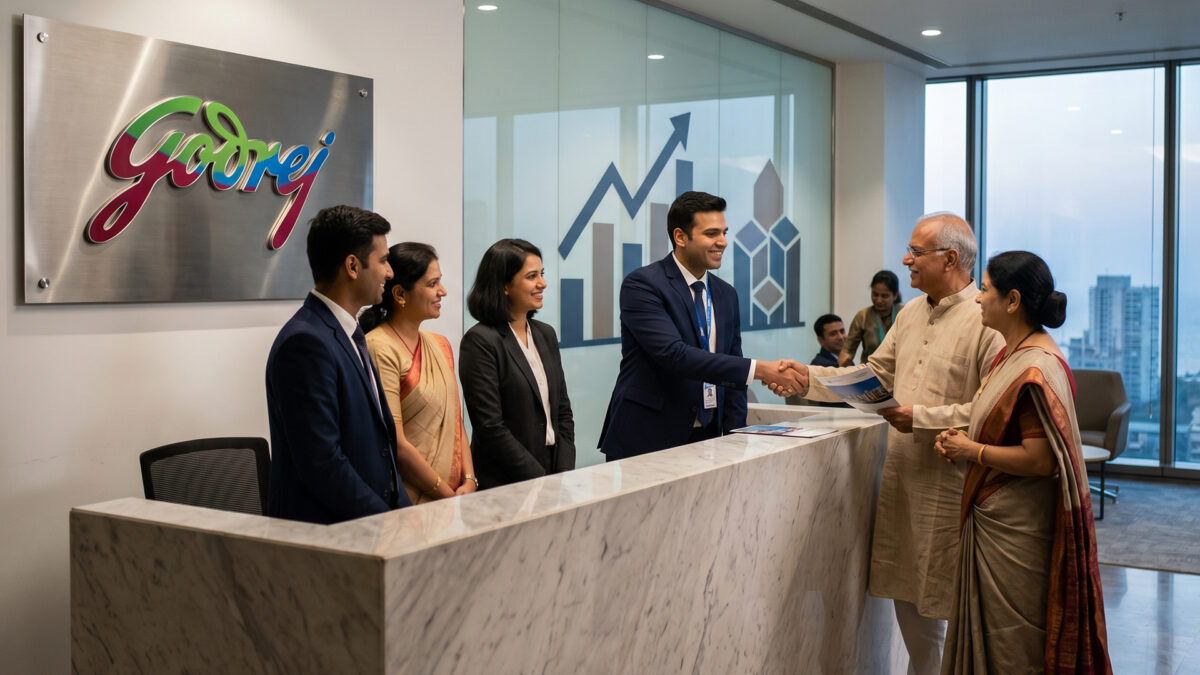
Godrej Industries has announced its entry into the wealth management business, marking a significant expansion of the group’s presence in financial services. The company has set an ambitious goal of managing assets worth ₹1 lakh crore over the next five years, reflecting its confidence in the growing demand for professional wealth advisory services in India.

The newly launched venture will cater primarily to high-net-worth individuals (HNIs), ultra-high-net-worth individuals (UHNIs), family offices and institutional investors. It will offer a range of services, including investment planning, portfolio management, estate planning and wealth preservation strategies.

The move comes at a time when India’s wealth creation story is gathering pace. Rising incomes, a booming startup ecosystem, increasing participation in financial markets and a growing number of wealthy individuals have created strong demand for personalised financial advice and investment solutions.

Godrej Industries believes its trusted brand name and long-standing reputation will help it build a strong position in the competitive wealth management sector. The company plans to combine technology-driven investment tools with personalised advisory services to provide tailored solutions for clients.

A dedicated team of experienced professionals will lead the business, focusing on long-term wealth creation and helping clients navigate increasingly complex financial markets. The company expects demand for sophisticated wealth management services to grow steadily as more Indians seek professional guidance to manage and preserve their wealth.

For Godrej Industries, the new venture represents more than just business diversification. It signals the group’s intent to participate in India’s evolving financial landscape and tap into a market that is expected to expand significantly in the coming years.

Also Read: COMPUTEX 2026 shows Taiwan’s growing AI leadership