Categories
Technology

BSNL launches Wi‑Fi calling, never lose a call

Bharat Sanchar Nigam Limited (BSNL) has rolled out its Voice over Wi‑Fi (VoWiFi) service nationwide starting January 1, 2026. The service, also known as Wi‑Fi Calling, is now available to all BSNL subscribers across every telecom circle in India, aiming to enhance call quality and connectivity even in areas with weak mobile signals.

VoWiFi allows users to make and receive voice calls and SMS using a Wi‑Fi connection, bypassing traditional cellular networks. This is particularly useful in locations such as basements, offices, homes, rural areas, or other regions where network coverage is poor. The service works with any stable broadband connection, including BSNL Bharat Fiber or other internet providers, ensuring uninterrupted communication in so-called “coverage shadow” zones.

The system operates on an IP Multimedia Subsystem (IMS) platform, which enables smooth switching between Wi‑Fi and mobile networks without dropping calls. Users can make calls directly from their regular phone dialer, with no need for third-party apps. Most modern smartphones support VoWiFi, and subscribers may need to activate the Wi‑Fi Calling feature in device settings.

BSNL has made the service available at no additional cost. Calls made via Wi‑Fi are billed under the subscriber’s existing voice plan, meaning users can enjoy improved connectivity without extra charges. The move is part of BSNL’s efforts to enhance customer experience while managing network congestion as the operator continues expanding its infrastructure.

By launching VoWiFi nationwide, BSNL joins other telecom providers like Reliance Jio, Bharti Airtel, and Vodafone Idea that already offer Wi‑Fi calling. This rollout aligns with the company’s broader strategy to modernize its network, strengthen coverage in underserved areas, and prepare for future 4G and advanced network developments.

BSNL’s nationwide VoWiFi service is expected to significantly improve call quality and reliability, particularly in regions with limited cellular connectivity, helping the operator bridge digital gaps while providing seamless communication for its customers.

Also Read: Warren Buffett retires as Berkshire CEO After 6 decades

Categories
1 Minute-Read

Tata Group charts 2026 path with innovation and impact

Tata Group chairman N Chandrasekaran has shared the group’s vision for 2026, focusing on execution with purpose and innovation that makes a real difference.

The group plans to advance artificial intelligence, expand future-ready manufacturing, and nurture talent for tomorrow. Sustainability is at the heart of their strategy, with green steel and electric mobility leading the way.

Chandrasekaran also highlighted resilience against cyber, operational, and geopolitical challenges, while exploring global opportunities that strengthen India’s position as a technology and manufacturing hub. The approach blends ambition with responsibility, aiming for growth that matters.

Categories
1 Minute-Read

OYO parent Prism files confidential IPO, raises Rs 6,650 cr

OYO’s parent company, Prism, has initiated plans for an initial public offering (IPO) via the confidential route, aiming to raise up to Rs 6,650 crore.

The filing with the Securities and Exchange Board of India (SEBI) follows shareholder approval at an extraordinary general meeting in December 2025. Prism’s IPO could value the hospitality‑tech firm at $7–8 billion, reflecting strong market confidence.

This move revives its earlier listing plans that were put on hold due to market conditions. SEBI’s review of the draft red herring prospectus is now underway.

Categories
Corporate

Sensex up 100+ points, Nifty above 26,150

The New Year brought a smile in the markets as the BSE Sensex rose around 200 points in early trade, while the NSE Nifty 50 moved above the 26,150 level, supported by buying in auto, IT and select banking stocks.

Among the key gainers, auto stocks advanced on expectations of stable demand and improving margins. Information technology shares also edged higher, aided by bargain buying after recent corrections and hopes of steady global tech spending. Select private sector banks added to the upside, helping benchmarks maintain early gains.

However, the broader market showed mixed trends. FMCG stocks were among the top losers, facing selling pressure amid valuation concerns and muted near-term growth outlook. Metal stocks also traded lower after recent gains, as investors booked profits. Mid-cap and small-cap stocks showed a cautious trend, with limited participation.

Market sentiment remained subdued as most global markets were closed for New Year holidays, leading to lower trading volumes. Investors also remained watchful ahead of key global cues, including signals on US interest rates, geopolitical developments and updates on global economic growth.

Analysts said the positive opening was an extension of the recovery seen in the final sessions of 2025. However, they cautioned that markets may remain range-bound in the near term due to mixed global signals and stock-specific action.

The Indian rupee traded slightly weaker against the US dollar in early trade, adding to the cautious tone. Going ahead, investors are expected to focus on corporate earnings, macroeconomic data and global cues to assess market direction in the opening weeks of 2026.

Also Read: Sensex climbs 546 points, Nifty tops 26,100 in 2025 finale

Categories
Corporate

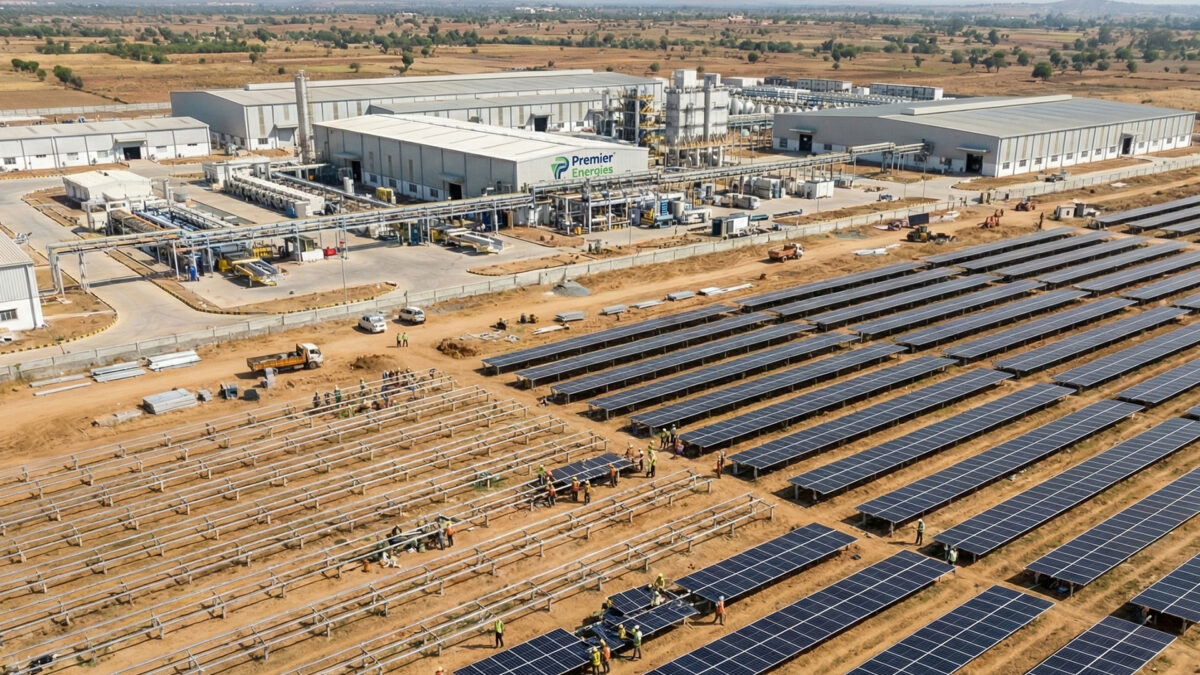
Premier Energies bags Rs 2,307 crore Solar orders

Premier Energies Ltd, a Hyderabad-based solar cell and module manufacturer, has won new orders worth Rs 2,307.30 crore in the third quarter (Q3) of FY26. These orders come from leading Indian power producers and other customers and are expected to be executed over the next two years, giving the company steady revenue visibility.

The company said the orders reflect strong customer trust in its product quality and execution capabilities. With India’s renewable energy market growing rapidly, Premier Energies is well-positioned to meet increasing demand for solar components.

The firm is also expanding its production capacity, planning to reach 10.6 gigawatts (GW) for solar cells and 11.1 GW for solar modules by September 2026. These new orders will support this growth and help the company strengthen its place in India’s domestic solar manufacturing sector.

Chiranjeev Saluja, MD and CEO, said the large order inflow shows confidence in Premier Energies’ technology and manufacturing. He added that as India accelerates renewable energy deployment, the company is focused on providing high-quality solar solutions while expanding backward integration across the value chain.

The announcement has caught the attention of investors, with analysts noting that the orders could boost the company’s stock performance. The size and timing of the contracts signal strong business momentum and future growth potential.

Overall, the new orders align with India’s focus on renewable energy and domestic manufacturing. They are expected to contribute significantly to Premier Energies’ growth over the next two years and reinforce its role in building India’s solar infrastructure.

Also Read: PM Modi to inaugurate India AI Impact Summit

Categories
1 Minute-Read

Meta buys AI startup Manus to boost advanced AI

Meta Platforms has acquired Manus, a Singapore-based AI startup originally founded in China, for over $2 billion.

Manus develops autonomous AI agents that handle tasks like research, coding, and data analysis with minimal prompts. Meta will integrate this technology into Meta AI, Facebook, Instagram, and WhatsApp, while keeping Manus’s subscription services running.

The acquisition highlights Meta’s push to compete with OpenAI and Google in advanced AI development.

Categories
1 Minute-Read

M&M rises to second spot in India’s car market

Mahindra & Mahindra (M&M) is set to overtake Hyundai Motor India to become the country’s second-largest passenger vehicle maker in 2025, behind Maruti Suzuki.

M&M registered around 581,000 units this year, surpassing Hyundai’s 550,000.

The shift reflects strong SUV demand and M&M’s expanding portfolio, while Hyundai’s limited new launches contributed to its drop in rankings. Tata Motors remains close behind in third place.

Categories
Beyond

India slaps 3 year safeguard duty on steel imports

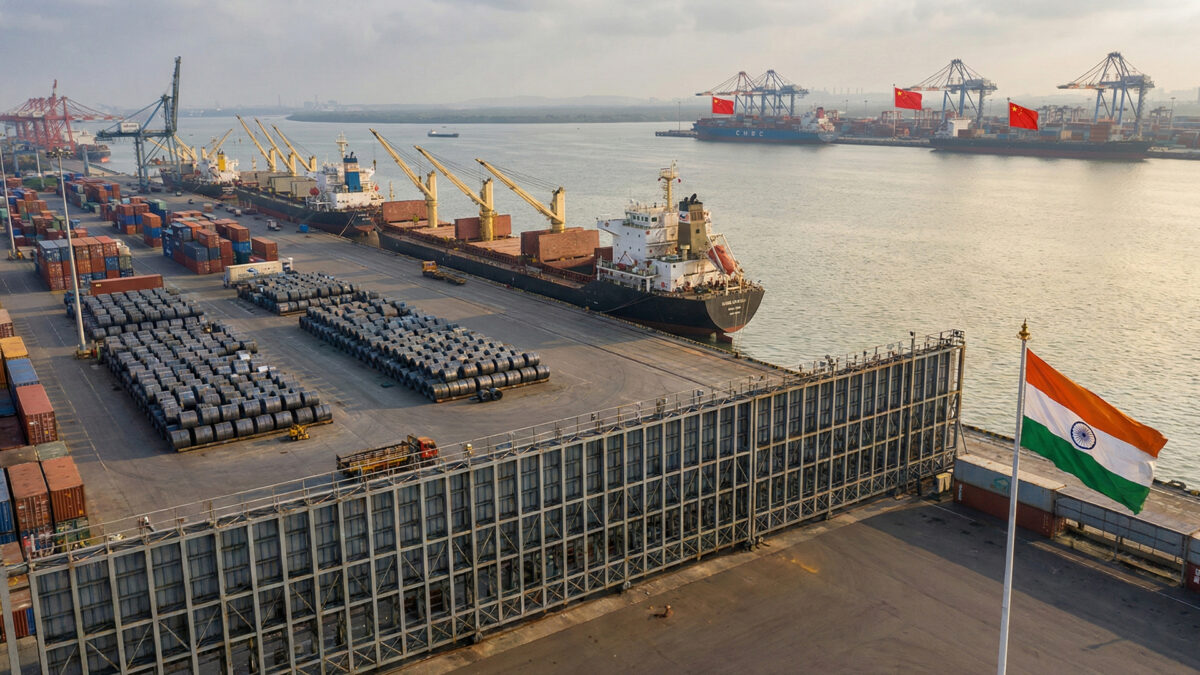
India has imposed a safeguard duty on select steel products for a period of three years to curb the inflow of low-priced imports that have been affecting domestic manufacturers. The move follows a detailed investigation that found a sharp rise in steel imports, particularly from China, causing stress to India’s steel industry.

Under the new notification, imports of certain non-alloy and alloy steel products will attract a duty of 12% in the first year. This will be gradually reduced to 11.5% in the second year and 11% in the third year. The graded structure is intended to give domestic producers time to stabilise operations while ensuring fair competition in the market.

The safeguard duty was recommended by the Directorate General of Trade Remedies (DGTR), which concluded that the surge in imports was sudden and significant, posing a risk of serious injury to Indian steelmakers. Industry bodies had flagged concerns that cheap steel shipments were undercutting local prices, impacting profitability and capacity utilisation across the sector.

While the measure is largely targeted at imports from China, it will also apply to steel inflows from countries such as Vietnam and Nepal. However, imports from certain developing nations have been exempted in line with global trade rules. High-end and specialty steel products, including stainless steel, are not covered under the duty.

The decision comes after a temporary 200-day safeguard duty imposed earlier this year expired in November. With India being the world’s second-largest steel producer, the government has emphasised the need to protect domestic manufacturing, jobs and long-term investment in the sector, while maintaining stable supply for downstream industries.

Also Read: India moves up to 4th spot in global economy rankings

Categories
Beyond

Gold at ₹1,36,190 per 10g, Silver slips to ₹2,39,900/kg

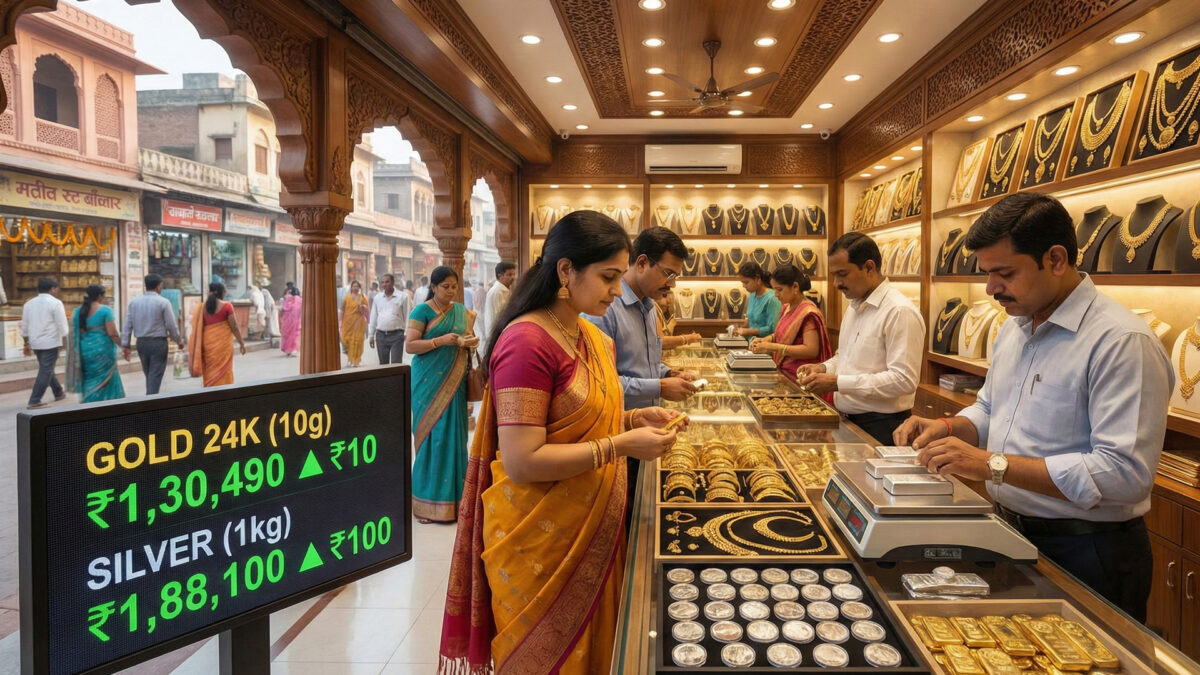
Gold and silver prices in India saw a mild decline on Wednesday, the final trading day of the year. According to market data, the price of 24-carat gold fell by ₹10, settling at ₹1,36,190 per 10 grams. 22-carat gold also eased by the same margin and was priced at ₹1,24,840 per 10 grams.

Silver prices declined more sharply, dropping by ₹100 to trade at ₹2,39,900 per kilogram.

Prices across major cities reflected similar trends. In Mumbai and Kolkata, 24-carat gold was quoted at ₹1,36,190 per 10 grams, while Delhi rates were slightly higher. Chennai continued to see marginally elevated prices compared to other metros.

The modest fall in gold and silver prices comes as global markets remain cautious, with investors adjusting positions ahead of the year-end. Experts say the small dip is largely technical and does not indicate any major shift in demand.

For buyers, the softer rates may offer a short-term opportunity, especially as precious metals continue to remain firm overall due to ongoing global uncertainties.

Also Read: Sensex gains 250 points, Nifty ends above 26000

Categories
Beyond

HAL flies Dhruv NG for first time

India’s civil aviation sector received a boost as Hindustan Aeronautics Limited (HAL) conducted the maiden flight of its Advanced Light Helicopter Dhruv New Generation (NG) in Bengaluru. The successful flight marks a major step forward in the development of indigenous rotary-wing platforms for civilian use.

The inaugural flight was flagged off by Union Civil Aviation Minister Ram Mohan Naidu, underlining the government’s support for domestically designed and manufactured aircraft. The event was witnessed by senior HAL officials and engineers involved in the helicopter’s development.

The Dhruv NG is a multi-role, twin-engine helicopter designed to meet the requirements of India’s civil and utility aviation sectors. Weighing 5.5 tonnes, it has been developed to handle diverse missions while offering modern technology, enhanced safety and improved passenger comfort.

One of the key upgrades in the Dhruv NG is the use of twin Shakti 1H1C engines, which deliver better performance and allow easier maintenance within the country. The helicopter features a fully civil-certified glass cockpit with a modern avionics suite, improving operational efficiency and reducing pilot fatigue. Additional safety systems include crashworthy seating and self-sealing fuel tanks.

The helicopter’s performance capabilities include a top speed of around 285 kmph, an operational range of approximately 630 km, and an endurance of nearly four hours. It can operate at altitudes of up to 6,000 metres and carry an internal payload of around 1,000 kg, making it suitable for demanding environments.

The Dhruv NG’s cabin can be configured for various roles. It can carry up to 14 passengers, while VIP and VVIP layouts offer spacious seating for four to six occupants. In the air ambulance configuration, it can carry four stretchers along with doctors and medical equipment.

HAL said the Dhruv NG is intended for emergency medical services, offshore logistics, disaster management, law enforcement and executive transport. The successful maiden flight highlights India’s growing capabilities in civil helicopter design and manufacturing, and strengthens HAL’s presence in the global civilian rotorcraft market.

Also Read: OpenAI offers Rs 5 crore AI safety job