Categories
Leaders

IMF Chief warns AI could impact 40% of global jobs

The International Monetary Fund (IMF) has warned that artificial intelligence could dramatically reshape the global job market. IMF Managing Director Kristalina Georgieva described AI’s rapid rise as a “tsunami” sweeping through the workforce, transforming jobs faster than governments and societies are ready for. Speaking at the World Economic Forum in Davos, she urged policymakers and businesses to act quickly to manage the challenges and risks posed by AI.

According to IMF analysis, up to 60% of jobs in advanced economies and about 40% of jobs globally could experience significant change due to AI in the coming years. While some jobs will benefit, seeing productivity and wages rise as AI complements human work, many roles, especially those involving routine tasks, are at risk of automation.

Entry-level positions are particularly vulnerable. These roles, often the first step for young workers entering the labor market, involve repetitive tasks that AI systems can perform efficiently. This could make it harder for graduates and young professionals to secure meaningful employment and gain early career experience.

Middle-income workers are also likely to face disruption. Positions that do not see productivity gains from AI may experience stagnant wages, slower hiring, or even elimination, widening the gap between high-skill, high-paying jobs and others. Georgieva highlighted that, while a small share of workers already benefit from AI, about one in ten jobs in advanced economies, the majority could face uncertainty without proper planning.

The IMF chief stressed that governments are lagging in creating rules, safeguards, and social policies to manage this transformation. She urged policymakers, educators, and business leaders to act quickly to ensure that AI adoption is inclusive and equitable, minimizing risks to the workforce while maximizing productivity gains.

“AI is for real, and it is transforming our world faster than we are getting a handle on it,” Georgieva said. The warning serves as a call to action for nations to prepare for significant structural shifts in the labor market and to implement strategies that protect vulnerable workers while supporting adaptation to the new AI-driven economy.

Also Read: ICICI Pru to halt new inflows into two FoFs
Categories
Beyond

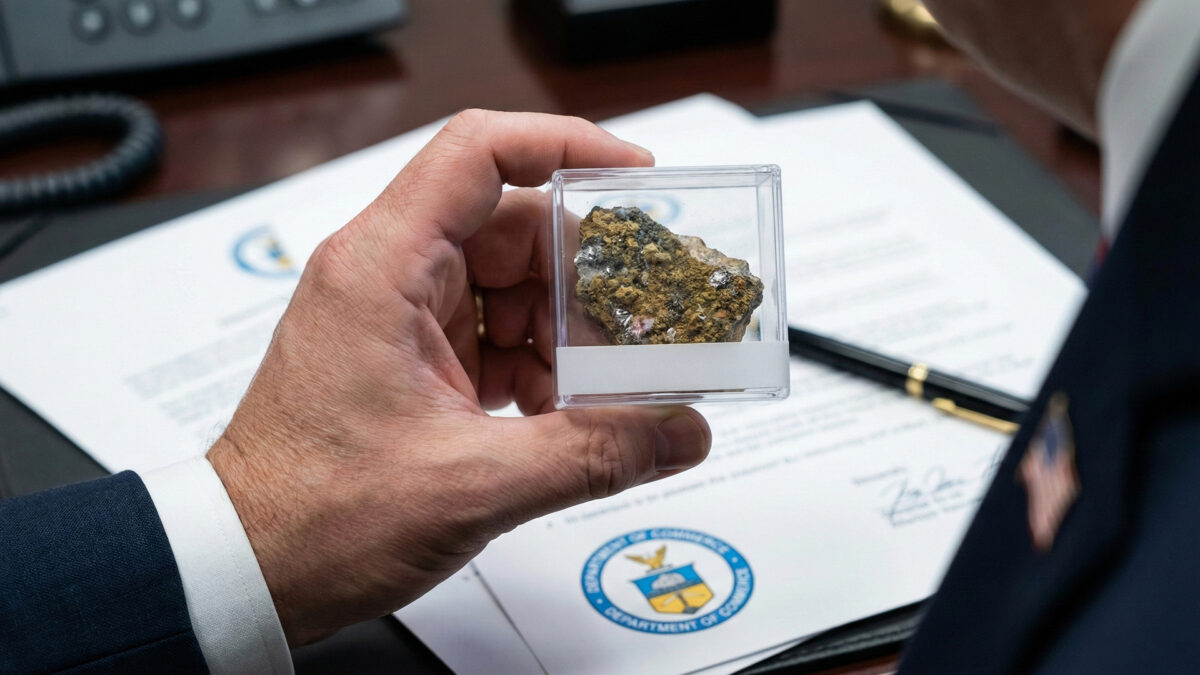
US takes 10% stake in rare earth miner $1.6 bn deal

The Trump administration has moved to strengthen domestic supply chains for critical minerals by agreeing to acquire a 10 per cent stake in USA Rare Earth in a deal valued at $1.6 billion, according to media reports.

The investment is part of a broader push to expand US-based rare earth mining and processing, reduce dependence on China, and secure materials vital for defence, clean energy, electric vehicles and advanced electronics.

Under the proposed arrangement, the US government will receive equity and warrants in USA Rare Earth, alongside providing significant debt financing. Reports indicate that the funding package includes about $1.3 billion in federal loans, with the remaining amount coming through direct equity participation. The financing is expected to be supported by federal programmes aimed at strengthening strategic industries.

USA Rare Earth is developing a rare earth mine at Sierra Blanca in Texas, in partnership with Texas Mineral Resources. The project is expected to begin production by 2028 and will focus on heavy rare earth elements, which are especially important for defence and high-performance technologies.

In parallel, the company is setting up a magnet manufacturing facility in Stillwater, Oklahoma, scheduled to start operations later this year. The plant will produce permanent magnets used in electric motors, wind turbines, military equipment and consumer electronics. Together, the mine and magnet facility are designed to create a fully domestic “mine-to-magnet” supply chain.

Rare earth elements consist of 17 minerals that are critical to modern technology but are largely processed and refined in China, which currently dominates global supply. US officials have repeatedly warned that this concentration poses economic and national security risks.

The investment in USA Rare Earth marks one of the largest federal interventions in the rare earth sector so far. It follows similar government actions aimed at supporting critical mineral producers and ensuring long-term supply security.

Also Read: Samsung nears Nvidia approval for HBM4 AI chips

Categories
Leaders

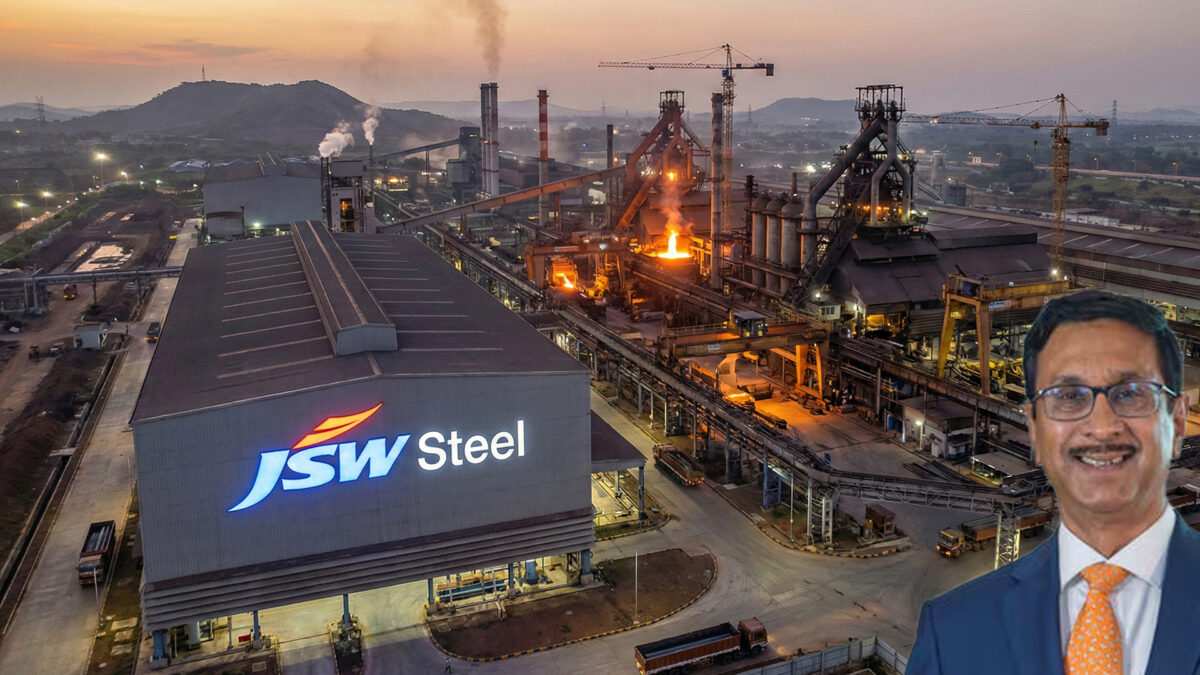
Jayant Acharya maps ₹2 lakh cr JSW Steel growth

JSW Steel, one of India’s top private steelmakers, has unveiled an ambitious ₹2 lakh crore investment plan to expand its production capacity by 25 million tonnes by the financial year 2030–31. The announcement was made by Jayant Acharya, Joint Managing Director and CEO, underlining the company’s focus on long-term growth and market leadership.

The investment will raise JSW Steel’s output from the current 34–35 million tonnes per annum (MTPA) to over 55 million tonnes by FY31. The plan includes building new greenfield plants, upgrading existing facilities, adding downstream units for value-added products, and adopting advanced technologies to boost efficiency.

A flagship project is a 5 MTPA plant in Paradip, Odisha, complemented by expansions at the Vijayanagar plant in Karnataka and a green steel facility in Salav, Maharashtra. These projects collectively aim to enhance JSW Steel’s production capability and meet rising domestic demand.

The company plans to fund most of the expansion through internal cash flows, supplemented by careful debt management. Strategic collaborations, including a joint venture with Japan’s JFE Steel, are expected to support operational efficiency and smooth execution of the projects.

Despite global steel price volatility and challenges such as Europe’s carbon border adjustment measures, JSW Steel remains optimistic. Domestic steel demand is projected to grow by 11–13 MTPA over the next two years, providing a robust market for the increased production.

The investment reflects JSW Steel’s commitment to leading India’s steel sector, leveraging infrastructure growth, industrial demand, and green steel initiatives. By investing in capacity and modern technology, the company aims to stay competitive while supporting India’s growing steel requirements.

Also Read: Canada rejects China deal after 100% tariff threat

Categories
Technology

ChatGPT cites Elon Musk’s Grokipedia in responses

OpenAI’s latest AI language model, GPT‑5.2, has begun sourcing information from Grokipedia, the AI-generated encyclopedia developed by Elon Musk’s xAI, according to industry reports. Grokipedia, unlike traditional Wikipedia, relies entirely on AI for content creation and updates. While the platform aims to offer a fast, alternative knowledge base, experts caution that it may introduce factual inaccuracies and bias into AI outputs.

The move highlights how AI models are increasingly integrating proprietary or niche sources into their knowledge base. Tests have shown GPT‑5.2 referencing Grokipedia when responding to less widely known topics, including technical subjects and certain geopolitical histories. This reliance on a single, AI-authored source has drawn attention from analysts concerned about reliability, particularly in corporate and professional settings where data accuracy is critical.

Interestingly, GPT‑5.2 appears to avoid citing Grokipedia for high-profile or widely debated subjects, suggesting the model prioritizes perceived source credibility on mainstream topics. This selective integration indicates a strategic approach to information sourcing but underscores risks for business users relying on AI-generated insights for decision-making.

Industry observers note that while integrating multiple sources can enhance AI capabilities, including content from unverified AI platforms may impact trust and brand perception. OpenAI maintains that GPT‑5.2 draws from a broad range of publicly available sources and includes safety filters to mitigate misinformation. However, analysts say this development could influence competitive dynamics in AI knowledge services, particularly as other companies explore proprietary encyclopedias or curated datasets.

For enterprises and professionals leveraging AI, this development serves as a reminder to assess both the breadth and credibility of AI-sourced information. As AI increasingly shapes business research, communication, and decision-making, source transparency and verification will be crucial for maintaining reliability and trust.

Also Read: Canada rejects China deal after 100% tariff threat

Categories
Leaders

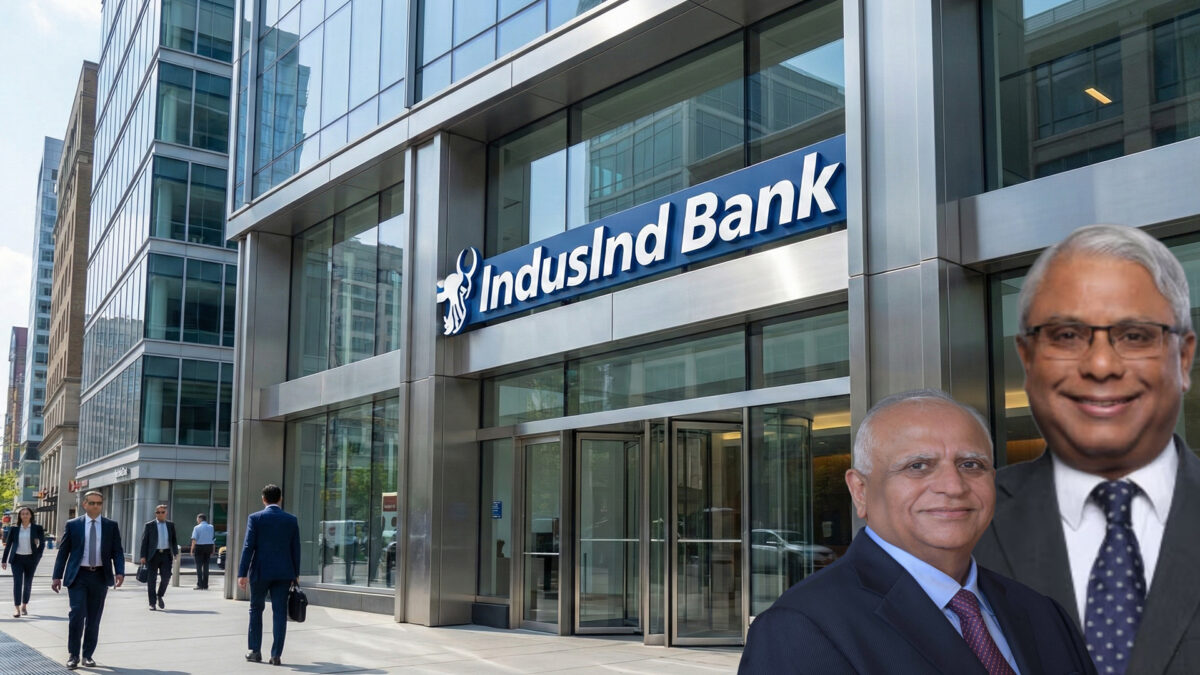
Arijit Basu named part‑time chairman of IndusInd Bank

IndusInd Bank has appointed Arijit Basu, former Managing Director of the State Bank of India (SBI), as its new Part‑Time Chairman and Non‑Executive Independent Director, effective January 31, 2026. His term will run for three years, subject to shareholder approval and regulatory compliance.

Basu succeeds Sunil Mehta, whose term ends on January 30, 2026. Mehta, who has led the board since January 2023, opted not to seek reappointment. The transition has been approved by the bank’s board and the Reserve Bank of India (RBI).

Before joining IndusInd Bank, Basu was Chairman of HDB Financial Services, the non‑banking finance subsidiary of HDFC Bank, a role he resigned from to take up the new position. Basu’s career spans several decades in banking and financial services, including leadership roles as MD of SBI and CEO of SBI Life Insurance Company.

He holds a master’s degree from the University of Delhi and professional banking qualifications, and currently serves on multiple corporate boards and as an advisor to international financial firms. His appointment is expected to strengthen the bank’s governance and strategic oversight.

The move comes at a critical juncture for IndusInd Bank, which has faced financial pressures and regulatory scrutiny following accounting irregularities disclosed in 2025. The lender reported a 91% year‑on‑year decline in net profit, falling to ₹128 crore in the December quarter, due to higher provisions and lower interest income.

Basu’s appointment is seen as a step to restore stakeholder confidence, enhance governance, and guide the bank through restructuring efforts. IndusInd Bank has stated that Basu is fully eligible to hold directorship without regulatory disqualifications.

Industry experts note that his extensive experience across banking, insurance, and corporate governance positions him well to help IndusInd navigate its current challenges while focusing on long-term growth. With Basu at the helm, the bank aims to stabilize operations, improve investor trust, and reinforce its strategic direction in India’s competitive banking sector.

Also Read: IndusInd Bank Q3 net profit drops 91% to ₹128 cr

Categories
Corporate

IndusInd Bank Q3 net profit drops 91% to ₹128 cr

Private sector lender IndusInd Bank reported a significant decline in financial performance for the third quarter of FY26 (ended 31 December 2025), reflecting ongoing headwinds in the banking sector. The bank’s net profit plunged sharply on a year‑on‑year (YoY) basis, while core interest income also weakened amid elevated provisions and cautious balance sheet management.

On a consolidated basis, IndusInd Bank posted a net profit of ₹128 crore in Q3, down nearly 91 per cent compared with ₹1,402 crore in the year‑ago quarter. Standalone profit after tax (PAT) fell 88.5 per cent to ₹161 crore, broadly in line with market estimates.

The bank’s Net Interest Income (NII), a key driver of bank earnings, contracted approximately 13 per cent YoY to around ₹4,562 crore, reflecting slower loan growth and margin pressures. However, NII showed a modest sequential improvement of about 3 per cent over the previous quarter. Net interest margins (NIMs) inched up slightly to 3.52 per cent from 3.32 per cent in Q2 FY26, indicating some stabilization in core lending spreads.

Fee and other non‑interest income also weakened, with total other income falling to ₹1,707 crore from ₹2,355 crore a year earlier, further compressing overall revenue. Pre‑Provision Operating Profit (PPOP) declined around 37 per cent YoY to ₹2,270 crore.

Asset quality remained under watch. Gross non‑performing assets (NPAs) increased to 3.56 per cent of gross advances, up from 2.25 per cent a year ago, while net NPAs rose to 1.04 per cent. The provision coverage ratio remained healthy at around 72 per cent, reflecting coverage against stressed loans.

On the balance sheet, total deposits and advances contracted versus the prior year, evidencing a cautious approach to growth.

Also Read: Zoho launches made‑in‑India ERP

Categories
Corporate

Zoho launches made‑in‑India ERP

Chennai‑based Zoho Corporation has launched its new enterprise resource planning (ERP) software from Kumbakonam in Tamil Nadu, marking a significant push to offer a homegrown alternative to global ERP systems. The launch reinforces Zoho’s focus on building deep‑tech products domestically while expanding technology jobs beyond major cities.

The Zoho ERP platform integrates key business functions including financial management, billing, supply chain, payroll, compliance, and asset tracking into a single system. Unlike conventional ERP solutions that add artificial intelligence (AI) as an afterthought, Zoho’s platform embeds AI across modules, enabling predictive insights, voice‑based assistance, anomaly detection, automation, and continuous intelligence for finance and operations. The system also offers low‑code and no‑code customization, allowing businesses to adapt the platform without heavy reliance on consultants.

The ERP targets industries such as manufacturing, distribution, retail, and non‑profits, with future updates planned to expand sector‑specific functionalities. Zoho emphasizes that the product is developed primarily by its Kumbakonam team, reflecting the company’s commitment to tech sovereignty. Founder Sridhar Vembu highlighted the importance of nations controlling critical technologies, positioning Zoho’s solution as a cost‑effective, flexible alternative to legacy global ERP systems, which are often expensive and slow to deploy.

As part of its growth strategy, Zoho plans to significantly expand its Kumbakonam operations. The regional office, established in 2020, currently employs around 200 professionals. The company intends to build a new campus capable of accommodating up to 2,000 employees by 2026, reinforcing its hub‑and‑spoke model of cultivating tech talent in smaller towns. Zoho will remain privately held, focusing on reinvesting in research and development rather than pursuing an initial public offering.

With this launch, Zoho aims to strengthen India’s presence in the global ERP market while creating high‑skilled technology jobs in rural regions, demonstrating that world‑class software innovation can thrive outside metropolitan hubs.

Also Read: Adani Group fully acquires IANS

Categories
Technology

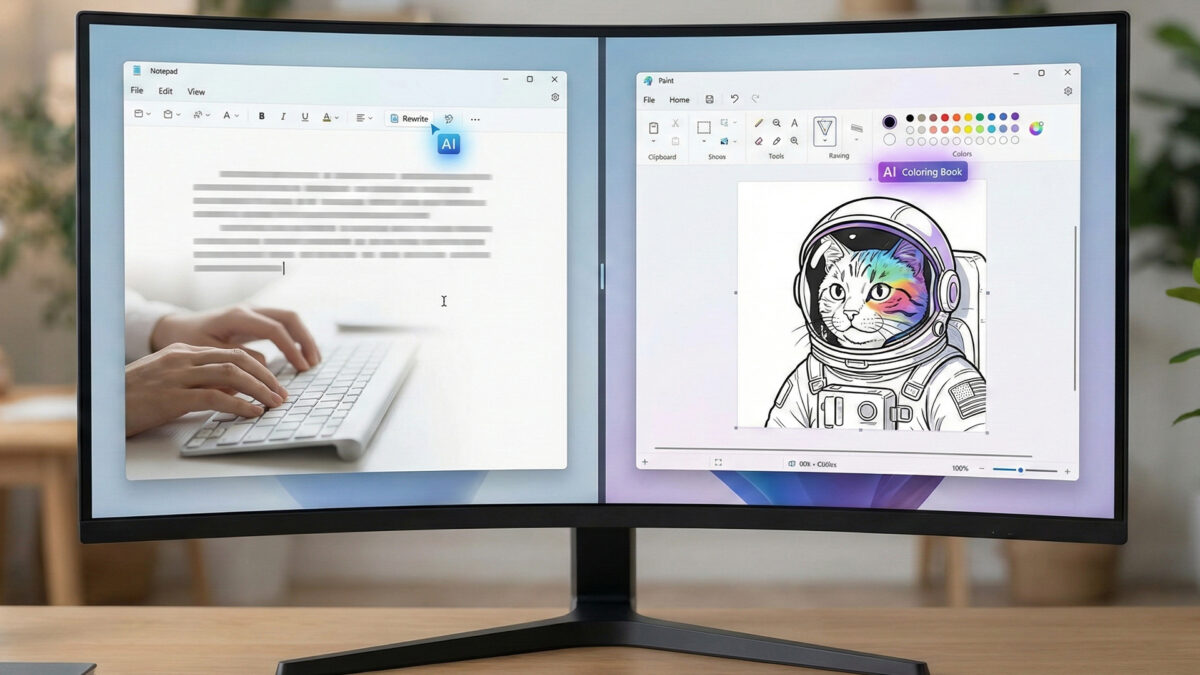
Windows 11 updates paint and notepad with AI

Microsoft adds creative AI tools to Paint and smarter writing features to Notepad for a more modern Windows 11 experience.

Microsoft is refreshing two of its most familiar Windows apps, Paint and Notepad, with new AI-driven features and usability upgrades in Windows 11. The updates are currently being rolled out to users enrolled in the Windows Insider programme, giving them early access before a wider public release.

In Paint, the standout addition is an AI-powered colouring book feature. Users can simply type a description, such as an animal, object or scene, and Paint will generate a clean outline that can be coloured digitally or printed. The tool is aimed at making creativity more accessible, especially for children, casual users and educators. It is available through the Copilot menu and works on Copilot+ PCs with a Microsoft account.

Paint has also become more precise with the introduction of a fill tolerance control. This allows users to decide how much area the Fill tool should cover, making it easier to colour detailed images accurately or experiment with artistic effects.

Notepad, traditionally known for plain text editing, is also seeing meaningful improvements. Microsoft has expanded Markdown support, adding features like strikethrough text and nested lists. These options can be used through shortcuts, a toolbar or Markdown syntax, helping users format content quickly without switching to heavier applications.

In addition, Notepad’s AI writing tools, including Write, Rewrite and Summarise, now respond faster by showing text as it is being generated. Microsoft says these updates reflect its effort to modernise core Windows apps while keeping them simple and lightweight. The features are expected to reach all Windows 11 users in the coming weeks through app updates.

Also Read: Adani Group fully acquires IANS

Categories
Corporate

Sensex falls 770, Nifty drops below 25,100

At the end of trading on Friday, the Sensex fell about 770 points to 81,538, while the Nifty dropped around 241 points to 25,049, sliding below the 25,100 mark. The broader sentiment turned cautious as profit booking intensified and selling pressure emerged across major sectors.

Early in the session, GIFT Nifty futures had hinted at a positive start, supported by gains in Asia and stronger cues from global markets. Asian indices such as Hang Seng and Straits Times were up about 0.5 percent, and U.S. markets had extended gains, lifting sentiment ahead of the Indian open.

However, the positive start did not translate into sustained buying. Market participants booked gains near intra‑day highs, and the indices reversed course, closing lower. The Indian rupee weakened further, ending at a fresh record low of around ₹91.96 against the U.S. dollar, adding to investor caution.

Several individual stock developments featured in the live market action. Nippon India Small Cap Fund increased its stake in Landmark Cars, while Goldman Sachs and Polar Capital trimmed their positions in the company. Sun Pharma received approval to market a generic semaglutide injection in India, a development that could impact the pharmaceutical segment.

On the earnings front, DLF reported a 13.6% rise in consolidated net profit for Q3 FY26, and multiple other companies,  including Shriram Finance, Cipla, JSW Steel, and IndusInd Bank,  were set to announce quarterly results.

Also Read: Sensex sees volatile moves, Nifty stays close to 25,300

Categories
Beyond

US natural gas trading hits all-time high

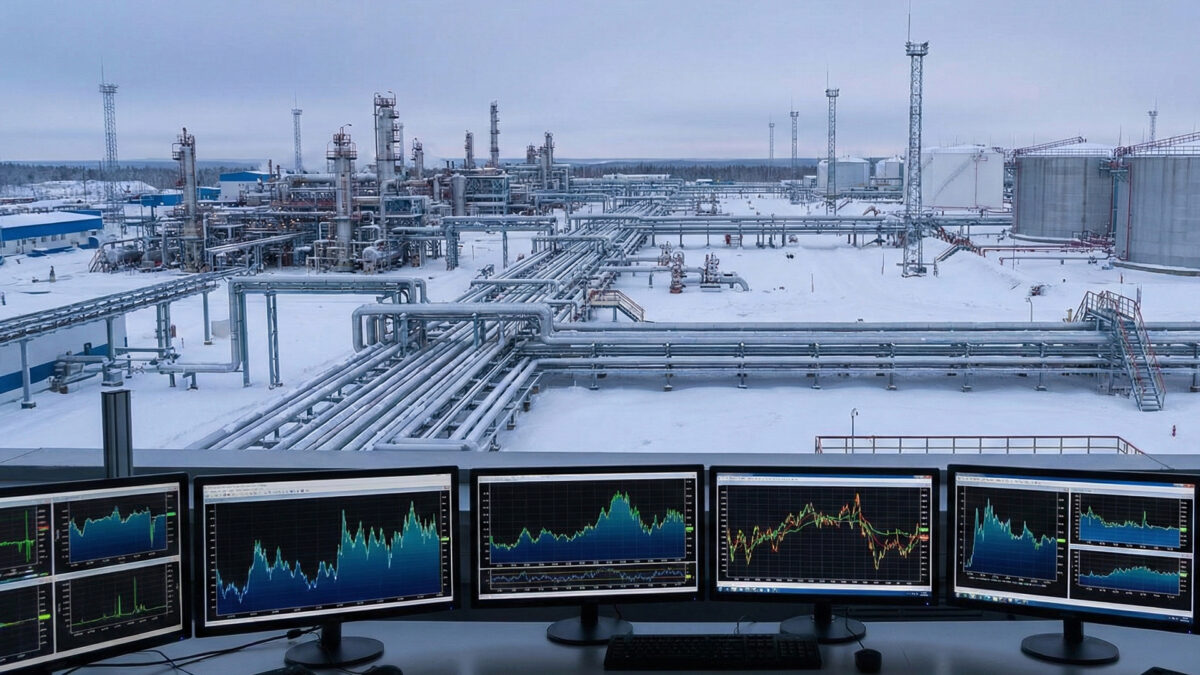
US natural gas markets grabbed global attention after trading activity hit a historic high at the CME Group. On a single day, more than 2.57 million natural gas contracts were traded, setting a new record and crossing the previous peak seen in 2018. This surge shows how sharply investor interest has risen as weather and supply concerns shake energy markets.

The main reason behind this jump is severe winter weather across large parts of the United States. Extremely low temperatures have increased the demand for natural gas, which is widely used for heating homes, offices, and industries. As people consume more gas to stay warm, prices tend to rise, and traders rush in to manage risks or take advantage of price movements.

Cold weather has also affected supply. In some oil- and gas-producing regions, freezing conditions disrupted production, reducing the amount of gas available in the market. This imbalance between rising demand and tight supply has made prices more volatile, prompting heavy trading in futures and options.

Natural gas prices climbed sharply over two consecutive days, posting gains of over 20 percent at one point. Many traders who had earlier bet on prices falling were forced to buy back contracts to limit losses, adding further momentum to the rally. As a result, short-term price swings became larger than usual.

Data from energy trackers showed that gas output in the Lower 48 US states dipped in January, while overall demand, including exports, rose strongly. The US remains a major exporter of liquefied natural gas (LNG), and global buyers continue to rely on American supplies, adding pressure to the market.

The impact was not limited to the US Gas prices in Europe also moved higher, as low storage levels and ongoing geopolitical tensions kept energy markets nervous. Any disruption or rise in US prices often influences global gas rates.

For investors, experts say caution is important. While high volatility can offer trading opportunities, it also increases risk. Keeping an eye on weather forecasts, storage data, and production trends will be key to understanding where prices may head next in the short term.

Also Read: Trump sues JPMorgan for $5bn over account closure