
Netflix is deepening its India strategy as the streaming giant marks 10 years in the country, betting on local storytelling, new talent and India’s growing influence on global entertainment.
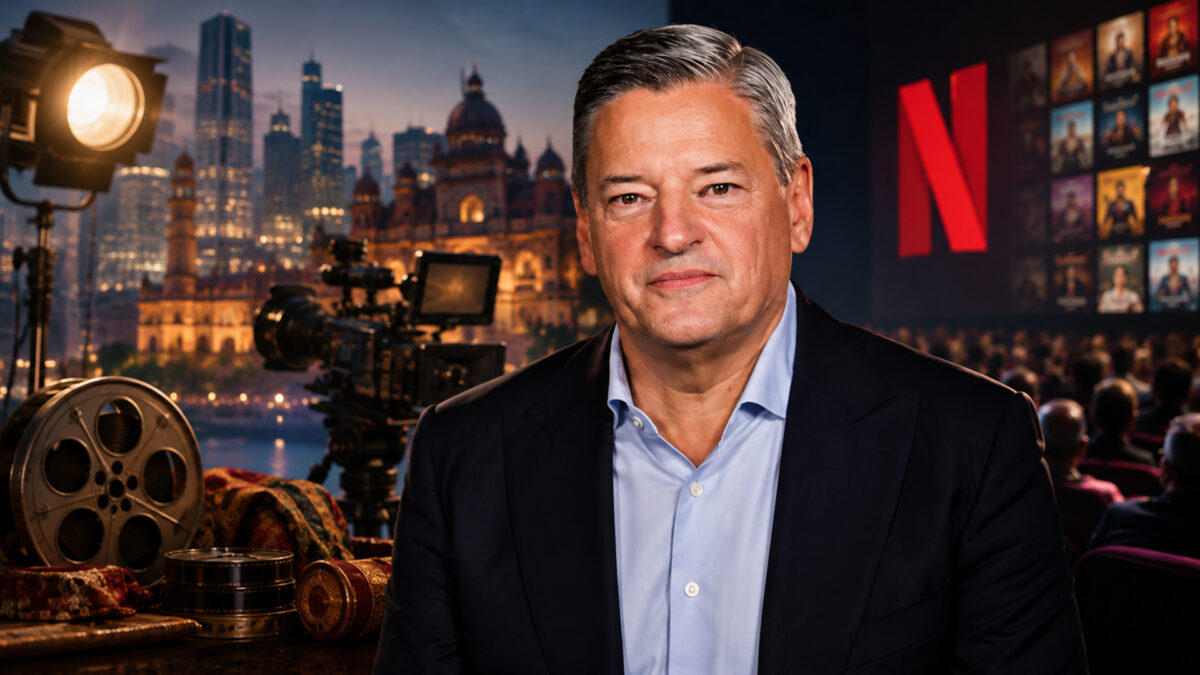
Netflix co-CEO Ted Sarandos, who recently met Prime Minister Narendra Modi, said India has a strong storytelling culture but remains “under-screened”, suggesting there is significant room for the country’s stories to reach larger audiences. He said Netflix believes it can help bridge that gap by taking more Indian stories to viewers in India and around the world.
Sarandos’ comments come as Netflix celebrates a decade of operations in India. The company has used the milestone to announce new initiatives focused on storytelling, talent development, tourism and cultural promotion, signalling that its India strategy is moving beyond simply acquiring and producing content.
One of the key developments is the Netflix India Storytelling Initiative, which aims to support the next generation of Indian storytellers. Netflix said the programme will help strengthen India’s creative ecosystem and expand opportunities for emerging talent. The company is also working with the National Film Development Corporation (NFDC) to build a stronger talent pipeline in the second phase of the initiative.
The focus on talent reflects the growing importance of India to Netflix’s global content strategy. Indian films and series are increasingly reaching audiences outside the country, while stories in regional languages are gaining visibility on international streaming platforms.
For Netflix, this provides an opportunity to combine India’s large domestic entertainment market with its ability to export local stories globally. Sarandos has previously described India as strategically important to Netflix despite the market’s relatively low average revenue per user compared with developed markets. The company’s approach has increasingly focused on local content, pricing and product strategies suited to Indian viewers.
Netflix entered India in 2016, at a time when the country’s streaming market was still developing. Since then, the platform has invested in Indian original series, films, documentaries and stand-up specials, while also acquiring rights to locally produced content.
The company’s Indian slate has included titles such as Sacred Games, Delhi Crime, The Railway Men, Heeramandi: The Diamond Bazaar and several regional-language productions. The strategy has helped establish Netflix as an important player in India’s increasingly competitive over-the-top, or OTT, market.
Sarandos’ latest remarks suggest the company sees considerable untapped potential. His description of India as “under-screened” points to a gap between the country’s storytelling capacity and the number of stories that reach audiences through cinema, television and streaming.
That opportunity is particularly relevant as India’s entertainment industry expands beyond traditional Bollywood and Hindi-language content. Regional film industries in Tamil, Telugu, Malayalam, Kannada, Bengali and other languages have built strong domestic audiences and increasingly attract international viewers.
Netflix’s global distribution network gives such stories a potential route to audiences beyond their original markets.
The company is also looking to strengthen the connection between entertainment and tourism. Netflix and India’s Ministry of Tourism and Ministry of Culture have launched the “As Seen on Netflix” section on the Incredible India website. The initiative highlights filming locations, cultural traditions, heritage sites, landscapes and experiences featured in Netflix productions.
The partnership is designed to encourage screen tourism, where viewers visit destinations after seeing them in films and television series. For India, the initiative creates another way of using the country’s entertainment industry to promote tourism and cultural heritage.
The economic impact of Netflix’s production activity is also becoming more visible. Sarandos said the company’s upcoming production Operation Safed Sagar contributed more than Rs 215 crore to the Indian economy, making it Netflix’s biggest and most ambitious Indian production so far.
Such investments can benefit a wider ecosystem that includes actors, writers, directors, technicians, production companies, location services and other businesses supporting film and television production.
Netflix’s India strategy is therefore increasingly tied to the broader growth of the country’s creative economy. Instead of treating India only as a market for subscriptions, the company is positioning the country as a source of stories, talent and production capabilities for its global platform.
The competitive environment, however, remains intense. Netflix operates alongside platforms such as Amazon Prime Video, JioHotstar, SonyLIV and Zee5, while India’s traditional television and film industries continue to command large audiences.
The company therefore needs to balance premium international programming with Indian content that can generate strong engagement among local viewers.
Pricing is another important factor. India’s streaming market is highly price-sensitive, and Netflix has had to adapt its plans and product strategy to the country. The platform currently offers several subscription tiers in India, with plans starting at Rs 149 per month.
The next phase of Netflix’s India journey is consequently likely to focus on both scale and quality. More local productions can strengthen the platform’s appeal, while global distribution can give Indian creators a larger audience than traditional domestic channels.
For India‘s entertainment industry, the opportunity is equally significant. Greater investment in training, production and international distribution could create more opportunities for emerging filmmakers and storytellers.
The streaming giant’s latest initiatives indicate that it intends to play a larger role in closing that gap, by investing in Indian talent, producing ambitious local stories, promoting filming destinations and taking more Indian content to audiences worldwide.