Categories
Leaders

Netflix CEO deepens India content push

Netflix is deepening its India strategy as the streaming giant marks 10 years in the country, betting on local storytelling, new talent and India’s growing influence on global entertainment.

Netflix co-CEO Ted Sarandos, who recently met Prime Minister Narendra Modi, said India has a strong storytelling culture but remains “under-screened”, suggesting there is significant room for the country’s stories to reach larger audiences. He said Netflix believes it can help bridge that gap by taking more Indian stories to viewers in India and around the world.

Sarandos’ comments come as Netflix celebrates a decade of operations in India. The company has used the milestone to announce new initiatives focused on storytelling, talent development, tourism and cultural promotion, signalling that its India strategy is moving beyond simply acquiring and producing content.

One of the key developments is the Netflix India Storytelling Initiative, which aims to support the next generation of Indian storytellers. Netflix said the programme will help strengthen India’s creative ecosystem and expand opportunities for emerging talent. The company is also working with the National Film Development Corporation (NFDC) to build a stronger talent pipeline in the second phase of the initiative.

The focus on talent reflects the growing importance of India to Netflix’s global content strategy. Indian films and series are increasingly reaching audiences outside the country, while stories in regional languages are gaining visibility on international streaming platforms.

For Netflix, this provides an opportunity to combine India’s large domestic entertainment market with its ability to export local stories globally. Sarandos has previously described India as strategically important to Netflix despite the market’s relatively low average revenue per user compared with developed markets. The company’s approach has increasingly focused on local content, pricing and product strategies suited to Indian viewers.

Netflix entered India in 2016, at a time when the country’s streaming market was still developing. Since then, the platform has invested in Indian original series, films, documentaries and stand-up specials, while also acquiring rights to locally produced content.

The company’s Indian slate has included titles such as Sacred Games, Delhi Crime, The Railway Men, Heeramandi: The Diamond Bazaar and several regional-language productions. The strategy has helped establish Netflix as an important player in India’s increasingly competitive over-the-top, or OTT, market.

Sarandos’ latest remarks suggest the company sees considerable untapped potential. His description of India as “under-screened” points to a gap between the country’s storytelling capacity and the number of stories that reach audiences through cinema, television and streaming.

That opportunity is particularly relevant as India’s entertainment industry expands beyond traditional Bollywood and Hindi-language content. Regional film industries in Tamil, Telugu, Malayalam, Kannada, Bengali and other languages have built strong domestic audiences and increasingly attract international viewers.

Netflix’s global distribution network gives such stories a potential route to audiences beyond their original markets.

The company is also looking to strengthen the connection between entertainment and tourism. Netflix and India’s Ministry of Tourism and Ministry of Culture have launched the “As Seen on Netflix” section on the Incredible India website. The initiative highlights filming locations, cultural traditions, heritage sites, landscapes and experiences featured in Netflix productions.

The partnership is designed to encourage screen tourism, where viewers visit destinations after seeing them in films and television series. For India, the initiative creates another way of using the country’s entertainment industry to promote tourism and cultural heritage.

The economic impact of Netflix’s production activity is also becoming more visible. Sarandos said the company’s upcoming production Operation Safed Sagar contributed more than Rs 215 crore to the Indian economy, making it Netflix’s biggest and most ambitious Indian production so far.

Such investments can benefit a wider ecosystem that includes actors, writers, directors, technicians, production companies, location services and other businesses supporting film and television production.

Netflix’s India strategy is therefore increasingly tied to the broader growth of the country’s creative economy. Instead of treating India only as a market for subscriptions, the company is positioning the country as a source of stories, talent and production capabilities for its global platform.

The competitive environment, however, remains intense. Netflix operates alongside platforms such as Amazon Prime Video, JioHotstar, SonyLIV and Zee5, while India’s traditional television and film industries continue to command large audiences.

The company therefore needs to balance premium international programming with Indian content that can generate strong engagement among local viewers.

Pricing is another important factor. India’s streaming market is highly price-sensitive, and Netflix has had to adapt its plans and product strategy to the country. The platform currently offers several subscription tiers in India, with plans starting at Rs 149 per month.

The next phase of Netflix’s India journey is consequently likely to focus on both scale and quality. More local productions can strengthen the platform’s appeal, while global distribution can give Indian creators a larger audience than traditional domestic channels.

For India‘s entertainment industry, the opportunity is equally significant. Greater investment in training, production and international distribution could create more opportunities for emerging filmmakers and storytellers.

The streaming giant’s latest initiatives indicate that it intends to play a larger role in closing that gap, by investing in Indian talent, producing ambitious local stories, promoting filming destinations and taking more Indian content to audiences worldwide.

Categories
Technology

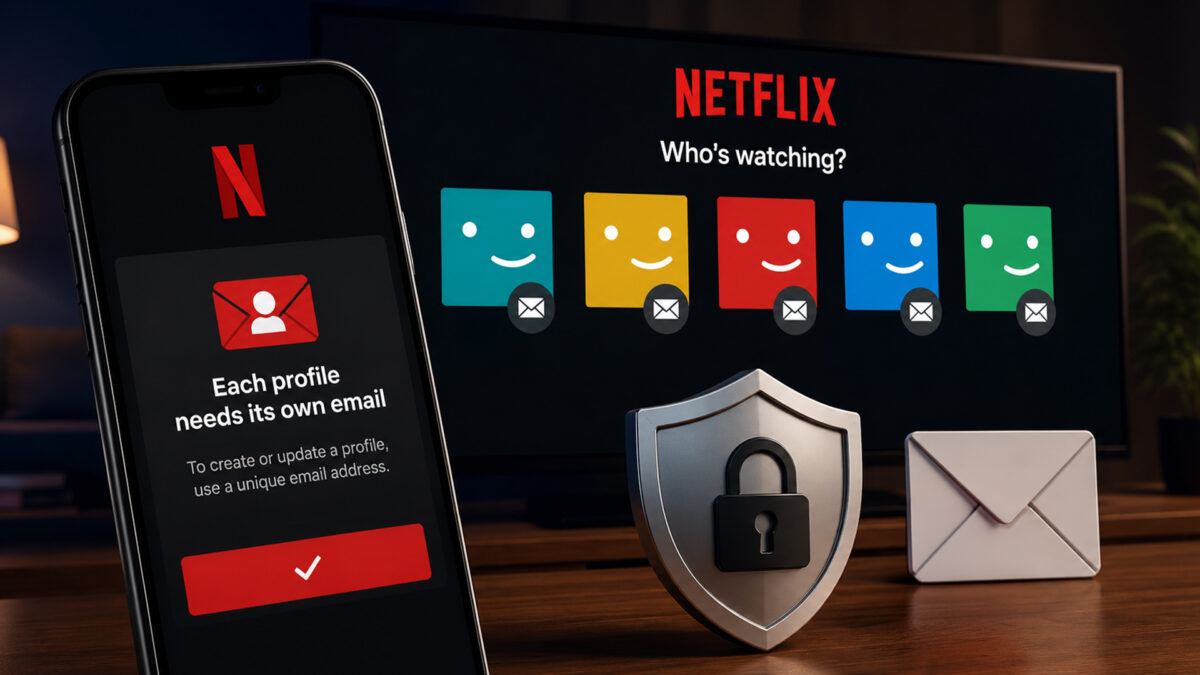
Netflix mandates unique emails for profiles

Netflix is introducing a new requirement that asks users sharing an account to link each profile with a unique email address, marking another step in the streaming giant’s effort to strengthen account security and personalise user access.

The feature is being rolled out gradually and is expected to affect users with multiple profiles under a single subscription. Until now, several profiles could exist without being tied to individual email addresses. Under the updated system, Netflix will prompt users to assign a separate email ID to each profile.

The company says the change is meant to make profile management easier while giving every user greater control over viewing history, recommendations and account settings. It will also simplify the process of transferring a profile to a new account if someone decides to move away from a shared subscription.

For families and households that legitimately share a Netflix account, the update is not expected to change the way they watch content. Instead, each profile holder will simply need to provide a unique email address when prompted. Users who ignore the request may eventually face restrictions in accessing or managing their individual profiles.

The latest move builds on Netflix’s broader strategy to curb password sharing outside a household. Over the past few years, the company has introduced paid sharing options in several countries and tightened verification measures to ensure subscriptions are used according to its policies.

For subscribers, the update means a slightly different login experience rather than a major change in service. Existing viewing preferences, watchlists and recommendations will remain linked to each profile after an email address is added.

As competition in the streaming market continues to grow, Netflix appears focused on balancing user convenience with stronger account protection. The latest update reflects the company’s ongoing effort to make shared subscriptions more secure while giving individual users greater ownership of their personal viewing experience.

Also Read: Gold nears ₹1.44 lakh, Silver hits ₹2.40 lakh

Categories
Leaders

Reed Hastings to step down from Netflix

Reed Hastings, the co-founder and long-time leader of Netflix, has announced that he will step down from his role as chairman of the company after nearly 29 years, marking the end of an era for the streaming giant.

Hastings confirmed that he will not stand for re-election at Netflix’s upcoming annual meeting in June 2026. He said he plans to focus on philanthropy and personal projects, bringing a gradual and carefully planned exit from the company he helped build from a DVD rental startup into a global entertainment powerhouse.

The announcement came shortly after Netflix’s recent corporate setback in its bid for Warner Bros. Discovery assets, a deal that ultimately went to rival Paramount Skydance. While the failed acquisition had been closely watched by the industry, Netflix executives have suggested Hastings’ decision was independent and part of a long-prepared leadership transition.

Investor reaction was swift, with Netflix shares slipping after the news broke, reflecting concerns over the departure of one of the company’s most influential figures. However, the company continues to show strong financial performance, with steady revenue growth and expanding global subscriber engagement.

Hastings co-founded Netflix in 1997 and played a central role in its transformation from a DVD-by-mail service into a dominant streaming platform that reshaped global entertainment. Under his leadership, Netflix pioneered binge-watching, invested heavily in original content, and expanded into nearly every major international market.

Over the years, he gradually reduced his operational responsibilities, stepping down as co-CEO in 2023 and later moving into the chairman role, while day-to-day leadership shifted to Ted Sarandos and Greg Peters.

His exit now places full responsibility on the current leadership team as Netflix navigates intensifying competition in streaming, advertising growth, and expansion into new formats like live content and gaming.

Also Read: Vedanta not declared highest bidder for JAL

Categories
Technology

Netflix buys Ben Affleck’s AI startup

Netflix has acquired InterPositive, an artificial intelligence startup founded by Hollywood actor and filmmaker Ben Affleck, as the streaming giant looks to expand the use of advanced technology in film and television production.

The company confirmed that the team behind InterPositive will now work with Netflix to develop AI tools aimed at helping filmmakers during different stages of production. Financial details of the deal have not been made public.

InterPositive was launched in 2022 by Affleck with the goal of creating AI systems that assist filmmakers in solving common technical challenges. The startup focuses on tools that can help fix missing shots, adjust lighting or backgrounds, and improve visual continuity in scenes while keeping the director’s creative vision intact.

Following the acquisition, Affleck will join Netflix as a senior adviser. In this role, he will work with the company to explore how artificial intelligence can be used responsibly in filmmaking without replacing human creativity.

Netflix said the technology developed by InterPositive is designed to support artists rather than take control away from them. The company believes AI can help filmmakers save time on technical work, allowing them to focus more on storytelling and creative decisions.

Affleck said the idea behind InterPositive came from his years of experience in the film industry. He noticed that while artificial intelligence was advancing quickly, many of the tools were not designed with filmmakers’ real needs in mind. His goal was to build technology that understands how movies are made and helps improve the process without changing the artistic intent.

The deal comes at a time when the entertainment industry is debating the role of artificial intelligence in film and television. Many actors, writers and filmmakers have expressed concerns about AI replacing jobs or using creative material without proper credit.

Also Read: Rupee gains 55 paise to close at 91.6 per dollar

Categories
Corporate

Paramount enters Warner Bros. deal race against Netflix

Warner Bros. Discovery has agreed to evaluate a fresh takeover proposal from Paramount, intensifying its ongoing deal process with Netflix and setting up a major contest in the global entertainment sector.

Warner had earlier moved ahead with a deal involving Netflix, but the new and improved offer from Paramount has forced the company to reconsider its options. The board will now examine whether the revised proposal delivers greater value to shareholders.

Paramount’s bid is seen as an attempt to take control of the entire company, while the Netflix agreement is focused mainly on Warner’s studio and streaming assets, including HBO. By making a stronger financial offer and adjusting its terms, Paramount is trying to position itself as the more attractive partner.

The development is significant for the media and streaming industry because Warner owns some of the world’s most valuable film, television and digital content businesses. Any change in ownership could alter the balance of power among major entertainment companies.

If the Netflix deal goes through, it would strengthen the streaming giant by adding a massive content library and well-known franchises to its platform. On the other hand, a merger between Paramount and Warner would create a much larger traditional media and streaming player capable of competing more aggressively on a global scale.

The possible transactions are also likely to face close scrutiny from regulators concerned about competition and market concentration. Industry groups and creative communities are watching the situation carefully due to fears of job cuts and structural changes in content production.

For now, Warner has not taken a final decision and will review Paramount’s improved bid before moving ahead.

Also Read: Nvidia plans AI laptop chips launch in 2026

Categories
Corporate

Netflix to buy Warner Bros Discovery for $72 billion

Netflix has agreed to buy Warner Bros Discovery’s film and TV studios, along with its streaming business, including HBO Max. The deal values the company at $72 billion in equity, or roughly $82.7 billion including debt, making it one of the largest acquisitions in the entertainment industry.

Under the agreement, Warner Bros Discovery shareholders will receive $23.25 in cash and $4.50 in Netflix stock per share, totaling $27.75 per share. The acquisition will finalize only after Warner Bros spins off its traditional cable and TV channels, expected by mid-2026, and after receiving regulatory and shareholder approvals.

The deal gives Netflix access to one of Hollywood’s richest content libraries, including blockbuster franchises such as Harry Potter, DC Comics, and Game of Thrones, along with Warner Bros’ film and TV studio infrastructure. This move positions Netflix not just as a streaming service, but also as a full-scale content creator, expanding its influence in the global entertainment market.

Industry experts say the merger could reshape how audiences watch movies and TV shows worldwide, though it may attract regulatory scrutiny due to potential market concentration. Questions remain over whether Netflix will merge HBO Max into its platform or keep it separate, and how the consolidation may affect competition and content diversity in the industry.

Also Read: Global outage hits internet as Cloudflare goes down