Categories
Corporate

Reliance may return to Venezuelan oil market

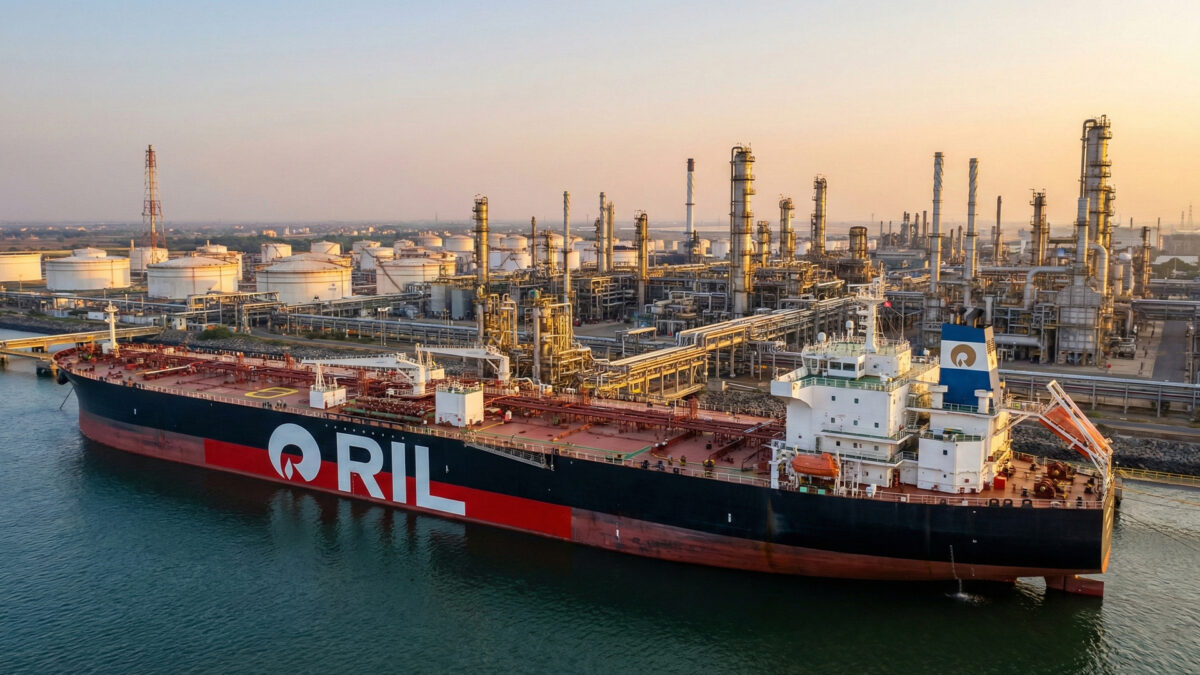
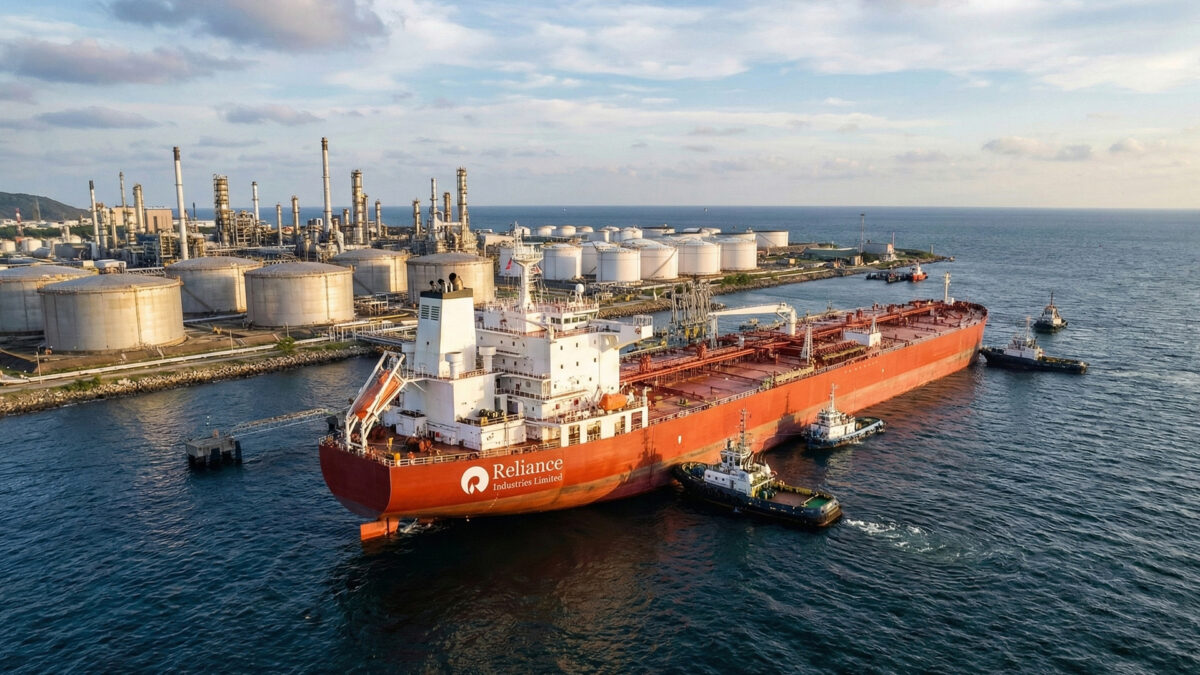
Reliance Industries Ltd (RIL), India’s largest private company and operator of the world’s biggest oil refinery complex, has indicated it may consider buying crude oil from Venezuela, if international regulations allow. The company is waiting for clear guidance on whether non‑US buyers can legally purchase Venezuelan crude before taking any steps.

RIL had previously stopped buying Venezuelan oil in 2025 after the United States imposed a 25 per cent tariff on imports from the South American country. The last shipment of Venezuelan crude to Reliance arrived in May 2025. Now, with the possibility of the rules changing, the company is evaluating whether it can re-enter this market.

The Gujarat refineries operated by Reliance are well-suited to process heavy, lower-cost grades of crude like Venezuela’s Merey oil. This makes Venezuelan crude particularly attractive, as it could provide both cost savings and operational advantages for the company.

The announcement has drawn attention from investors, with RIL shares expected to remain in focus as markets watch the company’s next moves. Analysts suggest that a return to Venezuelan oil could help Reliance manage refinery costs, while also tapping into a potential supply of discounted crude in a global market that is often volatile.

Other Indian refiners, such as Indian Oil Corporation (IOC) and Hindustan Petroleum Corporation Ltd (HPCL), are also likely to evaluate Venezuelan crude should sales to non-US buyers be allowed. The broader energy sector sees this as a potential opportunity for Indian refiners to access competitively priced heavy crude, which could ease supply pressures and reduce import costs.

For Reliance, this move is not just about expanding crude sources—it is also a strategic play to maximize refinery efficiency and maintain competitive advantage. As international trade regulations evolve, the company is treading carefully, balancing opportunities with compliance, while the market closely monitors developments.

With global oil markets fluctuating and international policies in flux, RIL’s cautious approach reflects both ambition and prudence, highlighting the company’s focus on strategic sourcing in a complex global landscape.

Also Read: Gold slips to ₹1,37,990, Silver fall to ₹2,51,900

Categories
Corporate

Reliance shares slide over 4%

Reliance Industries Ltd (RIL) shares fell sharply, losing over 4 per cent in a single session, as investors reacted to concerns around the company’s crude oil sourcing strategy and rising uncertainty in the retail sector. The stock ended near ₹1,507, marking its steepest one-day decline in several months and wiping out close to ₹1 lakh crore from the company’s market capitalisation.

The immediate trigger for the sell-off was Reliance’s confirmation that it has not received Russian crude oil at its Jamnagar refinery for nearly three weeks and does not expect any deliveries in January. Russian oil had become an important source for Indian refiners over the past two years due to discounted prices. The halt has raised questions about future refining margins and supply stability, especially amid tighter Western sanctions and geopolitical pressures.

Market sentiment was further dented by concerns emerging from the retail sector. Weak updates from listed retail players have sparked fears of slowing consumer demand and margin pressure. Investors worry that similar challenges could impact Reliance Retail, which is a key growth engine for the conglomerate and a major driver of its valuation.

Analysts also pointed out that the sharp fall may partly reflect profit-booking. Reliance shares had risen strongly over the past year, outperforming the benchmark indices. With valuations at elevated levels, any negative trigger was likely to prompt investors to lock in gains.

The decline in Reliance shares weighed heavily on the broader market, dragging both the Sensex and Nifty lower due to the stock’s significant index weight. Market participants noted that sentiment turned cautious as uncertainty around global trade, crude prices and domestic consumption trends increased.

Looking ahead, analysts remain divided on the near-term outlook. While some expect continued volatility due to oil sourcing risks, retail sector pressure and global macro concerns, others believe Reliance’s long-term fundamentals remain intact. Potential triggers such as a future listing of Jio Platforms, tariff hikes in telecom services and stable refining margins could support the stock over time.

Also Read: Gold rises ₹1,38,830, Silver up by ₹2,53,100

Categories
Corporate

Reliance rejects $30bn government claim over KG-D6 gas

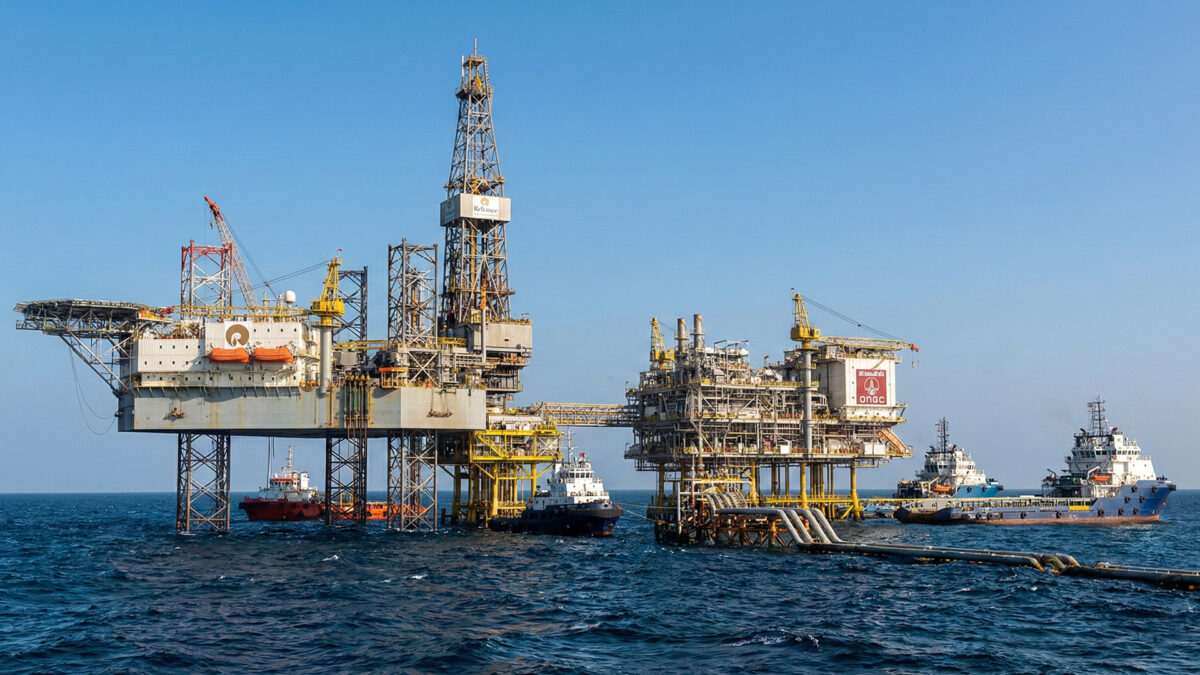
Reliance Industries Limited (RIL) has rejected recent media reports claiming that the Government of India is seeking $30 billion in compensation from it and partner BP over underproduction from the KG‑D6 deepwater gas field in the Krishna Godavari basin. RIL described these reports as “factually incorrect, inappropriate, and irresponsible” in a statement to stock exchanges.

The company clarified that no $30 billion claim exists against it or BP. The actual claim relates to about $247 million, a figure that has been fully disclosed in audited financial statements, consistent with disclosure requirements.

The dispute traces back over a decade and concerns costs the government allegedly disallowed for recovery during development and production of the KG‑D6 block’s D1 and D3 gas fields. Under the production sharing contract, companies can recover specific costs before profit sharing with the government. Media reports had suggested that lower gas output due to operational choices, including fewer wells, prompted the government to demand large compensation.

RIL and BP maintain they complied with all contractual and legal obligations, and geological factors limited field output. They stressed that the matter is sub judice, meaning it is under active judicial review, and any resolution will follow India’s legal process, including potential appeals up to the Supreme Court.

The company criticised reports relying on unnamed sources and misrepresenting facts. RIL reiterated its confidence in transparency and compliance with legal and contractual standards, asserting that the exaggerated claim misleads the public and investors.

Also Read: RBI flags rising bank competition

Categories
Corporate

Reliance tops India’s wealth creation in 2025

Reliance Industries Ltd (RIL) emerged as India’s largest wealth creator in 2025, leading corporate value gains amid a strong year for equities driven by banking, financial services and automobile stocks. The Mukesh Ambani-led conglomerate delivered the highest addition to investor wealth, reinforcing its dominant position in India’s corporate landscape.

RIL’s shares rose close to 30 per cent during the year, adding about ₹4.6 lakh crore to investor wealth. This pushed the combined market capitalisation of the Reliance Group to around ₹23.44 lakh crore, making it the single biggest contributor to wealth creation among Indian companies. Analysts attributed the strong performance to steady earnings growth, improving margins and positive expectations around the group’s digital, retail and new energy businesses.

The broader wealth creation story in 2025 was shaped by strong performances in autos, banks and financial services. Companies such as Bharti Airtel, Bajaj Finance, State Bank of India (SBI), Maruti Suzuki and HDFC Bank each added more than ₹1.5 lakh crore to their market value. These stocks benefited from healthy demand, stable asset quality, improving profitability and sustained investor confidence in India’s economic growth.

Overall, the top seven business groups — Reliance, Bharti, HDFC, Bajaj, Adani, ICICI and Tata — together added nearly ₹10 lakh crore in market capitalisation during the year. Their combined value now stands at about ₹122 lakh crore, accounting for nearly 60 per cent of the total market capitalisation of the Nifty 50 index. Reliance alone contributed almost half of this wealth creation, followed by the Bharti Group.

In contrast, the Tata Group emerged as an outlier in 2025, lagging behind its peers. Its flagship company, Tata Consultancy Services (TCS), saw its market capitalisation fall by nearly ₹3 lakh crore. Investor concerns over slower revenue growth, margin pressures and delayed benefits from emerging technologies such as artificial intelligence and cloud services weighed on the stock. Several other Tata companies, including Tata Elxsi, Trent, Voltas and Tata Technologies, also faced sharp corrections.

Market experts expect wealth creation trends to remain selective, with investors continuing to favour companies and sectors that demonstrate strong earnings visibility, balance sheet strength and long-term growth potential. Reliance, banks and auto majors are seen as well positioned to benefit from these themes in the coming years.

Also Read:  BP close to $10 bn sale of Castrol stake

Categories
Corporate

Reliance halts Russian oil for Jamnagar export refinery

Reliance Industries Ltd (RIL) has stopped importing Russian crude oil into its special export-oriented refinery in Jamnagar, Gujarat, from November 20, 2025. The move is aimed at ensuring full compliance with European Union sanctions, which will prohibit the import of fuels made from Russian crude starting January 21, 2026.

According to Reliance, all products exported from the Jamnagar SEZ refinery will be made entirely from non-Russian oil from December 1. Existing shipments booked before October 22, 2025, will continue as planned. The last Russian crude shipment for the SEZ refinery was loaded on November 12, 2025.

Any Russian crude arriving after November 20 will be routed to Reliance’s domestic-market refinery, rather than the export-oriented unit. The company said this shift, or “recalibration” of Russian oil imports, has been completed ahead of schedule.

This decision also reflects compliance with US sanctions, which required companies to wind down trade with major Russian oil producers, including Rosneft and Lukoil, by November 21, 2025.

Reliance’s Jamnagar refinery complex is one of the largest single-location refineries in the world, with a capacity of 1.24 million barrels per day. The export-focused SEZ refinery plays a key role in supplying fuel and petrochemical products to global markets.

By halting Russian crude at its SEZ unit, Reliance not only aligns with international regulations but also ensures uninterrupted exports and strengthens its global supply chain. Analysts note this move may also help the company avoid potential penalties and maintain its credibility with European and US buyers.

Also Read: Reliance up 2% on O2C rebound, new-energy push

Categories
Leaders

Ira Bindra of Reliance among top global CHROs

Ira Bindra, Head of Human Resources at Reliance Industries, has been recognized as one of the world’s top HR leaders. She is ranked 28th on N2Growth’s 2025 Leaders40 CHRO list, which celebrates the most influential Chief Human Resources Officers globally.

Reliance is the only Indian company featured this year, making Bindra the first woman from India to achieve this distinction. In her role, she leads the HR strategy for around 360,000 employees across diverse sectors, including energy, telecom, retail, media, and green technologies. Her work focuses on shaping company culture, enhancing talent development, and driving organizational growth.

Before joining Reliance, Bindra held senior HR roles at Medtronic and spent 19 years at General Electric, gaining extensive experience in global talent and business management. She holds an MBA from Maastricht School of Management in the Netherlands and a History degree from Lady Shri Ram College, Delhi University.

The Leaders40 list by N2Growth is a prestigious global recognition that highlights HR leaders who act as strategic partners to CEOs and boards, influencing company performance, culture, and growth. According to Tony Morales, Co-Chairman of N2Growth, today’s top CHROs play a critical role in shaping organizational strategy while fostering a positive workplace environment.

Also Read: Reliance announces 1-GW AI data centre in Andhra

Categories
Corporate

Reliance announces 1-GW AI data centre in Andhra

Reliance Industries Ltd (RIL) has signed an MoU with the Andhra Pradesh government to build a 1-gigawatt AI data centre in Visakhapatnam. The agreement was finalised during the CII Partnership Summit 2025, attended by Chief Minister N. Chandrababu Naidu and senior Reliance leaders.

The upcoming facility will be a modular, high-performance data centre designed to handle next-generation AI workloads. It will support advanced processors such as GPUs, TPUs and specialised AI chips. The company said this centre will act as a “twin” to its gigawatt-scale AI hub in Jamnagar, Gujarat, creating a strong national network for AI computing.

To ensure sustainable power supply, Reliance will also set up a 6 GWp solar power plant in Andhra Pradesh. This will help meet the heavy energy needs of the AI facility while supporting the state’s push for renewable energy.

In addition to the data centre, RIL plans to develop a fully automated greenfield food park in Kurnool, spread across 170 acres. The park will manufacture beverages, packaged water, snacks and various food products. The project is expected to generate thousands of jobs and boost local supply chains.

Reliance said the new investments reflect its commitment to supporting Andhra Pradesh’s economic growth. The company has already invested over $25 billion in the state across its energy, retail and digital businesses.

Chief Minister Naidu welcomed the announcement, saying the projects will help position Andhra Pradesh as a hub for AI innovation, renewable energy and advanced manufacturing.

Also Read: Google to invest $40 billion in Texas

Categories
Corporate

Sensex Falls 150 pts, Nifty Below 25,750, Hitachi Up, Reliance Down

The Indian equity market closed largely unchanged on Monday as investors paused after the Sensex and Nifty capped their strongest monthly rally in seven months. Mild profit-booking following October’s surge was countered by selective buying in stocks buoyed by robust earnings, helping indices hold steady.

The S&P BSE Sensex inched up 39.78 points, or 0.05%, to close at 83,978.49, while the NSE Nifty 50 gained 41.25 points, or 0.16%, to end at 25,763.35.

Across global markets, cues were mixed. S&P 500 futures slipped 0.4% as of midday Tokyo time, while Japan’s Topix advanced 0.4%. Australia’s S&P/ASX 200 declined 0.9%, Hong Kong’s Hang Seng rose 0.2%, and the Shanghai Composite edged down 0.1%. Euro Stoxx 50 futures were also marginally lower at 0.2%.

At the domestic market opening, top gainers included 3AM India, Hitachi Energy, TBO Tech, City Union Bank, and RR Kabel. On the downside, Reliance Power, Affle (India), Power Grid Corporation, Hero MotoCorp, and Gland Pharma were among the top losers.

Also Read: Sensex, Nifty Hold Steady, Realty, PSU Banks Lead

Categories
Corporate

ED Seizes ₹3,000 Crore Reliance Group Assets

The Enforcement Directorate (ED) has attached assets worth over ₹3,000 crore belonging to the Anil Ambani-led Reliance Group, escalating its investigation into alleged money-laundering and diversion of bank funds.

The action covers more than 40 properties across Mumbai, Delhi, Noida, Pune, Hyderabad, Chennai, and Thane. The list includes commercial assets, land parcels, and Ambani’s Pali Hill residence in Mumbai.

According to the agency, the attachment follows a probe into Reliance Home Finance Ltd (RHFL) and Reliance Commercial Finance Ltd (RCFL). Both firms reportedly received loans of over ₹5,000 crore from Yes Bank between 2017 and 2019, a large portion of which was allegedly routed through shell or connected entities in the form of “round-tripping.”

Investigators say several loans were sanctioned and disbursed on the same day, often without proper documentation or collateral. Many recipient firms were financially weak or inactive, indicating possible misrepresentation and internal control lapses.

The ED has also extended its investigation to Reliance Communications Ltd (RCOM) and related companies, citing suspected fund diversion of about ₹13,000 crore. Some of these funds were allegedly moved through fixed deposits and mutual funds before returning to group-linked entities.

Officials said proceeds from the attached assets will help recover public money lost through these transactions. More attachment orders are expected as the money trail is traced.

Also Read: Gold at ₹1.21 Lakh, Silver at ₹1.49 Lakh as Dollar Weakens