
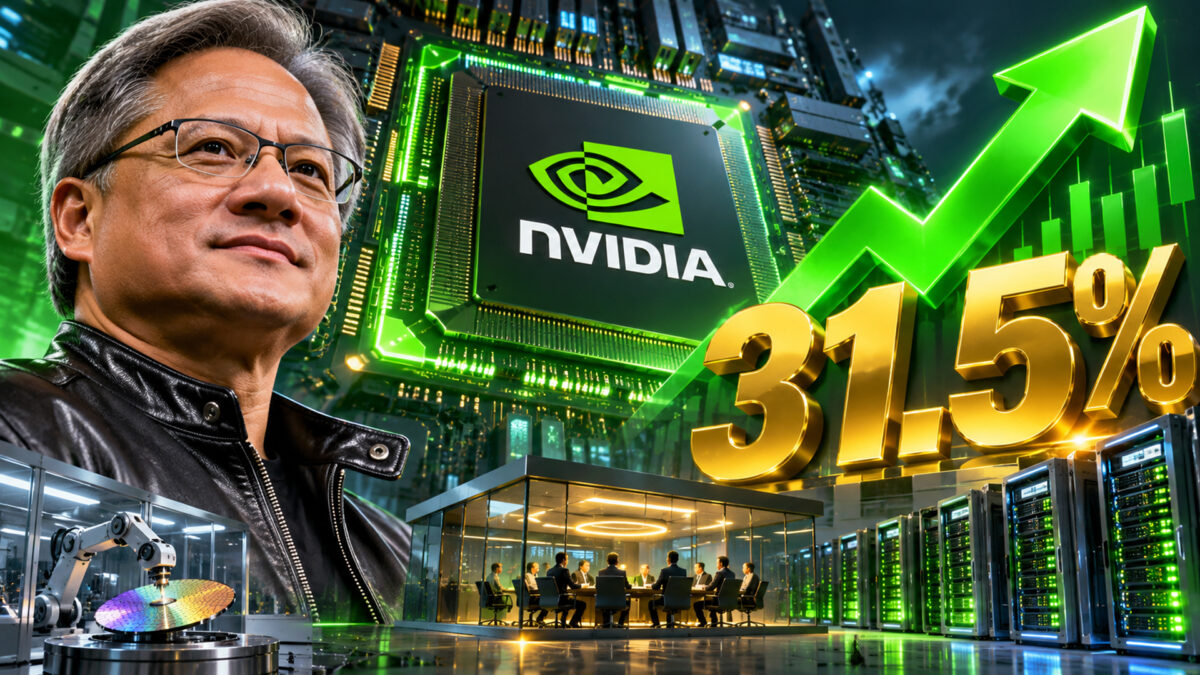
Nvidia’s decision to bring back Jensen Huang as its chief executive, just 11 days after accepting his resignation, is an extraordinary reversal that underlines the influence of a founder over one of the world’s most powerful technology companies. The board’s decision, announced on November 23, follows intense pressure from employees, investors and influential figures in Silicon Valley, alongside intervention by US President Donald Trump.
Huang, who co-founded Nvidia in 1993 and transformed it from a graphics chip manufacturer into a global leader in artificial intelligence (AI) computing, has been reinstated as president, chief executive officer and a member of the board with immediate effect. The board voted unanimously in favour of his return after a series of discussions with him and consultations with senior US government officials.
In its announcement, Nvidia said the directors were satisfied with Huang’s candour and his ability to lead the company. It also stated that, based on the government’s input, his reinstatement did not pose a national security risk. Harvey C. Jones, chairman of the board, said Huang was the right person to lead Nvidia and that his return was in the best interests of shareholders, employees, partners and customers.
The decision reverses the position the company had taken only days earlier. Huang resigned on November 12 following reports about his personal relationships, including an alleged relationship with a Chinese businesswoman suspected by US intelligence officials of having links to Beijing. Reports also raised questions about another relationship involving an Nvidia employee.
The allegations brought unwanted attention to the personal conduct of an executive whose company occupies a strategically important position in the global technology industry. Nvidia’s advanced processors are central to the development of AI systems, and its products are subject to strict US export controls because of their potential applications in advanced computing and military technology.
Huang acknowledged making serious mistakes in his personal life and apologised to his family and colleagues. He also indicated that he would be willing to return if the board believed his leadership was in the company’s best interests. Initially, however, the board appeared unwilling to reconsider its decision.
Chief financial officer Colette Kress was appointed interim CEO following his departure. On November 17, board chairman Jones had publicly indicated that Nvidia did not intend to reinstate Huang. That position made Monday’s announcement particularly striking, highlighting how quickly the company’s leadership calculations changed.
The turnaround was driven partly by the strong support Huang received from within and outside the company. Nvidia employees reportedly urged the board to reconsider, while an online petition seeking his return attracted more than 200,000 signatures. Several prominent technology executives and investors also backed his reinstatement.
Trump emerged as an influential voice in the debate, publicly supporting Huang and saying he had spoken to the Nvidia board about bringing him back. The US president argued that Huang’s leadership was important to America’s position in the global AI race. His intervention added a political dimension to what had initially appeared to be a corporate leadership issue.
The response from financial markets was immediate. Nvidia shares surged 31.48% on November 23, closing at $165.05 and adding approximately $952 billion to the company’s market value in a single trading session. Its valuation climbed to nearly $3.98 trillion, reflecting investor confidence that Huang’s return would restore stability at a critical time for the business. The rally also helped lift broader US technology stocks.
The market reaction demonstrated how closely Nvidia’s fortunes are linked to its co-founder. Under Huang’s leadership, the company has become one of the biggest beneficiaries of the global AI boom, supplying graphics processing units (GPUs) and specialised computing platforms to technology giants, cloud service providers and data centre operators. Its chips power many of the systems used to develop and run generative AI applications.
Huang’s leadership has been central to this transformation. Nvidia’s success has not come from hardware alone but from its broader computing ecosystem, including its CUDA software platform, AI infrastructure and partnerships with major technology companies. As demand for computing capacity continues to grow, the company’s ability to maintain its technological advantage will depend on sustained investment, innovation and strong execution.
However, the sharp market recovery does not mean the controversy surrounding the CEO has been resolved. Nvidia’s board has confirmed that an independent committee will continue investigating reports that Huang was targeted by a foreign intelligence operation. The committee has appointed external legal advisers and will complete its work despite his reinstatement.
The company has also established a separate National Security and Export Control Committee, comprising independent directors, to strengthen oversight of trade compliance and security-related risks. In another significant move, Nvidia plans to appoint a chief compliance officer who will oversee compliance across the organisation and report to the board’s nominating and corporate governance committee. The company has said it will continue cooperating with government investigations and inquiries.
These measures are particularly important given Nvidia’s position in the increasingly competitive technology relationship between the United States and China. Washington has imposed restrictions on the export of advanced semiconductor technology to China, citing national security concerns. Any questions about the movement of restricted chips or access to sensitive technology could have wider consequences for the company and the American semiconductor industry.
The board’s decision has nevertheless raised questions about corporate governance and its independence. Only days before reinstating Huang, it had indicated that he would not return. The subsequent reversal, following political intervention and widespread support from investors and technology leaders, has prompted questions about the extent to which commercial considerations influenced the decision.
For a company of Nvidia’s scale, the issue extends beyond the future of one executive. It concerns the ability of its board to maintain independent oversight, enforce accountability and protect shareholder interests even when the individual involved is the company’s most influential figure.
Huang described his return as an honour and said he was approaching the responsibility with humility and renewed commitment. He thanked the board, employees, shareholders and business partners for their support, while acknowledging the role played by Jones and Kress during his absence. Kress will continue as Nvidia’s chief financial officer, while Jones will remain chairman of the board.
Huang’s reinstatement also reinforces a familiar pattern in the technology industry, where companies sometimes turn back to their founders during periods of uncertainty. However, his return comes with additional scrutiny because of Nvidia’s strategic importance to the United States and the investigations surrounding the circumstances of his departure.
The immediate priority for Huang will be to restore confidence, maintain Nvidia’s technological momentum and reassure investors that the company can continue delivering growth without compromising governance standards. His return has ended an unusually turbulent chapter in Nvidia’s leadership, but the questions surrounding accountability, national security and board independence remain.
Ultimately, Nvidia’s challenge is to ensure that its success rests not only on the vision of its founder but also on strong institutional leadership. The company’s next phase will test whether it can balance Huang’s extraordinary influence with the transparency and accountability expected of a global technology leader.