Categories
Leaders

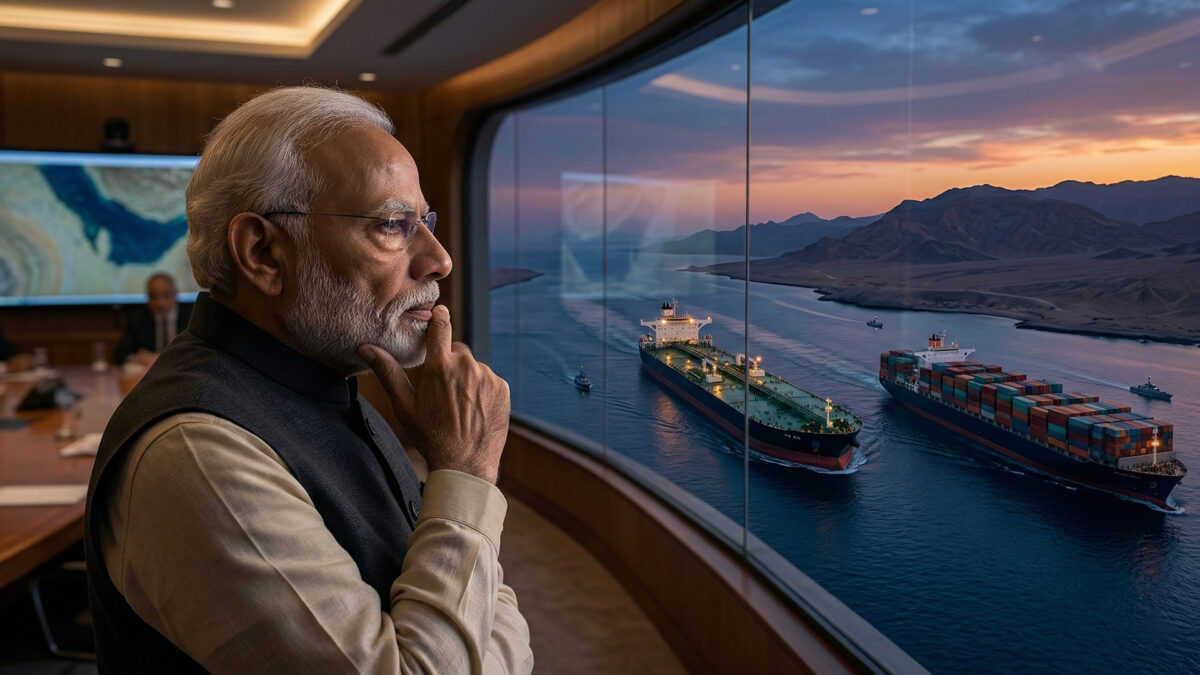
PM Modi urges peace, flags economic risks in Gulf

Prime Minister Narendra Modi held a telephone call with Benjamin Netanyahu on Monday, urging an “early cessation of hostilities” and emphasising that the safety of civilians must be a priority as tensions soar in West Asia following US–Israel strikes on Iran.

In his message on social media platform X, Modi said he had conveyed India’s concerns over the ongoing violence and called for de‑escalation to protect non‑combatants caught in the crossfire. He reiterated that India wants hostilities to end quickly and urged all sides to prioritise peace and civilian security.

The call comes amid growing concerns over trade and energy flows. India imports a significant portion of its crude oil and LPG from West Asia, and instability in the region, especially near strategic chokepoints like the Strait of Hormuz, could affect fuel costs, shipping schedules, and supply chains.

PM Modi also spoke with Sheikh Mohamed bin Zayed Al Nahyan, President of the United Arab Emirates, condemning recent attacks on the UAE and expressing India’s solidarity, while thanking UAE leadership for looking after the large Indian expatriate community.

Although direct trade with Iran has declined due to sanctions, India continues to export agricultural products, machinery, and pharmaceuticals, while importing dry fruits, chemicals, and glassware. Analysts warn that escalating conflict could disrupt these trade flows, affecting businesses and exporters dependent on Gulf markets.

India’s government is closely monitoring the economic fallout, including potential delays at ports, shipping disruptions, and volatility in energy prices. The PM’s outreach reflects India’s dual focus: advocating for peace to protect civilians and ensuring continuity of critical trade and energy interests.

PM Modi’s calls to regional leaders signal proactive diplomacy, combining humanitarian concerns with strategic economic foresight as businesses watch the Gulf situation for its impact on energy, logistics, and trade stability.

Also Read: GST collections rise to ₹1.83 lakh cr in February
Categories
Beyond

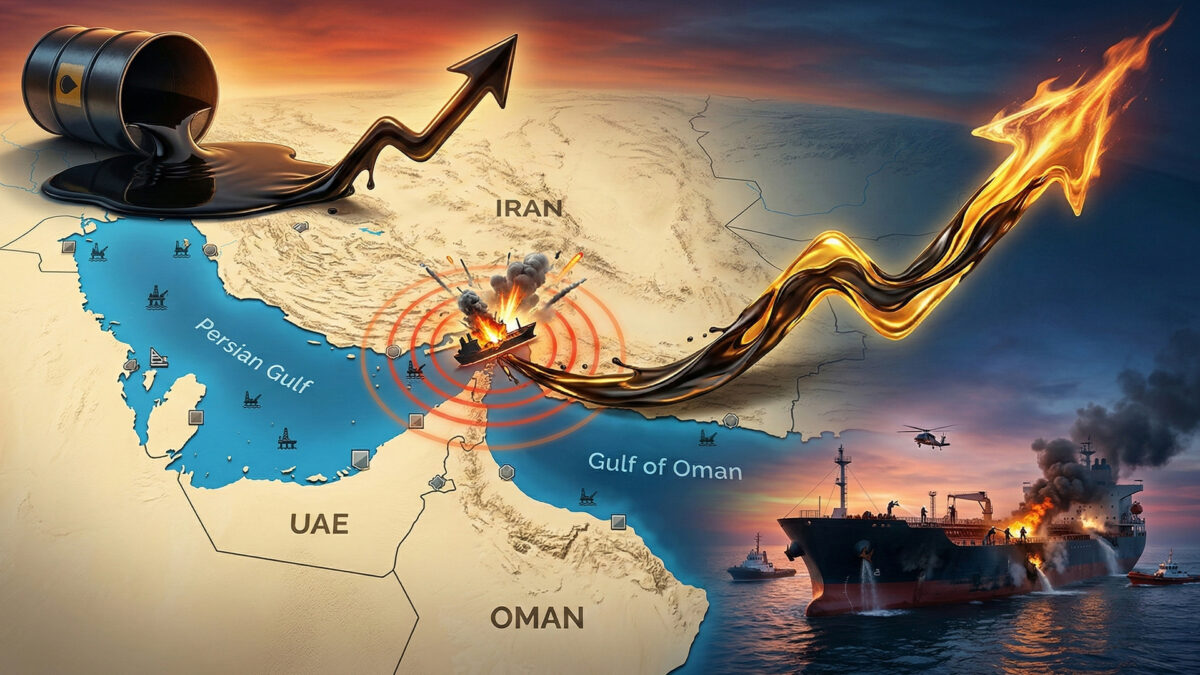
Brent crude jumps 13% as Iran moves on Hormuz

Global oil markets were rocked on Monday after crude prices surged more than 13% amid escalating conflict involving Iran, the United States and Israel, raising fears of a prolonged supply shock.

The sharp rally came after reports that Iran moved to restrict traffic through the Strait of Hormuz following coordinated US–Israel strikes on Iranian targets. The narrow waterway, located between Iran and Oman, is one of the world’s most critical energy corridors, handling nearly 20% of global crude oil and liquefied natural gas shipments each day.

Global benchmark Brent Crude surged as much as 13% to $82.37 per barrel, marking its highest level in over a year before easing slightly to trade near $79–$80. Meanwhile, West Texas Intermediate (WTI) climbed roughly 8% to around $72–$73 per barrel after volatile trading.

Shipping firms and maritime insurers have reportedly paused or delayed tanker movements through the Strait due to heightened security risks. Although Iranian authorities have not formally declared a complete closure, vessel tracking data shows significant slowdowns and rerouting activity. Analysts warn that even partial disruptions could tighten global supply chains.

Energy experts estimate that if flows through Hormuz were fully blocked, the global market could temporarily lose between 8 million and 10 million barrels per day, a volume difficult to replace quickly despite strategic reserves or alternative pipeline routes in Saudi Arabia and the UAE.

The price spike also reflects growing concern about retaliatory strikes and possible expansion of the conflict across the Gulf region. Traders are building in a geopolitical risk premium, pushing futures contracts higher across near-term delivery months.

Oil-importing nations face immediate pressure. Countries such as India, Japan and several European economies depend heavily on crude shipped through the Gulf. Higher prices could translate into rising fuel costs, inflationary pressures and widening trade deficits if the situation persists.

Meanwhile, producer alliance OPEC+ has signaled readiness to increase output modestly, but market analysts caution that incremental supply hikes may not offset a major disruption in Hormuz.

Financial markets reacted sharply, with global equities falling while safe-haven assets such as gold rose. Energy stocks, however, rallied on expectations of stronger earnings.

With geopolitical tensions intensifying and military exchanges continuing, oil markets remain highly volatile. Traders are closely monitoring developments around the Strait of Hormuz, as any confirmation of extended disruption could push crude prices toward the $90–$100 per barrel range in the near term.

Also Read: Gold ₹1.73 lakh, Silver ₹2.94 lakh