
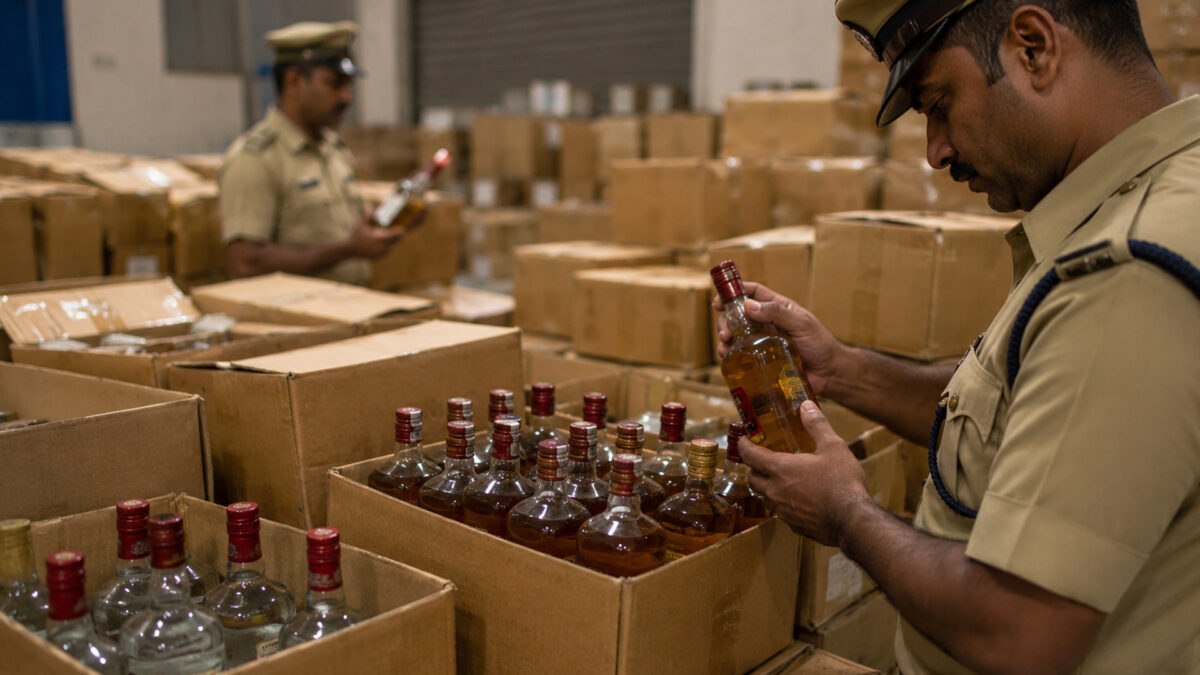
The Food Safety and Standards Authority of India (FSSAI) has seized around 18,000 boxes of liquor bottles from a United Spirits facility in Bengaluru, citing concerns over mandatory markings on bottles made with recycled plastic.
The action affects products from several Diageo India brands, including DSP Black Deluxe Whisky, Smirnoff Zesty Lime Triple Distilled Flavoured Vodka and VAT 69 blended Scotch whisky. The seized products and related plastic material have been valued at about $1.6 million, according to government documents.
The seizure followed an inspection at the United Spirits facility in Bengaluru last week. Officials found that certain plastic bottles carried markings indicating that they were made from polyethylene terephthalate, or PET, but did not display the required symbol identifying recycled PET that meets food-grade standards.
PET is a widely used plastic for packaging beverages and other consumer products. Recycled PET, commonly known as rPET, can be used in packaging when it meets prescribed safety and quality requirements. The labelling requirements are intended to help establish that packaging materials comply with food-contact standards.
The issue in the Bengaluru inspection was therefore related to packaging compliance and labelling rather than an allegation that the liquor itself was contaminated. FSSAI treated the missing markings as a food-safety and misbranding concern and ordered the affected products to be taken off the market pending further directions.
United Spirits, which operates Diageo’s business in India, has said the bottles were sourced from a recycler approved by FSSAI and that the required tests had been conducted by suppliers. The company has maintained that its products are safe for consumption and is engaging with the regulator over the matter.
The development has brought renewed attention to the importance of packaging regulations in India’s food and beverage industry. While consumers usually focus on ingredients, quality and product labels, regulators also monitor the materials that come into contact with food and beverages.
The FSSAI action is particularly significant because the affected bottles are smaller plastic packs, generally used for liquor sold in quantities such as 180 millilitres. Most larger bottles used by Diageo are made of glass, meaning the regulatory action is concentrated on a specific category of packaging.
The seizure also comes amid increased scrutiny of the alcoholic beverages sector. Regulators have recently taken action over product labelling, claims about maturation and the use of artificial flavours in certain alcoholic drinks.
That wider enforcement campaign has placed Indian Made Foreign Liquor, or IMFL, brands under closer examination. IMFL refers to spirits manufactured in India that are based on internationally recognised categories such as whisky, vodka, rum and gin.
The latest action highlights how compliance requirements extend beyond the contents of a bottle. Companies must also meet rules covering packaging materials, labelling, manufacturing processes and claims made on products.
The episode adds to a period of increased regulatory attention. The company is one of the biggest international spirits businesses operating in the country, with brands across whisky, vodka, rum and other categories.
Diageo has identified India as an important growth market. United Spirits reported revenue of roughly $3 billion from India in the financial year ended March 2026, underlining the country’s significance to the company’s global business.
The financial impact of the latest seizure could extend beyond the value of the products placed under regulatory hold. Depending on the final findings, the company may need to address packaging, labelling or distribution issues before affected products can return to the market.
The seizure does not mean that all Diageo products have been declared unsafe. The regulatory action concerns specific products and packaging identified during the Bengaluru inspection. The company has also stated that the affected bottles came from an approved recycler and underwent testing.
The case now depends on the regulator’s assessment and any further directions issued to United Spirits. Additional testing, documentation or corrective measures could be required before the affected stock is released.
Recycled PET has become increasingly important as businesses face pressure to reduce plastic waste and improve packaging sustainability. At the same time, food-contact packaging must meet strict safety standards because materials can potentially affect the products they contain if they are not properly manufactured or processed.
That makes accurate labelling an important part of the regulatory framework. Markings allow authorities and other stakeholders to identify the type and intended use of packaging material and determine whether it complies with applicable standards.
The development is also likely to keep attention on packaging compliance across India‘s alcohol industry. With regulators increasing inspections and enforcement, manufacturers and distributors may face greater scrutiny of both product claims and packaging practices.