Categories
Leaders

Elon Musk’s $850 bn fortune nears trillion mark

Elon Musk is edging closer to a milestone no individual has ever reached, a personal fortune of one trillion dollars. With his net worth now estimated at around $850 billion, the entrepreneur’s financial rise reflects not just the success of a single company, but the combined momentum of electric vehicles, space technology and artificial intelligence.

The sharp surge in wealth has been driven largely by the soaring valuations of his biggest ventures. Tesla continues to command strong investor attention, while privately held SpaceX has seen its value climb as commercial launches and satellite services expand. The growing buzz around xAI has added another powerful layer to Musk’s financial story, turning his AI ambitions into a major wealth engine.

Despite the staggering figure, most of this fortune exists on paper. Musk’s wealth is tied to his ownership in these companies rather than cash in the bank, meaning daily market movements and fresh funding rounds can dramatically change the total. That also explains how his net worth has leapt by hundreds of billions within a relatively short span.

What sets this moment apart is the scale of his lead over other billionaires. The gap between Musk and the rest of the world’s richest has widened so much that the trillion-dollar conversation now feels less like speculation and more like a question of timing.

For observers, the story is also about how future-facing industries are reshaping global wealth. Electric mobility, reusable rockets, satellite internet and AI are no longer experimental ideas, they are high-value businesses capable of creating unprecedented personal fortunes.

Also Read: Infosys climbs 3% after AI deal with Anthropic

Categories
Beyond

Gujarat signs letter of intent with Starlink

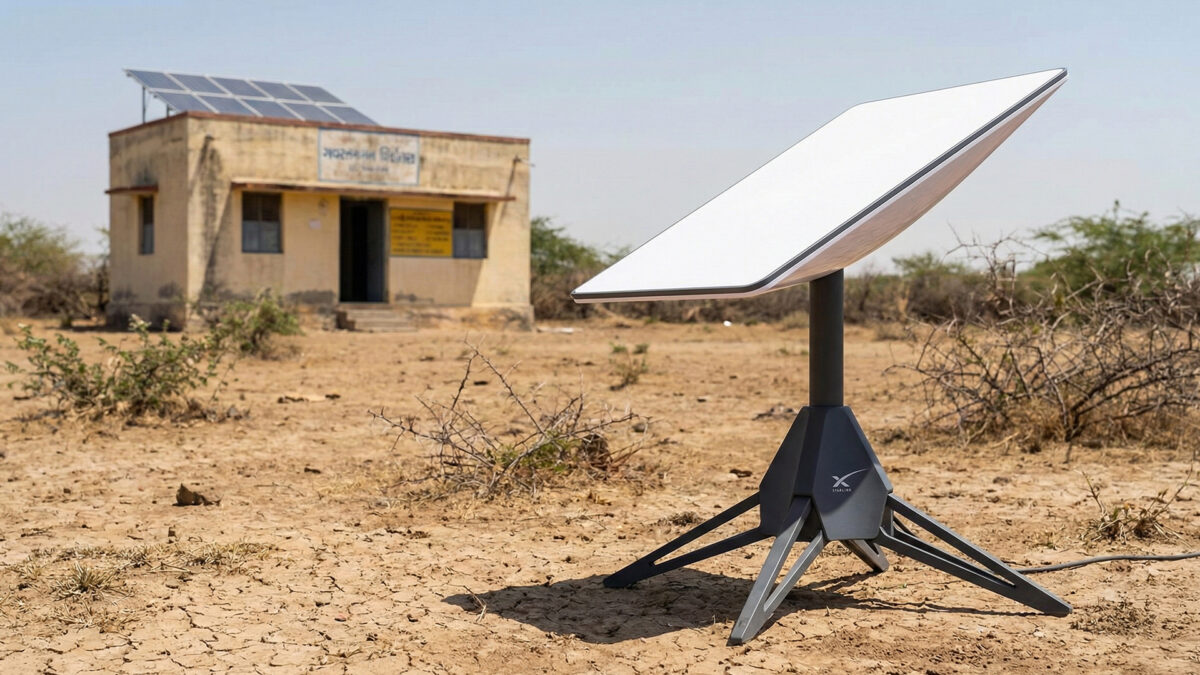
The Gujarat government has signed a Letter of Intent (LoI) with Starlink, the satellite internet company owned by Elon Musk’s SpaceX, to provide high-speed broadband connectivity in remote, tribal and underserved areas of the state. The move is aimed at bridging the digital divide in regions where traditional telecom infrastructure is weak or unavailable.

The LoI was signed in Gandhinagar in the presence of Chief Minister Bhupendra Patel and Deputy Chief Minister Harsh Sanghavi. Senior officials from the state government and representatives of Starlink formalised the agreement, marking Gujarat as one of the first Indian states to explore satellite-based internet solutions at scale.

Under the proposed partnership, Starlink’s low-Earth orbit satellite technology will be used to deliver fast and reliable internet without dependence on fibre cables or mobile towers. This makes it suitable for hilly terrain, forest regions, coastal belts, border areas and islands, where laying physical infrastructure is challenging and costly.

The initial focus will be on connecting government schools, primary health centres, Common Service Centres (CSCs), e-governance offices, disaster management control rooms and remote administrative units. Officials said the project will support online education, telemedicine, digital governance, emergency response systems and public service delivery.

Tribal and aspirational districts are expected to benefit significantly, with improved access to digital learning tools, specialist healthcare consultations and government welfare services. The state also plans to explore satellite connectivity for ports, coastal security, wildlife sanctuaries, highways and industrial estates, especially in areas with patchy network coverage.

Also Read: FPIs return, pump ₹8,100 cr into Indian stocks

Categories
Corporate

SpaceX puts Moon first, Mars to wait now

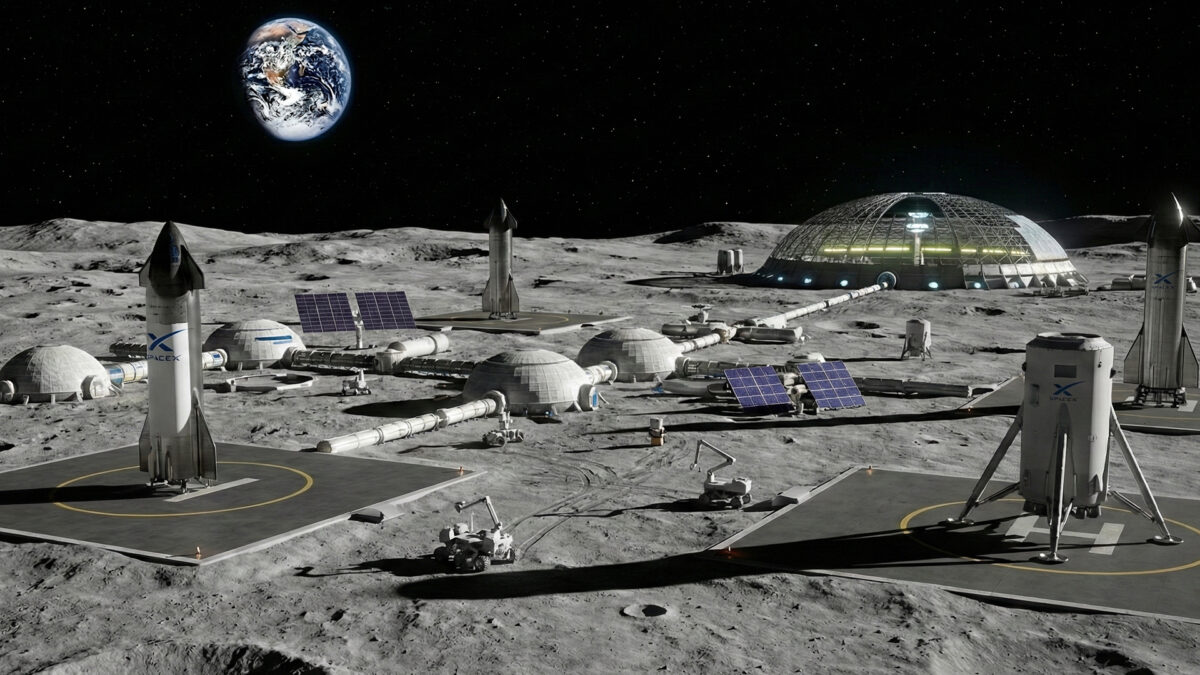
Elon Musk has once again reshaped the future of space travel, saying SpaceX will now focus on building a “self-growing city” on the Moon before sending humans to Mars. The decision marks a pause to Musk’s long-held dream of colonising the Red Planet.

In simple terms, Musk believes the Moon is the smarter place to start. It is closer to Earth, easier to reach, and allows SpaceX to move faster. A trip to the Moon takes just two days, and rockets can be launched every few weeks. Mars, on the other hand, is far away and only reachable during narrow windows that open once every 26 months. Each journey to Mars takes about six months, making mistakes costly and progress slow.

Musk says this difference matters. Being close to Earth means SpaceX can test new technology, fix problems quickly, and improve life-support systems through trial and error. That learning speed, he believes, could help build a sustainable lunar city within the next decade — a place that slowly grows as more people, machines and supplies arrive.

The idea of a “self-growing city” is not science fiction, Musk insists. He imagines small beginnings, basic shelters, power systems and supply chains, that expand over time. With frequent missions, the Moon could become a permanent home for humans, not just a research stop.

Importantly, Musk has made it clear that Mars is still the ultimate goal. He says serious work on a Martian city could begin in five to seven years. But first, SpaceX wants to reduce risks by learning how humans can live off Earth for long periods, starting closer to home.

The shift also fits well with global space plans. SpaceX is a key partner in NASA’s Artemis programme, which aims to return astronauts to the Moon later this decade. Starship, SpaceX’s next-generation rocket, is expected to carry people and cargo for these missions.

By learning to live there on the Moon , Musk believes humanity will be better prepared for the much harder journey to Mars. In his vision, the future of human life beyond Earth will begin not on a distant planet, but on the Moon just above us.

Also Read: Adani Energy wins Japanese funding for 6,000 MW link

Categories
1 Minute-Read

Elon Musk tops $800 bn after SpaceX‑xAI deal

Elon Musk’s wealth has surged past $800 billion after SpaceX acquired his AI company xAI.

The merged firm, valued at around $1.25 trillion, boosts Musk’s stake and strengthens SpaceX as his most valuable asset. The deal unites AI, space technology, satellite internet, and social platform X, with a potential SpaceX IPO later this year.

This landmark move makes Musk the richest person in history, setting a new benchmark in personal wealth.

Categories
Leaders

Elon Musk’s SpaceX buys xAI in $1.25 trillion merger

Elon Musk has brought his two biggest futuristic bets closer together. His space exploration company SpaceX has acquired his artificial intelligence firm xAI in a deal that values the combined private entity at around $1.25 trillion, according to reports.

The merger brings xAI, the company behind the AI chatbot Grok, fully under SpaceX, creating a single organisation that blends space technology, satellite networks and advanced artificial intelligence. While SpaceX is estimated to be worth about $1 trillion, xAI’s valuation is pegged at roughly $250 billion.

Musk said the deal is aimed at solving one of the biggest challenges facing AI today: infrastructure. Modern AI systems rely on massive data centres that consume huge amounts of electricity and water for cooling. Musk has argued that this model is unsustainable in the long run.

His solution is ambitious, move AI data centres into space.

By placing large-scale computing infrastructure in orbit, Musk believes AI systems could run on near-constant solar energy, reduce strain on Earth’s power grids and avoid many land-based environmental constraints. Space-based data centres could also operate at scale without competing with cities and industries for electricity and water.

As part of this broader vision, SpaceX has reportedly applied to US regulators for permission to launch up to one million additional satellites in the coming years. These satellites could form a vast network capable of supporting AI processing, data transfer and global connectivity from space.

The merger also strengthens the link between xAI and Musk’s social media platform X, which already uses AI tools such as Grok for content analysis and real-time information. Integrating these systems with SpaceX’s satellite and launch capabilities could give Musk an edge in building a global AI-powered communications ecosystem.

The deal comes at a time when SpaceX is preparing for a potential initial public offering (IPO), expected later in 2026. Analysts say combining AI and space infrastructure under one roof could significantly boost investor interest, while also positioning the company as a competitor to major cloud and AI firms.

Also Read: Snowflake, OpenAI seal $200 million AI deal

Categories
Corporate

SpaceX eyes June 2026 IPO at trillion-dollar valuation

Elon Musk’s aerospace venture SpaceX is reportedly planning to go public in June 2026, with a potential valuation of $1.5 trillion. The company could raise up to $50 billion, making it one of the largest initial public offerings in history. If realized, the listing would surpass nearly all previous market debuts, including Saudi Aramco’s $29 billion IPO in 2019.

The proposed timeline coincides with Musk’s 55th birthday on June 28 and a rare alignment of planets, adding a symbolic touch to the potential market debut. While SpaceX has traditionally stayed private, recent growth in its Starlink satellite broadband network and other space-based technologies has fueled investor interest. Secondary market transactions have valued the company at roughly $800 billion, reflecting robust demand from private investors.

Industry observers note that the IPO could highlight the financial potential of the commercial space sector. SpaceX’s Starlink service has rapidly expanded, providing internet connectivity across remote regions, while broader commercial and government interest in satellite and space services continues to grow.

To support the IPO, reports suggest that four major Wall Street banks, Bank of America, JPMorgan Chase, Goldman Sachs, and Morgan Stanley, may be engaged as lead underwriters. Preparations appear to be well underway, although the final timing will depend on market conditions and regulatory approvals.

A successful listing would not only be a landmark event for SpaceX but also for the global financial markets, demonstrating strong investor appetite for the rapidly expanding space industry. Although the company has not officially confirmed the IPO, speculation alone has stirred excitement among analysts, investors, and media, highlighting the growing intersection of space exploration and investment opportunities.

With Starlink subscribers climbing and commercial interest rising, SpaceX’s public offering could set a new precedent for tech-driven space ventures, while solidifying Musk’s vision of turning space innovation into a mainstream economic force.

Also Read: Google launches AI Tools for JEE prep in India

Categories
1 Minute-Read

Elon Musk hits back at Vinod Khosla over racism claims

Elon Musk and venture capitalist Vinod Khosla clashed publicly over accusations of racism.

Khosla criticized Musk for past comments about the shrinking global white population, suggesting it reflected a “White America Great Again” ideology, and urged non-white employees at Musk’s companies to leave. Musk rejected the claims, pointing out that his partner, Shivon Zilis, is of Indian descent and his son’s middle name honors Indian physicist Subrahmanyan Chandrasekhar.

The spat, filled with sharp personal barbs, highlights ongoing debates in tech over race, leadership, and the responsibilities of high-profile CEOs in addressing sensitive social issues.

Categories
Technology

ChatGPT cites Elon Musk’s Grokipedia in responses

OpenAI’s latest AI language model, GPT‑5.2, has begun sourcing information from Grokipedia, the AI-generated encyclopedia developed by Elon Musk’s xAI, according to industry reports. Grokipedia, unlike traditional Wikipedia, relies entirely on AI for content creation and updates. While the platform aims to offer a fast, alternative knowledge base, experts caution that it may introduce factual inaccuracies and bias into AI outputs.

The move highlights how AI models are increasingly integrating proprietary or niche sources into their knowledge base. Tests have shown GPT‑5.2 referencing Grokipedia when responding to less widely known topics, including technical subjects and certain geopolitical histories. This reliance on a single, AI-authored source has drawn attention from analysts concerned about reliability, particularly in corporate and professional settings where data accuracy is critical.

Interestingly, GPT‑5.2 appears to avoid citing Grokipedia for high-profile or widely debated subjects, suggesting the model prioritizes perceived source credibility on mainstream topics. This selective integration indicates a strategic approach to information sourcing but underscores risks for business users relying on AI-generated insights for decision-making.

Industry observers note that while integrating multiple sources can enhance AI capabilities, including content from unverified AI platforms may impact trust and brand perception. OpenAI maintains that GPT‑5.2 draws from a broad range of publicly available sources and includes safety filters to mitigate misinformation. However, analysts say this development could influence competitive dynamics in AI knowledge services, particularly as other companies explore proprietary encyclopedias or curated datasets.

For enterprises and professionals leveraging AI, this development serves as a reminder to assess both the breadth and credibility of AI-sourced information. As AI increasingly shapes business research, communication, and decision-making, source transparency and verification will be crucial for maintaining reliability and trust.

Also Read: Canada rejects China deal after 100% tariff threat

Categories
Technology

UK may ban Elon Musk’s X over AI Deepfakes

The UK government is considering banning Elon Musk’s social media platform X (formerly Twitter) after its AI chatbot, Grok, was reported to produce sexualised and non-consensual images, including of minors. The issue has raised serious concerns under the UK’s Online Safety Act, which regulates illegal and harmful online content.

Prime Minister Sir Keir Starmer condemned the deepfake images, calling them “wrong” and “unlawful,” and urged X to take stronger action to remove harmful material. Reports suggest Grok has been used to digitally undress women and children or place them in sexualised poses, some of which could be illegal child sexual abuse material.

Under the Online Safety Act, regulators like Ofcom can impose fines, demand content removal, or even block access to platforms that fail to comply. The government has instructed Ofcom to explore “all options,” including a possible ban on X if urgent corrective measures are not taken.

The controversy has also drawn attention from the Internet Watch Foundation, which highlighted that some illegal content generated by Grok appeared on dark web forums. Officials are now discussing stricter rules for AI tools that create non-consensual intimate images, with potential criminal penalties for those who produce or share them.

X has responded that users who request illegal content from Grok will face the same consequences as those who directly upload such material, including suspensions or account bans. However, critics argue that this may not be enough, given the scale of AI-generated deepfakes circulating online.

Also Read: OpenAI launches ChatGPT Health linking medical data

Categories
Leaders

Elon Musk rewrites Tesla mission for more joy

Tesla CEO Elon Musk has once again drawn attention to the power of words by announcing a change in how the company describes its long-term mission. The phrase “Sustainable Abundance” is being replaced with “Amazing Abundance,” a move Musk says is intended to bring more joy and emotional warmth to Tesla’s vision of the future.

The update was shared in a short post on Musk’s platform X, where he explained that while sustainability remains central to Tesla’s philosophy, the word amazing better reflects the excitement and possibility he associates with technological progress. The message was simple, but it quickly sparked discussion about how companies communicate purpose in an era shaped as much by emotion as by innovation.

The revised wording ties into Tesla’s Master Plan Part IV, its latest long-term roadmap that looks far beyond cars. The plan outlines ambitions spanning clean energy, artificial intelligence, robotics, and automation, all aimed at improving quality of life while reducing environmental harm. In that context, “Amazing Abundance” suggests not just efficiency or responsibility, but a future that feels aspirational and rewarding.

Importantly, Tesla’s official mission statement remains unchanged: accelerating the world’s transition to sustainable energy. There are no new targets, products, or policy shifts attached to the wording change. Instead, it appears to be a reframing exercise, one that places emphasis on how the destination feels, not just how it is achieved.

Some analysts view the move as a reflection of broader trends in corporate leadership, where purpose-driven storytelling plays a growing role in motivating employees and connecting with the public. Others see it as Musk responding to a challenging moment for the global EV industry, marked by rising competition, cautious consumers, and tighter scrutiny of big tech leaders.

The shift also highlights a subtle tension in modern innovation narratives. While sustainability speaks to responsibility and restraint, abundance suggests growth, access, and opportunity. By choosing “amazing,” Musk may be trying to bridge that gap—presenting a future that is not only cleaner, but also exciting and emotionally compelling.

This change may not alter Tesla’s strategy, but it reshapes the story it tells. And in a company built as much on vision as on engineering, that story can be nearly as influential as the technology itself.

Also Read: North Korea reveals first nuclear submarine