Categories
1 Minute-Read

China urges banks to cut US treasury holdings

China has instructed its major banks to reduce their exposure to US Treasury bonds, aiming to manage risk amid market volatility. Banks are advised to limit new purchases and gradually scale down existing holdings, though no strict targets or deadlines were given.

The guidance focuses on commercial bank portfolios and does not affect China’s sovereign reserves.

Analysts say the decision reflects a broader trend of diversifying away from dollar-denominated assets, as Chinese holdings of US government debt have declined to multi-year lows.

Categories
Beyond

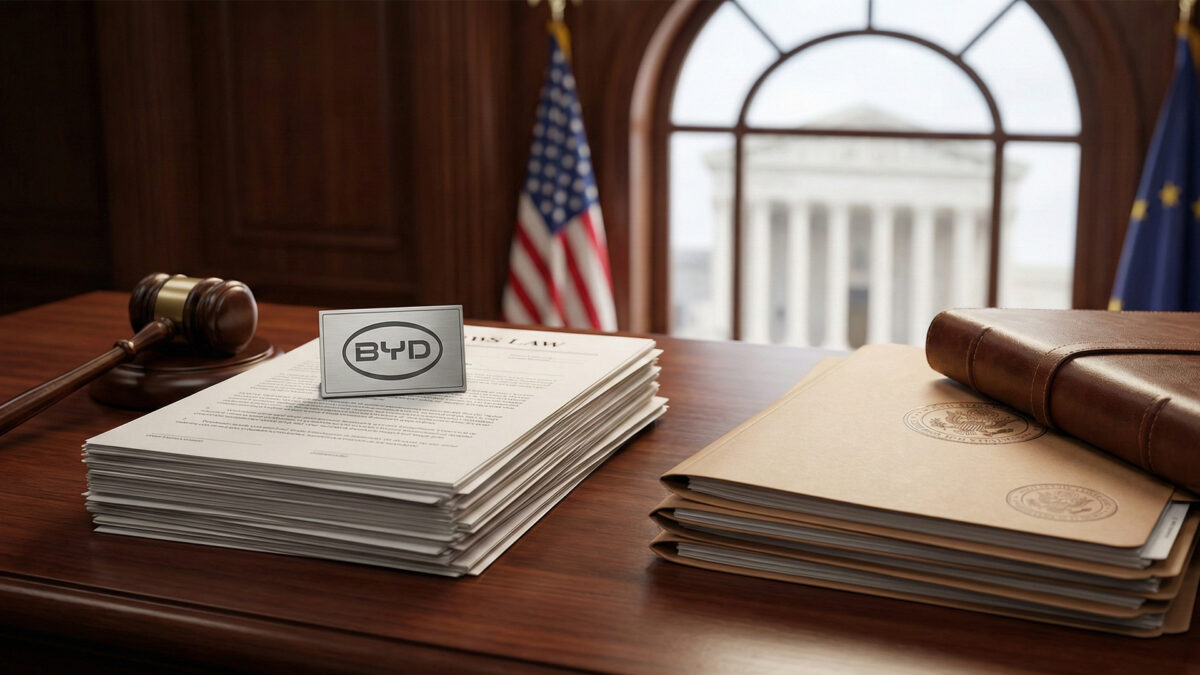
China’s BYD challenges Trump’s tariffs at US court

Chinese electric vehicle and clean-energy major BYD has taken a significant legal step in the United States, filing a lawsuit against the federal government to challenge tariffs imposed by President Donald Trump.

The case, filed in the US Court of International Trade in New York, seeks refunds for import duties paid since April and questions the legal basis used to impose the levies. BYD’s US subsidiaries argue that the tariffs were introduced under the International Emergency Economic Powers Act (IEEPA), a law meant for national security emergencies, not for imposing broad trade barriers.

The emergency law does not explicitly allow the government to levy import tariffs. BYD is asking the court to order the repayment of duties already paid and to safeguard its right to future refunds if the tariffs are ruled invalid.

While BYD does not sell passenger cars in the US, it has a growing footprint in the country through its electric buses, trucks, batteries, energy storage systems and solar products. Its manufacturing facility in Lancaster, California, employs around 750 workers, making the company an active contributor to local jobs and clean-energy infrastructure.

The legal move places BYD among a rising number of global companies challenging Trump’s trade policies. The dispute also comes as the US Supreme Court considers a separate case that could ultimately decide whether emergency powers can be used to justify such tariffs.

For Washington, the case revives a sensitive debate around trade protectionism and executive authority. For BYD, it is both a financial and strategic decision, aimed at recovering costs while seeking clarity on the rules governing global trade.

Also Read: Balaji Krishnamurthy named Uber CFO

Categories
Beyond

US plans $12 bn critical minerals

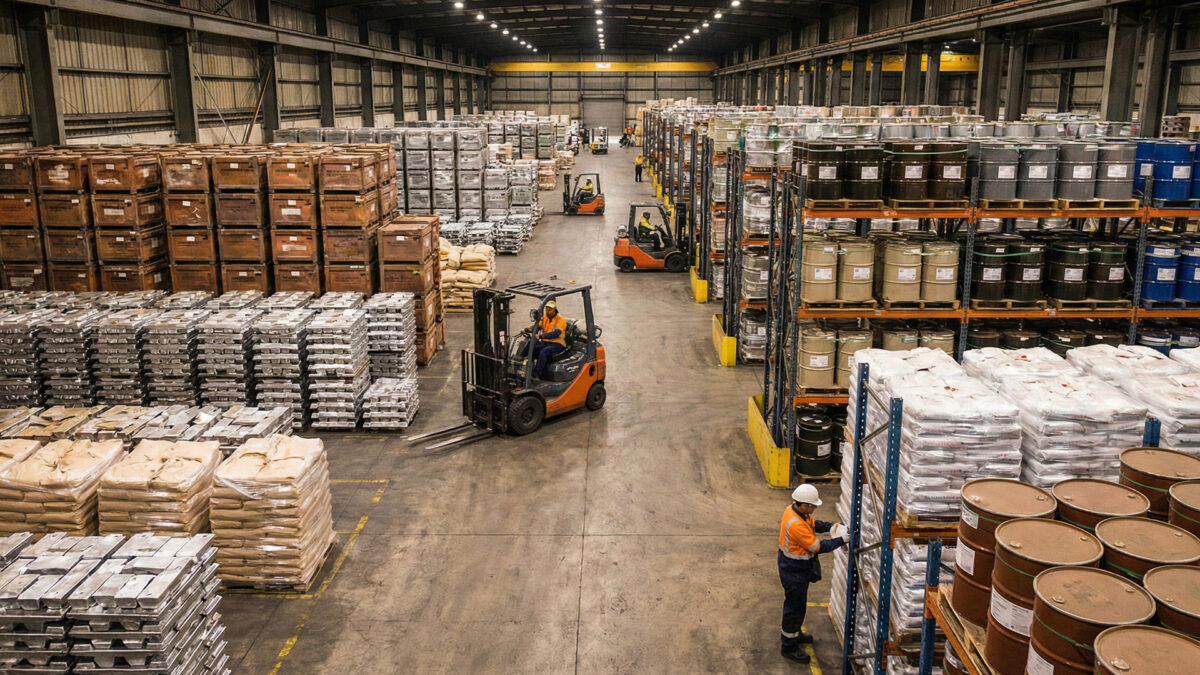
The United States has announced plans to create a $12 billion strategic stockpile of critical minerals, as President Donald Trump moves to reduce the country’s heavy dependence on China for materials essential to modern industry, clean energy, and national security.

The initiative, unveiled on February 2, will function on the lines of the Strategic Petroleum Reserve but will focus on minerals instead of oil. It is designed to protect American companies from supply disruptions, price shocks, and geopolitical risks linked to China’s dominance in the global minerals market.

Under the plan, funding will come from a mix of government-backed financing and private investment. The US Export-Import Bank is expected to provide the bulk of the support, while private companies will participate by committing to buy minerals from the reserve. The stockpile will include materials such as rare earth elements, lithium, nickel, cobalt, gallium, and graphite, all of which are critical for manufacturing electric vehicles, semiconductors, renewable energy equipment, electronics, and defence systems.

China currently controls a large share of the world’s mining and, more importantly, processing capacity for many of these minerals. Recent Chinese export controls and trade tensions have raised concerns in Washington about supply security. US officials say the new reserve is meant to ensure that American manufacturers are not left vulnerable during political disputes or global supply chain disruptions.

Several major US companies, including firms from the automotive, aerospace, technology, and energy sectors, have expressed interest in participating in the programme. Commodities trading firms will help procure, store, and manage the materials, ensuring they are available when needed.

According to officials, the stockpile is expected to hold around two months’ supply of selected critical minerals. While the move is seen as an important step, experts note that stockpiling alone will not solve long-term challenges. Expanding domestic mining, improving processing capacity, and building reliable supply partnerships with allied countries will remain crucial.

Also Read: Elon Musk’s SpaceX buys xAI in $1.25 trillion merger

Categories
Corporate

China’s Anta Sports invests in Puma for $1.8 bn

China’s leading sportswear company Anta Sports Products has taken a significant step onto the global stage by agreeing to buy a 29.1% stake in German sports brand Puma in a deal worth around $1.8 billion (€1.5 billion). The shares are being acquired from Artemis, the investment firm of the Pinault family, which has been a long-time major shareholder in Puma.

The deal will make Anta Puma’s largest shareholder, though the Chinese company has clarified that it does not plan a full takeover at this stage. Anta will pay €35 per share in cash, offering a substantial premium over Puma’s recent market price,  a sign of strong belief in the brand’s long-term value.

For Anta, the investment is part of a broader strategy to expand its international presence. The company already manages several well-known global brands, including Fila in China, outdoor label Jack Wolfskin, and sports names such as Salomon and Wilson through its stake in Amer Sports. Adding Puma to this portfolio strengthens Anta’s position as a major global player in the sporting goods industry.

For Puma, the move comes at a crucial time. The German brand has been facing slower sales growth and stiff competition from rivals like Nike and Adidas. While Puma has been working on a turnaround under new leadership, recent performance pressures have weighed on its market confidence. The entry of Anta as a strategic shareholder could provide both stability and new growth opportunities, especially in Asian markets.

The transaction is still subject to regulatory and antitrust approvals and is expected to be completed by the end of 2026. If cleared, the partnership could reshape the competitive landscape of the global sportswear industry, blending European brand heritage with Chinese market strength.

Industry observers say Anta’s strong distribution network and deep understanding of the Chinese consumer could help Puma regain momentum in the world’s largest sportswear market. At the same time, Puma’s global brand strength offers Anta greater international visibility.

Also Read: Public sector banks disrupted by nationwide strike

Categories
Beyond

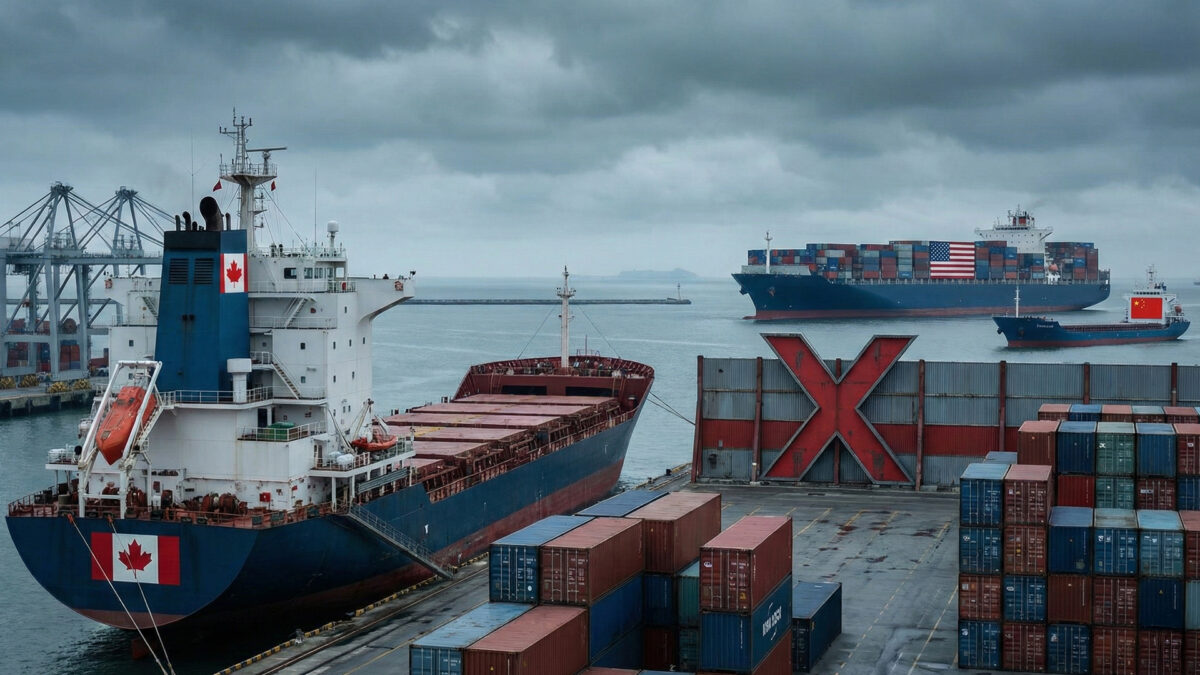
Canada rejects China deal after 100% tariff threat

Canada has ruled out any free trade agreement with China, after US President Donald Trump threatened to impose 100 per cent tariffs on Canadian goods if Ottawa went ahead. Prime Minister Mark Carney clarified that Canada remains committed to its North American trade agreements and has no intention of pursuing a broad pact with Beijing.

Speaking on Sunday, January 25, Carney emphasised that Canada’s limited engagement with China has focused only on resolving specific tariff disputes, not on negotiating a full-fledged trade deal. “We respect our commitments under the USMCA. We are not planning any free trade agreements with China or other non-market economies,” he said.

The remarks follow a week of tense exchanges between Washington and Ottawa. Trump’s warnings came after reports that Canada was exploring closer trade ties with China, prompting fears in the US that Chinese goods could gain easier access to North American markets through Canada.

Recent agreements with China have been narrow and targeted. Canada reduced tariffs on a small number of Chinese electric vehicles, while Beijing agreed to ease duties on some Canadian exports, including canola and seafood. These measures, Carney stressed, are far from a comprehensive trade deal.

The US threat has added strain to Canada-US trade relations, but Carney’s firm stance sends a clear message: Ottawa seeks to balance global economic ties while honouring obligations to its North American partners. Analysts say the move highlights Canada’s careful approach to diplomacy, ensuring it can engage with global markets without triggering conflicts with the US.

Also Read: India to cut EU car import duties

Categories
Beyond

China’s economy grows 5% in 2025

China’s economy grew by 5 per cent in 2025, meeting the government’s annual growth target despite sluggish domestic activity and ongoing trade tensions with the United States. The growth was supported primarily by strong exports, which helped the country navigate challenges from slower consumer spending, low investment, and deflationary pressures.

Data released by Chinese authorities show that GDP rose 5 per cent year‑on‑year, although growth slowed in the fourth quarter to 4.5 per cent, marking the weakest quarterly expansion since the country reopened after the pandemic. Nominal GDP, which does not account for inflation, rose only 4 per cent, highlighting the pressure on domestic economic activity.

Exports remained the key driver of growth. Demand from overseas markets, including Europe, Southeast Asia, Latin America, and Africa, helped offset a slowdown in shipments to the United States caused by higher tariffs. China’s trade surplus reached about $1.2 trillion in 2025, underlining the strength of its external sector.

Domestic consumption and investment, however, showed uneven performance. Retail sales rose only modestly, while fixed‑asset and private investment weakened. Deflation continued for a third straight year, limiting consumer spending and overall confidence. Industrial production held up better, but the domestic economy’s recovery remained fragile.

Policy makers in Beijing acknowledge the imbalance between strong exports and weak internal demand. Plans under the new five‑year strategy aim to strengthen household consumption and the service sector, but authorities are cautious about large-scale stimulus due to local government debt and inflation concerns.

Analysts warn that China’s heavy reliance on exports makes growth vulnerable to future global trade disruptions. Sustainable long-term expansion will depend on boosting domestic demand and implementing structural reforms to encourage private investment and household spending.

Also Read: UAE signs $2.5bn LNG deal with HPCL

Categories
Beyond

China’s trade surplus soars to $1.2 trillion in 2025

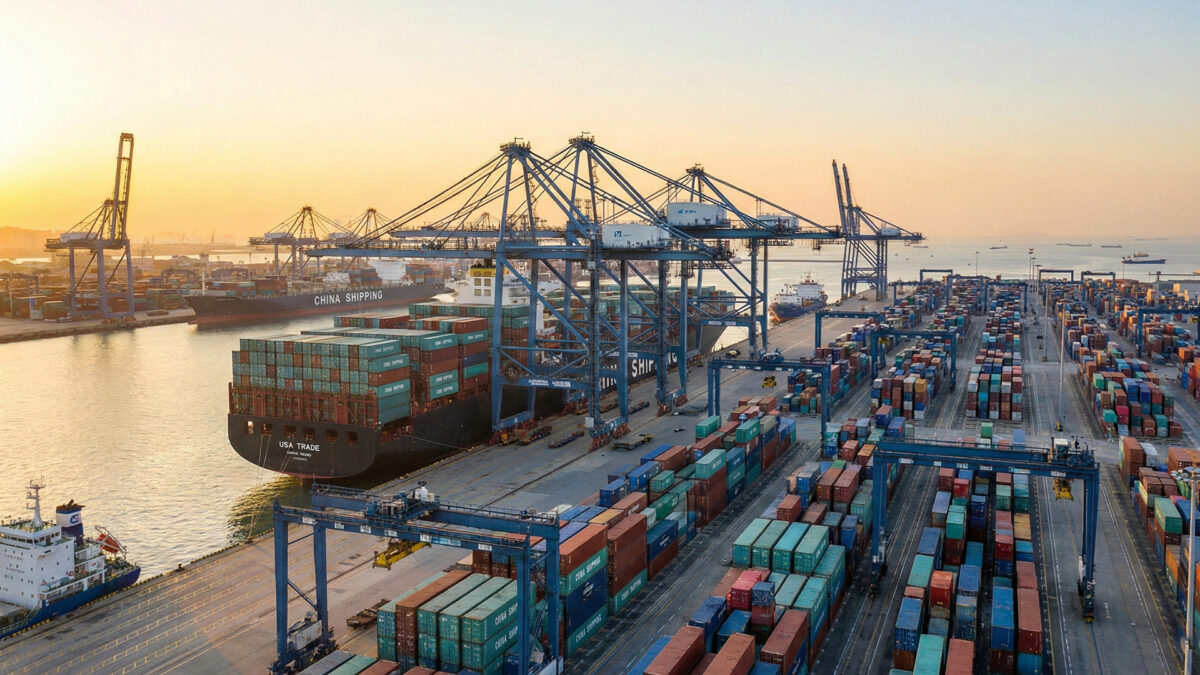
China closed 2025 with a record trade surplus of nearly $1.2 trillion, showing strong exports even amid U.S. tariffs and global tensions, official data released on January 14 revealed.

For the year, exports grew about 5.5 percent to $3.77 trillion, while imports remained nearly flat at $2.58 trillion. This created China’s largest trade gap ever, surpassing last year’s surplus of $992 billion.

December trade data was particularly strong. Exports in December rose 6.6 percent year-on-year, the fastest increase in months. Imports grew 5.7 percent, indicating continued demand for foreign goods and raw materials.

A major factor behind China’s trade performance was diversification of export markets. While exports to the United States dropped around 20 percent due to tariffs, shipments to other regions surged. Exports to Africa rose 26 percent, while sales to Southeast Asia, the EU, and Latin America grew by 13 percent, 8 percent, and 7 percent respectively.

Analysts say China’s strong export growth reflects global demand for electronics, machinery, and automobiles, as well as exporters’ efforts to reduce reliance on the U.S. market. Jacqueline Rong, chief China economist at BNP Paribas, noted, “Exports will continue to be a major growth driver in 2026.”

However, domestic challenges remain. Consumer demand is weak, and the property market is struggling. The International Monetary Fund has urged China to boost internal consumption to rely less on exports.

The strong trade numbers lifted Chinese markets, but experts cautioned that geopolitical tensions and future tariffs could affect growth. Despite this, China’s ability to expand trade with other regions helped it achieve record figures for 2025, showing resilience in a challenging global environment.

Also Read: Bajaj Housing raises ₹509 cr via bonds

Categories
Beyond

Trump blocks Chinese‑linked chip deal

US President Donald Trump has blocked a Chinese‑linked semiconductor deal, saying it could threaten national security. An executive order issued on January 2 requires HieFo Corporation to sell certain Emcore Corp. assets within 180 days. The move reflects growing concern over foreign access to sensitive US technology.

The deal, completed in 2024, involved HieFo, a Delaware‑registered company, buying Emcore’s computer chip business and wafer fabrication operations for $2.9 million. Emcore, based in New Jersey, was a public aerospace and defense technology company before the sale.

Trump’s order said there is “credible evidence” that HieFo is controlled by a Chinese national and that the deal could harm US security. The order did not give full details but shows the government’s worry about foreign control of important technology.

The Committee on Foreign Investment in the United States (CFIUS) reviewed the transaction and identified risks. HieFo now has six months to divest all rights and assets globally unless CFIUS allows more time.

The assets include technology and facilities used for chip design and wafer production, which are important for both commercial and defense purposes. The move highlights the US effort to stop Chinese-linked companies from accessing advanced semiconductor technology amid global tech competition.

Neither HieFo nor Emcore has commented publicly yet.

Also Read: BYD surpasses Tesla as global EV leader in 2025

Categories
Beyond

China’s DeepSeek reveals efficient AI training

Chinese AI startup DeepSeek has introduced a new way to train large AI models more efficiently. The approach, called Manifold‑Constrained Hyper‑Connections (mHC), helps models learn faster while using less computing power and energy. This is especially important as China faces limits on buying the latest AI chips from abroad due to US export restrictions.

The research paper, co‑authored by founder Liang Wenfeng and 18 other researchers, tested mHC on AI systems ranging from 3 to 27 billion parameters. The method stabilises training and avoids excessive computing costs, making it easier to build very large AI models without huge energy bills.

DeepSeek has a history of surprising the AI industry. Its 2025 R1 reasoning model was developed at a much lower cost than similar models from US companies. Experts now expect the next model, R2, to launch around China’s Spring Festival in February. The new mHC training method is expected to power this model, making it faster and more efficient.

China’s AI firms continue to face challenges due to limited access to advanced semiconductors. This has pushed companies like DeepSeek to create innovative, resource‑saving techniques to stay competitive globally.

Analysts suggest that R2 could make a significant impact internationally, even as companies like Google and OpenAI release high‑performance models. China’s lower-cost, efficient AI models are already gaining recognition in global rankings, showing the country’s growing technical capabilities.

DeepSeek has shared its research on open platforms like arXiv and Hugging Face, reflecting a trend of more openness and collaboration among Chinese AI developers.

The new method could set a benchmark for energy-efficient, large-scale AI training, helping China expand its AI capabilities despite hardware limitations.

Also Read: Aurobindo Pharma buys Khandelwal labs’ drugs for ₹325 cr

Categories
Beyond

Mexico hikes tariffs up to 50% on Asian imports

Mexico has approved higher import tariffs on products from several Asian countries, including India and China. The move is meant to protect local industries and increase government revenue. The new duties will come into effect in 2026 and will cover products such as vehicles, auto parts, textiles, plastics, steel, footwear, and clothing.

The bill was passed in the Mexican Senate with 76 votes in favour, five against, and 35 abstentions, after it was approved by the lower house. Most products will face tariffs of up to 35%, while some could see increases as high as 50%. The first version of the proposal included higher tariffs on around 1,400 products, but the final plan reduced duties for nearly two-thirds of them.

Officials say the tariff hike is needed to help Mexican manufacturers compete with cheaper imports from Asia. They believe the new duties will protect jobs, strengthen domestic production, and improve Mexico’s role in global supply chains.

The tariff increase is also expected to boost government revenue, with experts estimating an extra $3.76 billion next year. This is seen as an important step to reduce Mexico’s fiscal deficit.

The decision comes as global trade tensions rise and ahead of a review of the United States-Mexico-Canada Agreement (USMCA). Some trade analysts and business groups have warned that higher tariffs could disrupt supply chains, increase production costs, and raise prices for consumers.

Countries without free-trade agreements with Mexico, including India and China, are likely to feel the biggest impact, as higher duties could make their exports less competitive.

Overall, the move is considered one of the most significant changes in Mexico’s trade policy in recent years. It shows the government’s focus on protecting local industries while managing international trade. Businesses and exporters are now closely watching the changes and preparing for the impact of the new tariffs.

Also Read: Vi Business rolls out smart gas metering for CGD companies