
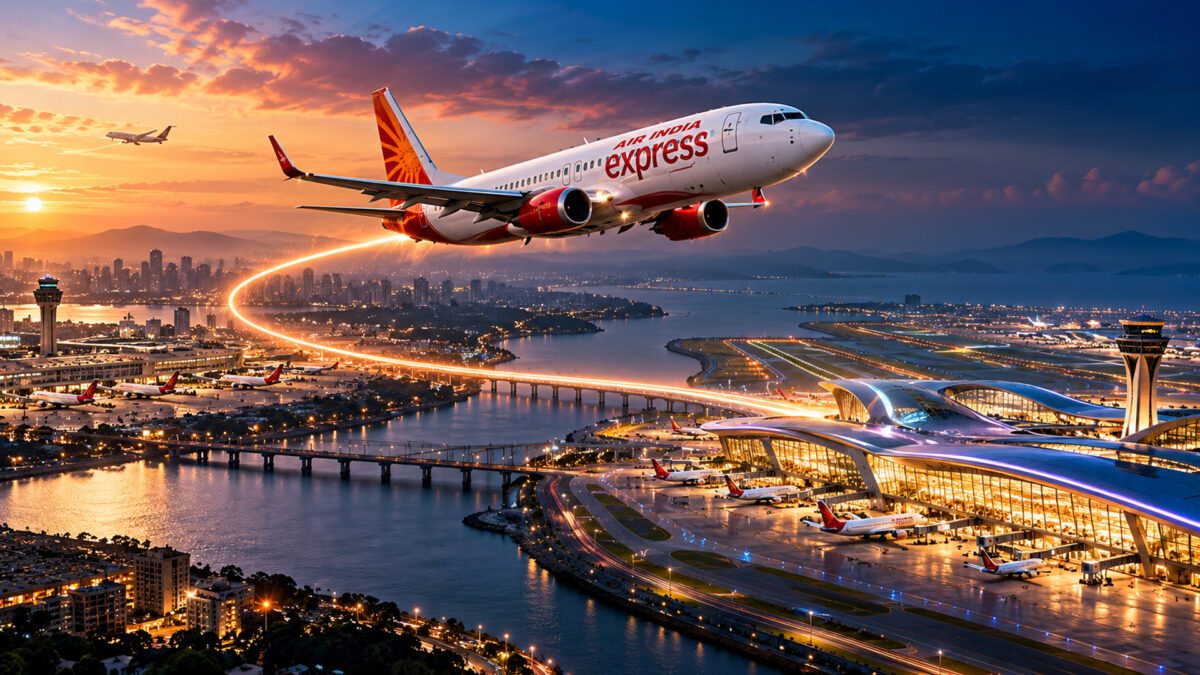
India’s aviation network is preparing for a significant operational change, with IndiGo and the Air India Group set to transfer 133 weekly international departures from Chhatrapati Shivaji Maharaj International Airport (CSMIA) to Navi Mumbai International Airport (NMIA). The phased shift is expected to affect nearly three million passengers annually and will help Mumbai’s existing airport make room for the redevelopment of Terminal 1.
The move marks an important step in the development of Mumbai’s dual-airport system. The region will increasingly divide passenger traffic between CSMIA and the newer Navi Mumbai facility. The transition also requires airlines, airport operators and aviation authorities to coordinate flight schedules, passenger connections and terminal capacity during a major infrastructure project.
IndiGo plans to transfer 12 daily international departures from Mumbai to Navi Mumbai, starting in February 2027 and continuing in phases through July. The services cover Bahrain, Riyadh, Dammam, Jeddah, Madinah, Kuwait, Ras Al Khaimah, Fujairah, Muscat, Dhaka and Jakarta. The airline also plans to introduce a daily flight to Kathmandu, taking its international network from Navi Mumbai to 12 destinations. Final dates remain subject to coordination and operating approvals.
The airline will also move the domestic connections needed to feed these international services. This matters because passengers often rely on domestic flights to connect with overseas departures. Moving both parts of the journey can help maintain connections at the new airport rather than leaving international services disconnected from the airline’s wider network. IndiGo and airport operator Adani Airports say they are in the final stages of operationalising the transition.
The Air India Group will shift services to six West Asian destinations: Jeddah, Riyadh, Dammam, Doha, Muscat and Sharjah. Air India Express is scheduled to begin with four daily domestic flights from Navi Mumbai in December 2026. It plans to move existing Oman services and introduce flights to Kuwait from January 2027, with the Kuwait plan subject to approvals. The broader transition is expected to be completed by the International Air Transport Association’s Northern Summer 2027 season.
Together, the airlines’ 133 weekly international departures represent an estimated three million passengers a year. That is about 60% of the five million annual passengers’ worth of capacity expected to be affected by the redevelopment of Terminal 1 at CSMIA. Around two million passengers’ worth of capacity still needs to be addressed as the airport and airlines work through the wider plan.
Terminal 1 currently has capacity for about 15 million passengers annually. Its redevelopment is expected to raise that figure to 20 million passengers a year, with reopening targeted for March 2030. The airport operator has said airlines’ historical slots will be restored after the rebuilt terminal becomes operational.
Airport redevelopment on this scale depends on more than building new terminal space. Airlines and airport operators must align flight slots, aircraft parking, passenger processing, baggage handling, security, ground transport and connecting-flight schedules. Digital coordination and clear passenger communication are especially important, as travellers need to know which airport their flight will use and how to reach it. Navi Mumbai’s planned infrastructure and multimodal connectivity are intended to support the growth of operations.
The shift follows weeks of disagreement over how international flights should be redistributed during the redevelopment. The existing Mumbai airport had proposed moving 265 of its 770 weekly international departure slots to Navi Mumbai. Several foreign airlines questioned the plan, arguing that splitting operations between two airports could complicate connections and require more supporting facilities at the new site. IndiGo and the Air India Group are the first major carriers to publicly outline a transition plan.
For passengers, the main practical consideration will be the airport listed on their ticket. Mumbai and Navi Mumbai are separate facilities, roughly 50 kilometres apart, so travellers should check departure details carefully before leaving home. Passengers connecting from domestic flights should also verify that their onward journey is scheduled from the same airport, particularly during the phased changeover. Final schedules may change as approvals and operational planning are completed.
The move could reshape how international travel is distributed across the Mumbai metropolitan region. Navi Mumbai will gain a larger role in serving West Asia and other regional destinations, while the existing airport will gain room to manage construction and support future route growth. IndiGo has said the capacity released at CSMIA will help it expand international services across Asia, Africa and Europe in 2027.
The transition will be closely watched as a test of airport capacity planning and operational technology in a fast-growing aviation market. Its success will depend on coordinated schedules, reliable passenger information and smooth connections between domestic and international services. With Terminal 1’s redevelopment expected to continue for several years, the phased relocation is designed to keep flights operating while Mumbai upgrades its aviation infrastructure.