Categories
1 Minute-Read

Apple adds video to podcasts

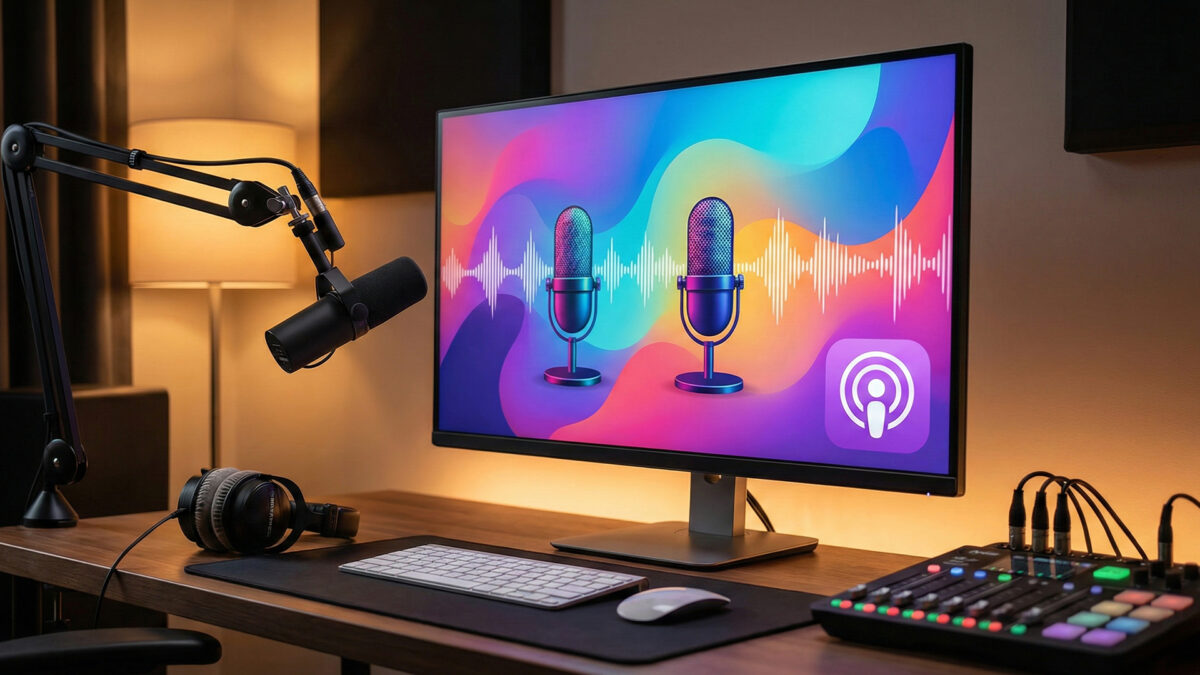
Apple is overhauling Apple Podcasts to include video, letting users watch and listen to episodes with picture-in-picture playback and offline downloads.

Launching this spring with iOS 26.4, iPadOS 26.4, and visionOS 26.4, the update uses HTTP Live Streaming (HLS) to support adaptive video and dynamic ads, including host-read spots. Apple partners with hosts like Acast, ART19, Omny Studio, Simplecast, and AdsWizz to simplify video distribution across devices.

With rising demand, 37% of U.S. adults watch video podcasts, Apple aims to keep creators and audiences on its platform while competing with YouTube, Spotify, and Netflix.

Categories
Technology

Apple sets March 4 global launch event

Apple has announced a global event on March 4 called the “Special Apple Experience.” The event will have in‑person gatherings in New York, London, and Shanghai, starting at 9 am ET. Unlike the usual big keynote, this event is expected to be more interactive, letting the media get hands-on with new products.

While Apple hasn’t confirmed the lineup, industry reports point to several updates. The highlight could be the iPhone 17e, a budget-friendly addition to Apple’s latest smartphone series. Mac fans may see refreshed MacBook Air and MacBook Pro models powered by the new M5 chips, alongside a possible low-cost MacBook aimed at first-time users.

iPads could also get upgrades. The base iPad may feature a faster A18 chip, while the iPad Air is expected to get the M4 processor, boosting performance and AI features.

Apple has not yet confirmed if the event will be streamed online, but with multiple product launches likely, March 4 is shaping up to be one of the company’s key launch events this year.

Also Read: Elon Musk’s $850 bn fortune nears trillion mark

Categories
Technology

Apple’s 6th India store to open in Borivali on Feb 26

Apple Inc. will open its sixth official retail store in India on February 26, expanding its presence in one of its fastest-growing markets. The new outlet will be located in Borivali, a key residential and commercial hub in Mumbai.

The store will open at the Oberoi Sky City Mall, becoming Apple’s second retail outlet in Mumbai after its flagship store at Apple BKC. With this launch, Apple continues to deepen its physical retail footprint across major Indian cities.

India has become an increasingly important market for Apple, both in terms of sales and manufacturing. The company has steadily expanded its retail operations to provide customers with direct access to its full product lineup, including iPhone, iPad, Mac, Apple Watch and accessories.

The Borivali store will offer personalised services such as product setup, technical assistance at the Genius Bar, and Today at Apple sessions ,  free workshops designed to help customers explore photography, coding, creativity and more. Customers will also have access to Apple Trade In and pickup services.

Apple’s expansion strategy reflects its long-term commitment to India. By choosing Borivali, the company aims to serve customers in Mumbai’s western suburbs, making its products and services more accessible beyond central business districts.

Also Read: Uday Kotak takes charge as Chairman of GIFT City

Categories
Uncategorized

Apple to launch new store in Hyderabad

Apple is expanding its retail presence in India with a new store in Hyderabad, as seen from job postings for roles like Store Leader and Genius on its careers portal.

The recruitment suggests the store could open in early 2027. This follows its Noida store launch in December 2025 and plans for a Mumbai outlet.

Apple’s India expansion reflects its growing market share, where it ranks among the top five smartphone brands by volume.

Categories
Technology

Apple acquires Israeli AI start‑up Q.AI for $2 bn

Apple Inc. has acquired Israeli artificial intelligence start‑up Q.AI in a deal valued at around $2 billion, marking one of the company’s largest acquisitions in recent years.

Founded in 2022, Q.AI specializes in advanced machine-learning technology capable of interpreting facial micro‑movements and silent speech, allowing devices to understand user intentions without spoken commands. The start-up has a team of roughly 100 employees, who will join Apple following the acquisition.

The deal signals Apple’s ambition to strengthen its capabilities in wearable devices and AI-powered interfaces. Analysts expect the technology could be integrated into products such as AirPods, smart glasses, or Apple’s Vision Pro headsets, enabling more intuitive ways for users to interact with devices.

Apple has faced increasing competition from tech rivals including Meta, Google, and OpenAI in the AI space, particularly in voice assistants and mixed-reality devices. Industry experts say this acquisition shows Apple’s determination to catch up in AI innovation and enhance its on-device intelligence.

The Q.AI acquisition is second only to Apple’s 2014 purchase of Beats in terms of scale and reflects the tech giant’s broader strategy to invest in next-generation AI technologies that transform user interaction.

Also Read: Defence budget nears 2% of GDP, gets ₹7.85 lakh cr

Categories
Corporate

Apple earnings soar as iPhone sales jump in China

Apple has reported one of its strongest quarterly results ever, thanks to a huge increase in iPhone sales, especially in China, and steady growth in its services business.

For the first quarter of fiscal 2026, Apple earned $143.8 billion in revenue, up 16% from last year, and a profit of $42.1 billion, exceeding analyst expectations. iPhone sales were the main driver, generating $85.3 billion, a 23% rise compared with the previous year.

China played a big role in this growth. iPhone sales in the country jumped about 38%, reaching $25.5 billion. Apple is seeing more customers switch from Android phones, helping it regain market share.

CEO Tim Cook said demand for the iPhone 17 was “staggering,” with strong sales across all major regions. Upgraded features, better performance, and customer upgrades from older models helped boost sales.

Apple’s services, including digital content, subscriptions, and software, also grew 14% to $30 billion, supported by a global active device base of 2.5 billion.

Not everything was perfect. Wearables and home accessories grew slowly, and rising chip costs and supply issues could affect future profits. Apple is also investing in artificial intelligence, including partnering with Google to use the Gemini AI model and buying AI startup Q.ai.

Looking ahead, Apple expects revenue growth of 13–16% for the next quarter, showing confidence in its iPhones and services despite ongoing supply challenges.

Apple’s strong results highlight the continued popularity of its devices and the resilience of its business, with China emerging as a key market once again.

Also Read: ITC Q3 FY26 profit ₹4,931 cr, revenue rises

Categories
Technology

India steps up antitrust heat on Apple

India’s competition watchdog has intensified its scrutiny of Apple Inc. after rejecting the company’s request to temporarily halt an ongoing antitrust investigation into its App Store policies. The Competition Commission of India (CCI) has made it clear that the probe will continue, warning Apple that repeated delays and non-compliance will no longer be tolerated.

The case originates from complaints filed by Tinder owner Match Group and several Indian start-ups, who allege that Apple abused its dominant position in the iOS ecosystem. They claim Apple forces app developers to use its in-app payment system and restricts them from informing users about alternative payment options. Such practices, the complainants argue, increase costs for developers and limit consumer choice.

A CCI investigation report prepared last year found prima facie evidence suggesting Apple engaged in anti-competitive conduct. Apple has strongly contested these findings, maintaining that its App Store rules are designed to ensure user security, privacy, and a consistent digital experience.

In recent months, Apple sought to pause the antitrust proceedings, citing a separate legal challenge in the Delhi High Court. The company is questioning amendments to India’s Competition Act and new penalty guidelines that allow regulators to calculate fines based on a firm’s global turnover. Apple argues that this could expose it to disproportionately large penalties for alleged violations linked only to the Indian market.

However, in a confidential order issued late December, the CCI rejected Apple’s request. The regulator noted that Apple had already been granted multiple extensions to submit financial data and responses, and that further delays would undermine the investigation process. The CCI warned that it could proceed with the case even without Apple’s cooperation if deadlines are missed.

The standoff highlights India’s increasingly assertive approach to regulating large technology companies. Authorities have signalled that global tech giants will be held to the same competitive standards as domestic firms.

Also Read: ICICI Bank Q3 profit seen up 7.5%

Categories
Technology

Apple launches Creator Studio with new AI tools

Apple has introduced Creator Studio, a new all-in-one subscription aimed at content creators, as it looks to expand its fast-growing services segment. The launch comes at a time when Apple is focusing more on software and subscriptions to balance slower growth in hardware sales.

Creator Studio combines Apple’s professional creative applications into a single monthly plan. The service will go live on January 28, 2026, and will cost $12.99 per month or $129 annually, with discounted pricing for students. It will be available on both Mac and iPad.

The subscription includes powerful tools such as Final Cut Pro, Logic Pro and Pixelmator Pro, covering video editing, music creation and image design. Mac users also gain access to apps like Motion and Compressor, while iPad users can take advantage of improved touch controls and Apple Pencil support.

Apple is placing strong emphasis on AI-driven features to attract users. In video editing, new tools allow creators to search clips using spoken words, identify visuals automatically and sync edits with music beats. Music creators can use AI to recognise chords and generate sounds, reducing the time needed to produce tracks.

Beyond creative apps, Apple is adding AI upgrades to everyday tools such as Pages, Numbers and Keynote, helping users create content faster and more efficiently. Additional AI updates for Freeform, Apple’s digital collaboration app, are expected later this year.

Although Apple will continue to sell its apps separately, Creator Studio offers exclusive AI tools and premium features that are not available with one-time purchases. This strategy reflects Apple’s growing focus on subscriptions and predictable revenue.

With Creator Studio, Apple is positioning itself as a strong alternative to established creative software platforms, while deepening engagement within its ecosystem and reinforcing its long-term services strategy.

Also Read: China’s trade surplus soars to $1.2 trillion in 2025

Categories
Technology

Alphabet beats Apple to become No. 2 company

Alphabet Inc., the parent company of Google, has overtaken Apple Inc. to become the world’s second-most valuable company. The rise reflects strong investor confidence in Alphabet’s growth, especially in artificial intelligence (AI).

On January 8, 2026, Alphabet’s market value reached about $3.89 trillion, slightly above Apple’s $3.85 trillion. Alphabet’s shares continued to rise after this, while Apple’s slipped, confirming Alphabet’s new position in global rankings.

Despite Alphabet’s gain, Nvidia remains the world’s most valuable company, with a market capitalization of over $4.4 trillion, driven by its AI hardware and data center business.

Alphabet’s climb is largely due to its success in AI, including the Gemini 3 model and custom AI chips called TPUs. These technologies have helped Google expand from search and ads into cloud computing and AI services, attracting more investors. In 2025, Alphabet’s stock was one of the top performers among major tech companies.

Apple’s valuation has lagged because its AI efforts are slower, and investors are cautious about leadership changes. While Apple is adding AI features to its products, it has not yet matched Alphabet’s AI-driven growth.

AI is now a key factor in determining company value, and companies that lead in AI are attracting more investor attention. Alphabet’s new position highlights the importance of innovation in shaping the world’s biggest companies.

Also Read: Trump orders $200bn mortgage bonds to cut rates

Categories
Technology

Apple’s made-in-India iPhones cross $50 bn in 2025

Apple’s iPhones made in India have hit a remarkable milestone, with exports reaching $50 billion (around ₹4.5 lakh crore) in 2025, the government has revealed. Union Minister Ashwini Vaishnaw called it a “historic achievement” and a testament to India’s growing stature in global electronics manufacturing.

This surge comes as a direct result of India’s Make in India initiative and the Production Linked Incentive (PLI) scheme, both aimed at attracting global companies to set up and expand their manufacturing operations locally. Apple joined the PLI program in 2022, and the results are already visible. In fact, in the first nine months of the current fiscal year alone, India shipped $16 billion worth of iPhones abroad.

Vaishnaw highlighted how India’s electronics industry has grown over the past decade, noting that production has increased six-fold and exports have jumped eight-fold since 2014. Today, smartphones and electronic goods are among the country’s top export categories, and Apple’s success is playing a big role in that story.

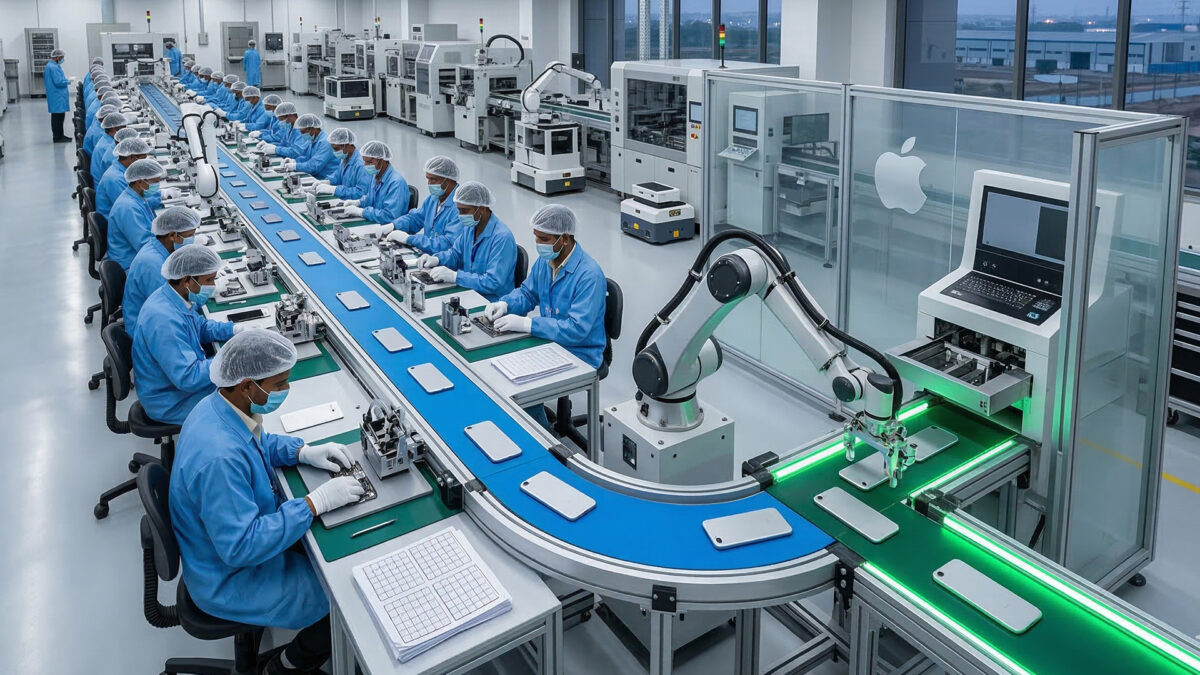
Much of this production comes from Apple’s assembly partners in India, including Foxconn and Tata Electronics. A network of around 45 component makers, including many small and medium enterprises, supports these plants. This ecosystem is not only helping Apple meet global demand but also creating local employment—currently supporting around 2.5 million jobs in electronics manufacturing.

For perspective, while Samsung’s mobile exports from India during a comparable period totaled about $17 billion, Apple’s iPhone shipments have more than doubled that, underlining India’s rising significance in the global supply chain.

For the thousands of workers on the assembly lines, and the millions in supporting industries, the $50 billion achievement represents both pride and promise for the future of “Made in India.”

Also Read: Unnati acquires Gramophone, Info Edge invests ₹35 cr