Categories
Technology

Amazon AI books stir author rights concerns

Amazon has introduced new artificial intelligence features that aim to make reading on Kindle more interactive, but they are raising questions about authors’ control over their work. The company’s latest tool, “Ask This Book,” is now available on the Kindle app for iOS in the United States.

The feature allows readers to ask questions about the book they are reading, such as character details, plot explanations, or background information, and receive instant responses. Importantly, the AI provides spoiler‑free answers, drawing only on the portions of the book the reader has already accessed. Users can activate the tool from the in‑book menu or by highlighting a passage. Amazon says the feature currently works with thousands of popular English-language titles and plans to expand it to Kindle e-readers and Android devices in 2026.

Alongside “Ask This Book,” Amazon has been experimenting with a broader AI initiative called “Ask My Book.” This project can generate responses based directly on the text of a specific book. While the tools are designed to help readers, they have sparked concern among authors and publishers. Many writers worry about copyright and consent issues, questioning whether their work is being used without permission and what control they retain over how their words are processed by AI. Currently, authors and publishers have no option to opt out once their titles are included, which some critics argue could compromise intellectual property rights.

From a reader’s perspective, the new AI features provide convenience and interactivity. They allow quick clarification of confusing passages or exploration of details without leaving the Kindle app or encountering spoilers. Amazon has emphasized that these tools are meant to enhance the reading experience, offering a seamless way for users to engage with books digitally.

As AI becomes increasingly integrated into reading platforms, the tension between innovation and intellectual property rights is likely to grow. Amazon’s approach highlights the balancing act between providing enhanced user experiences and addressing authors’ rights in the age of AI.

Also Read: Elon Musk becomes first person worth $600 billion

Categories
Corporate

Amazon announces $35 billion India growth plan by 2030

Amazon has announced it will invest over $35 billion in India by 2030. This is in addition to the $40 billion it has already invested in the country. The investment will focus on three areas: artificial intelligence, exports, and job creation.

Since 2010, Amazon has helped digitise more than 12 million small businesses in India. It has supported around $20 billion in exports and created 2.8 million jobs, directly or indirectly.

With the new plan, Amazon expects to generate 1 million more jobs by 2030. These jobs will include technology, logistics, operations, customer support, and other related sectors.

Amazon also aims to increase its e-commerce exports from $20 billion to $80 billion by 2030. The company plans to expand access to AI tools for small businesses. This includes improving online shopping experiences with AI features like visual search and multilingual support. Amazon will also offer AI education and training to students.

The announcement was made at the Amazon Smbhav Summit 2025 in New Delhi. The company shared a report highlighting its impact on India’s digital growth, small business empowerment, and job creation over the last decade.

Amazon’s new investment shows its confidence in India’s growing digital economy. It also aligns with national goals to boost AI, strengthen infrastructure, and support small businesses.

This step reinforces Amazon’s commitment to helping India’s economy grow while creating opportunities for millions of people.

Also Read: Anupam Rasayan buys US firm Jayhawk for $150 million

Categories
Corporate

Apple, Amazon, Meta oppose Jio-Vi 6 GHz auction

A new fault line has emerged in India’s digital landscape, with some of the world’s biggest technology companies urging caution just as Indian telecom operators push ahead. Apple, Amazon, Meta, Cisco and others have told TRAI that the 6 GHz band should not be handed over to mobile networks yet, arguing it is better used to strengthen India’s expanding Wi-Fi ecosystem.

Global tech majors submitted a joint response to TRAI’s spectrum consultation, challenging Reliance Jio and Vodafone Idea’s push to auction the 6 GHz band for future 5G and 6G use. According to these companies, the upper portion of the band is not technically ready for mobile services and is still under evaluation internationally.

They want regulators to keep the 6425–7125 MHz range unlicensed for now, allowing wider, faster and more affordable Wi-Fi, something they say benefits consumers, small businesses and India’s digital economy more immediately than reallocating it to telecom operators.

Global players have also urged the government to revisit the band only after 2027, when the next World Radiocommunication Conference is expected to lay down clearer global norms for upper-6 GHz usage.

India has already delicensed 500 MHz in the lower 6 GHz band, while about 400 MHz is likely to be auctioned soon. However, Jio wants the entire 1,200 MHz opened for IMT services to support future network growth.

Telecom operators, represented by COAI, argue that delicensing more spectrum will weaken mobile network capacity, hurt long-term planning and reduce government auction revenues.

Chipmaker Qualcomm has echoed Big Tech’s stance, saying India should wait for global clarity before moving the upper 6 GHz band into mobile services.

With both sides presenting sharply different priorities, telcos pushing for future mobile capacity and tech giants backing robust public Wi-Fi, TRAI now faces the challenge of balancing immediate connectivity needs with longer-term spectrum strategy.

Also Read: Lakshmi Mittal leaves UK as tax fears rise

Categories
1 Minute-Read

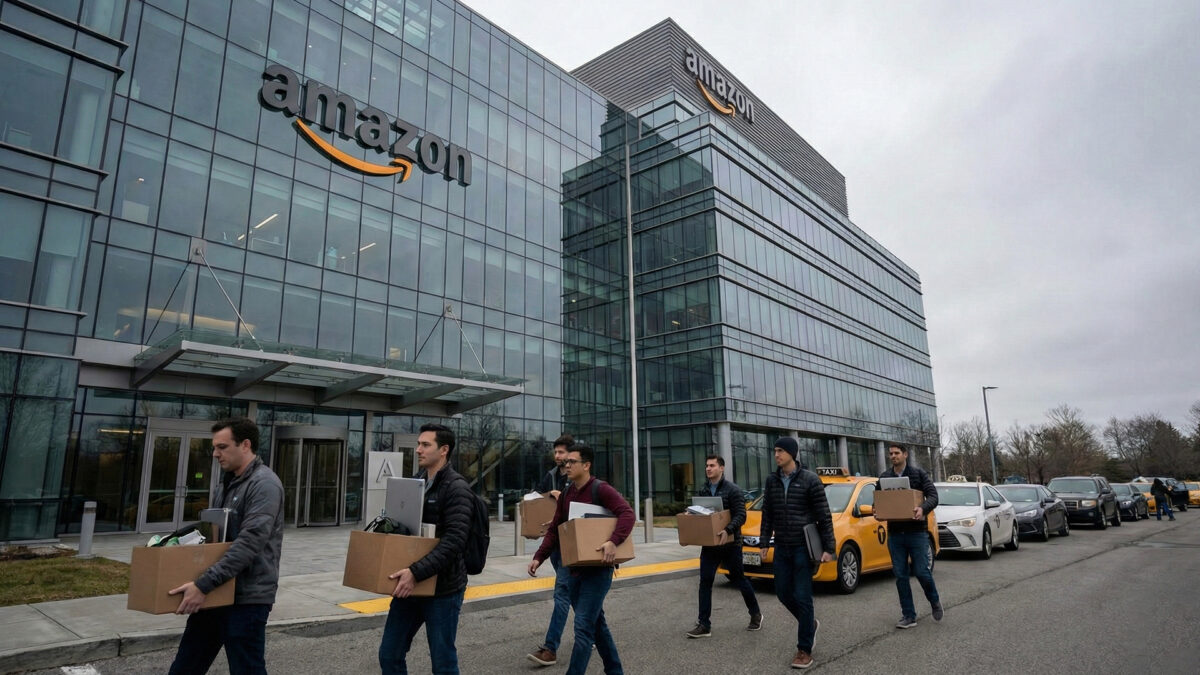
14,000 Amazon employees laid off, engineers bear brunt

Amazon is cutting 14,000 corporate jobs, its largest layoff ever, with engineers hit hardest, accounting for nearly 40% of cuts in key states like New York, California, and Washington.

Mid-level software developers (SDE II) were the most affected, playing a critical role in building and delivering products.

The cuts follow strategic shifts, including scaling back gaming projects and visual-search AI initiatives, as CEO Andy Jassy pushes for faster, leaner operations. Impacted employees get 90 days to apply internally, with severance, career support, and continued health benefits.

This reflects a broader tech trend of AI-driven workforce optimization in 2025.

Categories
Leaders

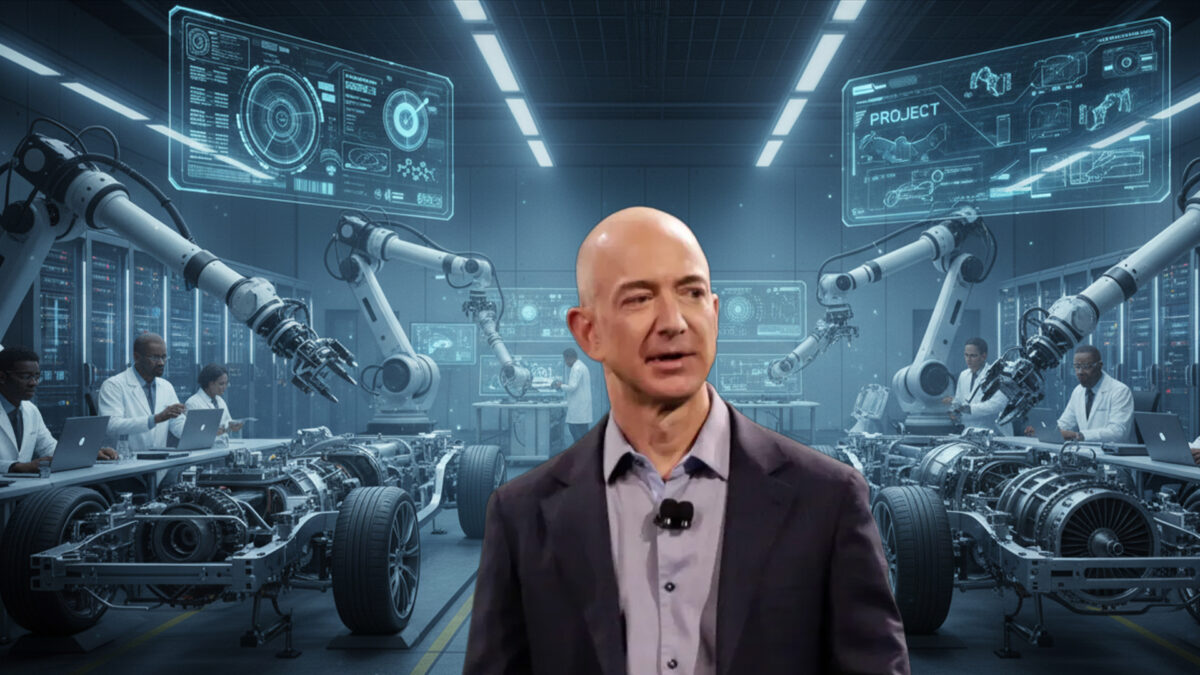
Amazon founder, Bezos , returns to lead $6.2 billion AI startup

Jeff Bezos, the Amazon founder who stepped down as CEO in 2021, is back in the driver’s seat,  this time in the world of artificial intelligence. He will be co‑CEO of a new startup called Project Prometheus, which has already raised a whopping $6.2 billion, with some of the money coming from Bezos himself.

The company is not just another tech startup. Its goal is to use AI to improve engineering, manufacturing, and industries like cars, computers, and even spacecraft. The team includes about 100 top researchers from leading AI labs like OpenAI, DeepMind, and Meta. Bezos will share leadership with Vik Bajaj, a physicist and chemist formerly with Google’s innovation lab, Google X.

This is Bezos’s first formal executive role since leaving Amazon, although he has remained busy with his space venture, Blue Origin.

Not everyone is impressed, though. Elon Musk reacted on social media, calling Bezos a “copycat” and adding a playful cat emoji. The comment reflects the ongoing rivalry between the two billionaires, especially as both are now heavily involved in AI.

Project Prometheus represents a bold move by Bezos to enter the AI space in a serious, hands-on role and the tech world is watching closely to see what he builds next.

Also Read: India’s October trade deficit hits $41.68 billion