
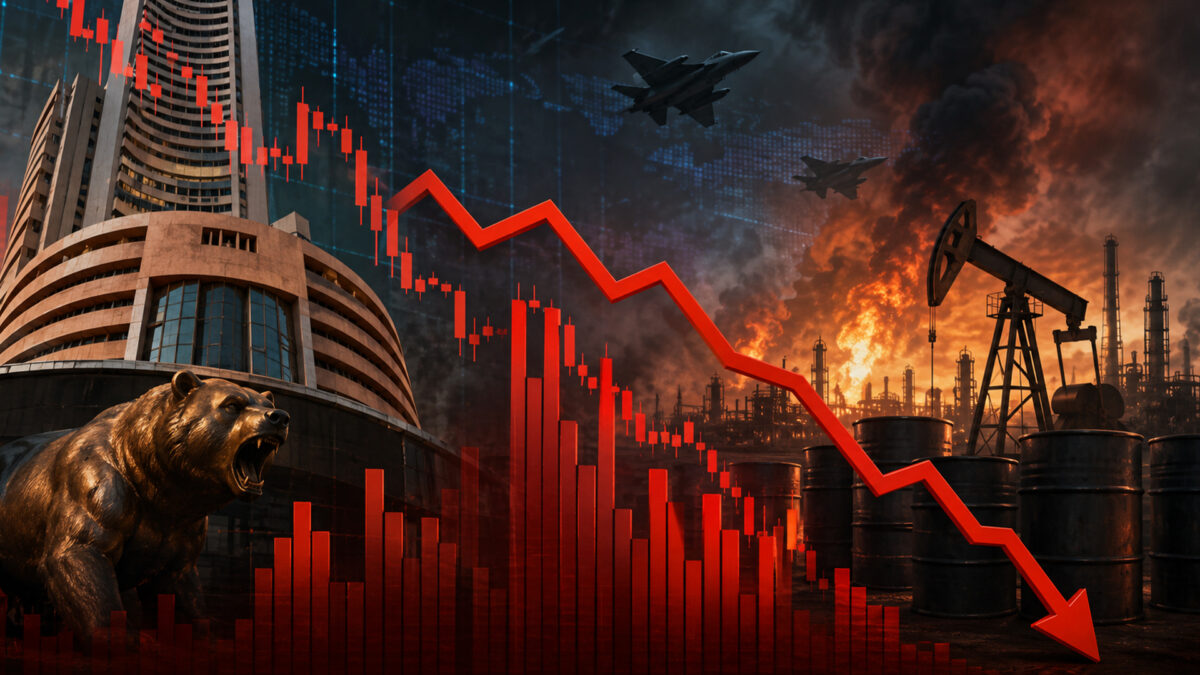
Indian equities slipped sharply on Tuesday, with the Sensex losing more than 400 points and the Nifty 50 falling below 24,500 as rising crude oil prices and renewed uncertainty over the Strait of Hormuz weighed on sentiment. Selling was broad-based, particularly across banking, financial and consumer-facing stocks, although strong earnings lifted select counters such as Gland Pharma and Info Edge. Investors remained cautious as geopolitical risks added to concerns over imported inflation and corporate costs.
The sell-off reflected growing concerns over the impact of higher oil prices on inflation, corporate earnings and the broader Indian economy. Investors also remained cautious as geopolitical tensions involving the United States and Iran clouded the outlook for global energy supplies.
The Sensex opened lower and extended its losses as selling spread across several sectors. The Nifty also weakened below the psychologically important 24,500 level. Banking, financial services, FMCG, media, realty and cement stocks faced pressure, while IT, auto, metals, pharmaceuticals and oil and gas stocks showed relatively better resilience.
Among the day’s notable gainers, Gland Pharma stood out after its strong June-quarter performance. The stock rallied more than 12% during the session after the pharmaceutical company reported a 47% year-on-year rise in consolidated profit for the first quarter of FY27. Revenue also increased 20%, giving investors a positive earnings trigger despite the weak broader market.
Info Edge was another stock in focus after reporting strong quarterly numbers. Its consolidated net profit rose 43% year-on-year to Rs 490 crore, while recruitment billings increased 17.5%. Operating profit also grew 25%, supporting buying interest in the stock.
Jupiter Wagons gained after announcing orders worth Rs 211 crore along with a Rs 400-crore battery energy storage system project. PC Jeweller also attracted buyers after reporting a 37% increase in first-quarter profit and 21% growth in revenue.
On the losing side, Bharti Airtel and IndiGo were among the stocks weighing on the benchmark indices during the early trade. Selling was also visible in several financial and consumption-focused counters as investors reduced exposure to sectors that could face pressure from higher input costs and a cautious economic outlook.
Crude oil remained the biggest trigger for the market decline. Oil prices moved near one-week highs as uncertainty over the Strait of Hormuz increased. The strategically important waterway is a major route for global oil shipments, making any prolonged disruption a significant risk for energy-importing economies such as India.
For Indian equities, an extended rise in crude prices could have several consequences. Higher fuel and transportation costs can raise operating expenses for companies, while elevated energy prices can add to inflationary pressures. This could also complicate the outlook for interest rates and consumer spending.
The rupee faced pressure as well, opening weaker against the US dollar. A softer currency can further increase the domestic cost of imported crude, adding another challenge for the economy if oil prices remain elevated.
Despite the day’s weakness, investors have some domestic factors working in their favour. Corporate earnings have remained relatively encouraging, while domestic consumption continues to provide support to the economy. Foreign institutional investors have also shown signs of renewed buying interest, which could help limit the downside if global conditions stabilise.
The Nifty’s technical levels are now being closely watched. The 24,500 mark has emerged as an important support zone, while 24,650 remains a key resistance level. A sustained break below support could increase selling pressure, whereas a recovery above resistance may improve market sentiment.
Another major stock-specific development was the inclusion of BSE in the Nifty 50. BSE will replace Wipro in the benchmark index from September 30. Analysts expect the change to trigger significant passive fund inflows into BSE shares, making the stock one of the most closely watched counters in the market.
For investors, the immediate focus will remain on crude oil prices, developments around the Strait of Hormuz and movements in the rupee. Global market cues and foreign fund flows will also play an important role in determining whether the current decline deepens or attracts bargain buying.
The market’s near-term direction will depend largely on whether the Nifty can defend the 24,500 support level and whether tensions around the Strait of Hormuz ease. While strong domestic earnings and steady consumption offer some cushion, sustained oil-price gains could keep investors defensive.