
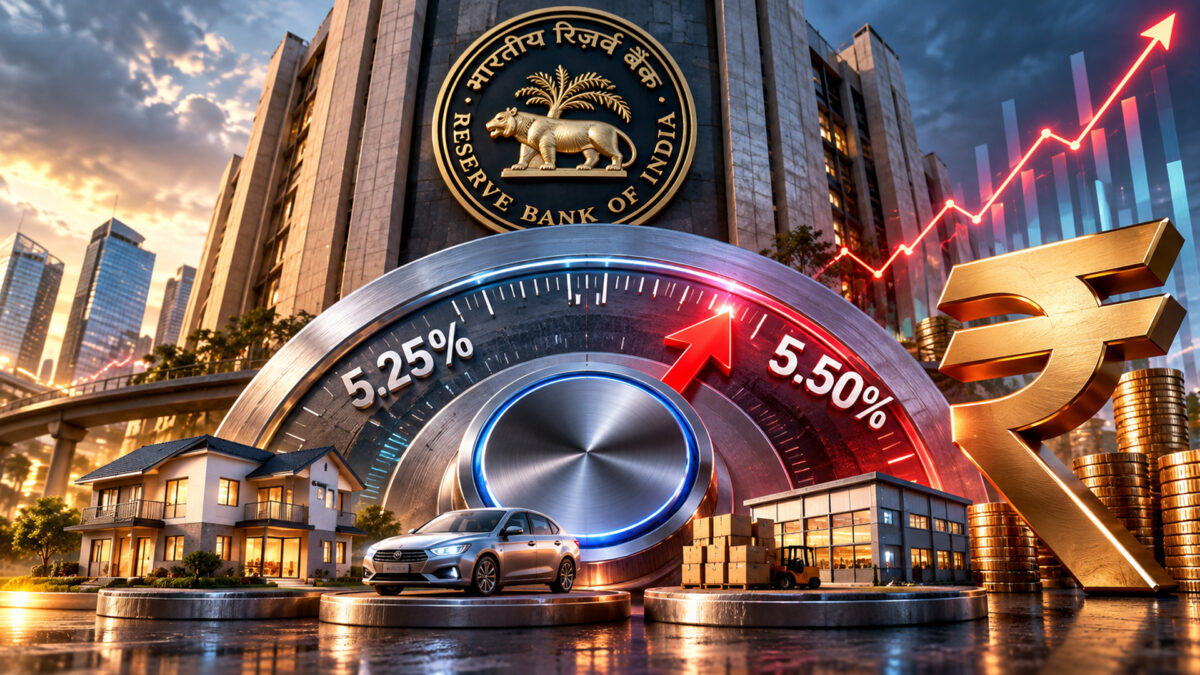
The Reserve Bank of India (RBI) is widely expected to end its rate-cut cycle this week, with economists and bankers increasingly forecasting a 25-basis-point hike in the policy repo rate. The move would mark the first increase in the benchmark rate since February 2023, as rising crude oil prices, broadening inflation and a shift towards tighter monetary policy globally put pressure on the central bank.
The RBI’s Monetary Policy Committee (MPC) began its three-day meeting on Monday and is scheduled to announce its decision on Wednesday, October 7. The policy repo rate currently stands at 5.25%. A 25-basis-point increase would take it to 5.50%.
The expected move would represent a clear reversal from the easing cycle that began in February 2025. The RBI cut the repo rate by 25 basis points in February last year, followed by another 25-basis-point reduction in April, a 50-basis-point cut in June and a further 25-basis-point reduction in December. Those cuts brought the repo rate down from 6.50% to the current 5.25%.
The last rate hike came in February 2023, when the RBI raised the repo rate by 25 basis points to 6.50%. It subsequently kept the rate unchanged through 2023 and 2024 before beginning monetary easing in 2025.
A recent poll of 16 economists and bankers found that most expect the RBI to raise rates by 25 basis points in October. A separate Reuters poll of 61 economists showed 35, or nearly 60%, expecting a similar increase. Financial markets have been even more decisive, with interest-rate swaps pricing in a hike.
The biggest concern for the RBI is the changing inflation picture. India’s retail inflation rose to an eight-month high of 4.82% in August, from 4.45% in July. Inflation has remained above the RBI’s 4% medium-term target for three consecutive months, rising from 3.93% in May to 4.38% in June and 4.45% in July before the August increase.
Economists believe price pressures could become more widespread in the months ahead. Around 19% of the items in the consumer price index basket recorded inflation above 6% in August, compared with 13% in March, according to estimates cited by CareEdge Ratings. That suggests inflation is no longer limited to a few volatile categories.
Crude oil has emerged as another major risk. International oil prices have moved above $100 a barrel amid renewed tensions in West Asia. A prolonged period of expensive crude could push up petrol and diesel prices, raise transportation and production costs and eventually feed into consumer prices.
Higher energy costs are particularly important for India because the country relies heavily on imported crude oil. A sustained increase in oil prices can widen the import bill, put pressure on the current account and weaken the rupee. A softer rupee can, in turn, make imported commodities more expensive and add to inflationary pressures.
The global interest-rate environment has also changed. Major central banks have begun moving towards tighter policy as inflation risks have returned, while global bond yields remain elevated. Economists believe the RBI may need to narrow the interest-rate gap with other major economies and prevent financial conditions from becoming too loose.
The rupee‘s weakness is adding to that pressure. The currency has lost around 6% against the US dollar this year, according to recent market estimates. A rate hike could provide some support by making rupee-denominated assets relatively more attractive, although currency movements will continue to depend on global capital flows and the dollar’s strength.
At the same time, the RBI is not dealing with an economy that is losing momentum. Domestic growth has remained resilient, giving policymakers greater room to focus on inflation. The central bank had projected FY27 real GDP growth at 6.7%, but economists increasingly expect that forecast to be revised upwards following stronger-than-expected economic activity.
The first quarter of FY27 recorded GDP growth of 7.8%, supported by consumption, investment and exports. Healthy GST collections, automobile sales and bank credit have also pointed to continued economic activity. Some economists now expect the RBI to raise its full-year growth projection to above 7%.
That resilience is important because a rate hike carries a cost. Higher borrowing rates can increase EMIs on home, vehicle and personal loans, particularly for borrowers whose loans are linked directly to external benchmarks. Businesses could also face higher financing costs, potentially affecting investment decisions if monetary tightening continues for an extended period.
Banks, however, may not see a major immediate impact on credit demand. SBI Chairman C S Setty has said the economy remains resilient and that a possible repo rate increase may not materially affect credit growth. Banks could also adjust lending and deposit rates depending on liquidity and funding conditions.