
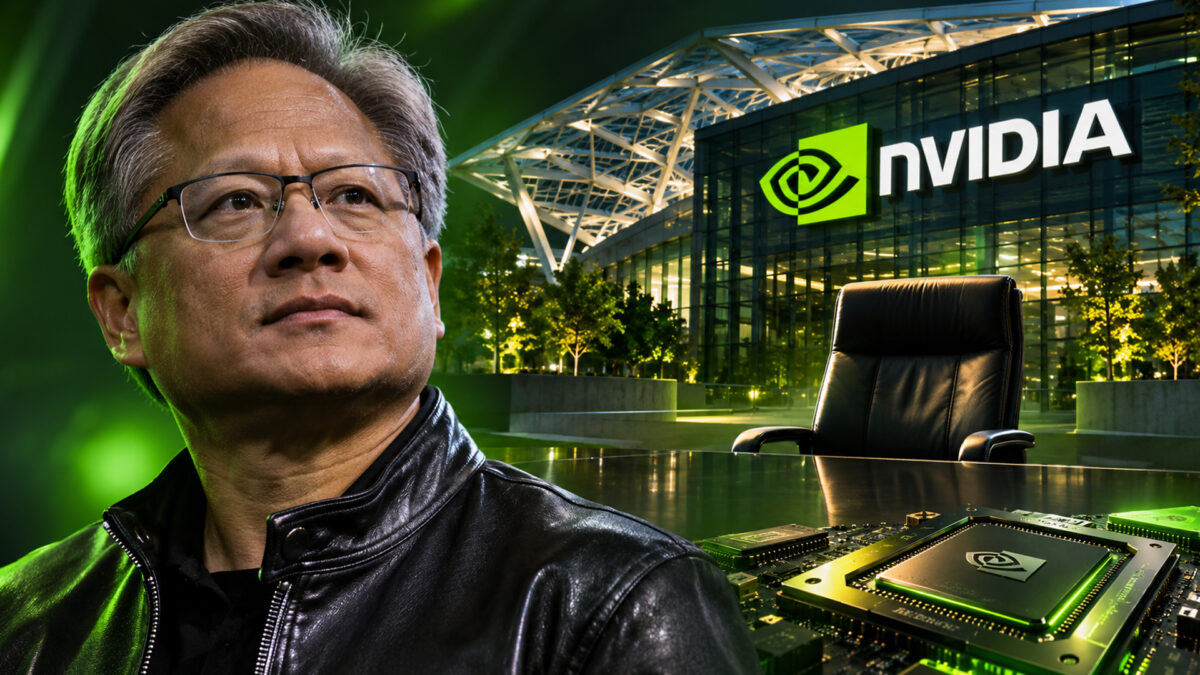
An online campaign calling for Jensen Huang’s return as Nvidia chief executive officer is gathering momentum, with Tesla and SpaceX chief Elon Musk and several influential technology leaders backing the effort. The petition has attracted more than 160,000 signatures, reflecting growing support for the former chief among sections of Silicon Valley, Nvidia employees and investors.
Huang, who co-founded Nvidia in 1993 and led the company for more than three decades, stepped down last week following controversy surrounding his personal relationships and concerns about possible national security implications. His sudden departure has triggered an unusual debate over corporate leadership, board accountability and the future of one of the world’s most valuable artificial intelligence companies.
The petition, titled ‘Stand with Jensen’, urges Nvidia’s board to reconsider its decision and allow an independent investigation into the circumstances surrounding his exit. Supporters argue that Huang deserves a fair hearing and should not be permanently removed before all allegations are properly examined.
Musk publicly endorsed the campaign on X, indicating that he would sign the petition. The billionaire entrepreneur has been among Huang’s prominent supporters and has previously spoken positively about the Nvidia chief’s leadership and achievements.
Other technology leaders, including Epic Games CEO Tim Sweeney and Y Combinator chief Garry Tan, have also backed the campaign. The petition has reportedly attracted thousands of signatures from people identifying themselves as current Nvidia employees, suggesting that support for Huang extends beyond the company’s investor community.
The campaign has also raised questions about how much influence public pressure can exert on the board of a major publicly traded technology company, particularly when its leadership transition involves sensitive legal and national security concerns.
Silicon Valley allies organise comeback effort
The effort to bring Huang back reportedly extends beyond the online petition. A group of influential Silicon Valley executives is said to be exploring a coordinated strategy to persuade Nvidia’s board to reconsider his departure.
According to reports, Huang has discussed the possibility of returning with people close to him. His supporters are also reportedly organising a group of technology executives to lobby the board and explore ways of securing support from the White House.
The proposed initiative has been described as a war room, suggesting that Huang’s allies are preparing a more organised campaign rather than relying entirely on public appeals.
The involvement of prominent business leaders is significant because Huang’s departure has created uncertainty at a company that occupies a central position in the global artificial intelligence industry. Nvidia’s advanced graphics processing units (GPUs) power many of the world’s leading AI systems, making its leadership decisions important to technology companies, governments and investors.
However, neither Nvidia nor Huang has formally confirmed a plan for his reinstatement. The board is continuing to assess the situation and consider its options.
Controversy behind Huang’s departure
Huang’s exit followed reports about his personal relationships, including allegations involving a woman identified as Alice Huang, who was suspected by US intelligence officials of having links to Chinese intelligence.
The reports raised concerns about potential national security implications, given Nvidia’s position as a major supplier of advanced AI chips. The company’s technology is strategically important to the United States, particularly as Washington seeks to maintain its advantage over China in artificial intelligence and semiconductor development.
Huang had also acknowledged an extramarital relationship and apologised to his family and Nvidia employees. Subsequent reports raised further questions about his personal conduct and relationships involving individuals connected to the company.
The developments prompted scrutiny of his position and the possible risks to Nvidia’s confidential information and business operations. The company’s board initiated an independent investigation involving independent directors and external legal advisers.
Nvidia has indicated that it had no reason to believe that national security interests or confidential company information had been compromised. Nevertheless, the investigation remains an important part of the process surrounding the leadership transition.
Colette Kress takes interim charge
Following Huang’s departure, Nvidia appointed its long-serving chief financial officer, Colette Kress, as interim CEO. She is responsible for overseeing the company’s operations while the board considers candidates for the permanent position.
Kress joined Nvidia in 2013 and has played an important role in managing its finances during a period of extraordinary growth. Her experience within the company is expected to help maintain operational stability during the transition.
The board is reportedly considering both internal and external candidates. Arm Holdings CEO Rene Haas has also emerged as a possible contender in discussions about Huang’s successor. However, Nvidia has not confirmed any final selection or appointment.
The search for a permanent chief executive is particularly important because Nvidia’s next leader will have to manage its expanding AI business, semiconductor supply chain, international partnerships and growing regulatory scrutiny.
Washington raises questions over leadership
The controversy has also attracted attention in Washington. US Treasury Secretary Scott Bessent has called for a change in Nvidia’s leadership, suggesting that the company should consider candidates from outside its existing management structure.
His concerns are linked partly to Nvidia’s chip distribution network and the possibility of advanced semiconductors reaching China despite US export restrictions.
The United States has imposed controls on the export of advanced AI chips to China to protect its technological advantage. Nvidia has been caught between these restrictions and the commercial importance of maintaining access to international markets.
Huang had previously argued that American technology companies should remain competitive globally and warned against policies that could hand market opportunities to overseas rivals.
His departure therefore raises questions about whether Nvidia’s future leadership will adopt a different approach to international trade, government relations and its business strategy in China.
Investors watch developments closely
The prospect of Huang returning has divided investors and market analysts. Supporters believe his experience, industry relationships and understanding of Nvidia’s business make him difficult to replace. They argue that his leadership was central to transforming the company from a graphics processor manufacturer into a global powerhouse in AI computing.
Others are less optimistic about the chances of a comeback, pointing to the legal and reputational challenges surrounding his departure. There are also concerns that a prolonged leadership dispute could distract the company from its business priorities.
Questions have emerged about the petition’s credibility as well, with reports that some individuals claimed their names had appeared on the campaign website without their consent.
For Nvidia, the immediate challenge is to maintain investor confidence, reassure employees and customers, and ensure that its business operations remain unaffected by the leadership uncertainty.
Huang’s contribution to Nvidia over more than three decades makes the situation particularly significant. He built the company into a dominant force in the semiconductor industry and positioned it at the centre of the global AI revolution.
Whether the growing campaign will persuade Nvidia’s board to reconsider its decision remains uncertain. The coming weeks could determine whether the company moves ahead with a new leadership structure or faces mounting pressure to bring back the executive who shaped its extraordinary rise.