Categories
Technology

Pulitzer winner Carreyrou, 5 authors sue AI giants over copyright

A group of six authors, including Pulitzer Prize winner John Carreyrou, has filed new lawsuits against six major AI companies, saying their books were used without permission to train AI models. The lawsuits were filed on December 22, 2025, in California.

The companies named are Anthropic, OpenAI, Google, Meta, xAI, and Perplexity AI. The authors claim these companies copied their books from pirate sites like LibGen and Z‑Library to teach AI systems, then profited from the AI models without paying the writers.

Carreyrou, known for Bad Blood, and the other authors rejected a $1.5 billion class action settlement offered by Anthropic earlier this year, saying the payment of around $3,000 per book is far too low for the value of their work.

Instead of joining a class action, the authors are filing individual lawsuits, which allows them to seek the maximum $150,000 per book per company. Across the six companies, this could reach up to $900,000 per book.

The group includes writers from different fields, spiritual books, psychology, IT, and political science, showing concern from many types of authors about how AI uses their work.

The lawsuits focus on AI using pirated books, which the authors say is not fair use and should have stronger legal consequences. Some courts have allowed limited AI use of copyrighted works, but using pirated copies is more serious.

So far, the companies have not responded, and no court dates have been set.

Also Read: Copper hits record $12,000 per ton
Categories
Technology

OpenAI’s ‘Your Year with ChatGPT’ makes 2025 personal

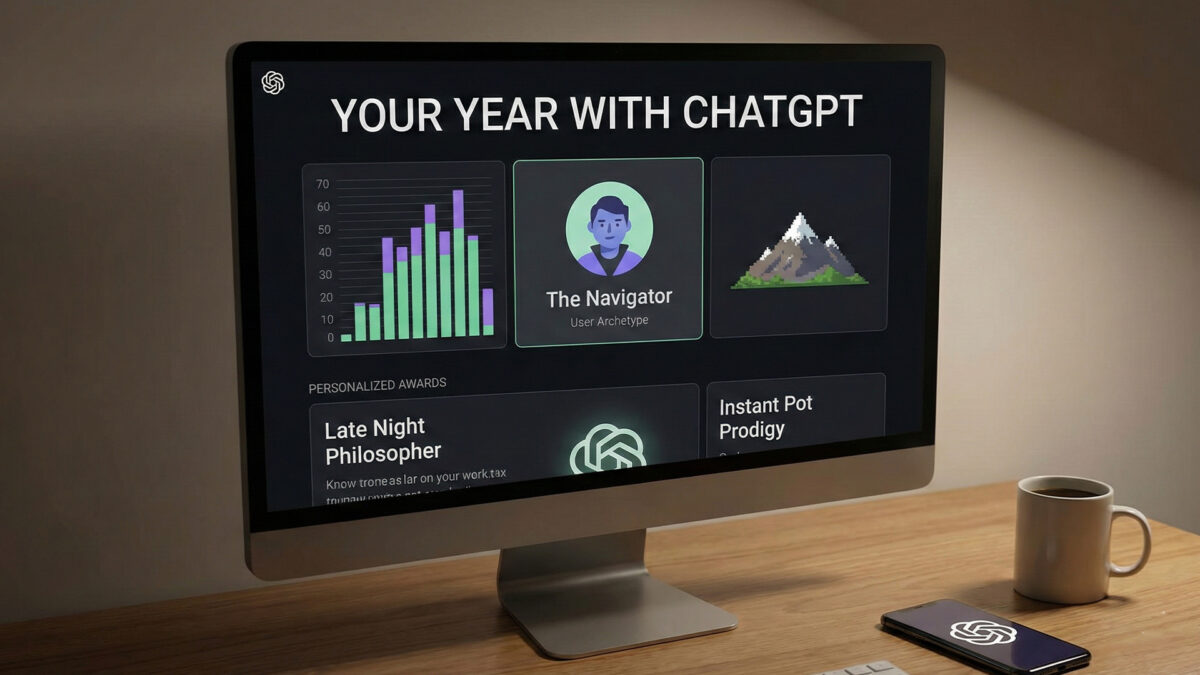
OpenAI has rolled out a new feature called “Your Year with ChatGPT”, offering users a personalised, year-end recap of their interactions with the AI throughout 2025. Similar to Spotify Wrapped, this recap blends stats, insights, and creative elements to show how users engaged with ChatGPT over the year.

The feature highlights key usage metrics such as total messages exchanged, number of chats, peak interaction days, and the most popular topics discussed. It also awards playful, personalised badges based on user behaviour, with titles like “Creative Debugger” or “Curious Explorer,” giving users a fun reflection of how they used ChatGPT.

Beyond numbers, OpenAI makes the recap visually engaging. Each summary begins with a short, AI-generated poem reflecting the user’s year and concludes with pixel art inspired by their most frequent conversation themes. This mix of stats, storytelling, and visuals creates an engaging and humanised experience rather than just a dry analytics report.

To access the recap, users need to have “reference saved memories” and “chat history” enabled. Once set up, they can trigger the feature directly in the ChatGPT app or by asking prompts like “Show me my year with ChatGPT.” The feature is available on Android, iOS, and web platforms for Go (India), Plus, and Pro users, while Team, Enterprise, and Education accounts are not supported.

OpenAI is gradually rolling out this feature across multiple regions, including India, the U.S., Canada, the U.K., Australia, and New Zealand. By providing a personalised summary of the year, the company encourages users to reflect on how they interacted with AI, highlighting both creativity and curiosity in their engagement.

Your Year with ChatGPT shows how AI can not only provide information but also create meaningful, fun experiences that celebrate the ways people use technology. With stats, creative visuals, and quirky awards, it’s a year-end gift from ChatGPT to its users, making 2025’s conversations memorable and personal.

Also Read: Apollo Micro gains access to DRDO’s advanced weapon tech

Categories
Technology

AI’s next leap will be memory, not reasoning, says Sam Altman

OpenAI CEO Sam Altman says the next big advance in artificial intelligence will focus on memory, rather than improving reasoning skills. Current AI systems, including the latest models, are good at solving problems but cannot remember past interactions, meaning users often have to repeat information each time they use them.

Altman envisions AI that can retain long-term memory of user interactions, preferences, emails, documents, and conversations. This would allow AI to learn from past experiences, anticipate user needs, and provide more helpful suggestions without needing repeated instructions.

This shift to memory-based AI aims to create a personalized assistant that truly understands each user over time. Altman believes such AI could become available as early as 2026, moving beyond simple question-answering to proactive support in daily tasks.

At the same time, Altman acknowledges privacy and security concerns. He suggests that advanced encryption and safeguards will be necessary to protect sensitive user data.

With this focus, AI could evolve from a reactive tool into a trusted digital companion, offering smarter, more intuitive help tailored to each individual user’s life and work.

Also Read: B P Kanungo appointed IIFL finance chairman

Categories
Technology

Google launches Pixel upgrade program in India

Google has launched the Pixel Upgrade Program in India, making it easier for people to buy and upgrade Pixel smartphones. The program is available until 30 June 2026 through selected stores and online partners. Customers can buy eligible Pixel phones on a 24-month no-cost EMI plan, starting at just ₹3,333 per month.

The program covers Pixel 10 series models, including Pixel 10, Pixel 10 Pro, Pixel 10 Pro XL, and Pixel 10 Pro Fold. Payments and upgrades are handled through partners like Bajaj Finance, HDFC Bank, and Cashify, which also takes care of buybacks.

Once enrolled within 30 days of purchase, customers can upgrade to a newer Pixel device after paying at least nine monthly instalments and before completing the fifteenth. When upgrading, Cashify buys back the old phone, and the remaining EMI balance is cleared, letting the customer start a new 24-month EMI plan for the new device without extra charges.

The program also gives exchange bonuses up to ₹7,000, depending on the old phone’s value. New Pixel buyers get free trials of Google services. For example, Pixel 10 Pro users receive one year of Google AI Pro, six months of Fitbit Premium, and three months of YouTube Premium, while Pixel 10 users get trials for Google One Premium (2TB), Fitbit Premium, and YouTube Premium.

Google says this program is designed to make premium phones more affordable and provide an easy way to upgrade every year. By spreading the cost over time and offering buyback and bonus services, the program gives customers more flexibility and convenience.

This initiative is part of a growing trend of subscription-style phone access in India, allowing people to enjoy the latest devices without paying the full price upfront. It also encourages users to stay in the Pixel ecosystem with perks and yearly upgrades, making high-end smartphones more accessible to a wider audience.

Also Read: Nike struggles in China as sales slide persists

Categories
Technology

TikTok US joint venture limits ByteDance stake

TikTok, the popular short-video platform owned by Chinese company ByteDance, has signed a binding agreement to transfer control of its USoperations to a new joint venture. The step is aimed at avoiding a potential US ban, which was being considered over national security concerns related to ByteDance’s Chinese ownership.

Under the deal, the new company known as TikTok USDS Joint Venture LLC , will be majority-owned by American and global investors, including technology giant Oracle, private equity firm Silver Lake, and Abu Dhabi-based MGX. ByteDance will retain a 19.9% stake, the maximum allowed for a Chinese company under US law. Other ByteDance-affiliated investors will hold about 30.1%.

The agreement gives the joint venture control over key areas such as U.S. user data security, content moderation, software auditing, and algorithm management. Oracle will act as a “trusted security partner”, ensuring that American user data is stored safely on U.S.-based servers and regularly audited for compliance with security standards.

TikTok’s CEO, Shou Zi Chew, said the joint venture will operate independently and safeguard U.S. users’ privacy while maintaining the platform’s popular features and content.

The deal is expected to close by January 22, 2026, giving TikTok a clear path to continue serving over 170 million American users without regulatory interruptions. The agreement also follows years of U.S. scrutiny over TikTok, including threats of a ban and demands to limit Chinese ownership.

While the restructuring satisfies US legal requirements, some lawmakers have questioned whether a minority stake by ByteDance and continued access to its recommendation algorithm fully eliminate potential security risks. Analysts believe the joint venture represents a compromise that balances regulatory compliance, investor interests, and continued service for users.

Also Read: Ukraine to receive €90B EU loan, Russian assets omitted

Categories
Technology

Meta AI glasses get noise filter, Spotify play

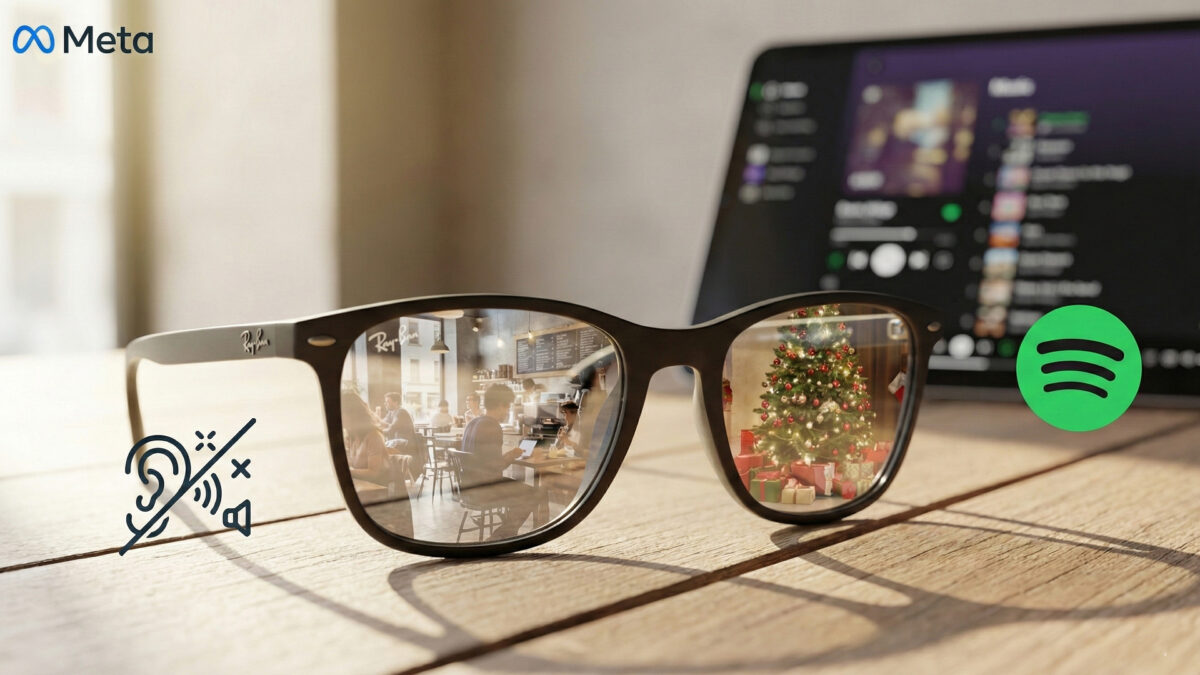
Meta Platforms has released a major update for its AI-powered smart glasses, including Ray-Ban Meta and Oakley Meta HSTN models. The v21 update is currently available in the US and Canada via Meta’s Early Access Program, with a wider rollout planned. The update brings two main features: Conversation Focus and Spotify integration, aimed at making the glasses more useful for everyday life.

Conversation Focus helps users hear people more clearly in noisy environments. Using the glasses’ built-in speakers and microphones, it isolates the voice of the person in front of the wearer while reducing background noise. Users can adjust the level of focus by swiping the right temple of the glasses or via settings, making it easier to talk in places like restaurants, trains, or crowded streets.

The update also integrates Spotify directly into the glasses. Users can now ask the AI to play music hands-free, and the system can even suggest songs based on what the wearer is looking at. For instance, saying “Hey Meta, play a song to match this view” while looking at a scene can trigger a playlist tailored to that environment, combining visual recognition with music recommendations.

The v21 update also expands voice command support in English and introduces regional language options. In India, Telugu and Kannada are now supported alongside English and Hindi, making the AI glasses more accessible to local users.

With these upgrades, Meta aims to make its smart glasses more practical for daily life, improving conversation clarity, hands-free music control, and personalised experiences. The update shows Meta’s focus on blending technology with real-world usability, making AI-powered glasses not just a gadget but a helpful companion for work, travel, and leisure.

The v21 update marks a step forward in Meta’s vision for smart eyewear, offering a mix of convenience, entertainment, and enhanced interaction in a compact device worn on the face. Users can expect a smoother experience with clearer audio, interactive music, and smarter AI features as Meta continues to refine its wearable technology.

Also Read: India and Oman ink historic CEPA trade deal

Categories
Technology

World’s smallest robots sense, think and move

Scientists in the United States have unveiled what could be called the world’s tiniest autonomous robots, machines so small that they are invisible to the naked eye, yet capable of sensing, thinking, and moving on their own. Measuring just 0.2 mm by 0.3 mm by 0.05 mm, each robot is smaller than a grain of salt, but carries a remarkable set of capabilities, including a “micro-brain” computer and sensors that allow it to navigate its environment independently.

Unlike conventional robots that rely on remote controls or wires, these microscopic machines are powered by pulses of light, which not only fuel them but also allow them to process information and make decisions in real time. This means they can adjust their paths, respond to temperature changes, and even perform complex movement patterns without any human intervention.

The robots are designed to swim through liquids, operate for months at a time, and even coordinate as a group, mimicking behaviors seen in nature, like schools of fish. Despite their advanced abilities, these machines are incredibly affordable, costing only about one penny each to produce. This opens up the possibility of large-scale experiments or practical applications without prohibitive costs.

Researchers are already exploring medical applications, such as monitoring the health of individual cells or delivering precise doses of treatment at a microscopic level. Beyond healthcare, these tiny robots could play a role in manufacturing ultra-small devices, where precision and autonomy are crucial.

Experts say this breakthrough solves one of the biggest challenges in robotics: creating machines that are both extremely small and fully autonomous. By integrating sensing, processing, and movement into a microscopic package, scientists have opened the door to a new era of microscale, programmable robots.

With their ability to think, move, heal, and even coordinate with one another, these tiny robots could redefine fields ranging from medicine and research to industrial manufacturing, proving that even the smallest machines can have a huge impact on the world.

Also Read: Apple explores chip assembly in India

Categories
Technology

US Tech Force set to boost AI and digital services

The US government is stepping up its tech game with a bold new initiative called the Tech Force. The program will bring around 1,000 skilled technology professionals into federal agencies for two-year assignments, giving the government a much-needed boost in artificial intelligence (AI), digital services, and software modernization.

Managed by the Office of Personnel Management, Tech Force roles offer competitive salaries ranging from $150,000 to $200,000 a year, along with standard benefits. Officials say the program is designed to be flexible, giving specialists hands-on experience in government while also allowing them to explore opportunities in the private sector after their tenure.

Several leading tech companies, including Apple, Microsoft, Amazon Web Services, Google Public Sector, Nvidia, OpenAI, Oracle, and Meta, are partnering in the initiative. They will provide training, mentorship, and temporary placements, helping participants navigate complex government projects while sharing real-world expertise from the private sector.

The initiative is non-partisan and aims to modernize government operations, improve public services, and strengthen the U.S.’s position in global technology and AI. Experts say this approach could transform how federal agencies operate, making them faster, smarter, and more responsive to citizens’ needs.

With the Tech Force, the government hopes to close the gap between private-sector innovation and public-sector execution, giving the country a strong footing in the rapidly evolving world of AI and emerging technologies.

Also Read: CEO Bhavish Aggarwal sells 2.6 crore Ola Electric shares

Categories
Technology

Amazon AI books stir author rights concerns

Amazon has introduced new artificial intelligence features that aim to make reading on Kindle more interactive, but they are raising questions about authors’ control over their work. The company’s latest tool, “Ask This Book,” is now available on the Kindle app for iOS in the United States.

The feature allows readers to ask questions about the book they are reading, such as character details, plot explanations, or background information, and receive instant responses. Importantly, the AI provides spoiler‑free answers, drawing only on the portions of the book the reader has already accessed. Users can activate the tool from the in‑book menu or by highlighting a passage. Amazon says the feature currently works with thousands of popular English-language titles and plans to expand it to Kindle e-readers and Android devices in 2026.

Alongside “Ask This Book,” Amazon has been experimenting with a broader AI initiative called “Ask My Book.” This project can generate responses based directly on the text of a specific book. While the tools are designed to help readers, they have sparked concern among authors and publishers. Many writers worry about copyright and consent issues, questioning whether their work is being used without permission and what control they retain over how their words are processed by AI. Currently, authors and publishers have no option to opt out once their titles are included, which some critics argue could compromise intellectual property rights.

From a reader’s perspective, the new AI features provide convenience and interactivity. They allow quick clarification of confusing passages or exploration of details without leaving the Kindle app or encountering spoilers. Amazon has emphasized that these tools are meant to enhance the reading experience, offering a seamless way for users to engage with books digitally.

As AI becomes increasingly integrated into reading platforms, the tension between innovation and intellectual property rights is likely to grow. Amazon’s approach highlights the balancing act between providing enhanced user experiences and addressing authors’ rights in the age of AI.

Also Read: Elon Musk becomes first person worth $600 billion

Categories
Technology

Tesla Diner opens mini racetrack for kids in Hollywood

Tesla is taking family fun to a new level at its West Hollywood, Tesla diner. Over the holiday weekend, the Tesla Diner transformed its parking and charging area into a playful experience, featuring a miniature racetrack where children could drive scaled-down Cybertruck-style vehicles. Parents and onlookers cheered as kids navigated tire-lined circuits around a prominently displayed red Model Y Performance.

The racetrack event is part of the diner’s holiday celebrations, which also include a pop-up market selling Tesla-themed merchandise. Guests could browse for miniature gift items, festive collectibles, and even take part in an interactive activity that lets them paint on a full-scale Cybertruck display, turning it into a collaborative holiday artwork.

A video of the racetrack went viral online, catching the attention of Tesla CEO Elon Musk, who described the scene as “super cute” on social media. Musk’s comment quickly spread, highlighting the company’s unique blend of innovation and community engagement.

The Tesla Diner itself, launched earlier this year, is designed to be more than just a charging hub or restaurant. Combining dining, EV charging, a drive-in theatre, and merchandise shopping, it is a space where Tesla enthusiasts and casual visitors can gather, explore, and enjoy hands-on experiences.

While the holiday racetrack is currently a limited-time attraction, fans have already expressed hope that Tesla will expand similar family-friendly events to other locations. By turning a charging stop into a destination for fun and creativity, Tesla is redefining how automotive and tech brands can engage with communities during the festive season.

Also Read: Seven launches put ISRO on fast track for March 2026