Categories
Leaders

Elon Musk becomes first person worth $600 billion

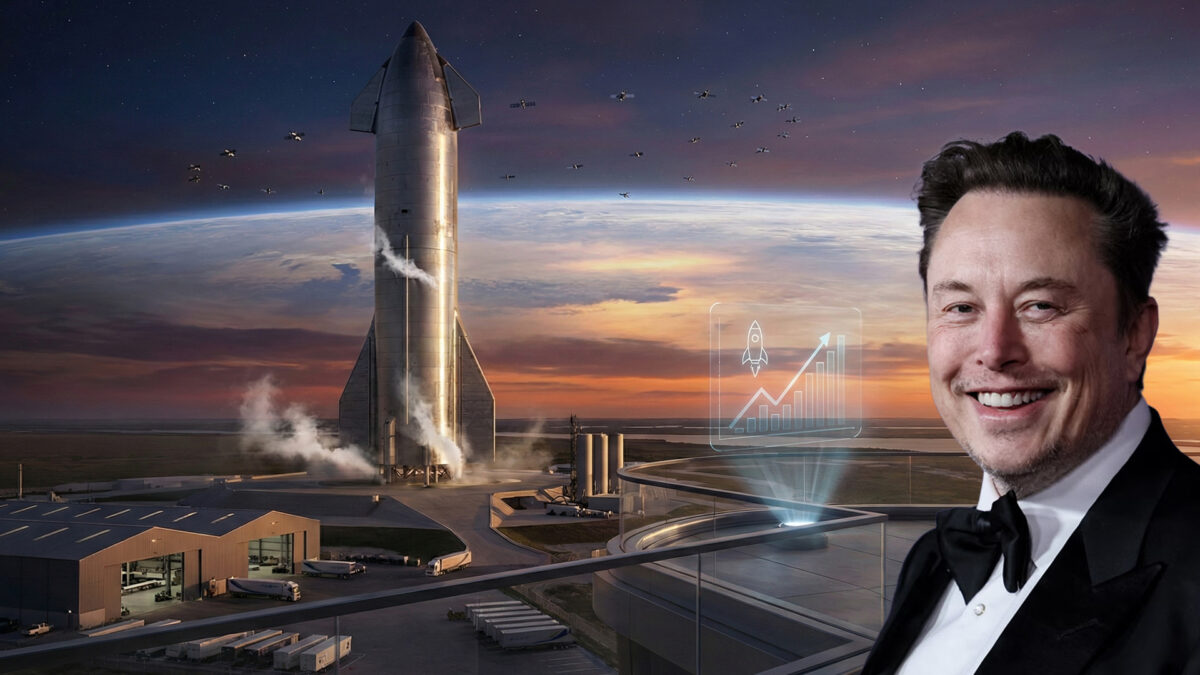
Elon Musk has become the first person in history to reach a net worth of $600 billion, according to Forbes. The sharp rise in his wealth is mainly due to growing expectations that SpaceX, his private space company, is preparing for an initial public offering (IPO) in the coming years.

SpaceX’s valuation has surged sharply as investor interest in the space industry grows. Reports suggest the company could be valued at around $800 billion when it goes public, possibly by 2026. Musk owns about 42 percent of SpaceX, making it the single largest contributor to his personal wealth. If the IPO goes ahead at the expected valuation, his net worth could rise even further.

Apart from SpaceX, Musk’s fortune is also supported by his stake in Tesla, the electric vehicle maker. He owns roughly 12 percent of Tesla, whose shares have performed strongly in recent months. Tesla remains one of the most valuable carmakers in the world and continues to play a key role in Musk’s financial standing.

Musk’s other ventures also add to his growing wealth. These include his artificial intelligence company xAI and his social media platform X. While these businesses are still evolving, investors see long-term value in Musk’s technology-driven approach and ambitious projects.

Earlier this year, Musk had already crossed the $500 billion mark, another first for any individual. The latest milestone places him far ahead of other global billionaires and sets a new benchmark for personal wealth. Market watchers say no individual in modern history has accumulated wealth at this scale.

Experts note that Musk’s fortune is closely tied to market valuations rather than cash holdings. Most of his wealth is invested in company shares, which can rise or fall with market conditions. Still, with SpaceX’s IPO on the horizon and strong investor interest in his companies, Musk’s financial influence continues to grow.

While Musk has not officially commented on the Forbes estimates or IPO plans, the numbers highlight the massive global impact of his businesses.

Also Read: SEBI starts ₹18 cr recovery against finfluencer ‘Baap of Charts’

Categories
Leaders

Meesho founder Vidit Aatrey joins the billionaire club

Vidit Aatrey, co‑founder and CEO of social commerce platform Meesho, has joined the ranks of global billionaires following a sharp rise in the company’s share price after its initial public offering (IPO). The stock jumped significantly above its issue price, pushing Aatrey’s personal wealth into the billion‑dollar range.

Meesho’s shares climbed to around Rs 193, representing a 74 percent increase over the IPO issue price of Rs 111 per share. This surge translated into substantial gains for Aatrey, who holds roughly 47.25 crore shares, or an 11.1 percent stake in the company. At these levels, his holdings were valued at over Rs 9,000 crore (approximately USD 1.1 billion).

The company’s listing reflects strong investor interest in its mobile‑first, social‑commerce model, which enables small businesses and individual sellers to reach consumers across India. The IPO attracted significant attention from both retail and institutional investors, and the stock’s performance post‑listing underscores market confidence in Meesho’s growth potential.

Industry observers say the rally highlights optimism about India’s domestic e‑commerce sector, especially for companies with scalable, asset‑light business models. Meesho’s focus on affordable products and penetration into smaller cities and towns has helped it build a broad consumer base, contributing to its strong stock performance.

For Vidit Aatrey, this milestone marks the culmination of a decade-long journey from a startup founder to one of India’s newest billionaires. Together with co‑founder Sanjeev Barnwal, he has grown Meesho from a niche social reselling platform into a mainstream e‑commerce company, attracting major global and domestic investors along the way.

As Meesho expands its operations and works toward profitability, its successful IPO may serve as a benchmark for future listings in India’s technology sector, signaling continued investor enthusiasm for innovative, growth-oriented startups.

Also Read: SEBI to review key mutual fund, broker and IPO rules

Categories
Leaders

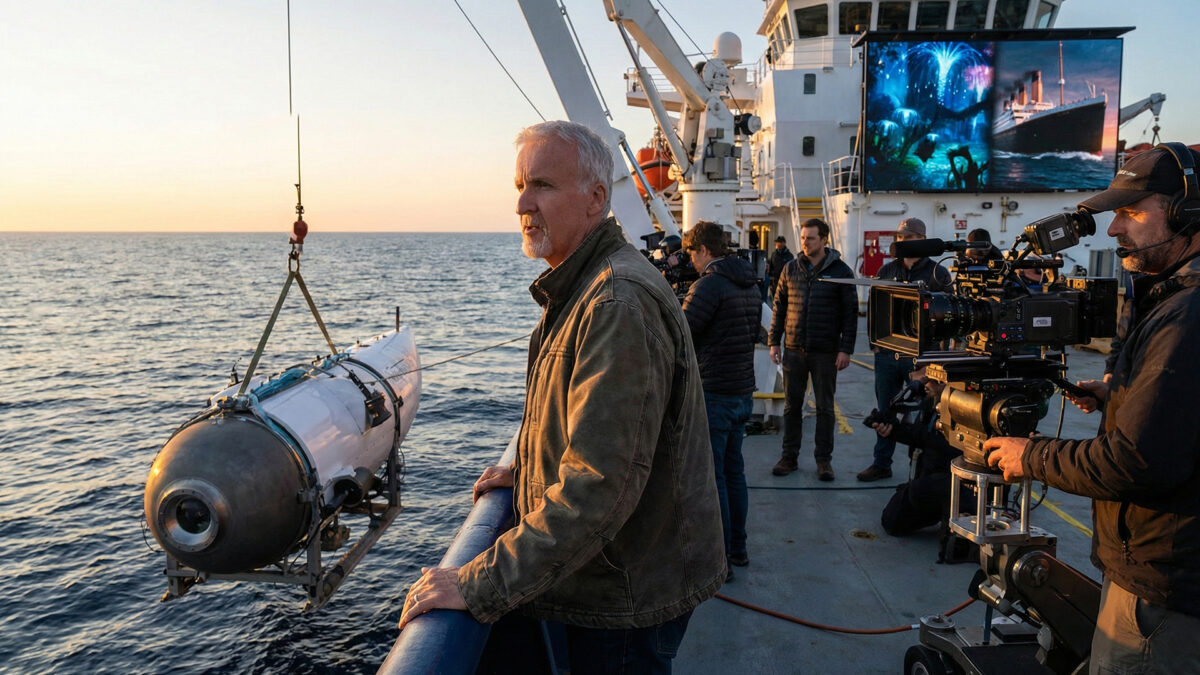
James Cameron’s films make him a billionaire

Filmmaker James Cameron has officially become a billionaire, according to Forbes, with his net worth now estimated at around $1.1 billion. Cameron, 70, is best known for directing blockbuster hits such as The Terminator, Titanic, and the Avatar series, which together have earned nearly $9 billion worldwide at the box office.

Unlike many wealthy celebrities who earn through investments or endorsements, Cameron’s fortune comes almost entirely from his movies. His wealth is generated through salaries, profit shares, licensing deals, and stakes in his production company, Lightstorm Entertainment. This approach has allowed him to maintain creative control over his projects while building long-term financial rewards.

Cameron’s billionaire status is the result of four decades in Hollywood. He began working in the film industry in the early 1980s, taking financial risks to fund his own ideas, including early sci-fi projects and underwater documentaries. Over time, his movies not only drew global audiences but also led to lucrative licensing deals, such as partnerships with theme parks for Avatar-inspired attractions.

Despite reaching this milestone, Cameron has often downplayed his wealth, noting that the label “billionaire” does not fully capture his situation. He has focused more on storytelling, technical innovation, and environmental projects than on personal wealth accumulation.

Looking ahead, Cameron’s earnings are likely to grow even further with the upcoming release of “Avatar: Fire and Ash,” the latest installment in the Avatar franchise. The film is expected to bring in hundreds of millions of dollars more, reinforcing his position as one of Hollywood’s most financially successful directors.

Cameron now joins a select group of directors who have become billionaires from their work in films, alongside names like George Lucas and Steven Spielberg. His journey highlights how vision, risk-taking, and smart business decisions can turn creative passion into extraordinary financial success.

Through his films and ventures, James Cameron has not only entertained millions around the world but also set a new benchmark for filmmakers in terms of wealth, influence, and artistic control.

Also Read: Shiprocket files revised papers for ₹2,342 crore IPO

Categories
Leaders

Fed’s Hammack backs tighter policy for inflation

Beth Hammack, President of the Federal Reserve Bank of Cleveland, said the US central bank should maintain a tighter monetary policy because inflation remains above comfortable levels. She made the remarks while speaking at a public event, stressing that price pressures have not eased enough.

Hammack said current interest rates are now close to a “neutral” level following the Federal Reserve’s recent quarter-point rate cut. However, she added that she would prefer policy to be slightly more restrictive to ensure inflation continues to move down.

The Federal Reserve recently lowered its benchmark interest rate to support economic growth and employment. Hammack suggested that had she been a voting member at the policy meeting, she might not have supported the rate cut.

She noted that the central bank must carefully balance its fight against inflation with the need to sustain a strong labour market. If inflation remains elevated while economic conditions stay firm, she said policymakers may need to rethink the level of restriction.

Hammack is not a voting member of the Federal Open Market Committee this year but is expected to vote in a future cycle. She also expressed confidence that the Federal Reserve will remain committed to its long-term goal of bringing inflation back to 2 percent.

Also Read: Venezuela oil exports drop after US tanker seizure

Categories
Leaders

Microsoft CEO builds AI Cricket App at leisure time

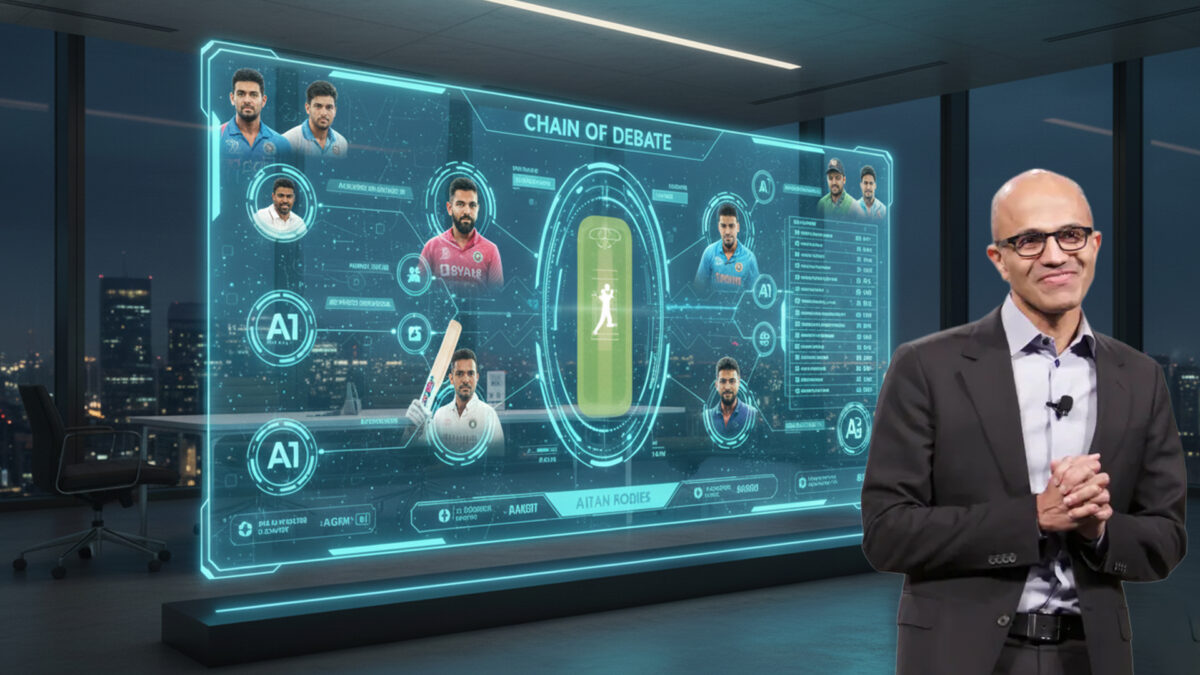
Microsoft CEO Satya Nadella has created his own cricket analysis app using artificial intelligence. He built it during his free time over the Thanksgiving holiday, combining his love for technology and cricket.

At an event in Bangalore, Nadella showed how the app works. It can analyze players and teams, help debate choices, and even pick an all-time Indian Test cricket team. Nadella joked that using the app made him want to join Microsoft’s Copilot AI team.

The app, built on Nadella’s Deep Research AI, explains its reasoning and shows where experts might agree or disagree on cricket selections.

Nadella is also a cricket investor. He has stakes in the London Spirit team in the UK’s Hundred league and the Seattle Orcas, a T20 franchise near Microsoft’s headquarters.

This project shows how AI can be used not just for business but also for fun and sports analysis, reflecting Nadella’s personal interests and tech expertise.

Also Read: NITI Aayog targets corporate bond growth

Categories
Leaders

Nestlé India eyes faster organic growth

Nestlé India’s newly appointed MD, Manish Tiwary, has laid out a strategy to accelerate growth through organic expansion rather than acquisitions. The company plans to focus on increasing household penetration and promoting healthier, high-quality variants within its existing product categories.

The company will increase advertising spending and introduce more items from its global portfolio to the Indian market, aiming to reach the Rs 20,000 crore revenue milestone faster. Tiwary noted that the current brand portfolio has “immense depth and potential,” so adding new brands is not an immediate priority.

Profit margins are expected to stay in the 22–24 percent range despite inflation, with a focus on digitisation across supply chain, sales, and consumer engagement to improve efficiency. While rural India contributes around 17–18 percent of sales, the company plans growth in both urban and rural markets with tailored strategies.

Tiwary emphasised that organic growth, technology investment, consumer-first agility, and enhanced advertising are central to the plan. He expects volume-led growth, supported by strong distribution, quick-commerce partnerships, and evolving consumer preferences for premium and healthier products.

Also Read: Instagram introduces “Your Algorithm” for personalized reels

Categories
Leaders

Hinge CEO steps down to lead new AI dating app

Justin McLeod, founder and Chief Executive Officer of Hinge, has stepped down from his role to lead a new artificial intelligence-powered dating startup. The move marks a major leadership transition at one of the most recognised relationship-focused dating platforms and signals the growing influence of AI in the online dating industry.

McLeod, who founded Hinge in 2011, will now head a new company called Overtone. The upcoming app is designed to move beyond traditional swipe-based dating by focusing on voice, personality and compatibility rather than just photos. It aims to help users form more meaningful connections through AI-driven matching and voice-first interactions.

Overtone has been in development for more than a year and has received early-stage funding from Match Group, the parent company of Hinge. While Match Group has backed the venture and plans to participate in future funding rounds, Overtone will operate independently. Match Group will retain a significant ownership stake in the new company.

Leadership at Hinge will now pass to Jackie Jantos, who previously served as President and Chief Marketing Officer. She joined Hinge in 2019 and has played a key role in expanding the platform’s global presence and strengthening its appeal among younger users. McLeod will continue to advise the company during a transition period to ensure operational continuity.

Hinge gained popularity with its positioning as “the dating app designed to be deleted,” promoting long-term relationships instead of casual matches. McLeod intends to carry this philosophy forward with Overtone, using AI and voice technology to make digital dating more human and authentic.

Industry observers view this shift as part of a wider trend in the sector, with dating platforms increasingly investing in artificial intelligence to improve matchmaking quality and user experience. The launch of Overtone reflects changing user preferences and growing demand for more meaningful digital interactions.

This leadership change represents a strategic pivot for Hinge and highlights the evolving future of AI-driven dating platforms.

Also Read: Blinkit CEO warns fast-delivery boom faces reality check

Categories
Leaders

Blinkit CEO warns fast-delivery boom faces reality check

Blinkit CEO Albinder Dhindsa has sounded a clear warning to the fast-growing quick-commerce sector, saying a major correction is on the way as the industry struggles with high costs and relentless competition.

Speaking about the current state of India’s instant-delivery market, Dhindsa said the business has been driven too long by aggressive discounting and heavy cash burn, creating an unhealthy race for growth. He believes this model is not sustainable and that the sector will soon be forced to reset.

“We are at a point where realism has to come in,” he indicated, stressing that companies must focus on strong fundamentals instead of chasing headlines and unrealistic delivery promises.

Dhindsa pointed out that running dark stores, managing high-speed logistics and meeting 10–20 minute delivery promises come at a steep cost. As investors become more cautious and funding becomes tighter, weaker players may struggle to survive.

From a leadership perspective, Dhindsa’s message is about responsibility and long-term thinking. He emphasised that growth should not come at the cost of financial discipline. Blinkit, he said, is working on building a more sustainable model by strengthening local sourcing, improving supply chain efficiency and supporting small suppliers.

Industry observers believe this warning from one of the sector’s leading voices signals a possible consolidation phase, where weaker firms may either shut down or be absorbed by stronger companies.

For consumers, this may eventually mean fewer deep discounts, but more reliable services and realistic pricing,  creating a healthier ecosystem for everyone involved.

Also Read: Telangana Global Summit sees ₹2.5 lakh cr investments

Categories
Leaders

Elon Musk fights EU over X platform fine

Elon Musk’s social media platform X (formerly Twitter) has been fined €120 million ($140 million) by the European Union, the first major penalty under the EU’s Digital Services Act (DSA). Regulators said X violated rules by allowing users to buy “blue checkmarks,” lacking transparency in advertising, and restricting researcher access to public data.

The “blue checkmark,” previously reserved for verified public figures, can now be purchased by anyone, which the EU says misleads users about authenticity. The EU also flagged X’s advertising practices for not being transparent, with unclear information about ad buyers and targeting. Researchers were reportedly blocked from accessing public data, limiting scrutiny of content and potential misuse.

Musk reacted strongly, calling the EU a “bureaucratic monster” and saying it “should be abolished.” His response reflects his frustration with regulatory oversight and his willingness to challenge global institutions.

Since acquiring Twitter, Musk has reshaped the platform, introducing paid verification, subscription services, and new content policies. These moves, while controversial, show his focus on rapid innovation and monetization. The EU fine challenges this approach but also highlights Musk’s risk-taking leadership style.

Experts say the fine is a warning to global tech companies that EU regulations will be strictly enforced. It also underscores the tension between international regulation and the fast-moving world of digital platforms. Musk’s defiance positions him as a leader ready to confront regulatory challenges while pursuing his vision for X.

This clash marks a defining moment for Musk and the platform, showing how global tech leadership now involves navigating legal, regulatory, and political pressures. As digital rules tighten worldwide, Musk’s bold approach to innovation and governance is likely to face more scrutiny, making him a central figure in shaping the future of social media and tech regulation.

Also Read: Chinese phone makers lure iPhone users with AI

Categories
Leaders

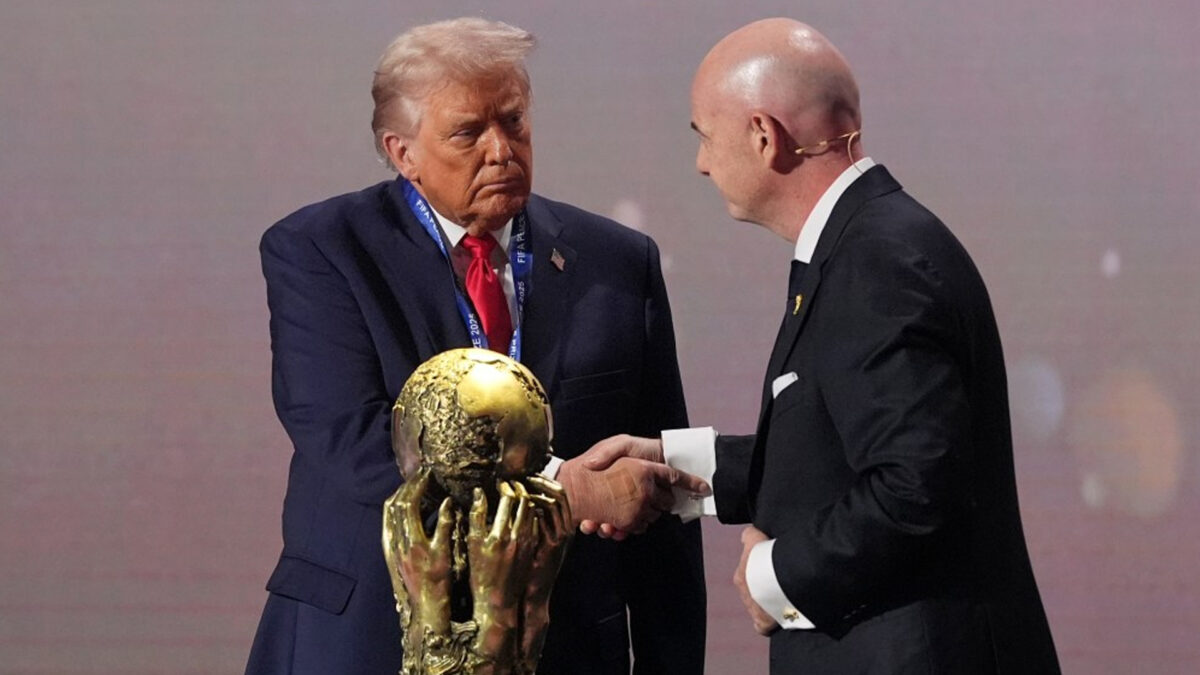
Trump receives FIFA Peace Prize for global leadership

FIFA made a decisive and attention-grabbing statement at the 2026 World Cup draw by awarding its first-ever Peace Prize to US President Donald Trump. The ceremony, held in Washington, D.C., underscored FIFA’s ambition to extend its influence into conversations about leadership, diplomacy and global cooperation.

Gianni Infantino, FIFA President, announced that the award was designed to honour leaders who have demonstrated “extraordinary actions for peace.” By choosing Trump for its inaugural recognition, FIFA showcased its willingness to engage with global governance, a notable departure from its traditionally sport-centric mandate.

Trump accepted the prize with conviction, asserting that leadership in uncertain times requires courage, clarity and an unwavering commitment to stability. He linked the award to the collaborative spirit behind the 2026 World Cup, co-hosted by the US., Canada and Mexico, calling the tournament an example of how strategic partnerships can bridge divides and build trust across borders.

However, the honour has sparked a wide spectrum of responses. Critics have questioned the transparency of the process, while rights groups noted that several conflicts Trump referenced as achievements remain unresolved. Yet supporters interpret FIFA’s decision as a recognition of influence, the ability to shape global narratives, encourage dialogue and use one’s platform to shift conversations toward peace.

The award reflects a strategic repositioning of FIFA as a global institution capable of addressing more than sport. By elevating leadership that transcends national boundaries, FIFA signals its belief that sport can be leveraged as a diplomatic tool, one that reaches millions and fosters unity.

In choosing Trump, FIFA has amplified its message: leadership today requires engagement with complex global realities, and international platforms must recognise those who attempt to navigate them. The Peace Prize serves as both a symbol and a call for leaders worldwide to use their influence for stability and collaboration.

Also Read: Netflix to buy Warner Bros Discovery for $72 billion