Categories
Leaders

Zomato CEO says New Year’s eve deliveries smooth

Zomato CEO Deepinder Goyal has clarified that the food delivery platform’s record-breaking performance on New Year’s Eve was achieved without offering any extra incentives beyond standard pay. Despite some gig workers calling for a nationwide strike, over 4.5 lakh delivery partners completed more than 75 lakh orders for over 63 lakh customers across India, marking the busiest day in the company’s history.

Goyal explained that standard New Year’s Eve pay rates, combined with strong support from local authorities, were sufficient to keep operations running smoothly. He acknowledged that a small number of disruptions occurred due to “miscreants” but said these were effectively managed, ensuring minimal impact on customers.

The CEO also addressed criticisms about the gig economy. He argued that if the system were fundamentally unfair, large numbers of people would not choose to work in it. Highlighting the flexibility and earning potential of gig work, he said it has become an important source of organised employment in India, benefiting both workers and their families.

On calls for more regulation, Goyal stated that the gig economy does not need additional rules. He emphasised that existing measures, including pay transparency, insurance, and safety provisions, make the current model sustainable. He suggested that further regulation could inadvertently reduce opportunities for workers while limiting the industry’s growth potential.

Goyal’s remarks come amid ongoing debate about delivery pressures, pay structures, and social security for gig workers, especially in light of initiatives like the 10‑minute delivery promise and growing competition from quick-commerce platforms.

Thanking delivery partners and ground teams, Goyal said their dedication and resilience made the record-breaking day possible. He urged the public not to be influenced by “narratives pushed by vested interests” and described the performance as a testament to the professionalism and commitment of India’s gig workforce.

Also Read: Vision Pro hits sales snag, Apple halts production

Categories
Leaders

Tarun Garg named Hyundai India MD & CEO

Hyundai Motor India Limited (HMIL) has entered a new chapter with Tarun Garg taking charge as Managing Director and Chief Executive Officer (MD & CEO) from January 1, 2026. His appointment is significant as he becomes the first Indian national to head the company since Hyundai began operations in India in 1996, underscoring the growing role of Indian leadership in global corporations.

Tarun Garg brings with him over three decades of rich experience in the automotive industry, spanning sales, marketing, strategy, finance, distribution and brand building. Since joining Hyundai Motor India in December 2019, Garg has played a pivotal role in strengthening the company’s market position. He previously served as Director – Sales, Service and Marketing, and later as Whole-time Director and Chief Operating Officer, during which the company reported record-breaking sales for three consecutive years, improved profitability and robust EBITDA margins.

One of the key highlights of his recent tenure was Hyundai Motor India’s landmark IPO in 2024, one of the largest public offerings in the Indian market, which further strengthened the company’s financial standing and public presence.

Before Hyundai, Garg spent a long and successful stint at Maruti Suzuki India, where he held several senior leadership roles, including Executive Director. His academic background includes a Mechanical Engineering degree from Delhi Technological University and an MBA from IIM Lucknow.

Speaking on his new role, Garg described the appointment as a privilege and said he aims to build on Hyundai’s strong legacy in India. His focus areas include sustainable growth, innovation, advanced mobility solutions and customer-centricity, while reinforcing the company’s commitment to the ‘Make in India’ initiative.

Tarun Garg succeeds Unsoo Kim, who will move back to Hyundai’s global headquarters in South Korea. The leadership transition reflects Hyundai’s confidence in India as a strategic market and signals a future driven by local insight and global ambition.

Under his leadership, HMIL plans to accelerate investments in electric vehicles, hybrid technology and connected mobility, with a proposed investment of around ₹45,000 crore by 2030. Strengthening localisation, boosting exports and deepening engagement with employees, dealers and suppliers will also be key priorities.

Also Read: Warren Buffett retires as Berkshire CEO After 6 decades

Categories
Leaders

Warren Buffett retires as Berkshire CEO After 6 decades

Warren Buffett, the iconic investor often called the “Oracle of Omaha,” has stepped down as Chief Executive Officer of Berkshire Hathaway, ending an extraordinary 60-year run at the helm of the conglomerate. Buffett, 95, officially retired as CEO on December 31, 2025, and passed the role to Greg Abel, a longtime lieutenant who has been widely seen as his successor. Buffett will continue to serve as Berkshire’s chairman and remain actively engaged from the company’s headquarters in Omaha, Nebraska.

Buffett took control of Berkshire Hathaway in 1965, when it was a struggling textile company. Over the decades, he transformed it into one of the world’s most valuable and diversified conglomerates, with businesses spanning insurance, railroads, energy, manufacturing, retail, and services. Under his leadership, Berkshire delivered exceptional long-term returns to shareholders, with its shares gaining roughly 6.1 million per cent over six decades, a performance that far outpaced broader market indices.

On Buffett’s final day as CEO, Berkshire Hathaway shares edged lower, reflecting routine market movement rather than any major shift in investor confidence. Analysts and shareholders have long anticipated this transition, as Buffett had clearly signalled his succession plans and gradually delegated more responsibility in recent years.

Greg Abel, 63, who joined Berkshire in 2000, now assumes day-to-day control as CEO. He previously served as vice-chairman overseeing non-insurance operations, including Berkshire Hathaway Energy and BNSF Railway. Abel is expected to preserve the company’s core philosophy of disciplined capital allocation, long-term investing, and limited corporate bureaucracy.

Ajit Jain will continue to lead Berkshire’s vast insurance operations, a cornerstone of the company’s financial strength, while other senior executives retain oversight of key subsidiaries. One area of close attention will be Berkshire’s massive equity portfolio, valued at hundreds of billions of dollars, which Buffett personally managed for decades.

Buffett’s retirement as CEO marks the end of a defining era in global business. Known for his plain-spoken wisdom, patience, and focus on fundamentals, he reshaped how generations of investors think about value and long-term wealth creation. As Berkshire enters its post-Buffett chapter, markets will watch closely how the company evolves under new leadership,, guided, for now, by the steady presence of its legendary founder.

Also Read: IGL slashes domestic PNG prices in Delhi‑NCR

Categories
Leaders

PM Modi to inaugurate India AI Impact Summit

India is gearing up to host the India AI Impact Summit 2026 in New Delhi from February 15 to 20, 2026, with Prime Minister Narendra Modi set to inaugurate the event. The summit aims to position India as a global hub for AI dialogue, focusing on ethical, economic, and social implications of artificial intelligence.

The summit has confirmed participation from representatives of more than 100 countries, including 15–20 heads of state and over 50 government ministers. The event highlights a strong representation from the Global South, reflecting India’s vision for inclusive global cooperation in AI.

Industry participation will be extensive, with over 100 CEOs of leading tech companies confirmed. Notable attendees include Bill Gates, Nvidia’s Jensen Huang, DeepMind’s Demis Hassabis, Adobe’s Shantanu Narayen, Salesforce’s Marc Benioff, and Anthropic CEO Dario Amodei. Discussions are ongoing to involve additional leaders from OpenAI, Microsoft, Intel, and other technology giants.

The summit programme includes a leaders’ plenary, a CEO roundtable, and a Prime Minister-hosted official dinner, alongside the 8th ministerial council meeting of the Global Partnership on Artificial Intelligence. An Innovation Festival and AI Impact Expo will showcase cutting-edge AI solutions for healthcare, agriculture, governance, and education.

Seven dedicated working groups have been set up to focus on key areas like AI for economic growth and social good, safe and trustworthy AI, inclusive technology access, human capital development, and democratizing AI resources. These groups aim to develop actionable frameworks for responsible and ethical AI use.

Organisers emphasise that the summit will produce tangible outcomes, including collaborative statements and governance guidelines, reinforcing a shared approach to AI innovation, safety, and global cooperation. The event is expected to strengthen India’s role as a global leader in shaping the future of artificial intelligence.

Also Read: India moves up to 4th spot in global economy rankings

Categories
Leaders

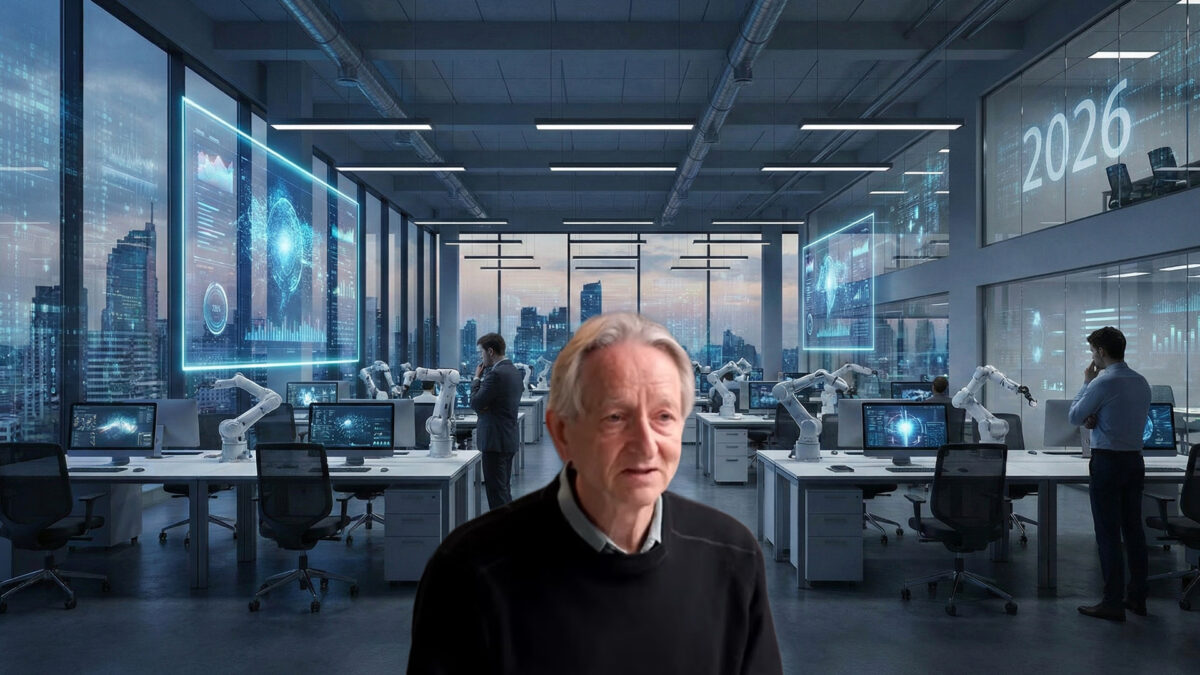
Geoffrey Hinton warns 2026 could trigger major AI job shock

Geoffrey Hinton, widely known as the “Godfather of AI,” has cautioned that 2026 could become a turning point for global employment as artificial intelligence systems rapidly grow more powerful. Speaking in recent interviews, Hinton said the speed at which AI is advancing has surprised even experts and could lead to large-scale job displacement across multiple sectors within the next year.

Hinton explained that AI tools are no longer limited to handling simple, repetitive tasks. Systems that once completed work taking a few minutes can now manage tasks lasting an hour or more. At this pace, he believes AI could soon take on complex assignments, such as advanced programming, analysis, and problem-solving, that traditionally require months of human effort. As a result, many existing roles could become redundant.

According to Hinton, this technological shift is fundamentally different from earlier industrial changes. Past revolutions mainly reduced the need for physical labour, while creating new types of work. The current AI wave, however, targets cognitive and knowledge-based jobs, including clerical work, customer support, data analysis, and some professional roles. This raises the risk of a “jobless productivity boom,” where companies grow more efficient without increasing their workforce.

The warning has sparked debate among economists and business leaders. Some agree that AI-driven productivity gains could weaken the traditional link between economic growth and job creation. Others argue that while certain jobs will disappear, new roles will emerge, especially in AI development, engineering, oversight, and leadership. Surveys of global CEOs suggest many expect hiring to continue in specialised and entry-level positions, even as job profiles change.

Hinton has also stressed that society is not fully prepared for the scale or speed of this transformation. He believes governments and institutions need to rethink education, reskilling, and social safety nets to help workers adapt. Without timely policy responses, the benefits of AI could be unevenly distributed, widening income inequality and social divides.

While acknowledging AI’s potential to transform healthcare, science, and education positively, Hinton maintains that ignoring its impact on jobs would be a serious mistake. His 2026 warning adds urgency to discussions on how economies and workers should prepare for an AI-driven future.

Also Read: India’s rare earth reserves high, production still low

Categories
Leaders

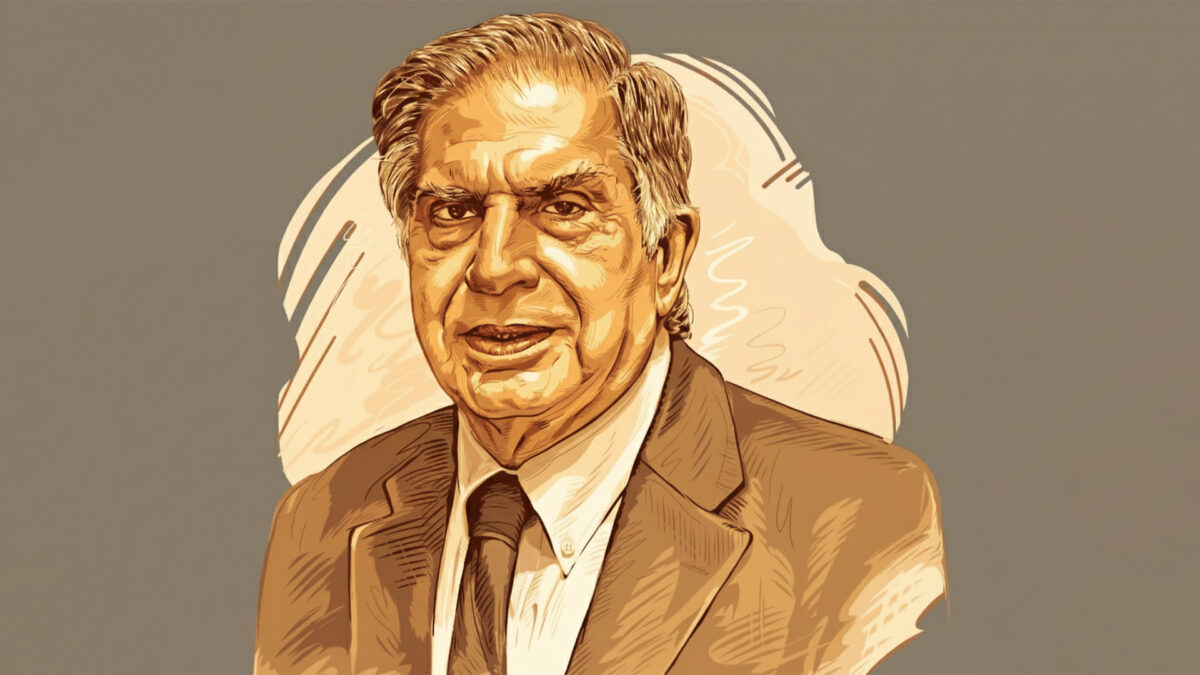
Ratan Tata remembered on 88th birth anniversary

India paid rich tributes to legendary industrialist Ratan Naval Tata on his 88th birth anniversary, remembering him as a visionary leader whose values reshaped Indian business and inspired generations. Political leaders, industry captains and citizens across the country recalled his lifelong commitment to ethical leadership, nation-building and social responsibility.

A symbolic tribute came from the Tata Group’s aviation arm, Air India Express, which honoured Ratan Tata by assigning a unique call sign to its latest Boeing 737-8 MAX aircraft. The aircraft has been registered as VT-RNT, reflecting the initials of Ratan Naval Tata, and has been named “The Visionary Aircraft.” Approved by aviation regulators, the gesture recognises Tata’s pivotal role in reviving and transforming India’s aviation sector under Tata Group ownership.

The aircraft, delivered from Boeing’s facility in Seattle, also marks a milestone as the first Boeing 737-8 MAX to be manufactured with airline-specific customisation during production for Air India Express. It is scheduled to arrive in India shortly, adding to the airline’s expanding fleet and symbolising the Tata Group’s renewed global aviation ambitions.

On the occasion, leaders cutting across party lines described Ratan Tata as a rare combination of humility, courage and foresight. Many referred to him as a “jewel of India,” crediting him with elevating Indian industry on the global stage while remaining deeply rooted in national values. Industrialists and business leaders highlighted how his emphasis on ethics and long-term vision set new benchmarks for corporate India.

Born on December 28, 1937, Ratan Tata led the Tata Group through a transformative phase, overseeing major global acquisitions and expanding the group’s footprint across sectors. Beyond business success, he was widely admired for his quiet philanthropy, supporting initiatives in education, healthcare, rural development and innovation.

Tributes on his birth anniversary reaffirmed that Ratan Tata’s legacy goes far beyond balance sheets and boardrooms. He is remembered as a leader who believed businesses must serve society, and whose life continues to guide India’s corporate and social conscience.

Also Read: Ex‑Google founders pivot to AI, launch $100mn startup

Categories
Leaders

Giga CEO confronts $3mn crypto extortion

San Francisco-based AI startup Giga, led by Indian-origin CEO Varun Vummadi, says it is being blackmailed by an unknown group. The company claims that the group has stolen confidential data and is demanding $3 million in cryptocurrency, threatening to release false and damaging information if the payment is not made.

Vummadi shared a screenshot of the email sent by the group, which included instructions on paying in Monero, a privacy-focused cryptocurrency. The group allegedly warned that they could cause serious damage by publishing manipulated company data.

This is not the first warning. In mid-December, the same group reportedly sent another email threatening to release a large amount of company data, calling it a “70 GB destruction stack” and claiming it could have a “nuclear-level impact.”

The extortion news comes shortly after Giga raised $61 million in Series A funding. Founded in 2023 by Vummadi and IIT Kharagpur alumna Esha Manideep, Giga develops voice-based AI tools for enterprises and is considered a fast-growing player in the AI sector.

In addition, a former employee, Jared Steele, has posted allegations online claiming inflated revenue numbers, misleading job titles, low pay, and toxic work culture. Giga has denied these claims, calling them false and defamatory.

The company says it has reported the blackmail attempt to law enforcement and is ready to take legal action. Giga maintains that its products and operations are not affected and is focused on protecting its reputation while investigating the security breach.

Also Read: Rupee slides to 89.95 against US Dollar

Categories
Leaders

Fibrebond CEO gives $240 mn to employees as bonus

Fibrebond, a manufacturing company in Minden, Louisiana, has made headlines after CEO Graham Walker arranged $240 million in bonuses for employees as part of its $1.7 billion sale to Eaton. Unusually, none of the workers owned company stock, yet they will benefit directly from the deal.

Walker insisted that a portion of the sale proceeds be reserved for full‑time employees. As a result, 540 staff members will receive payouts averaging about $443,000 each, with long‑serving employees getting larger sums. Payments will be distributed over five years, provided employees remain with Fibrebond.

The bonuses are a reward for staying with the company through difficult times, including a factory fire, layoffs, salary freezes, and other challenges. Employees said they were shocked and grateful for the unexpected gift, using the funds for homes, debt repayment, education, and savings.

Fibrebond’s growth and sale were boosted by its move into modular power enclosures for data centres, which became highly sought after due to cloud computing and AI expansion.

Graham Walker’s approach stands out as a rare example of a CEO prioritising employee loyalty over stock ownership, sparking discussions about how companies can share success more broadly.

Also Read: WhatsApp status gets AI photo makeover

Categories
Leaders

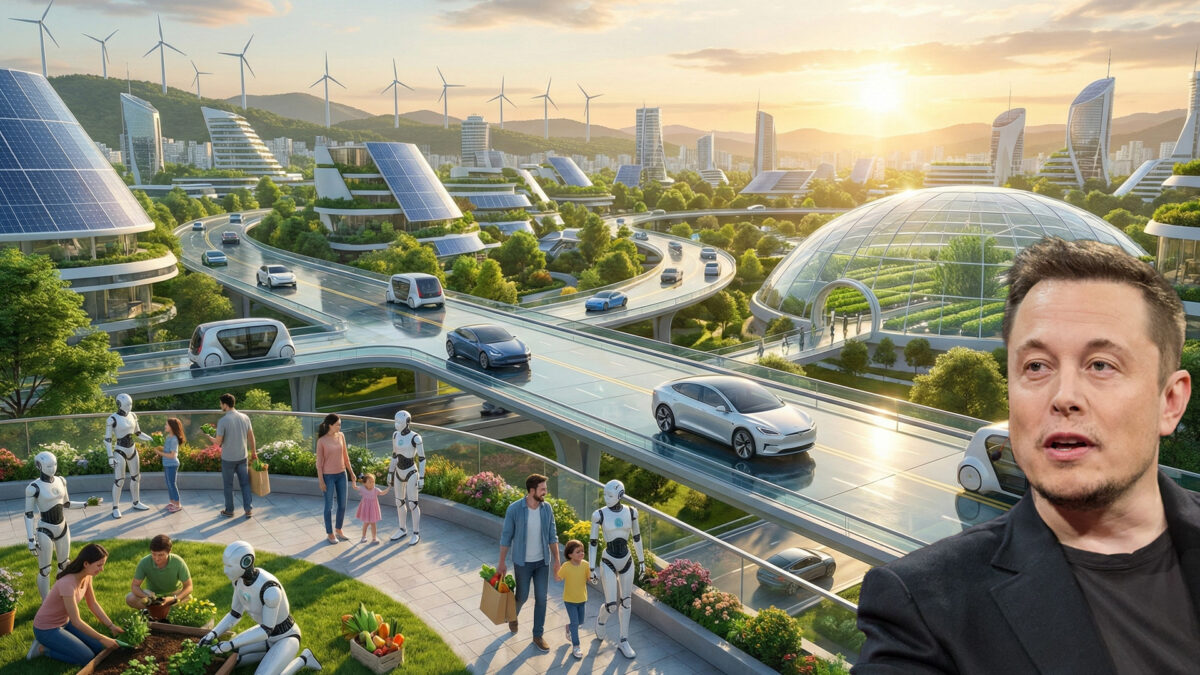
Elon Musk rewrites Tesla mission for more joy

Tesla CEO Elon Musk has once again drawn attention to the power of words by announcing a change in how the company describes its long-term mission. The phrase “Sustainable Abundance” is being replaced with “Amazing Abundance,” a move Musk says is intended to bring more joy and emotional warmth to Tesla’s vision of the future.

The update was shared in a short post on Musk’s platform X, where he explained that while sustainability remains central to Tesla’s philosophy, the word amazing better reflects the excitement and possibility he associates with technological progress. The message was simple, but it quickly sparked discussion about how companies communicate purpose in an era shaped as much by emotion as by innovation.

The revised wording ties into Tesla’s Master Plan Part IV, its latest long-term roadmap that looks far beyond cars. The plan outlines ambitions spanning clean energy, artificial intelligence, robotics, and automation, all aimed at improving quality of life while reducing environmental harm. In that context, “Amazing Abundance” suggests not just efficiency or responsibility, but a future that feels aspirational and rewarding.

Importantly, Tesla’s official mission statement remains unchanged: accelerating the world’s transition to sustainable energy. There are no new targets, products, or policy shifts attached to the wording change. Instead, it appears to be a reframing exercise, one that places emphasis on how the destination feels, not just how it is achieved.

Some analysts view the move as a reflection of broader trends in corporate leadership, where purpose-driven storytelling plays a growing role in motivating employees and connecting with the public. Others see it as Musk responding to a challenging moment for the global EV industry, marked by rising competition, cautious consumers, and tighter scrutiny of big tech leaders.

The shift also highlights a subtle tension in modern innovation narratives. While sustainability speaks to responsibility and restraint, abundance suggests growth, access, and opportunity. By choosing “amazing,” Musk may be trying to bridge that gap—presenting a future that is not only cleaner, but also exciting and emotionally compelling.

This change may not alter Tesla’s strategy, but it reshapes the story it tells. And in a company built as much on vision as on engineering, that story can be nearly as influential as the technology itself.

Also Read: North Korea reveals first nuclear submarine

Categories
Leaders

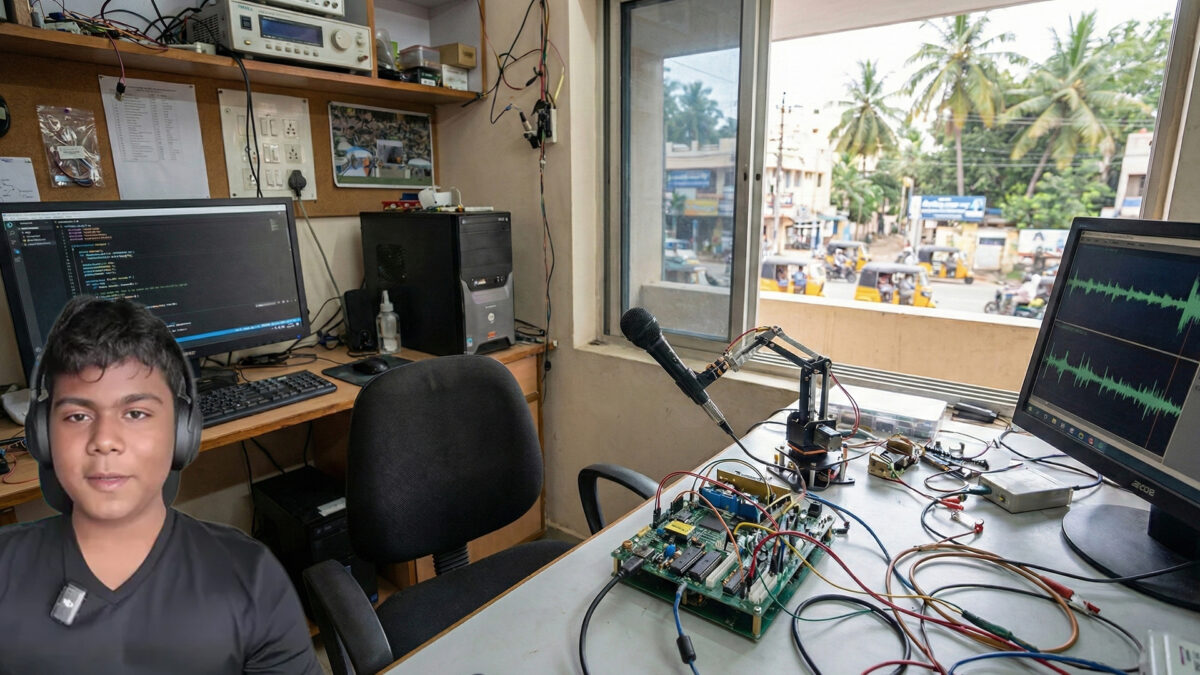
Chennai teen builds voice-based Tool for Hardware

At an age when most teenagers are focused on exams and college choices, Harish Ashok, a 17-year-old from Chennai, is quietly rethinking how hardware is built. His innovation, a voice-based assistant called Zenith, aims to make hardware development as easy and intuitive as writing software, simply by speaking.

Hardware prototyping is often slow, technical, and intimidating. Developers must write firmware, install libraries, map pins, upload code, and debug errors manually. Harish experienced these hurdles first-hand while working on electronics projects. Instead of accepting them as inevitable, he decided to solve the problem.

Zenith works like a smart companion for hardware builders. Users can speak instructions such as changing a sensor, checking a datasheet, or generating code. The assistant then takes care of the background tasks, from writing and uploading firmware to managing serial communication, libraries, and documentation. The result is a smoother, faster journey from idea to working prototype.

In demonstrations shared online, Harish showed how Zenith could build a practical project: an OLED display that reads temperature and humidity when motion is detected. Tasks that would normally take hours of setup and troubleshooting were completed quickly, using simple voice commands. For makers, students, and robotics enthusiasts, this could be a game-changer.

Harish’s vision is clear,  to remove the friction that often discourages people from experimenting with hardware. By making the process conversational and accessible, he hopes more creators will feel confident turning ideas into real-world devices.

Zenith is not Harish’s first invention. Earlier, he worked on a smart home energy-saving platform that optimised electricity usage, as well as a colour-scanning device that converts real-world colours into hex codes for web designers. Each project reflects his interest in blending practical needs with clever technology.

The young innovator credits mentors, early supporters, and collaborative tech communities for helping him refine his ideas. He continues to invite feedback as Zenith evolves, signalling his openness to learning and improvement.

Also Read: Bharti, Warburg Pincus take 49% in Haier India