Categories
Corporate

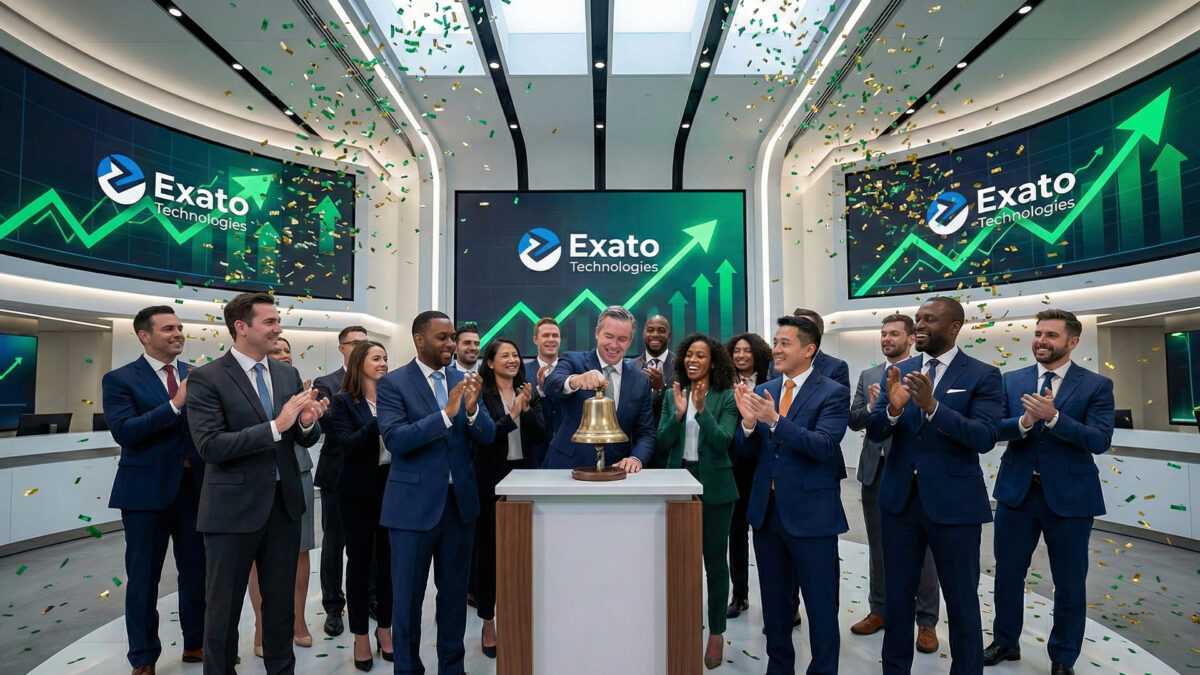
Exato Technologies shares soar 90% on BSE SME debut

Exato Technologies, an emerging player in AI-driven customer experience solutions, made a stunning debut on the BSE SME platform today, sending waves of excitement among investors. Priced at ₹140 per share in the IPO, Exato’s stock opened at ₹266, delivering an immediate 90 % gain. During the day, the shares surged to a high of ₹279.30, nearly double the IPO price, reflecting strong market enthusiasm.

The IPO, which raised about ₹37.45 crore, witnessed massive interest, being oversubscribed nearly 900 times across different investor categories. Such overwhelming demand highlights investor confidence in Exato’s business model and growth potential. The proceeds from the IPO will be used to fund working capital, expand technology and product development, repay loans, and support general corporate purposes.

Exato Technologies specializes in customer-experience-as-a-service (CXaaS) and AI-as-a-service offerings, including virtual assistants, automation tools, omnichannel support, and analytics. The company aims to help businesses enhance customer engagement and streamline operations using advanced technology.

Market analysts say the strong first-day performance underscores the growing appetite for innovative smaller-cap tech firms on the BSE SME platform. While early investors enjoy substantial gains, experts also note that such high initial jumps can bring short-term volatility.

Overall, Exato Technologies’ IPO debut is a major success story in the SME segment, showcasing the market’s confidence in technology-led growth and innovation. The listing not only rewards investors but also sets a positive tone for upcoming SME platform offerings, reflecting a robust investor sentiment toward emerging tech companies.


Also Read: Samsung unveils CES 2026 Vision at ‘First Look’

Categories
Corporate

Sensex up 447 points, Nifty above 26,150, after RBI rate cut

The Indian stock market ended Friday on a strong note after the Reserve Bank of India (RBI) cut its key interest rate, boosting investor confidence. The BSE Sensex rose 447 points, while the Nifty 50 crossed the 26,150 mark, reflecting broad optimism across sectors.

The rally was mainly driven by banks, non-banking financial companies, auto makers, and real estate stocks and industries that benefit directly from lower borrowing costs. Top gainers included Bajaj Finserv, Bajaj Finance, and HCL Technologies, while Hindustan Unilever, Sun Pharma, and Tata Motors were among the top losers.

The positive sentiment began building even before the policy announcement and strengthened once the RBI confirmed a 25 basis-point cut in the repo rate, bringing it down to 5.25%. The central bank said this move aims to support economic growth at a time when inflation is easing and GDP performance remains solid.

In addition to reducing the policy rate, the RBI unveiled several liquidity-support measures. These include large open-market bond purchases and a dollar–rupee swap facility designed to ensure banks have adequate funds to lend. This further reassured the market that credit availability will improve in the coming months.

 Market experts pointed out that while the rate cut is positive, deeper concerns continue to linger, such as weak nominal growth, a fragile rupee, and narrow market participation. Some sectors and stocks have been driving the bulk of gains, while broader market strength remains limited.

Global market trends, foreign fund flows, and currency movements will continue to play a significant role in determining whether the rally sustains. Any adverse global development or withdrawal of foreign investment may put pressure on domestic equities.

Still, the short-term outlook appears favourable. With borrowing expected to become cheaper, sectors linked to credit demand, like banks, real estate, automobiles, and consumer finance, are likely to benefit the most.

Also Read: Sensex 85,187, Nifty 26,021 open flat ahead of RBI policy

Categories
Corporate

Reliance earns ‘A-‘ rating boost from S&P Global

S&P Global Ratings has upgraded Reliance Industries Ltd. from ‘BBB+’ to ‘A‑’, citing the company’s improving cash flows and strong earnings from its consumer-facing businesses. The rating on Reliance’s senior unsecured debt has also been raised to ‘A‑’, with the outlook kept stable, signaling confidence in the company’s financial stability over the next one to two years.

The upgrade comes as Reliance continues to diversify beyond oil and gas. Its digital services arm, Reliance Jio, and retail business are now contributing significantly to overall cash flow, making earnings more predictable. For the fiscal year 2026, S&P expects consumer and digital businesses to generate nearly 60% of Reliance’s operating cash flow.

Reliance Jio’s telecom segment remains a key profit driver, with projected growth in subscriber base and average revenue per user as more customers adopt higher-priced data plans. The company’s strong cash flow, even with ongoing capital expenditure and investments in renewable energy, supports its financial resilience and long-term expansion plans.

Analysts say the upgrade reflects S&P’s confidence in Reliance’s strategic shift from a traditional oil-and-gas company to a diversified conglomerate with robust digital and retail operations. The improved rating may help Reliance secure lower-cost financing for future projects while enhancing investor confidence.

Also Read: Park Hospital’s chain launches ₹920 cr IPO on Dec 10

Categories
Corporate

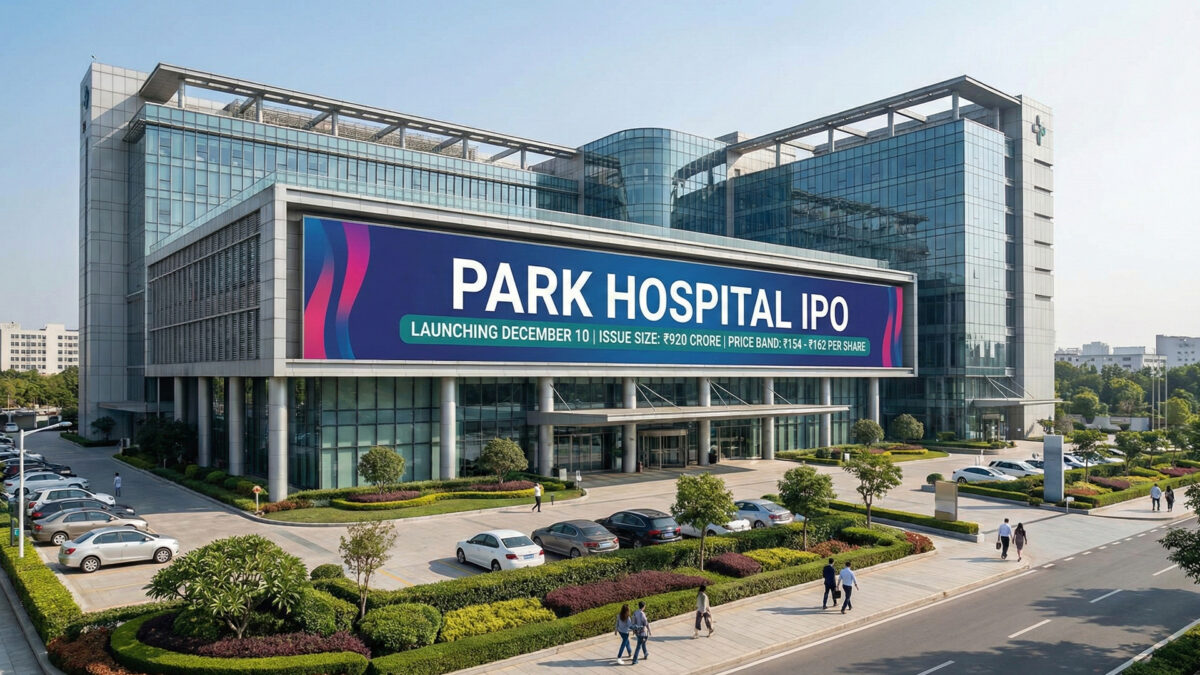
Park Hospital’s chain launches ₹920 cr IPO on Dec 10

Park Medi World, the operator of the well-known Park Hospital chain in North India, is all set to enter the stock market with a ₹920 crore Initial Public Offering (IPO) opening on 10 December 2025. The shares have been priced in a band of ₹154 to ₹162 per share, and the subscription window will close on 12 December 2025.

The IPO is structured as a combination of a fresh issue worth ₹770 crore and an offer-for-sale (OFS) of ₹150 crore by the company’s promoters. Investors can apply for a minimum of 92 shares, with further applications in multiples of 92 shares. If the listing goes ahead as planned, Park Medi World is expected to debut on the stock exchanges on 17 December 2025, giving it an estimated valuation of around ₹7,000 crore.

The company plans to use the proceeds from the IPO for multiple strategic purposes. About ₹380 crore will be directed towards repaying existing borrowings, which were reported at ₹624.3 crore as of October 2025. Around ₹60.5 crore will be invested in developing a new hospital under Park Medicity in the NCR region and expanding an existing facility managed by its subsidiary, Blue Heavens. Another ₹27.4 crore will be used to purchase medical equipment across its hospitals, while the remaining funds will support general corporate purposes and potential future acquisitions.

Park Medi World operates 13 multi-specialty, NABH-accredited hospitals across North India, including Haryana, Delhi, Punjab, and Rajasthan, with a combined capacity of approximately 3,000 beds. The chain has earned a reputation for quality healthcare services, particularly in multi-specialty and critical care areas.

With this IPO, the company aims to strengthen its balance sheet, reduce debt, and expand its infrastructure, positioning itself for future growth in the region’s healthcare sector. For investors, this offering provides an opportunity to be part of one of North India’s largest private hospital networks at a crucial phase of expansion.

Also Read: RBI lowers repo rate to 5.25% for economic growth

Categories
Corporate

BAT trims ITC Hotels stake in major block deal

British American Tobacco (BAT) has carried out a significant stake sale in ITC Hotels, offloading around 187.5 million shares through a large block deal. The transaction raised close to ₹3,820 crore, valuing the shares at a floor price of ₹205.60 each.

With this sale, BAT’s shareholding in ITC Hotels drops sharply, from about 15.3% to nearly 6.3%. The sale was executed through an accelerated book-build process and attracted strong market interest, allowing BAT to complete the divestment quickly.

The stake sale forms part of BAT’s ongoing financial strategy. The company has stated that its direct investment in ITC Hotels is not strategically essential, especially after the hotel arm was separated from the parent company ITC Limited and listed as an independent entity earlier this year. BAT received its holding in ITC Hotels as part of that demerger.

The proceeds from the block deal will be used to reduce debt and help the company reach its targeted leverage ratio by 2026. BAT has been actively restructuring its balance sheet and has indicated that lowering borrowings is a priority.

The news created some pressure on ITC Hotels’ stock, which briefly dipped as the market absorbed the large supply of shares. Analysts, however, expect the overhang to ease now that a major stakeholder has completed its planned sale. Many also point to the company’s strong expansion pipeline and favourable hospitality sector trends as support for future performance.

The latest divestment also gives ITC Hotels more room to move forward with its long-term plans under a more diversified shareholding structure, while BAT streamlines its global portfolio and focuses on strengthening its core business.

Also Read: Dream11 reinvents app as interactive sports platform

Categories
Corporate

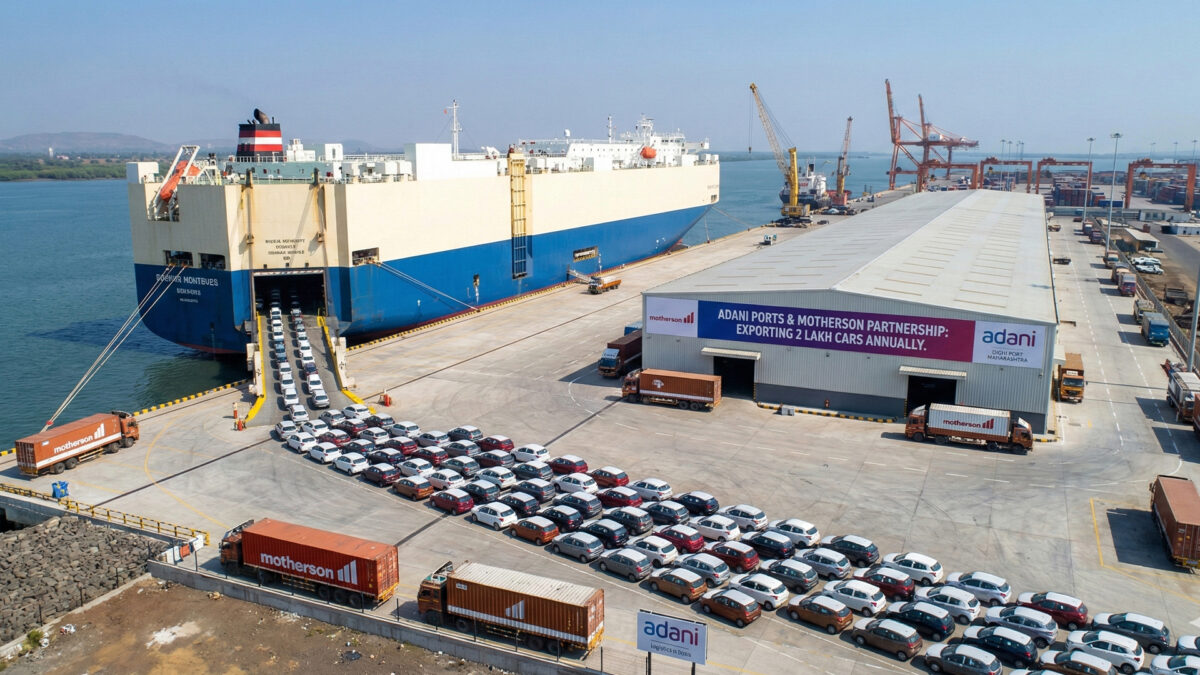
Adani’s Dighi port to export 2 lakh cars annually with Motherson

Dighi Port, part of Adani Ports and Special Economic Zone Limited (APSEZ), is set to handle 200,000 cars annually following a strategic partnership with Motherson. The collaboration, through Motherson’s joint venture Samvardhana Motherson Hamakyorex Engineered Logistics Limited (SAMRX), will establish a dedicated RoRo (Roll-on/Roll-off) terminal at the port in Maharashtra.

The new facility will serve as a key automobile exports hub for the Mumbai-Pune auto belt, supporting India’s “Make in India” initiative by enabling smooth import and export of vehicles to global markets.

Mr. Ashwani Gupta, CEO of APSEZ, said the partnership aims to redefine automotive logistics in India. “Combining APSEZ’s infrastructure with Motherson’s expertise creates a seamless and resilient network for vehicle movement, accelerating trade and enhancing supply chain efficiency,” he added.

Mr. Laksh Vaaman Sehgal, Vice Chairman of Motherson Group, emphasized that the terminal will reduce logistics costs for OEMs while strengthening India’s automotive supply chain.

The RoRo terminal will feature end-to-end vehicle logistics, including single-window operations, AI-driven yard optimization for real-time vehicle tracking, and fast OEM evacuation via NH-66. The port will also support electric vehicle exports with EV-ready infrastructure and provide integrated dashboards for live tracking of cargo volumes.

Dighi Port, strategically located on India’s west coast, is already equipped to handle various cargo types with excellent road connectivity and direct berthing facilities. Its expansion into RoRo operations aligns with APSEZ’s vision of building future-ready logistics hubs.

Also Read: Reliance starts Jio IPO process targeting record valuation

Categories
Corporate

Sensex 85,187, Nifty 26,021 open flat ahead of RBI policy

Sensex opened near 85,187 on December 5, 2025, with the Nifty hovering around 26,021, as the Indian stock market began the day almost unchanged. Benchmark indices showed little movement as investors stayed cautious ahead of the Reserve Bank of India’s monetary-policy announcement, resulting in a muted start while traders awaited policy clarity.

The flat opening followed a mild recovery in the previous session, which ended a four-day losing streak. Mixed global cues and uncertainty about the RBI’s stance kept buying interest limited. Adding to the cautious tone, the Indian rupee, after touching a record low recently, recovered slightly in early trade, offering some relief to the markets.

In early action, mid- and small-cap stocks outperformed the broader market. Zen Technologies, Himadri Speciality and Wockhardt were among the top gainers, rising sharply on active investor interest. On the other hand, index heavyweights like Reliance Industries (RIL) and Tata Steel were early losers, weighing on market sentiment.

A major development influencing trading patterns was the National Stock Exchange’s decision to revise price bands for 230 stocks. Of these, 128 counters now have a wider daily movement band of 20%. The change is expected to improve liquidity and enable broader price discovery in these stocks.

Regulatory action also played a role in shaping market mood. SEBI banned market influencer Avadhut Sathe and his firm from participating in the securities market and ordered them to refund about ₹601 crore collected from over 3.37 lakh investors,  a strong signal of tightening oversight.

All eyes now remain on the RBI’s policy announcement. Investors are keen to understand the central bank’s view on inflation and growth, and whether interest rates will hold steady. Analysts expect markets to remain range-bound until clearer signals emerge from the policy outcome.

Also Read: Sensex rises 158 points, Nifty tops 26,000 as IT stocks lead

Categories
Corporate

Sensex rises 158 points, Nifty tops 26,000 as IT stocks lead

Indian stock markets bounced back on Thursday after a four-day slump. The BSE Sensex gained 158.51 points, closing at 85,265.32, while the NSE Nifty 50 rose 47.75 points to settle at 26,033.75, snapping a four-day losing streak.

The rebound was led by strong gains in the technology sector, with the Nifty IT index climbing 1.41%. Major contributors included Tech Mahindra (+1.51%), Tata Consultancy Services (TCS, +1.48%), HDFC Life Insurance (+1.49%), SBI Life Insurance (+1.41%), and Bharat Electronics (+1.25%).

On the other hand, some stocks lagged, including InterGlobe Aviation (‑2.39%), Reliance Industries (‑0.88%), Hindalco Industries (‑0.65%), Maruti Suzuki (‑0.64%), and Titan Company (‑0.62%), weighing on broader market momentum.

Broader market sectors were mixed. While IT, auto, metal, and realty indices gained, media, pharma, and small- and mid-cap indices underperformed.

The market rebound was supported by value buying, a recovering rupee boosting export-oriented IT firms, and positive global cues. However, foreign institutional investors continued to sell shares, keeping some pressure on the broader market.

Investors are now closely watching the upcoming Reserve Bank of India (RBI) policy decision, which could influence market sentiment in the near term.

Overall, the market’s recovery reflects renewed investor confidence in IT stocks and currency stability, even as caution remains in lagging sectors.

Also Read: Sensex gains 100 points, Nifty steady above 26000 after early dip

Categories
Corporate

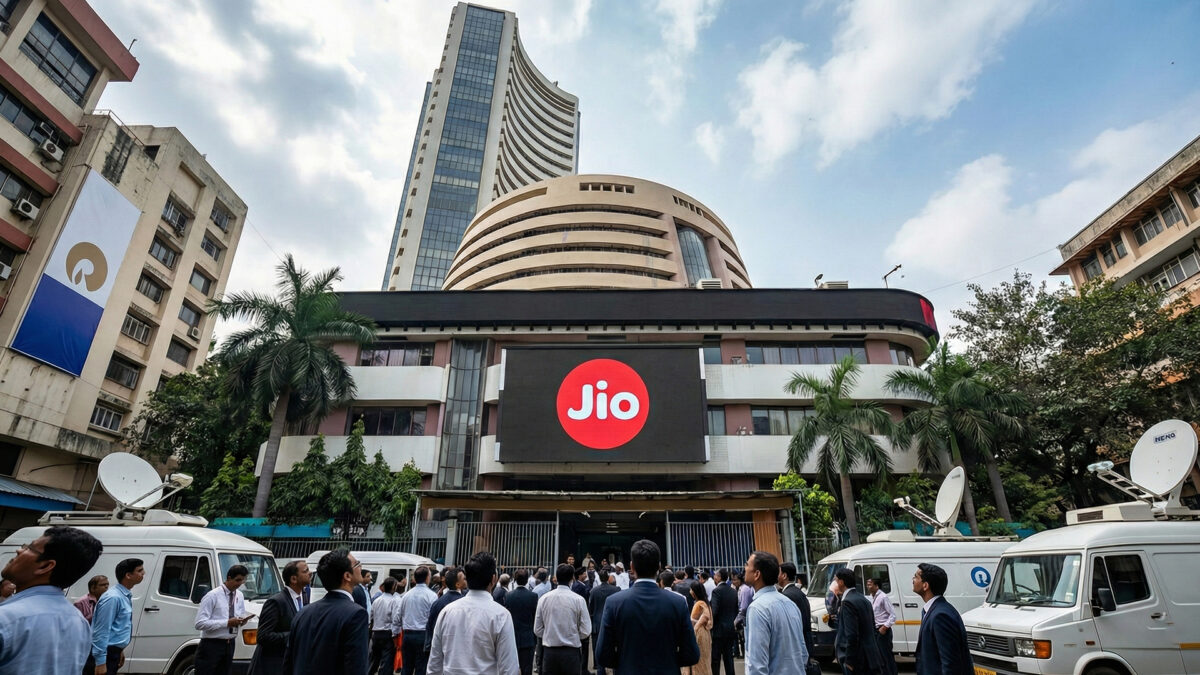
Reliance starts Jio IPO process targeting record valuation

The Jio IPO process has officially begun, with Reliance Industries Ltd. (RIL) starting the formal steps to list its digital and telecom subsidiary, Jio Platforms. This marks a major move toward what could become India’s largest-ever initial public offering. According to people familiar with the matter, the company has started work on the draft prospectus and initiated early discussions with investment banks to shape the structure of the public issue.

The banks involved in these discussions have reportedly proposed a valuation of up to $170 billion for Jio Platforms. If achieved, this valuation would place Jio among India’s most valuable listed companies on debut. It would also make the offering one of the biggest IPOs ever attempted in the country.

Sources indicate that Reliance is expected to formally appoint bankers once India’s updated IPO regulations come into effect. The new rules are expected to allow companies to reduce the minimum dilution requirement, which means Jio may be able to raise significant funds without selling a large stake. At the projected valuation, even a small dilution could help the company raise around $4–4.5 billion.

The timeline for the listing  Jio IPO aligns with earlier announcements made by Reliance Chairman Mukesh Ambani, who had indicated that Jio would be taken public by the first half of 2026. The current activity suggests the company is moving steadily toward meeting that target.

Jio Platforms, launched commercially in 2016, has grown rapidly to become India’s largest telecom operator with more than 500 million subscribers. Over the years, it has expanded beyond telecom into digital services, broadband, enterprise solutions, and technology platforms. The company has also attracted major global investors in earlier funding rounds, strengthening its position as a digital giant.

If the IPO proceeds as planned, it would surpass previous fundraising records and mark a defining moment for India’s capital markets. It is expected to attract strong interest from domestic and global investors, given Jio’s scale, growth potential, and central role in India’s digital ecosystem.

With the prospectus now in preparation, the Jio IPO is set to become one of the most closely watched market events in the coming year.

Also Read: Andhra allots 480 acres for Adani–Google AI data centre

Categories
Corporate

Andhra allots 480 acres for Adani–Google AI data centre

The Andhra Pradesh government has approved the allotment of 480 acres of land to Adani Infra (India) Pvt. Ltd. for setting up a major AI and cloud data-centre project linked to Google. The land parcels are spread across Visakhapatnam and Anakapalli districts and will be used to build a 1-gigawatt (1 GW) data-centre campus, one of the largest of its kind in India.

The project will be developed by Raiden Infotech India Pvt. Ltd., a company associated with Google. It plans to create a high-capacity data-centre ecosystem capable of supporting advanced AI computing, global cloud services and large-scale digital applications. The facility will be built to the same international standards followed by Google’s global data-centre network, ensuring world-class reliability and performance.

According to official estimates, the overall investment connected to the project is expected to be around ₹87,500 crore over multiple phases. The State government is also offering incentives worth roughly ₹22,000 crore, spread over several years, to support the development of the high-energy, high-capacity data-centre cluster.

Once completed, the 1 GW data centre will require enormous power resources. Officials noted that its full-capacity electricity consumption could be equivalent to nearly half of Mumbai’s annual energy use, highlighting the scale and complexity of the infrastructure planned. This will also require significant upgrades to local power supply systems, connectivity, and green-energy options.

The government said the project will be a major boost to Andhra Pradesh’s position as an emerging technology and digital-services hub. Visakhapatnam, already being developed as the Executive Capital of the State, is expected to benefit from related infrastructure development, job creation and new opportunities for technology companies.

Senior officials believe the project will attract further investments in AI, cloud computing, semiconductor research and advanced data-storage solutions. The presence of a global-standard data centre is also expected to support start-ups, research institutions and digital-first companies looking to build products in India.

With this land allotment, Andhra Pradesh hopes to establish Visakhapatnam as one of the leading centres for AI-driven digital infrastructure in the country, strengthening its long-term economic and technology goals.

Also Read: Chennai’s Dr Anjana to lead IDF global fitness drive