Categories
Corporate

RBI’s monetary policy meeting begins, rate cut expected

The Reserve Bank of India (RBI) has kicked off its three-day Monetary Policy Committee (MPC) meeting in Mumbai, which will conclude on Friday, December 5, with an announcement on the key repo rate. The repo rate is the interest rate at which banks borrow from the RBI, and any change can affect borrowing costs for businesses and households.

India’s economy is showing strong growth momentum. The country’s GDP for the second quarter of the current financial year rose around 8.2%, indicating robust economic activity. At the same time, inflation has cooled to historically low levels. Consumer price inflation in October fell to about 0.25%, the lowest in years. This combination of high growth and low inflation is unusual and gives the RBI room to potentially cut rates without worrying about fueling prices.

Experts are divided on what the RBI will do. Some economists believe a rate cut is likely, citing low inflation and strong growth. Lower interest rates could encourage borrowing, boost spending, and further support economic expansion. On the other hand, some analysts argue that the RBI may hold the rate steady at 5.50%, pointing out that the economy is already performing well and may not need additional stimulus.

Markets are closely watching the MPC discussions. A rate cut could lower EMIs on home and personal loans, reduce borrowing costs for businesses, and stimulate credit demand. A decision to pause, however, would signal that the central bank believes the current monetary stance is sufficient to maintain growth and price stability.

The MPC’s final decision will be announced on Friday by RBI Governor, who will also give insights on the bank’s outlook for inflation, growth, and liquidity. This meeting is being closely monitored by investors, banks, and borrowers, as it will influence credit costs, investment decisions, and overall market sentiment.

With India’s economy performing strongly yet inflation remaining subdued, the RBI faces a delicate balance,  supporting growth while keeping prices in check. Friday’s decision will provide clarity on the direction of monetary policy for the coming months.

Also Read: Adani plans $15 billion airport expansion across India
Categories
Corporate

Adani plans $15 billion airport expansion across India

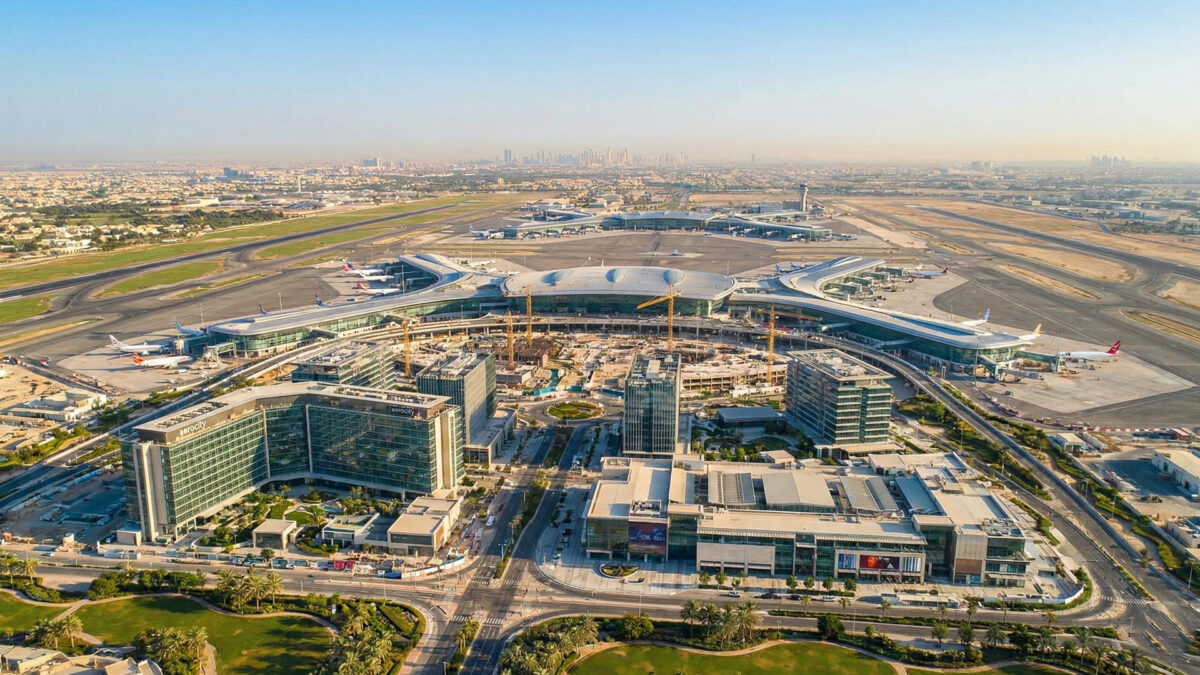
Adani Group is set to invest $15 billion over the next five years to expand its airports across India, marking one of the largest airport infrastructure pushes in the country. The move aims to significantly increase passenger-handling capacity, aligning with India’s rapidly growing aviation sector.

The expansion plan covers six key airports located in Navi Mumbai, Ahmedabad, Jaipur, Thiruvananthapuram, Lucknow, and Guwahati respectively. Among these, Navi Mumbai International Airport, which is expected to open on December 25, 2025, will receive major upgrades including a new runway and additional terminals, raising its annual capacity by 30 million passengers. Ahmedabad airport is set to increase capacity by 16 million, Jaipur by 14 million, Thiruvananthapuram by 8 million, and Lucknow by 6 million.

These developments will include the construction of new terminals, taxiways, and supporting infrastructure to handle the projected surge in air traffic efficiently. Adani’s plan reflects the group’s focus on modernising airport facilities and preparing for future demand, as India’s total annual air passenger numbers are expected to reach 300 million by 2030.

To fund the expansion, the group intends to raise around 70% of the investment through loans, with the remaining portion coming from its own funds. This funding strategy ensures the group can accelerate construction while managing financial risk effectively.

The investment not only aims to improve passenger experience and operational efficiency but also strengthens Adani’s position as a major player in India’s aviation sector. Experts say the expansion could support a potential initial public offering (IPO) for Adani Airports in the future, while also catering to the country’s fast-growing air travel demand.

With this expansion, Adani expects its airports to collectively handle 200 million passengers annually by 2030, roughly two-thirds of India’s projected air traffic. The move is a strategic step to meet increasing travel demand, modernise airport infrastructure, and enhance India’s global aviation competitiveness.

Also Read: Yes Bank, Union bank to join Nifty Bank as index expands

Categories
Corporate

Yes Bank, Union bank to join Nifty Bank as index expands

India’s banking benchmark, Nifty Bank, is set for a significant change. Yes Bank and Union Bank of India will be added to the index from December 31, 2025, expanding the number of constituent banks from 12 to 14.

This move comes after SEBI’s new rules requiring indices eligible for derivatives trading to have at least 14 stocks. By widening the index, Nifty Bank aims to reduce its reliance on a handful of big banks and provide a fairer reflection of the sector.

Currently, the top three banks dominate the index, holding around 60% of its weight. After the reshuffle, this will drop to 43%, with the three largest banks capped individually at 19%, 14%, and 10%. The transition will be gradual, with allocations adjusted in four monthly tranches from December 2025 to March 2026, giving investors and fund managers time to rebalance.

For investors, this is likely to mean some shifts in portfolio allocations. Passive funds and ETFs that track Nifty Bank will now invest in Yes Bank and Union Bank, while the heaviest banks in the index may see minor outflows. Analysts estimate the two new entrants could attract about US $249 million in inflows.

The expansion is a step toward making the index more diverse and representative, reducing concentration risk and reflecting the wider banking landscape in India. Investors tracking the index or holding related ETFs can expect a smoother, phased transition, allowing adjustments without sudden market pressure.

Overall, the change is designed to balance the index, giving emerging banks a chance to feature alongside established players, and offering a more rounded view of India’s banking sector.

Also Read: Rupee falls past ₹90 on trade and outflow pressure

Categories
Corporate

Sensex falls 250 Points, Nifty slips 80 as markets turn cautious

Indian stock markets began Wednesday’s session on a quiet note. The Sensex opened almost unchanged, rising only about a dozen points near the 85,150 level. The Nifty, however, slipped slightly at the start and opened just above 26,000 before easing further.

The mood was cautious right from the opening bell. Several big companies such as HUL, Titan, BEL, NTPC and Tata Motors (passenger vehicles) came under early selling pressure, pulling the market down.

At the same time, some support came from information technology and banking stocks. Shares of TCS, Infosys, Tech Mahindra and ICICI Bank were among the early gainers, helping prevent a steeper fall.

The flat opening reflects the wait-and-watch approach among traders ahead of the Reserve Bank of India’s policy meeting this week. With no major triggers early in the day, investors preferred to stay on the sidelines and trade carefully.

Overall, the morning trade showed mixed signals, weakness in consumer and PSU stocks, but some strength in IT and banking, keeping the market steady but muted.

Also Read: Sensex falls 504 points, Nifty slips below 26,050

Categories
Corporate

Sensex falls 504 points, Nifty slips below 26,050

Indian equity markets ended lower on Tuesday as investors booked profits after recent record highs. The BSE Sensex dropped 503.6 points, closing at 85,138.3, while the Nifty 50 fell 143.6 points to settle at 26,032.2.

Markets had opened on a positive note but quickly reversed as weakness in banking, metals, and oil & gas sectors weighed on investor sentiment. Profit-taking in blue-chip stocks and a sharp rupee decline, which touched ₹89.85 against the US dollar,  added pressure.

Among the Sensex constituents, major laggards included HDFC Bank, ICICI Bank, and Reliance Industries, which dragged the indices lower. On the upside, Asian Paints, Bharti Airtel, Dr Reddy’s Laboratories, SBI Life Insurance, and Maruti Suzuki registered modest gains, providing some support to the broader market.

Sectoral performance reflected broad-based weakness. Banking and financial stocks led the losses, while midcap and smallcap indices fell about 0.5–0.6 %, indicating cautious trading across market segments.

Analysts said the market’s decline is more a pause than a reversal, with key support levels for Nifty around the 20-day moving average. Investors are advised to focus on fundamentally strong stocks while remaining cautious on overvalued names.

Looking ahead, domestic markets will track cues from the Reserve Bank of India’s policy stance and global developments. For now, consolidation and selective trading dominate investor strategy.

Also Read: Sensex falls 316 points, Nifty slips 88

Categories
Corporate

Exato Technologies IPO sees record 700× subscription

The IPO of Exato Technologies has turned into one of the most talked-about SME issues of the year, thanks to unusually high investor interest and a sharp jump in its grey-market premium (GMP). The bidding for the IPO closed on Monday with extraordinary subscription numbers, showing strong appetite from retail and small investors.

By the final day, the IPO was subscribed over 700 times, making it one of the most oversubscribed SME offerings in recent months. Most of the buying came from retail and non-institutional investors, while institutional participation remained comparatively lower. Such a high subscription level suggests strong confidence in the company’s business and future prospects.

Along with this demand, the grey-market premium also climbed steadily. As of the closing day, unofficial market reports showed a GMP of around ₹150 above the upper IPO price, indicating a possible 100%+ listing gain. This means that if the trend holds, the stock may list at nearly double the issue price.

Exato Technologies had set its price band at ₹133–₹140 per share, with the minimum application size being 2,000 shares, making the smallest investment roughly ₹2.8 lakh. The IPO size is ₹37.45 crore, including a fresh issue as well as an offer for sale by existing shareholders.

The company has announced that the allotment of shares will likely be finalised on December 3, with refunds and demat credits expected on December 4. The shares are scheduled to list on the BSE SME platform on December 5, 2025.

Founded in 2016, Exato Technologies offers technology and customer-experience solutions to businesses across banking, healthcare, retail, telecom, BPO and other sectors. It sells a mix of digital products and services, including analytics tools, communication solutions, and automation platforms. Some of its well-known clients include MakeMyTrip, RBL Bank, and WNS.

The company plans to use a part of the IPO money to strengthen working capital, invest in product upgrades, and reduce certain borrowings.

Given the extremely high subscription and strong GMP, market watchers expect the stock to list with sizable gains. Investors who applied for the IPO will be eagerly waiting for the allotment outcome.

Also Read: Vidya Wires opens ₹300 cr IPO on December 3

Categories
Corporate

Vidya Wires opens ₹300 cr IPO on December 3

Vidya Wires, a Gujarat-based maker of copper and aluminium wiring products, will open its ₹300-crore initial public offering (IPO) on Wednesday, December 3, giving investors three days to subscribe. The issue closes on December 5.

The IPO consists of a fresh issue worth about ₹274 crore and an offer-for-sale (OFS) of nearly ₹26 crore by some existing shareholders. The company has fixed the price band at ₹48–₹52 per share, with a minimum application size of 288 shares for retail investors.

The company plans to use a large part of the proceeds to build a new manufacturing project through its subsidiary. About ₹140 crore is earmarked for this expansion. Another ₹100 crore will be used to repay or reduce debt, while the remaining amount will support general business needs.

If the schedule goes as planned, the basis of allotment will be announced on December 8, refunds and demat transfers on December 9, and the shares will list on the NSE and BSE on December 10.

Vidya Wires produces enamelled wires, copper strips, busbars, insulated conductors, PV ribbons and aluminium strips. These products are used in power transmission, electrical equipment, engineering, renewable energy and electric vehicles.

The company has reported steady financial growth. Revenue rose from ₹1,186 crore in FY24 to ₹1,486 crore in FY25, while net profit increased to ₹40.9 crore during the same period. In the first quarter of FY26, it recorded ₹411 crore in revenue and a profit of ₹12 crore.

Vidya Wires is among the leading players in its segment and aims to significantly increase its production capacity through the new project. Analysts say the expansion could strengthen its market presence and support long-term growth.

However, the company relies heavily on three sectors, power, electricals and engineering, which contribute more than 80% of its revenue. Any slowdown in these industries or delays in the new project could affect performance.

Despite these risks, many market experts believe the IPO may appeal to long-term investors due to the company’s consistent growth and expansion strategy.

Also Read: Ravelcare IPO subscribed six times on strong debut

Categories
Corporate

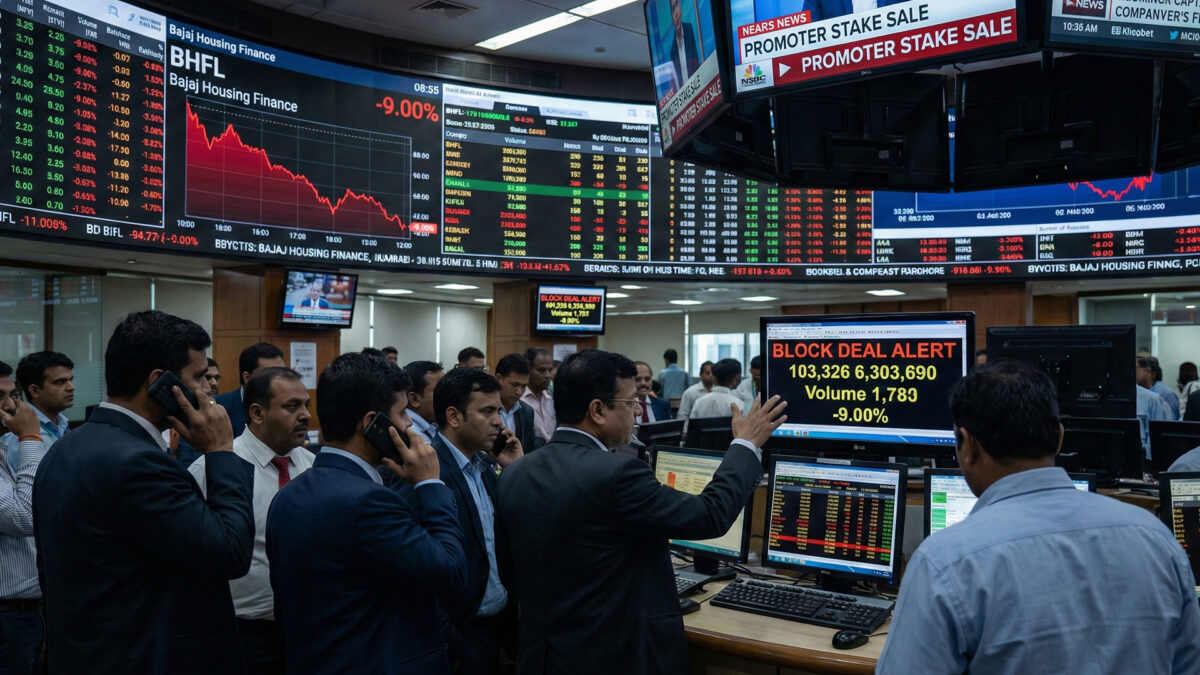
Bajaj Housing Finance shares drop 9% on promoter stake sale

Shares of Bajaj Housing Finance plunged around 9% on Tuesday, sliding to a 52‑week low of ₹94.90 following news of a large block deal by its promoter, Bajaj Finance. The announcement sparked investor concerns about dilution and the sudden sale weighed heavily on the stock.

Bajaj Finance intends to offload up to 2% of BHFL’s equity, roughly 16.66 crore shares, in one or more tranches. Market estimates suggest the deal could involve up to 2.35% stake, about 19.5 crore shares, at a price near ₹97 per share. The move is reportedly aimed at helping BHFL comply with minimum public shareholding norms, as Bajaj Finance currently holds 88.70% of BHFL’s total paid-up capital.

The divestment process may take place between December 2, 2025, and February 28, 2026, depending on market conditions and regulatory approvals.

Despite the stock reaction, BHFL has shown solid financial performance. For the quarter ended September 2025, it posted a net profit of ₹643 crore, up 18% from a year ago, and revenue of ₹2,755 crore, a 14% increase.

Since its listing in September 2024, the stock has declined about 23% and currently trades below both its 50‑day and 200‑day moving averages. Technical indicators suggest oversold conditions, but the large promoter sale has unsettled investors.

Analysts note that market confidence will likely hinge on how smoothly the stake sale is executed and whether the share price stabilizes post-transaction. For now, BHFL remains under close watch as the block deal progresses.

Also Read: Rupee hits record low, students and travellers feel pinch

Categories
Corporate

Sensex falls 316 points, Nifty slips 88

Indian stock markets opened in the red on Tuesday as weak global cues and heavy selling in financial stocks pulled benchmark indices lower. The BSE Sensex fell 316 points at the opening bell to 85,325, while the Nifty 50 declined 88 points to begin the session at 26,088.

The decline comes just a day after both indices touched fresh all-time highs. On Monday, the Sensex had climbed above 86,000 and the Nifty had crossed 26,325, driven by strong domestic economic data and broad-based buying. However, profit-booking set in soon after, and that corrective trend carried into today’s session.

The financial sector was the biggest drag early in the day. Heavyweights such as HDFC Bank led the fall, putting pressure on the banking and financial indices and weighing on overall market sentiment. Investors remained cautious, especially as valuations in several large-cap counters remain stretched after the recent rally.

In contrast, select stocks from the energy, pharma and mid-cap segments showed resilience, with Gujarat State Petronet, Natco Pharma and JSW Holdings emerging as top gainers in early trade. Their gains, however, were not enough to offset losses in major financial names, making the overall market breadth negative.

Analysts believe the decline reflects a phase of consolidation rather than a shift in long-term sentiment. After a sharp uptrend over the past few weeks, the market is seeing natural profit-taking as investors look for fresh triggers. Global market softness, concerns around upcoming central bank commentary, and foreign investor activity are also influencing near-term direction.

Going ahead, traders will closely watch movements in banking stocks, global market trends and institutional flows. Any renewed interest in defensives or strong mid-cap names could help stabilise the market, but broader sentiment is likely to stay cautious in the short term.

Also Read: Bombay HC clears WeWork India IPO, fines petitioner ₹1 lakh

Categories
Corporate

Bombay HC clears WeWork India IPO, fines petitioner ₹1 lakh

The Bombay High Court has rejected challenges against WeWork India’s IPO, confirming SEBI’s approval. Petitioner Vinay Bansal has been asked to pay ₹1 lakh in legal costs, while another petitioner, Hemant Kulshrestha, faced no penalty. This clears the way for the IPO to continue without problems.

The petitions claimed that WeWork India did not clearly disclose legal cases against its promoters, including allegations under the Prevention of Money Laundering Act (PMLA) and charges by the CBI and Economic Offences Wing. They also argued that the company had negative net worth and heavy losses, yet projected fast growth, which could mislead investors.

Petitioners also said the company only licenses the WeWork brand instead of owning it and that the IPO mostly allowed promoters to exit, adding risk for public investors.

The court dismissed these concerns, saying SEBI had approved the IPO, meaning disclosure and regulatory requirements were met. With this ruling, the IPO, priced at ₹615–648 per share, continues smoothly.

This decision reassures investors and shows that SEBI-approved IPOs are unlikely to be stopped by court petitions, even if there are ongoing legal issues involving promoters.

Also Read: Atomberg plans $200 million Mumbai IPO