Categories
Corporate

Sensex falls 300+ points, Nifty slips below 26,100

Indian stock markets opened lower on December 8 as investors traded cautiously due to mixed global signals. The BSE Sensex fell by more than 300 points in early trade, while the Nifty 50 slipped below the 26,100 level.

Market sentiment was affected by weakness in the rupee and uncertainty ahead of key global interest rate decisions, especially from the US Federal Reserve. Foreign investors were also seen as cautious, with some money moving out of emerging markets.

Aviation stock InterGlobe Aviation, the parent company of IndiGo, saw a sharp fall in its share price after concerns over regulatory issues and recent flight operation disruptions. Heavyweight stocks like Bajaj Finance, Bajaj Finserv and Bharat Electronics also dragged the market.

Mid-cap and small-cap stocks showed weakness, while real estate shares remained under pressure. Analysts said investors are avoiding big bets until there is more clarity on global economic trends.

Experts believe market movements will remain volatile in the near term, depending on global cues, foreign fund flows and domestic liquidity conditions.

Also Read: SC to review Trump birthright citizenship order

Categories
Corporate

Ministry of Defence awards ₹120 cr order to Zen Technologies

Zen Technologies Ltd, a leading Indian defence training solutions provider, saw its shares rise over 2% following the announcement of a major contract win. The company has secured a ₹120‑crore order from the Ministry of Defence (MoD) for supplying a “Comprehensive Training Node” (CTN), which comprises a set of advanced simulators and related equipment designed to enhance training for defence personnel.

The company stated that the order is scheduled for delivery within a year and clarified that this is not a related-party transaction. The CTN package will bolster the Indian armed forces’ training infrastructure, providing realistic simulation-based training for various operational scenarios. This aligns with the government’s push for modernisation and self-reliance in defence technology.

Zen Technologies is known for its specialised defence simulators, anti-drone systems, and other defence-related products. The company has steadily built a reputation for providing technologically advanced and reliable solutions for training armed forces, paramilitary personnel, and police units across India and overseas.

The latest contract adds to Zen’s existing order book and enhances the company’s revenue visibility for the upcoming fiscal periods. Analysts noted that defence orders of this scale signal strong demand for indigenous training solutions and could position Zen Technologies as a key partner in India’s defence modernisation plans.

Financially, Zen reported a consolidated net profit of ₹59.4 crore in Q2 FY26, reflecting a slight decline compared to the same period last year, but showing sequential growth over the previous quarter. Revenue from operations also demonstrated resilience, supported by ongoing defence and training contracts.

Market observers believe that with rising focus on defence self-reliance and increased allocation in defence budgets, companies like Zen Technologies are likely to witness steady order inflows. The CTN order, combined with Zen’s ongoing projects, is expected to contribute positively to both revenue and profit margins in the medium term.

Investors reacted positively to the news, with Zen’s shares trading higher in early deals, reflecting market confidence in the company’s growth trajectory and its expanding role in India’s defence sector.

Also Read:

Categories
Corporate

Zepto becomes public company, plans IPO by June 2026

Bengaluru-based quick-commerce startup Zepto has officially converted from a private to a public limited company, taking a major step toward launching its initial public offering (IPO). Shareholders approved the move during an extraordinary meeting on November 21. Following the approval, the company’s legal name has changed from “Zepto Private Limited” to “Zepto Limited.”

The company also updated its legal documents, including its Memorandum and Articles of Association, to comply with public company regulations. These changes allow Zepto to file its draft IPO papers with market regulators, likely in the near future.

Founded in July 2021, Zepto has grown rapidly and is now valued at around USD 7 billion. It has raised about USD 1.8 billion (approximately ₹16,000 crore) from investors so far. Despite being a relatively young startup, Zepto operates over 900 “dark stores” across India and has managed gross sales worth about USD 3 billion (around ₹26,000 crore).

However, the company has faced high operating costs and has spent between ₹1,000–1,100 crore in cash. Company insiders say that while cash burn has been significant, it is now decreasing as operations become more efficient. Order volumes are reportedly increasing by 20–25% each quarter, and the company aims for over 100% growth year-on-year.

With the conversion to a public company, Zepto is now set to take the next big step in its growth journey. The startup plans to submit its draft IPO documents to regulators this month, with an aim to go public and list its shares on the stock market by June 2026.

The move signals Zepto’s intention to tap public markets to raise funds for expansion, strengthen operations, and solidify its position in the rapidly growing quick-commerce sector. Analysts see this as a significant development, as Zepto is among the first unicorns in India’s fast-paced quick-delivery segment to take steps toward becoming a listed company.

By going public, Zepto hopes to attract more investors, scale operations, and compete effectively with other players in the sector, while giving early investors and founders a path to unlock the value of their stakes.

Also Read: HUL’s record date for demerger Dec 5, shares drop 7%

Categories
Corporate

Tamil Nadu CM inaugurates ₹1,003 cr Gorilla Glass plant near Chennai

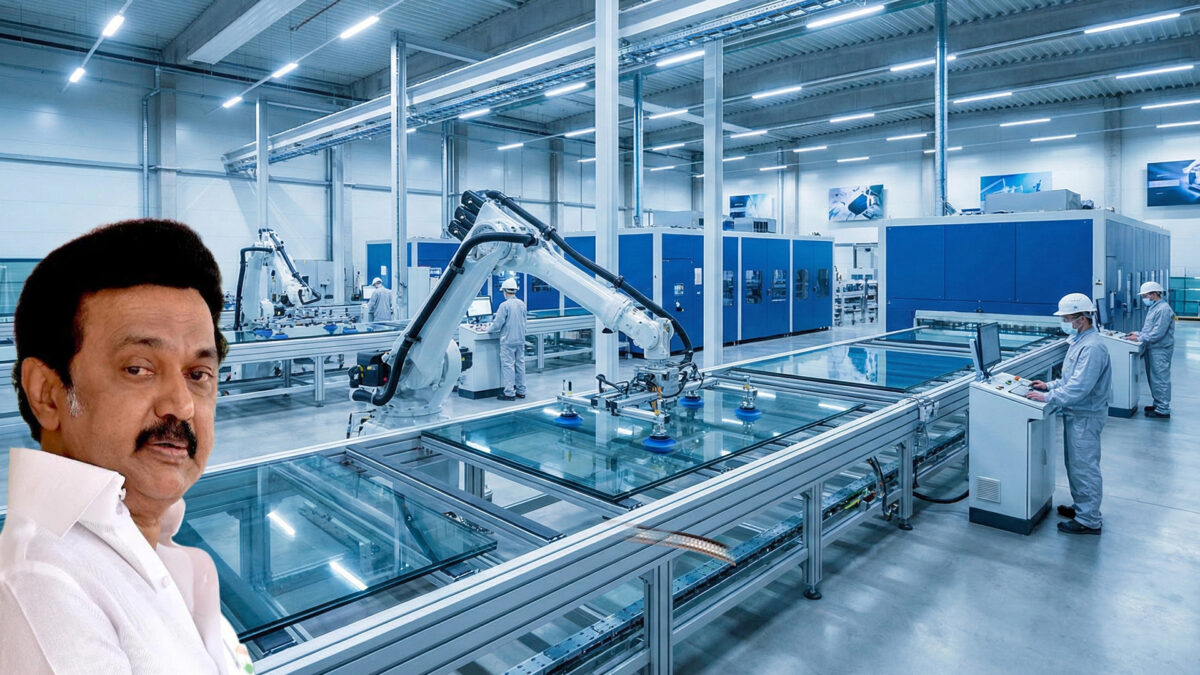
Tamil Nadu Chief Minister M. K. Stalin inaugurated a new state-of-the-art Gorilla Glass manufacturing facility near Chennai on Friday, marking a major milestone for India’s electronics industry. The plant, located at the SIPCOT industrial park in Pillaipakkam, Kancheepuram district, has been built with an investment of ₹1,003 crore and is expected to significantly strengthen the country’s high-tech manufacturing capabilities.

The facility is a joint venture between the US-based Corning Incorporated, globally known for its “Gorilla Glass,” and Indian firm Optiemus Infracom Ltd. It is the first plant in India to employ precision glass-processing technology to manufacture front cover glass for smartphones and other portable devices. The technology, widely used in premium mobile devices worldwide, will now be produced domestically, reducing reliance on imports and strengthening India’s electronics supply chain.

In its first phase, the plant is expected to produce approximately 30 million pieces of cover glass annually. The project will also generate around 840 direct jobs, providing employment opportunities and contributing to skill development in advanced manufacturing technologies. Officials noted that the initiative aligns with the central government’s “Make-in-India” strategy by promoting domestic production of high-value electronics components.

Stalin highlighted the significance of the facility in attracting further investment to Tamil Nadu’s electronics and manufacturing sectors. He pointed out that the state has been proactive in implementing industrial policies and MoUs, ensuring smooth project execution and creating an investor-friendly environment.

The plant is part of a broader trend of high-tech investments in the region, reinforcing Tamil Nadu’s position as a hub for electronics manufacturing in India. Industry experts say that domestic production of Gorilla Glass could open avenues for collaboration with global smartphone manufacturers and strengthen the country’s export potential in premium mobile components.

With the inauguration of this facility, India moves closer to self-reliance in critical smartphone technologies, while the state benefits from economic growth, employment generation, and enhanced technological capabilities. The plant is expected to play a key role in the country’s electronics ecosystem, attracting additional investments and supporting the growth of ancillary industries in the coming years.

Also Read: Netflix to buy Warner Bros Discovery for $72 billion

Categories
Corporate

HUL’s record date for demerger Dec 5, shares drop 7%

Hindustan Unilever Ltd (HUL) has set 5 December 2025 as the record date for the demerger of its ice‑cream business into a separate entity, Kwality Wall’s (India) Limited (KWIL). The move is part of HUL’s strategic plan to unlock value by separating its ice‑cream operations from its broader FMCG portfolio.

Under the approved demerger scheme, which came into effect on 1 December 2025, existing HUL shareholders as of the record date will receive one KWIL share for every HUL share held. This will give shareholders direct access to HUL’s ice‑cream business, which includes well-known brands like Cornetto, Magnum, Feast, and Creamy Delight. The newly formed KWIL is expected to be listed by February 2026, allowing investors to participate in the growth of the ice‑cream segment independently.

The announcement and record date triggered volatility in HUL shares. On the Bombay Stock Exchange (BSE), HUL’s stock fell sharply to an intraday low of ₹2,289, a drop of around 7%, before recovering to close the day down roughly 3.5%. Analysts attribute the initial decline to market adjustments as investors await the spin-off and recalibrate valuations for both HUL and the new ice-cream entity.

HUL’s management has emphasized that the demerger is intended to enhance operational focus and unlock shareholder value. By creating a pure-play ice‑cream company, the company aims to provide better visibility into the performance of its high-growth frozen dessert segment, separate from HUL’s core FMCG operations, which include personal care and household products.

The demerger follows a broader trend among large FMCG companies to unlock value through strategic spin-offs of high-potential business units. Analysts expect the move to strengthen both HUL and KWIL, with KWIL benefiting from dedicated management focus and increased investor interest, while HUL can concentrate on its core product categories.

For investors, the key takeaway is the opportunity to hold shares in both HUL and the newly listed KWIL, enabling participation in the growth trajectory of HUL’s ice‑cream business while retaining exposure to its established FMCG portfolio.

Also Read: Tamil Nadu CM inaugurates ₹1,003 cr Gorilla Glass plant near Chennai

Categories
Corporate

Netflix to buy Warner Bros Discovery for $72 billion

Netflix has agreed to buy Warner Bros Discovery’s film and TV studios, along with its streaming business, including HBO Max. The deal values the company at $72 billion in equity, or roughly $82.7 billion including debt, making it one of the largest acquisitions in the entertainment industry.

Under the agreement, Warner Bros Discovery shareholders will receive $23.25 in cash and $4.50 in Netflix stock per share, totaling $27.75 per share. The acquisition will finalize only after Warner Bros spins off its traditional cable and TV channels, expected by mid-2026, and after receiving regulatory and shareholder approvals.

The deal gives Netflix access to one of Hollywood’s richest content libraries, including blockbuster franchises such as Harry Potter, DC Comics, and Game of Thrones, along with Warner Bros’ film and TV studio infrastructure. This move positions Netflix not just as a streaming service, but also as a full-scale content creator, expanding its influence in the global entertainment market.

Industry experts say the merger could reshape how audiences watch movies and TV shows worldwide, though it may attract regulatory scrutiny due to potential market concentration. Questions remain over whether Netflix will merge HBO Max into its platform or keep it separate, and how the consolidation may affect competition and content diversity in the industry.

Also Read: Global outage hits internet as Cloudflare goes down

Categories
Corporate

Global outage hits internet as Cloudflare goes down

A major internet disruption occurred on December 5, 2025, after Cloudflare suffered yet another outage, briefly knocking several popular websites and apps offline across the globe. The downtime lasted around half an hour but caused widespread inconvenience as platforms relying on Cloudflare’s network stopped loading or showed error messages.

Users reported issues with a wide range of services, including finance apps like Zerodha and Groww, productivity tools such as Zoom and Canva, and even Downdetector, the portal used to track outages. Many websites experienced loading failures, login errors, and complete service interruptions.

Cloudflare later confirmed that the outage was triggered by a faulty configuration change in its Web Application Firewall. The update was rolled out to address a recently disclosed security flaw involving React Server Components. The company clarified that the failure was technical in nature and not the result of a cyberattack.

This marks Cloudflare’s second major incident in recent weeks, raising concerns about the global dependence on a few internet infrastructure providers. Even a brief disruption at one such company can create a ripple effect across industries, impacting millions of users and businesses at the same time.

Cloudflare has restored services and apologised for the inconvenience while assuring users that the vulnerability update will be handled more carefully going forward.

Also Read: Russia begins fuel supply to Kudankulam plant, Tamil Nadu

Categories
Corporate

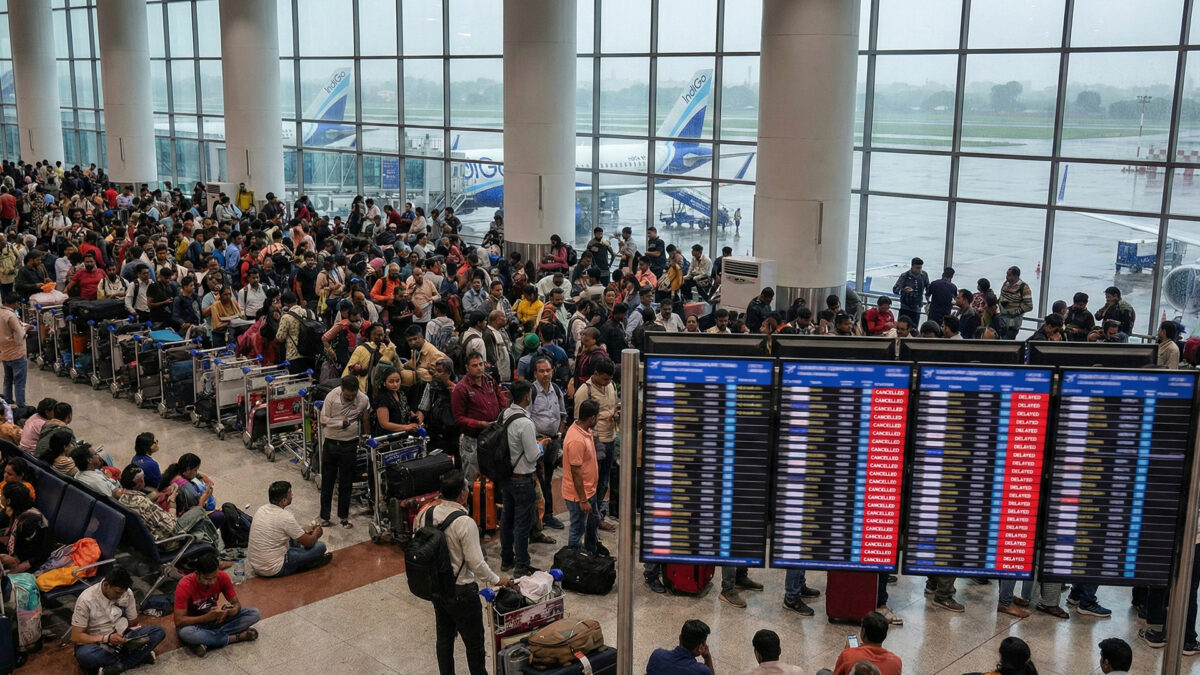
IndiGo’s operational crisis enters Day 5, over 1000 flights affected

IndiGo, India’s largest airline by market share, is navigating one of its most prolonged operational disruptions in recent years, as widespread flight delays and cancellations entered their fifth consecutive day afftecting more than 1000 fights across India. What began as a roster and crew-duty alignment issue early in the week has now evolved into a sustained operational challenge affecting its nationwide network and prompting close regulatory scrutiny.

According to industry sources, the disruptions stem from a combination of crew shortages, last-minute duty realignments, and the airline’s ongoing transition to new Flight Duty Time Limitations (FDTL) norms. The Directorate General of Civil Aviation (DGCA) has sought detailed explanations from the carrier, asking IndiGo to map out corrective plans that ensure network stability, adequate crew availability, and compliance with staffing benchmarks during high-traffic periods.

Operational metrics have been under pressure, with dozens of cancellations and significant delays across major metros including Delhi, Mumbai, Bengaluru, Hyderabad, and Kolkata. The extended strain has forced IndiGo to reassign aircraft, redesign flight rotations, and stagger departures in an effort to restore punctuality. However, the cascading effect of earlier delays has continued to disrupt the airline’s tight turnaround model, leading to network-wide congestion.

From a corporate standpoint, the situation has raised questions around workforce planning, seasonal capacity management, and the airline’s preparedness for regulatory transitions. Analysts note that IndiGo’s scale—operating over 2,000 daily flights—makes it particularly vulnerable to systemic shocks, where localized crew shortages can ripple across the network.

The airline has issued multiple public statements acknowledging the disruption, saying it is “working around the clock” to stabilise operations. It has deployed additional staff for passenger handling, strengthened customer communication, and activated contingency rostering teams. IndiGo is also believed to be evaluating medium-term structural adjustments to prevent a repeat of this week’s events.

Despite the corrective measures underway, IndiGo’s recovery curve remains gradual, with residual delays expected to persist until crew schedules are fully realigned. The carrier has enhanced operational oversight, activated crisis-management protocols, and is coordinating closely with airport operators to streamline passenger handling. Analysts note that while IndiGo has historically demonstrated strong operational resilience, this episode highlights the growing importance of agile workforce planning and scenario-based scheduling models—especially as regulatory frameworks evolve.

As operations gradually stabilise, IndiGo’s management is expected to conduct an internal review to assess staffing buffers, duty roster flexibility, and long-term preparedness for similar disruptions. The outcome, coupled with DGCA guidance, will likely shape the airline’s operational strategy in the coming months, marking this week’s disruptions as a pivotal moment for its network management capabilities and service reliability.

Also Read: Purple Wave Infocom ₹31.45 cr IPO opens modestly

Categories
Corporate

Meesho IPO oversubscribed 79×, grey market shows 45% gains

India’s popular social commerce platform Meesho has captured the attention of investors with an extraordinary response to its initial public offering (IPO). The three-day issue, which ran from 3 to 5 December, has been oversubscribed nearly 79 times, reflecting strong market confidence in the company. The IPO included a fresh issue of ₹4,250 crore and an offer-for-sale (OFS) of around ₹1,171 crore, totaling ₹5,421 crore, priced in a band of ₹105–₹111 per share.

Subscription data shows that demand built rapidly: the IPO was subscribed 2.35 times on Day 1, surged to 6–8 times on Day 2, and closed at nearly 79 times overall on the final day. By category, Qualified Institutional Buyers (QIBs) subscribed roughly 120 times, retail investors around 18 times, and non-institutional investors about 38 times.

Ahead of the listing, Meesho shares are trading at a grey market premium of nearly 45%, with unlisted shares changing hands at approximately ₹160.5. This points to potential listing gains of 40–45% over the IPO’s upper price band. The shares are expected to list on 10 December 2025.

At the upper price band of ₹111, Meesho’s post-IPO market valuation stands at roughly ₹50,096 crore. The company plans to use the funds raised to strengthen its cloud infrastructure, expand technology and AI capabilities, ramp up marketing, and support overall business growth.

Analysts highlight Meesho’s strong presence in Tier-2 and Tier-3 cities and its asset-light business model as key strengths driving investor confidence. However, the company remains unprofitable, despite generating positive free cash flow in FY25, and operates in a highly competitive e-commerce market where maintaining customer trust and logistics efficiency is crucial.

Also Read: Exato Technologies shares soar 90% on BSE SME debut

Categories
Corporate

Exato Technologies shares soar 90% on BSE SME debut

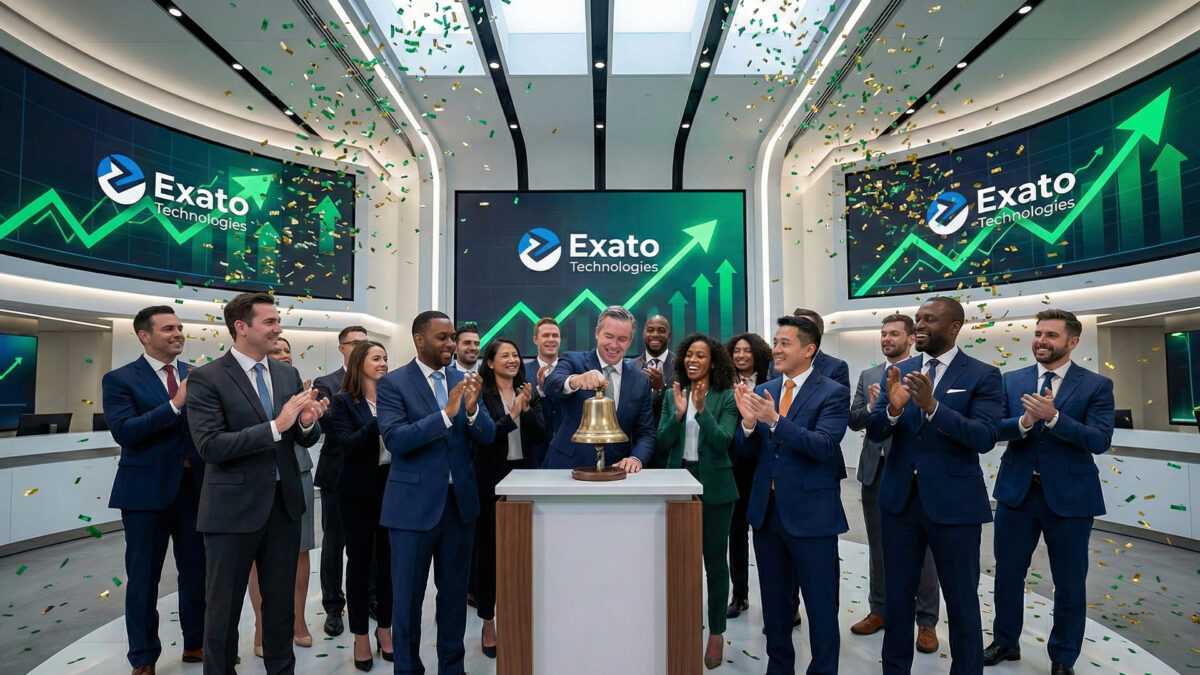
Exato Technologies, an emerging player in AI-driven customer experience solutions, made a stunning debut on the BSE SME platform today, sending waves of excitement among investors. Priced at ₹140 per share in the IPO, Exato’s stock opened at ₹266, delivering an immediate 90 % gain. During the day, the shares surged to a high of ₹279.30, nearly double the IPO price, reflecting strong market enthusiasm.

The IPO, which raised about ₹37.45 crore, witnessed massive interest, being oversubscribed nearly 900 times across different investor categories. Such overwhelming demand highlights investor confidence in Exato’s business model and growth potential. The proceeds from the IPO will be used to fund working capital, expand technology and product development, repay loans, and support general corporate purposes.

Exato Technologies specializes in customer-experience-as-a-service (CXaaS) and AI-as-a-service offerings, including virtual assistants, automation tools, omnichannel support, and analytics. The company aims to help businesses enhance customer engagement and streamline operations using advanced technology.

Market analysts say the strong first-day performance underscores the growing appetite for innovative smaller-cap tech firms on the BSE SME platform. While early investors enjoy substantial gains, experts also note that such high initial jumps can bring short-term volatility.

Overall, Exato Technologies’ IPO debut is a major success story in the SME segment, showcasing the market’s confidence in technology-led growth and innovation. The listing not only rewards investors but also sets a positive tone for upcoming SME platform offerings, reflecting a robust investor sentiment toward emerging tech companies.

Also Read: Samsung unveils CES 2026 Vision at ‘First Look’