Categories
Corporate

Sensex advances over 500 points, Nifty reclaims 24,050 mark

Indian equities recovered strongly on Thursday as investors returned to the market after the previous session’s sharp correction, helping benchmark indices erase a significant portion of Wednesday’s losses. Supported by value buying and positive global cues, the Sensex rose more than 450 points in early trade, while the Nifty climbed back above the psychologically important 24,000 level.

The recovery was driven by renewed buying in consumer-focused, pharmaceutical and automobile stocks, with investors taking advantage of lower valuations after the recent sell-off. Broader market sentiment also improved as Asian markets traded higher, encouraging participants to add positions in quality stocks.

Consumer giant Titan emerged among the top performers, joined by Sun Pharma, Maruti Suzuki, Mahindra & Mahindra and Bajaj Finance, all of which witnessed healthy buying interest. In contrast, information technology stocks continued to face pressure, with TCS, Infosys, HCLTech, Tech Mahindra and Wipro featuring among the day’s major laggards as investors remained cautious ahead of the sector’s quarterly earnings announcements.

Market experts attributed Thursday’s rebound to four key factors. The biggest trigger was value buying after Wednesday’s steep decline, which had pushed several fundamentally strong stocks to attractive levels. Positive cues from Asian peers further lifted sentiment, while buying in domestic-oriented sectors such as automobiles, healthcare and financials provided additional support. Optimism ahead of the corporate earnings season also helped improve investor confidence.

The previous trading session had seen Dalal Street register its steepest fall in over two months, weighed down by concerns over elevated crude oil prices, persistent geopolitical tensions and weak global sentiment.

Also Read: India hosts 180 retail GCCs, leads globally

Categories
Corporate

Sensex crashes 1,680 points, Nifty ends below 23,900

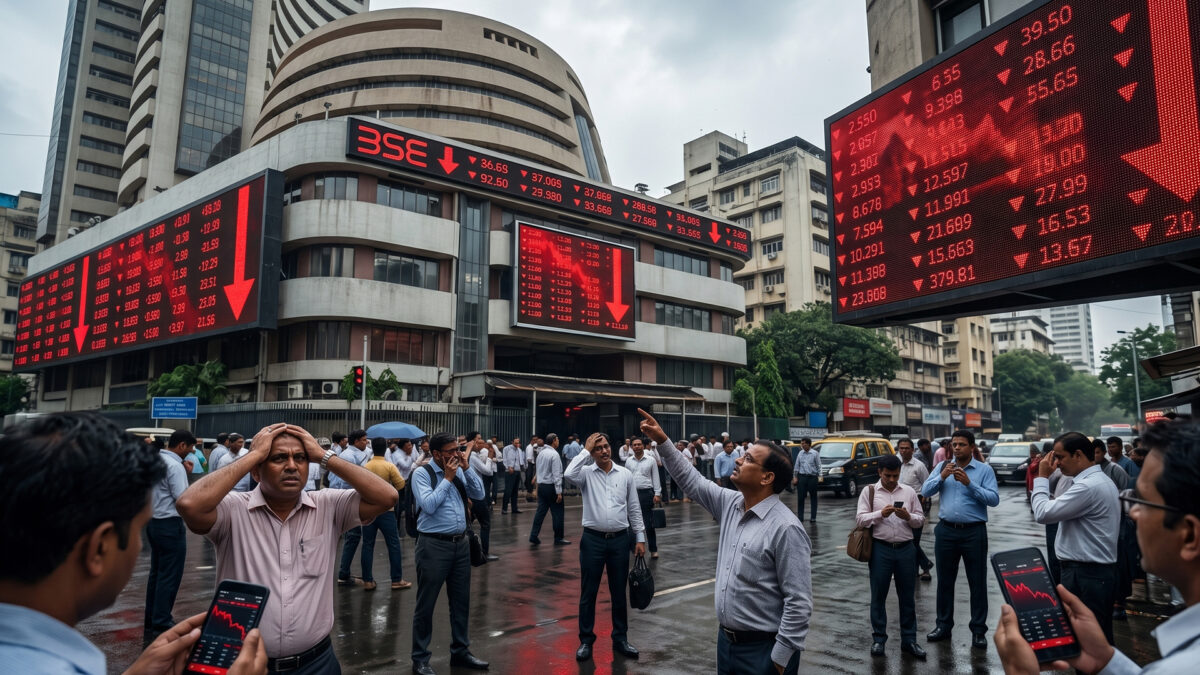
Equity markets suffered their steepest fall in over two months on Wednesday, with the BSE Sensex plunging 1,680 points and the Nifty 50 closing below the 23,900 mark as geopolitical tensions and soaring crude oil prices triggered widespread selling.

The sharp decline was driven by heavy selling in financial, banking, information technology and oil-linked stocks. Investors turned cautious after renewed tensions involving the US and Iran pushed Brent crude prices higher, raising concerns over inflation, corporate margins and India’s import bill.

Among the few gainers were Oil and Natural Gas Corporation (ONGC), Bajaj Auto and Wipro, supported by rising crude prices and selective defensive buying. Major losers included oil marketing companies such as Bharat Petroleum, Hindustan Petroleum and Indian Oil Corporation, along with aviation and financial stocks that came under pressure from higher fuel costs and profit booking.

Broader markets also ended sharply lower, with mid- and small-cap stocks extending losses as investors reduced exposure to riskier assets. Analysts attributed the sell-off to weak global cues, rising volatility, foreign institutional investor selling and caution ahead of the earnings season.

Despite the sharp correction, market experts believe India’s long-term fundamentals remain intact. They expect sentiment to stabilise once geopolitical concerns ease and investors shift their focus back to corporate earnings and domestic economic indicators.

Also Read: Titan rises 4% after strong Q1 update

Categories
Corporate

Titan rises 4% after strong Q1 update

Shares of Titan Company gained after the company reported a strong business update for the first quarter of FY27, driven by healthy growth in its jewellery business and steady demand across consumer segments.

The company’s domestic consumer business recorded a 41% year-on-year growth, supported by robust performance in its flagship jewellery division. Strong customer demand during festive occasions, wedding purchases and higher gold prices contributed to increased sales, helping the company deliver another solid quarter.

Titan also witnessed encouraging growth across its watches, wearables and eyecare businesses, reflecting resilient consumer spending despite an uncertain economic environment. The company said expanding retail presence, new product launches and a focus on premium offerings continued to attract customers.

Following the quarterly update, the stock climbed in early trade as investors welcomed the strong operational performance. Several brokerages retained their positive outlook on the company, citing sustained demand, healthy execution and long-term growth prospects. Some analysts also see further upside in the stock, supported by Titan’s leadership in the organised jewellery market and consistent financial performance.

Market experts believe Titan remains well positioned to benefit from rising disposable incomes, formalisation of the jewellery sector and growing preference for trusted brands. Continued store expansion and investments in digital channels are also expected to support future growth.

While fluctuations in gold prices and broader consumer sentiment remain key factors to watch, analysts said the company’s diversified business portfolio and strong brand presence provide resilience against short-term challenges.

Also Read: NBFC Gold loan growth surges 70% in May

Categories
Corporate

Cult.fit files IPO papers, targets ₹950 cr fresh issue

Fitness and wellness platform Cult.fit has taken a major step towards its stock market debut by filing draft papers with the Securities and Exchange Board of India (SEBI) for an initial public offering (IPO). The company plans to raise ₹950 crore through a fresh issue of equity shares, while several existing investors will partially exit through an offer for sale (OFS).

The proposed OFS will see early backers, including private equity and venture capital investors, sell part of their holdings. However, Cult.fit itself will not receive any proceeds from this portion of the issue. The funds raised through the fresh issue will be used to expand the company’s fitness centre network, invest in technology, strengthen its digital platform and support general corporate purposes.

Founded by Mukesh Bansal and Ankit Nagori, Cult.fit has evolved into one of India’s leading health and wellness platforms, offering gym memberships, group fitness classes, sports facilities, mental wellness services and nutrition products through both physical centres and its digital ecosystem.

The IPO comes as the company continues to improve its financial performance. Cult.fit has significantly reduced its losses over the past few years through tighter cost controls and improved operational efficiency, while maintaining steady revenue growth. The company has also expanded its offline presence across multiple Indian cities and strengthened its online offerings to attract a wider customer base.

India’s primary market has witnessed renewed momentum in recent months, with several consumer technology startups tapping public markets. Cult.fit’s proposed listing is expected to test investor appetite for businesses operating in the rapidly growing fitness and preventive healthcare segment.

Also Read: Gold at ₹145,350, silver futures slip To ₹230,160

Categories
Corporate

Sensex falls over 450 points, Nifty drops below 24,250

In early trade on Wednesday, the BSE Sensex declined more than 450 points to around 77,800, while the NSE Nifty50 slipped over 140 points to trade below the 24,250 mark. The weakness followed a mixed trend in Asian markets as investors assessed the impact of escalating global tensions on energy prices and economic growth.

Higher crude prices remain a key concern for India, one of the world’s largest oil importers. A sustained increase in oil prices could push up inflation, widen the trade deficit and increase input costs for companies, prompting investors to adopt a cautious approach.

Selling pressure was visible across banking, financial, auto, metal and oil-linked stocks, while the broader market also remained under pressure. Midcap and smallcap indices traded lower as investors booked profits after the recent rally.

Among individual stocks, Tech Mahindra and Titan were among the top gainers in early trade, benefiting from selective buying. Adani Enterprises and Bharat Electronics (BEL), meanwhile, figured among the biggest losers, weighing on the benchmark indices.

Investors are now keeping a close watch on geopolitical developments, movements in crude oil prices and the start of the June quarter earnings season for fresh market cues. Analysts expect volatility to persist in the near term but believe India’s strong domestic fundamentals, steady institutional inflows and hopes of healthy corporate earnings could lend support to the market over the medium term.

Also Read: Walmart cuts prices on thousands of everyday items

Categories
Corporate

Sky to strike £1.6 billion ITV deal

Sky has agreed to acquire ITV in a deal worth around £1.6 billion, marking one of the biggest changes to the UK’s media industry in recent years. The agreement is expected to bring together two of Britain’s best-known broadcasters as they respond to growing competition from global streaming platforms.

Under the proposed transaction, ITV will become part of Sky while continuing to produce popular television programmes, live sports coverage and news content. The companies say the merger will combine their strengths in entertainment, streaming and advertising, allowing them to invest more in original programming and digital services.

Executives from both organisations described the agreement as an opportunity to create a stronger British media business capable of competing with international rivals. They believe combining content libraries, production expertise and technology will offer viewers more choice across television and streaming platforms.

The deal is expected to strengthen Sky’s position in sports broadcasting, entertainment and on-demand services. ITV’s well-known portfolio of dramas, reality shows and live events will complement Sky’s existing offerings, while advertisers could benefit from a broader audience reach across multiple platforms.

Despite the agreement, the acquisition must still receive approval from shareholders and UK regulatory authorities before it can be completed. Competition regulators are expected to examine the transaction closely to ensure it does not reduce consumer choice or limit competition in the broadcasting market.

Both companies have stressed that viewers will continue to enjoy their favourite programmes during the transition. They also said employees, creative partners and production teams will remain central to future growth plans, although some operational changes may be introduced after the merger is finalised.

The announcement reflects the rapid transformation of the television industry, where traditional broadcasters are increasingly joining forces to compete with global streaming giants. Industry analysts believe larger media companies are better placed to invest in technology, premium content and live sports rights.

Also Read: Nothing unveils Phone 4b and RCB edition

Categories
Corporate

Samsung posts 19-fold profit rise, AI fears hit stock

Samsung Electronics has reported a sharp jump in profits for the second quarter, driven by strong demand for artificial intelligence-related chips and improved semiconductor performance. However, the upbeat earnings outlook failed to impress investors, with the company’s shares falling amid concerns that the AI boom may slow.

Samsung estimated that its operating profit surged nearly 19 times from a year earlier, exceeding market expectations. The strong performance was supported by higher demand for memory chips used in artificial intelligence servers, data centres and advanced computing systems.

The company’s semiconductor business has benefited from the rapid expansion of AI infrastructure worldwide. Growing demand for high-bandwidth memory (HBM) chips, which are essential for advanced AI processors, has helped major chipmakers recover from the downturn that affected the industry earlier.

Despite the strong profit forecast, Samsung’s shares declined as investors focused on concerns over the sustainability of AI-driven growth. Market participants are worried that heavy investments in artificial intelligence infrastructure may eventually slow, affecting future demand for advanced chips.

Analysts said investors are looking beyond short-term earnings and evaluating whether AI-related spending can continue at the current pace. The technology sector has seen massive investment in AI data centres and computing power, but questions remain over long-term returns.

Samsung has been working to strengthen its position in the AI semiconductor market, competing with global rivals in memory technology and advanced chip manufacturing. The company is investing heavily to expand production capacity and improve its high-performance memory chip offerings.

The latest results highlight the growing importance of artificial intelligence for the global semiconductor industry. While chip demand remains strong, investors are becoming more selective and closely monitoring whether companies can convert AI investments into sustainable profits.

Samsung’s performance reflects the wider technology market trend: strong earnings linked to AI growth, but increasing investor caution over whether the current boom can maintain its momentum.

Also Read: Xbox CEO Asha Sharma announces 3,200 job cuts

Categories
Corporate

Sensex falls 104 points, Nifty slips below 24,400

The equity indices ended lower on Tuesday, snapping a four-session winning streak as investors booked profits in heavyweight stocks and remained cautious ahead of key global developments.

The BSE Sensex fell 104 points to close at 80,582, while the NSE Nifty 50 slipped below the 24,400 mark to settle at 24,379. The market opened on a firm note and traded in positive territory during the first half of the session before surrendering gains amid late selling in select blue-chip counters.

Shares of Trent, Reliance Industries, Kotak Mahindra Bank, Axis Bank and Bajaj Finance were among the biggest drags on the benchmark indices, pulling the market lower in the final hours of trade. Profit booking in these heavyweight stocks weighed on overall investor sentiment.

On the other hand, Eternal (formerly Zomato), Tata Steel, JSW Steel, Hindalco Industries and NTPC emerged among the top gainers, supported by buying in metal and select energy stocks. Strength in the metal pack helped limit broader market losses despite weakness in financial and consumer-focused counters.

Market participants remained cautious as they awaited further clarity on global trade developments, the trajectory of interest rates and the upcoming corporate earnings season. Investors also monitored movements in crude oil prices and foreign institutional investor (FII) activity, both of which continue to influence domestic market sentiment.

Broader markets presented a mixed picture, with sectoral indices closing in varied territory. Metal stocks outperformed, while financial services and consumer discretionary stocks witnessed selling pressure.

Despite Tuesday’s decline, market experts believe investors are likely to remain focused on quarterly earnings, domestic economic data and global cues over the coming weeks. They advise investors to stay selective and maintain a long-term approach as markets navigate near-term volatility and shifting global sentiment.

Also Read: India, Japan unite for UNICORN naval project

Categories
Corporate

Trent reports 19% revenue growth in first quarter

Shares of Trent Ltd. fell sharply on Tuesday even as the Tata Group retailer reported healthy business growth for the first quarter of FY27. The stock dropped nearly 11% after investors reacted to the company’s quarterly update.

Trent reported a 19% year-on-year increase in standalone revenue during the April–June quarter. While the growth remained strong, it was lower than what the market had expected, triggering profit booking in the stock.

The company said demand across its fashion brands remained healthy during the quarter. It also continued expanding its retail footprint by opening new stores under its popular Westside and Zudio brands, strengthening its presence across India.

Despite the positive business update, analysts said Trent’s premium valuation had raised investor expectations. As a result, even solid revenue growth was not enough to satisfy the market.

This sharp fall reflects short-term sentiment rather than any weakness in the company’s business. They said investors are closely watching the pace of growth after Trent delivered exceptional performance over the past few years.

The retailer remains optimistic about long-term growth, backed by rising demand for organised fashion retail and continued store expansion. Analysts also expect upcoming financial results to provide a clearer picture of the company’s profitability and margins.

Also Read: Kalyan Jewellers stock falls despite growth

Categories
Corporate

Cochin Shipyard OFS opens today, shares slip 4%

The Centre has launched an Offer for Sale (OFS) to divest up to 5.04% stake in Cochin Shipyard Ltd, aiming to raise nearly ₹1,800 crore through the share sale. The two-day OFS opened for institutional investors on Monday, while retail investors can bid on Tuesday.

The government has fixed the floor price at ₹1,400 per share, a discount to the stock’s previous closing price to encourage wider participation. The offer includes a base sale of 2.5% equity, with an additional 2.54% stake available under the green shoe option if demand remains strong.

Following the announcement, shares of the state-owned defence and shipbuilding company came under pressure. The stock fell around 4% during trading as investors reacted to the discounted offer price and the increase in the number of shares available in the market.

Despite the short-term decline, market analysts said the OFS is part of the government’s broader disinvestment programme and does not alter Cochin Shipyard’s long-term business prospects. The company continues to benefit from a healthy order book, rising defence spending and increasing opportunities in commercial shipbuilding and ship repair.

The government currently holds a majority stake in Cochin Shipyard, and the latest OFS is expected to improve public shareholding while helping the Centre meet its disinvestment targets for the financial year.

Retail investors have been offered the opportunity to participate in the sale on the second day of the issue, with reservations made specifically for them. Analysts believe the discounted pricing could attract long-term investors despite the temporary weakness in the stock.

Cochin Shipyard remains one of India’s leading public sector shipbuilders, executing projects for the Indian Navy, Coast Guard and commercial shipping companies. Its strong execution capabilities and robust order pipeline continue to support investor confidence.

Also Read: Rupee gains 15 paise to 95.28