Categories
Corporate

Sun Pharma Q3 profit seen up 8% at ₹2,400 cr

Sun Pharmaceutical Industries Ltd is expected to report Q3 FY26 revenue of around ₹13,500 crore, up 8–10% year-on-year, while net profit is estimated at nearly ₹2,400 crore, reflecting an 8% annual increase, according to analyst estimates. EBITDA margins are likely to remain stable at 28–30%, supported by steady domestic growth and a favourable product mix.

Growth in the December quarter is expected to be led by Sun Pharma’s India formulations business, which continues to benefit from strong demand for chronic therapies and periodic price hikes. Analysts expect the domestic market to remain a key earnings driver, contributing consistently to both revenue growth and margin stability.

The company’s specialty drugs portfolio, including products such as Ilumya and Cequa, is expected to deliver stable sales during the quarter. However, higher spending on marketing and research and development is likely to limit margin expansion. While the specialty business remains strategically important for long-term growth, analysts believe profitability from this segment will take time to scale up.

In contrast, Sun Pharma’s US generics business is expected to remain largely flat, weighed down by persistent pricing pressure and intense competition. Limited new product launches and ongoing price erosion are likely to restrict growth in the US market, which has been a key headwind for Indian drugmakers in recent years.

Other international markets are expected to report modest performance, broadly in line with previous quarters. Cost controls and a stable operating environment are likely to help the company protect margins despite challenges in select geographies.

On the profitability front, earnings are expected to closely track operating performance, with no major one-off items anticipated during the quarter. Analysts will closely monitor management commentary on the outlook for the US generics business, progress in the specialty portfolio, and the pace of investment in research and development.

Also Read: Gold at ₹1.78 lakh, Silver above ₹4.10 lakh

Categories
Corporate

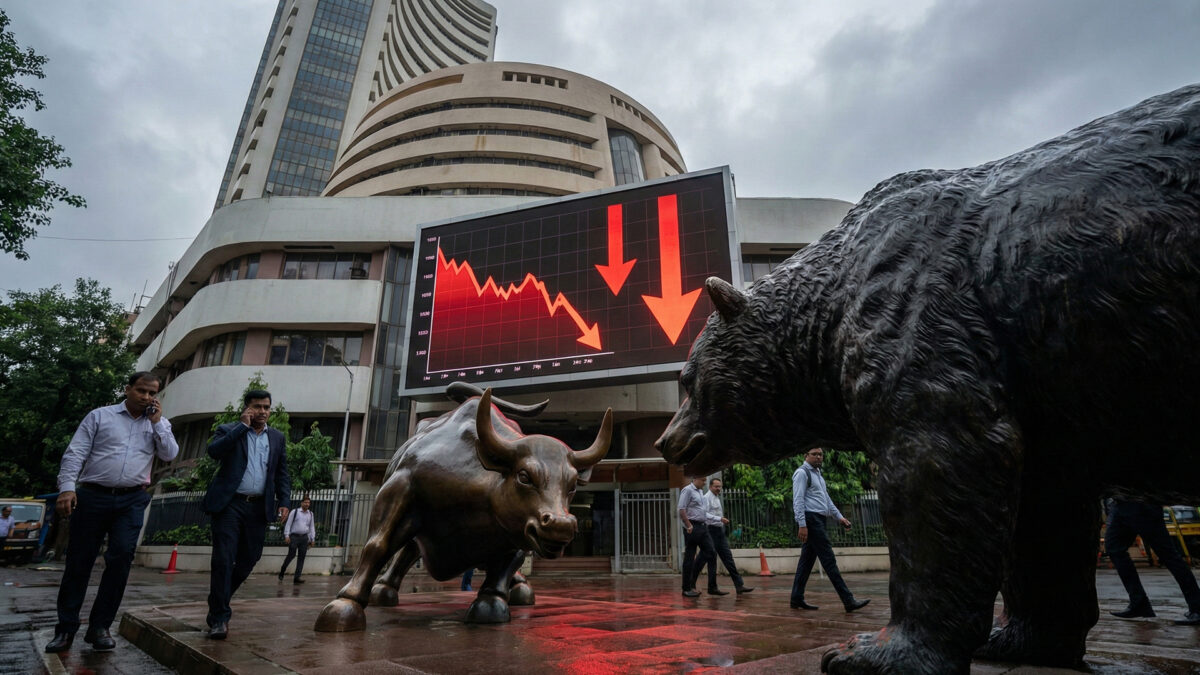
Sensex slides 350 points, Nifty slips below 25,300

equity benchmarks ended lower on January 30, 2026, as investors turned cautious ahead of the Union Budget and booked profits after recent gains. The BSE Sensex declined by more than 350 points, while the NSE Nifty 50 slipped below the key 25,300 level, reflecting weak global cues and stock-specific selling pressure.

Market sentiment remained subdued through the session, with losses seen across auto, metal and select FMCG stocks. Tata Motors emerged as a major laggard, with its shares falling sharply after the company reported a steep drop in net profit for the December quarter, despite steady revenue growth. Weak margins and higher costs weighed on investor confidence.

Voltas shares slid around 5% after the company posted disappointing quarterly earnings, missing market expectations. Metal stocks, including Tata Steel, also traded lower amid concerns over global demand and soft commodity prices, adding to the pressure on frontline indices.

On the positive side, Dabur India gained around 2%, supported by a modest rise in December-quarter profit and stable demand across its key product categories. Some defensive stocks and select FMCG names also saw mild buying as investors shifted to relatively safer segments amid market uncertainty.

Broader markets mirrored the weak trend, with midcap and smallcap stocks trading under pressure for most of the day. Sectorally, metal, auto and capital goods indices were among the top losers, while FMCG and healthcare stocks showed relative resilience.

Investors remained on the sidelines ahead of the Union Budget, looking for clarity on government spending, fiscal consolidation and measures to support growth. Global factors, including mixed Asian market performance and concerns around interest rate outlooks, also influenced domestic sentiment.

Also Read: Sensex climbs 222 points, Nifty regains 25,400 mark

Categories
Corporate

SpaceX eyes June 2026 IPO at trillion-dollar valuation

Elon Musk’s aerospace venture SpaceX is reportedly planning to go public in June 2026, with a potential valuation of $1.5 trillion. The company could raise up to $50 billion, making it one of the largest initial public offerings in history. If realized, the listing would surpass nearly all previous market debuts, including Saudi Aramco’s $29 billion IPO in 2019.

The proposed timeline coincides with Musk’s 55th birthday on June 28 and a rare alignment of planets, adding a symbolic touch to the potential market debut. While SpaceX has traditionally stayed private, recent growth in its Starlink satellite broadband network and other space-based technologies has fueled investor interest. Secondary market transactions have valued the company at roughly $800 billion, reflecting robust demand from private investors.

Industry observers note that the IPO could highlight the financial potential of the commercial space sector. SpaceX’s Starlink service has rapidly expanded, providing internet connectivity across remote regions, while broader commercial and government interest in satellite and space services continues to grow.

To support the IPO, reports suggest that four major Wall Street banks, Bank of America, JPMorgan Chase, Goldman Sachs, and Morgan Stanley, may be engaged as lead underwriters. Preparations appear to be well underway, although the final timing will depend on market conditions and regulatory approvals.

A successful listing would not only be a landmark event for SpaceX but also for the global financial markets, demonstrating strong investor appetite for the rapidly expanding space industry. Although the company has not officially confirmed the IPO, speculation alone has stirred excitement among analysts, investors, and media, highlighting the growing intersection of space exploration and investment opportunities.

With Starlink subscribers climbing and commercial interest rising, SpaceX’s public offering could set a new precedent for tech-driven space ventures, while solidifying Musk’s vision of turning space innovation into a mainstream economic force.

Also Read: Google launches AI Tools for JEE prep in India

Categories
Corporate

Sensex climbs 222 points, Nifty regains 25,400 mark

Markets closed higher on Thursday, where the BSE Sensex gained over 220 points, while the Nifty 50 moved back above the 25,400 level by the end of the session.

Markets opened on a cautious note amid mixed global cues and uncertainty ahead of key economic developments. Sentiment improved later in the day on the back of gains in heavyweight stocks.

Tata Steel surged around 4%, emerging as the top gainer on the Nifty, while Larsen & Toubro climbed nearly 3% on sustained investor interest. Other metal and PSU stocks such as Vedanta and Coal India also traded higher.

On the losing side, FMCG and auto stocks faced selling pressure. ITC, Maruti Suzuki and Titan Company were among the notable laggards, limiting broader market gains.

Sector-wise, metal, PSU and capital goods stocks outperformed, while FMCG, IT and auto indices ended lower. Investors stayed cautious ahead of upcoming economic cues and the Union Budget.

Also Read: Sensex down 400 points, Nifty under 25,250

Categories
Corporate

L&T bags ₹5,000–10,000 cr Riyadh metro extension order

Larsen & Toubro (L&T) has secured a major international infrastructure contract worth between ₹5,000 crore and ₹10,000 crore for the extension of the Riyadh Metro in Saudi Arabia. The project has been awarded by the Royal Commission for Riyadh City and marks another significant overseas win for the Indian engineering and construction major.

The order relates to the extension of the Red Line of the Riyadh Metro and will be executed by L&T’s Heavy Civil Infrastructure business. Under the contract, L&T will be responsible for the design and turnkey construction of the new metro corridor. The project will be carried out as part of a global consortium that includes international and regional partners.

The metro extension will span 8.4 kilometres and include a combination of underground and elevated sections. The project will also feature five new metro stations, aimed at improving public transport access and easing traffic congestion in the rapidly growing Saudi capital. Once completed, the extension is expected to enhance connectivity across key parts of Riyadh and support the city’s long-term urban mobility plans.

The Riyadh Metro is one of the largest public transport projects in the Middle East and forms a core part of Saudi Arabia’s efforts to modernise its infrastructure under its broader economic diversification strategy. The Red Line is a crucial corridor in the network, and the extension will further strengthen the system’s reach and efficiency.

L&T has a strong track record in executing large metro and rail infrastructure projects both in India and overseas. The company’s growing presence in the Middle East has helped it secure several high-value contracts in recent years, contributing significantly to its international order book.

Following the announcement, L&T shares moved higher in early trade, reflecting positive investor sentiment around the company’s robust project pipeline and continued global expansion. The order also comes at a time when the company is preparing to announce its quarterly financial results, with analysts expecting steady performance driven by strong infrastructure demand.

Also Read: Maruti Suzuki Q3 net profit up 4% at ₹3,879 cr

Categories
Corporate

Maruti Suzuki Q3 net profit up 4% at ₹3,879 cr

Maruti Suzuki India Ltd, the country’s largest passenger car maker, reported a 4 per cent rise in net profit for the third quarter of FY26, reaching ₹3,879 crore, up from ₹3,726.9 crore in the same period last year. The company’s standalone profit was ₹3,794 crore, reflecting steady growth despite a one-time exceptional charge of ₹594 crore related to the implementation of new labour codes.

The company’s revenue from operations jumped 29 per cent to around ₹49,900 crore, driven by strong domestic demand and a rebound in consumer sentiment. Maruti Suzuki recorded its highest-ever quarterly domestic sales, with 564,669 units sold, up sharply from 466,993 units a year ago. Including exports, total sales reached 667,769 units, supported by continued demand across different car segments and overseas shipments.

The small car segment contributed significantly to growth, benefiting from the lower 18 per cent Goods and Services Tax (GST) rate. Operating performance remained healthy, with EBITDA rising around 10 per cent, although higher commodity costs and employee expenses slightly compressed margins.

Despite the positive top-line and volume growth, Maruti Suzuki’s shares saw a dip after the results, as investors considered the impact of the one-time labour code provision and ongoing cost pressures.

Also Read: Meta to spend $135 bn on AI in 2026

Categories
Corporate

Sensex down 400 points, Nifty under 25,250

Indian equity markets saw a sharp bout of selling on Thursday as the BSE Sensex slipped over 400 points, while the Nifty 50 dropped below the 25,250 level, reflecting nervous sentiment on Dalal Street after recent gains.

The mood was subdued right from the opening bell, tracking weak global cues. Asian markets traded lower, and GIFT Nifty had already signalled a negative start, setting the tone for the session. Investors chose to pare risk amid uncertainty around global interest rates and lingering geopolitical concerns.

One of the major overhangs was the US Federal Reserve’s decision to keep interest rates unchanged. While the move was widely expected, the absence of clear signals on near-term rate cuts dampened risk appetite across global equities, including India. Traders opted for profit-booking after the market’s recent rally.

Adding to the pressure was the Indian rupee slipping to record lows against the US dollar. The weaker currency raised concerns around capital outflows and imported inflation, weighing on overall market confidence. Although a soft rupee typically supports export-oriented stocks, it failed to offset broader selling pressure.

Sectorally, IT and metal stocks were among the laggards, while select FMCG and defensive names offered limited support. Stocks such as ITC and Vedanta remained in focus amid stock-specific developments and earnings-related chatter. Broader markets also mirrored the weakness, with midcap and smallcap stocks trading lower.

In contrast to equities, gold and silver prices moved higher, as investors sought safety amid volatility. The rise in precious metals highlighted the shift towards defensive assets during uncertain market conditions.

Market participants are also staying cautious ahead of important domestic cues, including upcoming economic data, quarterly earnings, and the broader policy outlook as the Union Budget approaches.

Also Read: India’s industrial growth rockets 7.8% in December

Categories
Corporate

Sensex jumps 487 points and Nifty tops 25,300

Markets surged on Wednesday, January 28, 2026, with Sensex gaining 487 points to end strong and Nifty50 closing above 25,300. Investor optimism was fueled by the recently announced India-EU Free Trade Agreement (FTA), positive global cues, and broad buying across metals, energy, and real estate sectors.

Leading the gains were Vedanta, Hindustan Zinc, ONGC, and Vodafone Idea, reflecting strong sectoral momentum and positive corporate developments. Metals and energy stocks benefited from rising commodity prices, while Vodafone Idea edged higher after posting a narrower Q3 loss and improved operating metrics. Realty stocks also saw increased buying interest, boosting mid and small-cap indices.

On the other hand, some defensive sectors witnessed profit-taking. IT and FMCG stocks underperformed, as investors rotated funds into cyclical and value-oriented stocks, highlighting a sectoral shift in market sentiment.

Analysts noted that a stronger Indian rupee and favorable global trends further supported the bullish trend. The market rally added significant capitalization and reinforced investor confidence ahead of upcoming corporate earnings.

Also Read: Sensex up 300+ points, Nifty crosses 25,250

Categories
Corporate

Reliance, ONGC partner to share offshore energy assets

Reliance Industries Ltd (RIL) and state-run Oil and Natural Gas Corporation (ONGC) have entered into a strategic partnership to share offshore oil and gas resources, marking a major step towards improving efficiency and boosting India’s domestic energy production. The two companies signed a memorandum of understanding (MoU) during India Energy Week 2026.

The agreement focuses on sharing infrastructure, services and expertise across offshore exploration and production projects, particularly in deepwater and ultra-deepwater areas. Key regions covered under the pact include the Krishna-Godavari (KG) Basin on the east coast and the Andaman offshore blocks, where both RIL and ONGC operate adjoining or nearby fields.

As part of the collaboration, the companies will jointly use high-value assets such as drilling rigs, offshore platforms, processing facilities, pipelines, power systems, and marine infrastructure including platform supply vessels and multi-support vessels. The arrangement also covers specialised services such as well logging, project execution support and other technical operations required in offshore fields.

The primary objective of the partnership is to reduce operational costs, avoid duplication of infrastructure and improve asset utilisation in capital-intensive offshore projects. By sharing resources, both companies expect faster project execution, better logistical coordination and improved safety standards in challenging offshore environments.

ONGC said the MoU is in line with recent policy reforms, including the Oilfields (Regulation and Development) Amendment Act, 2025, which allows greater flexibility for operators to share facilities and infrastructure. The regulatory changes are aimed at encouraging collaboration, attracting investment and accelerating exploration and production activity in India’s oil and gas sector.

The partnership is also expected to strengthen emergency response mechanisms and operational resilience by enabling quicker access to vessels, equipment and technical support during critical situations.

Also Read: Hindalco to invest ₹21,000 cr in Odisha expansion

Categories
Corporate

Hindalco to invest ₹21,000 cr in Odisha expansion

Hindalco Industries Ltd, the metals flagship of the Aditya Birla Group, has announced a large expansion of its aluminium operations in Odisha, reinforcing the state’s role as a key hub in India’s metals and manufacturing ecosystem. The company will invest ₹21,000 crore to expand capacity at its Aditya Aluminium complex in Sambalpur, alongside commissioning high-value downstream facilities.

The expansion includes a major increase in aluminium smelting capacity by 3.6 lakh tonnes per annum, aimed at meeting rising domestic demand from infrastructure, automotive and energy sectors. As part of the same integrated project, Hindalco has operationalised a 1.7 lakh tonnes per annum Flat Rolled Products (FRP) plant and India’s first battery-grade aluminium foil unit, built at an investment of around ₹4,500 crore.

The battery foil facility is a strategic addition, designed to support up to 100 GWh of lithium-ion battery manufacturing, a critical input for electric vehicles and renewable energy storage. Company officials said this would reduce India’s dependence on aluminium foil imports and strengthen domestic supply chains for the fast-growing EV ecosystem. The expanded FRP capacity is also expected to cut aluminium imports significantly while supplying sectors such as packaging, defence, railways and clean energy.

Odisha Chief Minister Mohan Charan Majhi inaugurated multiple Hindalco projects in Sambalpur, together valued at around ₹26,496 crore. He said the investments would accelerate industrial growth in western Odisha, generate employment and improve skill development in the region. The state government has also announced plans to set up a second World Skill Centre in Sambalpur to prepare local youth for advanced manufacturing roles.

Hindalco Managing Director Satish Pai stated that the Sambalpur expansion is part of a broader ₹37,000 crore investment pipeline in Odisha, aligned with the company’s overall ₹55,000 crore capital expenditure plan across India. These projects span both upstream and downstream aluminium operations and are expected to create nearly 15,000 direct and indirect jobs.

Also Read: Tata Consumer Q3 profit jumps 38% to ₹385 cr