Categories
Beyond

China lifts 24% US tariff, keeps 10%

China will suspend its 24% tariff on a wide range of US goods for one year, marking a cautious step toward easing trade tensions. However, it will continue to impose a 10% duty on certain products, keeping some restrictions in place.

The decision follows a high-profile meeting between President Xi Jinping and US President Donald Trump, indicating a possible thaw in the long-standing trade dispute.

US agricultural exports may benefit, as tariffs of up to 15% on some farm products will be lifted starting November 10. While the suspension of the higher tariff provides relief for American businesses, China’s decision to maintain certain duties signals that a full resolution remains a work in progress.

This step represents a measured approach from both sides, balancing economic interests with ongoing diplomatic negotiations.

Also Read: Mehli Mistry Steps Down from Tata Trusts

Categories
Beyond

Gold Rises ₹300, Silver Flat at ₹89,500

Gold prices gained on November 5, tracking a recovery in international bullion markets as the US dollar softened and investors bet on stable Federal Reserve rates. Spot gold rose to about $2,365 per ounce, while on the Multi Commodity Exchange (MCX), domestic futures climbed by ₹200–₹300 per 10 grams.

In India, 24-carat gold averaged ₹73,000 per 10 grams and 22-carat around ₹67,000 across major metros including Delhi, Mumbai, and Bengaluru. The uptrend came after a brief dip last week, as safe-haven buying strengthened amid geopolitical tensions and steady treasury yields.

Silver, however, remained unchanged, hovering near $27.6 per ounce globally and ₹89,500 per kg in Indian markets. Analysts said muted industrial demand and investor caution ahead of key US data kept silver’s movement limited.

Experts expect gold to trade in a narrow band in the near term, with festive demand in India and global uncertainties lending support. As traders await fresh cues from inflation and employment data, bullion may continue to hold its current gains through the week.

Categories
Beyond

Bullion Steady, Gold at ₹12,333, Silver Near ₹1.54 Lakh

Gold and silver prices remained firm on Tuesday, November 4, across major Indian cities amid steady festive buying and muted global market movements.

In Delhi, 24-carat gold traded at ₹12,333 per gram and 22-carat at ₹11,304, while Mumbai saw ₹12,318 and ₹11,291, respectively.

Silver hovered around ₹154 per gram, or ₹1.54 lakh per kg. Analysts said stable demand and dollar strength kept bullion prices range-bound, with little volatility expected in the near term.

Categories
Beyond

BCCI Awards ₹51 Crore to Women’s Team

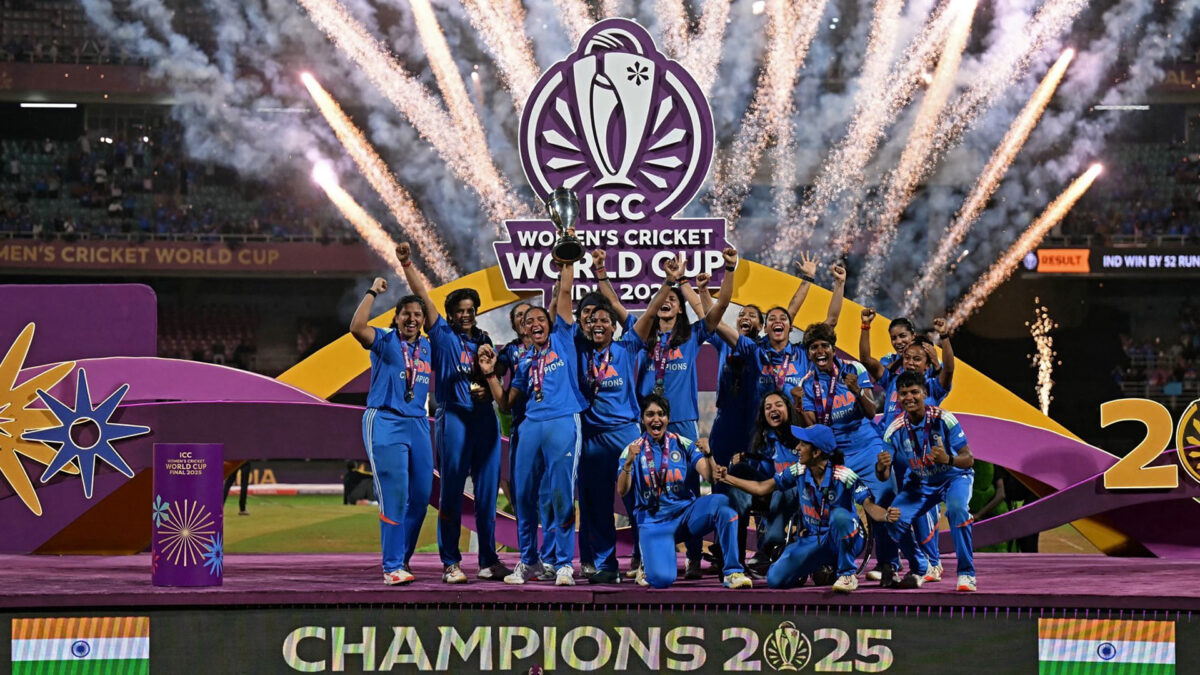
India’s first-ever Women’s World Cup victory has not only made history on the field but also inspired a record-breaking gesture off it, with the BCCI announcing a ₹51-crore reward for the triumphant team.

The reward will be shared among players, selectors, and support staff, making it one of the most significant financial recognitions in Indian women’s sports. BCCI Secretary Devajit Saikia confirmed that the amount would come entirely from the Board’s own resources, “without touching the ICC’s share.”

India lifted the ICC Women’s World Cup 2025 after defeating South Africa by 52 runs in the final at Navi Mumbai’s DY Patil Stadium, a victory that marked a defining chapter in Indian cricket. The BCCI’s ₹51-crore reward also exceeds the ICC’s official prize purse of about ₹40 crore, signalling the Board’s readiness to lead by example in promoting women’s cricket.

Saikia attributed the success to the team’s consistent performance and the BCCI’s recent initiatives, including equal match fees and enhanced support structures, aimed at bringing parity and professionalism to the women’s game.

“Women’s cricket reached the next level when our team beat Australia in the semi-final,” Saikia said, acknowledging the performance that set up India’s historic win.

The BCCI’s decision goes beyond the cricket field. It highlights how recognition, fairness, and investment can drive both performance and reputation. For India, it is a moment to celebrate excellence helps build a stronger culture of aspiration and trust.

With this record reward, the BCCI has set a new standard for recognition, proving that women’s cricket is not just a sporting triumph but a growing symbol of leadership and progress.

Categories
Beyond

Sensex and Nifty Extend Losses Amid FII Selling, Weak Global Sentiment

Indian equity benchmarks continued their downward trend on Friday, pressured by persistent selling from foreign institutional investors and weak global cues that dampened investor confidence.

The Sensex fell 465.75 points, or 0.55 percent, to close at 83,938.71, while the Nifty declined 155.75 points, or 0.6 percent, to end at 25,722.10.

Several major stocks in the Nifty pack, including NTPC, ETERNAL, Max Healthcare Institute, Cipla and InterGlobe Aviation, were among the notable laggards and slipped up to two percent during the trading session.

Market participants pointed to sustained foreign investor outflows as a key driver of the decline. FIIs sold equities worth ₹3,077.59 crore on Thursday, following withdrawals of ₹2,540.16 crore in the previous session.

According to market experts, the continuous selling by overseas investors has weakened overall market sentiment and is likely to act as a short-term drag on equities.

Global cues also added to the pressure. Asian markets remained subdued, with indices in Shanghai and Hong Kong trading lower, while U.S. markets closed in the red in the previous session.

Analysts observing global movements said that investors appear cautious as they assess recent policy signals from the U.S. Federal Reserve and await major economic data releases.

The overall tone was described as tentative, with Asian markets displaying uneven movement ahead of the weekend amid ongoing volatility.

Uncertainty surrounding U.S.–China trade discussions contributed to the weakness as well. Recent talks between U.S. President Donald Trump and China’s Xi Jinping concluded with expressions of optimism regarding easing tensions, but analysts noted that the outcome did not include a comprehensive agreement.

Also Read: Adani Power Lowest Bidder for 3.2 GW Coal Tender in Assam

Categories
Beyond

RBI Deputy Governor Reaffirms Crypto Scepticism

In a decisive address at the annual BFSI Summit in Mumbai, Reserve Bank of India (RBI) Deputy Governor T Rabi Sankar reiterated the central bank’s scepticism about private cryptocurrencies while laying out a calibrated strategy for the country’s Central Bank Digital Currency (CBDC).

Sankar insisted that the RBI will not rush into a full-scale launch of the digital rupee, indicating that India is technologically and operationally prepared but still cautious about a broader rollout.

“Many countries are experimenting with CBDC. We do not want to rush or launch it full scale because everyone globally is just starting off. The use cases are still very different and limited,” he said. He emphasized that central banks worldwide are observing the macro-economic and policy implications of CBDCs and that India is focused on “calibration over speed.”

On the issue of private cryptocurrencies, Sankar delivered a blunt verdict: unbacked tokens “have no underlying cash flow, no issuer, therefore no value,” and cannot be treated as financial assets.

He categorised them as serving “no purpose that existing forms of money cannot do better.”

He also flagged stablecoins as a major concern, stating they carried “a huge risk of replacing your currency and policy sovereignty,” particularly in emerging economies.

Turning to the CBDC, Sankar identified cross-border payments as a prime application.

He pointed out that the current settlement time of “four to five days” and transaction costs of “five to six per cent” in cross-border transfers could be reduced by appropriately designed central-bank money. “In the cross-border space … we believe CBDC is the answer,” he said. He also drew a strategic parallel between CBDC development and the internationalisation of the rupee, asserting that both are long-term goals that must be executed patiently. “We want to be a developed country in a very short time. Can you imagine a developed country when your currency is not commonly acceptable for global cross-border trades? We have to build those things now,” he observed.

The remarks reaffirm the RBI’s long-held stance on digital assets. The bank has consistently cautioned that cryptocurrencies pose macro-financial risks, especially for emerging markets lacking strong governance frameworks.

Meanwhile, the Indian government continues to assess how best to regulate the sector; a recent document indicated India is leaning away from full-scale regulation of cryptocurrencies, citing difficulty in containing associated risks.

On CBDC progress, the RBI’s retail and wholesale pilots — including the e₹-W and e₹-R launched in late 2022 — are progressing, though Sankar emphasized that scale and wider adoption remain subject to careful testing and feedback.

The RBI’s approach signals a willingness to innovate in digital currency, but within a framework prioritising monetary policy integrity, financial stability, and sovereignty.

As India charts its course, Sankar’s message is clear: the digital-rupee journey will advance step by step, but private cryptocurrencies remain firmly beyond the RBI’s comfort zone.

Also Read: Netflix Explores Possible Bid for Warner Bros Discovery

Categories
Beyond

US signs 10-year defence pact with India

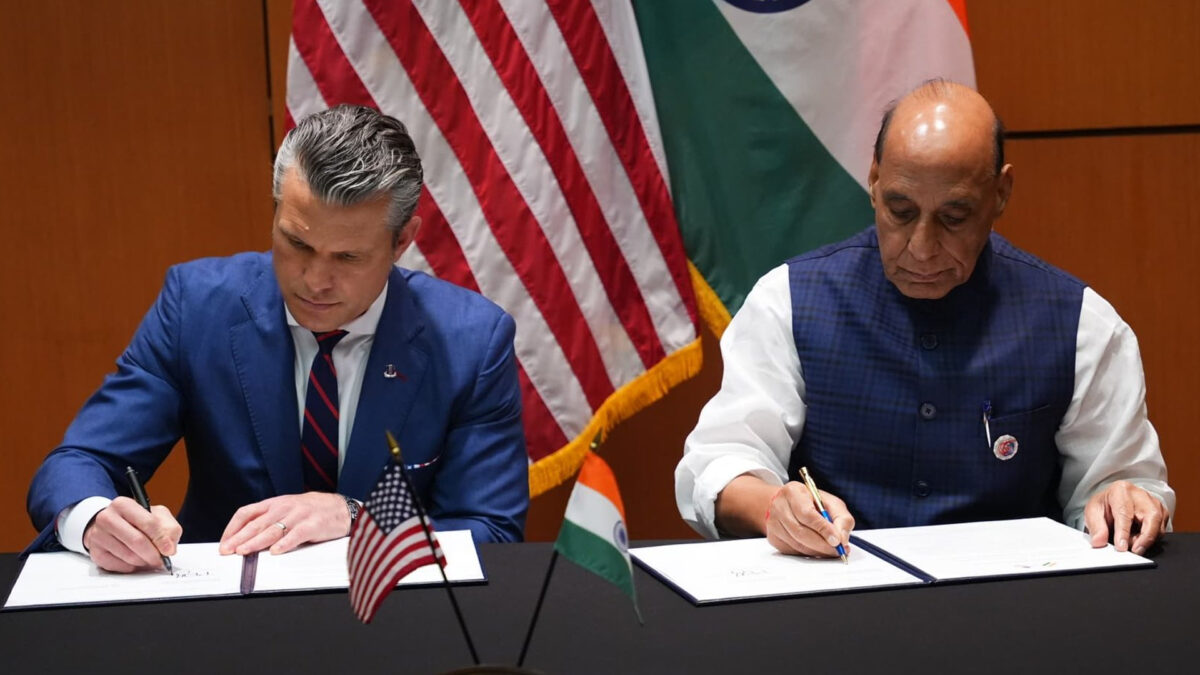
Indian Defence Minister Rajnath Singh met his US counterpart Pete Hegseth in Malaysia on Friday and announced the signing of a 10-year defence framework between the two countries.

The agreement will be a foundation for regional stability and deterrence, enhancing coordination, information sharing and technological cooperation between the two nations, Hegseth posted on X after the meeting with his Indian counterpart, Rajnath Singh.

Earlier, Singh had planned to meet Hegseth in Washington, but the trip was cancelled amid strained India-US ties after President Donald Trump doubled tariffs on Indian imports to 50%.

The meeting likely included a review of India’s plans to purchase military hardware from the US such as six Boeing P8I aircraft for the Indian Navy, as well as a fresh India-US defence cooperation framework.

Last week, commerce minister Piyush Goyal said that talks are being held regarding the proposed India-US Bilateral Trade Agreement and that an agreement will be reached after concerns of the nation’s farmers, fishermen and MSME sector are addressed.

Also Read: Adani Airports, AIONOS Sign Deal For Agentic AI Solution

Categories
Beyond

Markets Rebound as Global Cues Improve; Sensex, Nifty Turn Positive

Equity benchmark indices recovered from early losses on Friday, lifted by improved global sentiment and buying interest in heavyweight stocks.

After slipping at the open, the Sensex bounced back by around 250 points from the day’s low to trade at 84,712.79.

The Nifty also regained momentum and moved above the 25,850 mark, trading at 25,872.25.

Analysts noted that the uptrend was supported by firm cues from Asian markets.

Key indices such as South Korea’s Kospi and Japan’s Nikkei 225 registered gains, while futures on Wall Street indicated a positive opening.

Market analysts observed that although global markets showed mixed trends following an overnight decline in US indices, investors remained cautiously optimistic as they awaited further economic data and clarity on the Federal Reserve’s policy outlook.

Domestic sentiment also improved as crude oil prices eased. Brent crude, the global benchmark, fell 0.65 per cent to USD 64.58 a barrel, a development that typically benefits Indian equities by lowering import costs and reducing inflation concerns.

The Indian rupee traded mildly higher, gaining 5 paise to 88.64 against the US dollar in early trade.

Forex dealers attributed the rise to softer crude prices and a weaker dollar. However, ongoing foreign fund outflows and intermittent selling pressure in equities limited further appreciation.

From a technical standpoint, market strategists observed that the Nifty, which initially appeared to be forming a bullish continuation pattern, now seems to be moving toward a possible topping formation.

Analysts pointed out that the index’s decline in the previous session tested a key downside level around 25,886, suggesting underlying bearish tendencies.

While early intraday gains were expected, they were likely to face resistance around the 25,960 level.

A sustained move beyond that point could delay or avert further declines toward the 25,700–25,400 zone, though such a sharp upward breakout was considered less probable.

Overall, the market staged a cautious recovery, supported by favorable global movements and relief from falling crude prices, even as technical indicators hinted at potential volatility ahead.

Also Read: Adani Airports, AIONOS Sign Deal For Agentic AI Solution

Categories
Beyond

Sensex Tumbles Over 590 points as Fed’s Tone, FII Outflows Weigh on Markets

Indian equity benchmarks ended lower on Thursday, tracking global weakness after the US Federal Reserve signaled a pause in its rate-cut cycle.

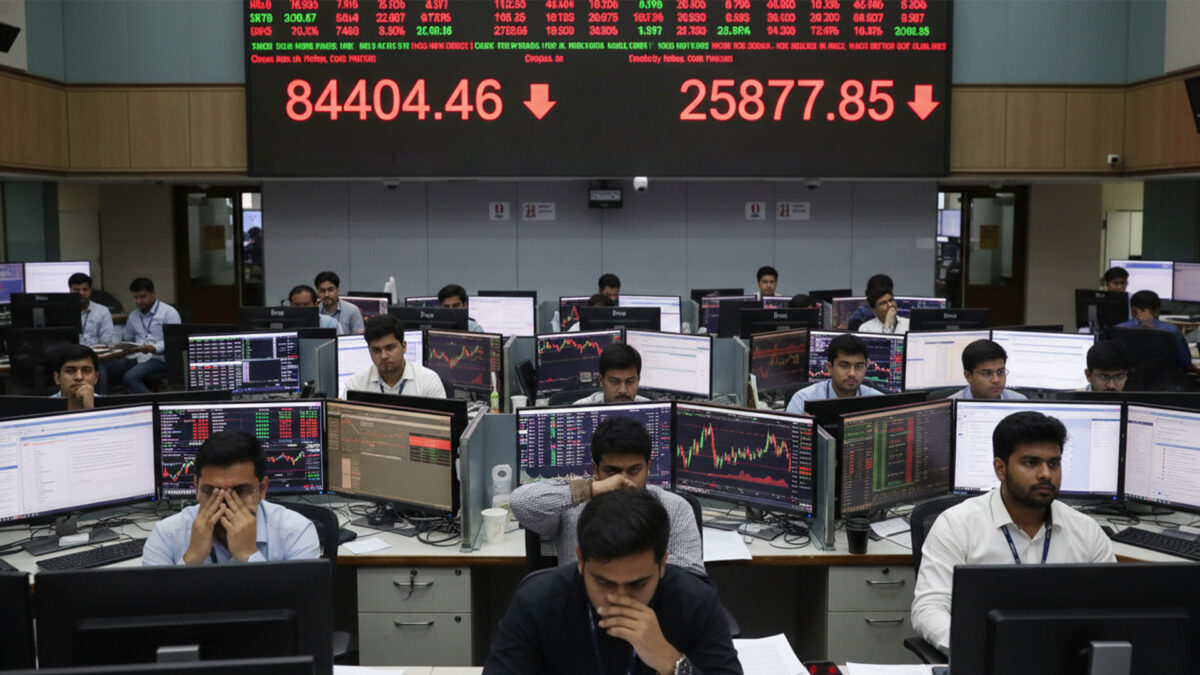
The BSE Sensex fell 592.67 points, or 0.7 percent, to close at 84,404.46, while the NSE Nifty 50 dropped 176.05 points, or 0.68 percent, to settle at 25,877.85.

Investor sentiment was further dented by persistent foreign fund outflows and rising market volatility.

Both indices came under pressure throughout the session, with financials, pharmaceuticals, and telecom stocks leading the decline.

Among major laggards on the Nifty were Dr. Reddy’s Laboratories, HDFC Life Insurance, Sun Pharmaceutical Industries, Bharti Airtel, and Tata Steel, each slipping up to 5 percent.

The market breadth also turned negative as investors opted to book profits at higher levels amid signs of near-term uncertainty.

The sentiment turned cautious after the US Federal Reserve, while announcing a widely expected 25 basis point rate cut, indicated that further easing may not follow soon.

Chair Jerome Powell cited limited availability of fresh economic data due to the ongoing US government shutdown and said the central bank would proceed carefully.

Analysts noted that this stance dampened risk appetite across emerging markets, including India, as investors scaled back expectations of an extended easing cycle.

Market strategists observed that Powell’s remarks had triggered a broad selloff in global equities and bonds, pushing yields higher.

They added that while the Fed has begun to ease, the move was characterized by caution rather than confidence, suggesting volatility could persist until clearer signals on future rate actions emerge.

Rising concerns over sticky inflation and potential downside risks to employment in the US also added to the sense of uncertainty.

Back home, foreign institutional investors (FIIs) remained net sellers, offloading shares worth ₹2,540.16 crore in Wednesday’s session, according to exchange data.

The sustained FII outflows put additional pressure on key indices, as domestic investors struggled to counterbalance the foreign selling.

Market experts believe this trend could continue in the near term, especially if global risk sentiment remains weak and the dollar strengthens further.

Volatility also ticked higher, with the India VIX rising 1.5 percent to 12.16.

The uptick reflected growing nervousness among traders, particularly as the Nifty failed to hold the 26,000 mark and slipped below key support zones.

Technical analysts observed that the Nifty’s upward momentum has begun to show signs of fatigue after recent gains. Indicators such as oscillators suggested hesitation near recent peaks.

However, they maintained that the broader trend remains positive, and dips toward 25,990 are likely to attract buying interest.

Immediate support for the Nifty is seen around 25,886, while a sustained move above 26,050 could restore bullish confidence.

Overall, Thursday’s decline underscored the fragility of investor sentiment in the wake of mixed global signals and continued foreign selling.

Market watchers expect trading to remain range-bound in the coming sessions as participants await more clarity from global central banks and fresh domestic earnings cues.

Also Read: NVIDIA Becomes First $5 Trillion Company Amid AI Surge

Categories
Beyond

Gold and Silver Prices Cool After Record Highs

Gold and silver markets in India have entered a phase of correction after hitting record highs earlier this month, presenting what some analysts describe as a timely window of opportunity—especially with the wedding season looming.

Domestic 24-karat gold prices recently eased from their October peaks of around ₹1,32,294 per 10 grams, while silver touched highs near ₹1,70,415 per kilogram before beginning their drop.

In most Indian cities, 24K gold is being sold at around Rs 1.25 lakh. This is a sharp decline from the October 18 levels when 24-karat gold was being sold for over Rs 1.4 lakh.

The pull-back in precious metal prices is being attributed to a confluence of factors including profit-taking by investors, a firmer U.S. dollar, and softening physical demand in key markets such as India and China.

For example, on the Multi Commodity Exchange (MCX), December gold futures fell about 2.8 %, while December silver futures dropped roughly 5.8 % in the most recent week.

Despite the recent correction, the broader outlook remains robust. Analysts continue to cite persistent inflation risks, central-bank diversification away from the dollar, and geopolitical uncertainties as tailwinds for bullion.

At the same time, India’s domestic demand remains anchored by cultural routines—jewellery and bullion purchases around Diwali and the wedding season continue to support demand anchors.

Jewellers and market watchers in India note that although this wedding season usually triggers brisk buying of gold and bridal jewellery, the recent heights of metal prices have prompted some buyers to delay or scale down purchases. One report states that while demand remains, the “softened physical demand” is a clear signal of buyers waiting for a dip.

For buyers with upcoming weddings in mind, the recent dip is being seen as a potential buying opportunity—however the timing may matter.

Market analysts caution that while the correction offers a breather, the window may not stay open for long given the seasonal uptick in demand and possible global triggers.

According to a forecast, gold prices may trade with a “sideways to lower” bias in the short term, but this does not discount a rebound if external factors such as central-bank decisions or geopolitical flare-ups come into play.

Silver’s outlook, meanwhile, is similarly mixed in the short term but favorable for the foreseeable future.

While its recent correction has been sharper—reflecting speculative unwinding and weaker industrial demand—the fundamental drivers remain in place, such as its role in solar, electronics and EV manufacturing. Analysts expect silver to recover once the market stabilises.

In summary, the precious-metal market in India is in a consolidation mode after a sharp rally. The correction is giving potential buyers—especially those preparing for weddings—a more favorable entry point.

Still, with seasonal demand ahead and global cues in flux, the key will be watching for when the consolidation ends and fresh upward momentum resumes.

Also Read: Novartis To Acquire Avidity Biosciences In US$12 Billion Deal