Categories
Beyond

Government lifts quality rules on polyester fibre and yarn

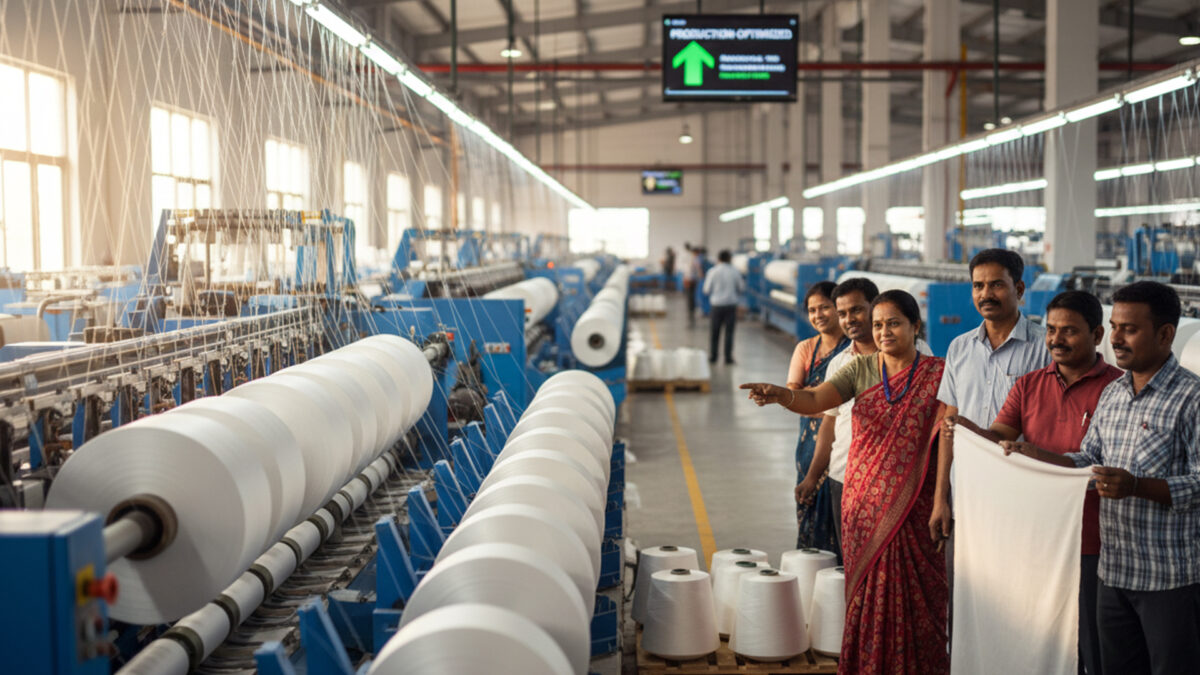
The Central Government has cancelled the quality-control order that applied to several polyester fibres and yarns. Earlier, manufacturers and importers had to get Bureau of Indian Standards (BIS) certification before selling these products in India.

The textile industry had long asked for this rule to be removed, saying it raised costs and made it harder to get raw materials. The decision is expected to lower production costs, make sourcing easier, and improve export prospects, especially for the man-made fibre segment.

The move is part of the government’s wider plan to simplify quality-control rules and make Indian manufacturing more competitive. It will also help attract new investments in the textile value chain.

Also Read: Reliance’s Campa Energy partners with Ajith Kumar Racing

Categories
Beyond

Cabinet approves ₹45,060 cr plan to boost exports

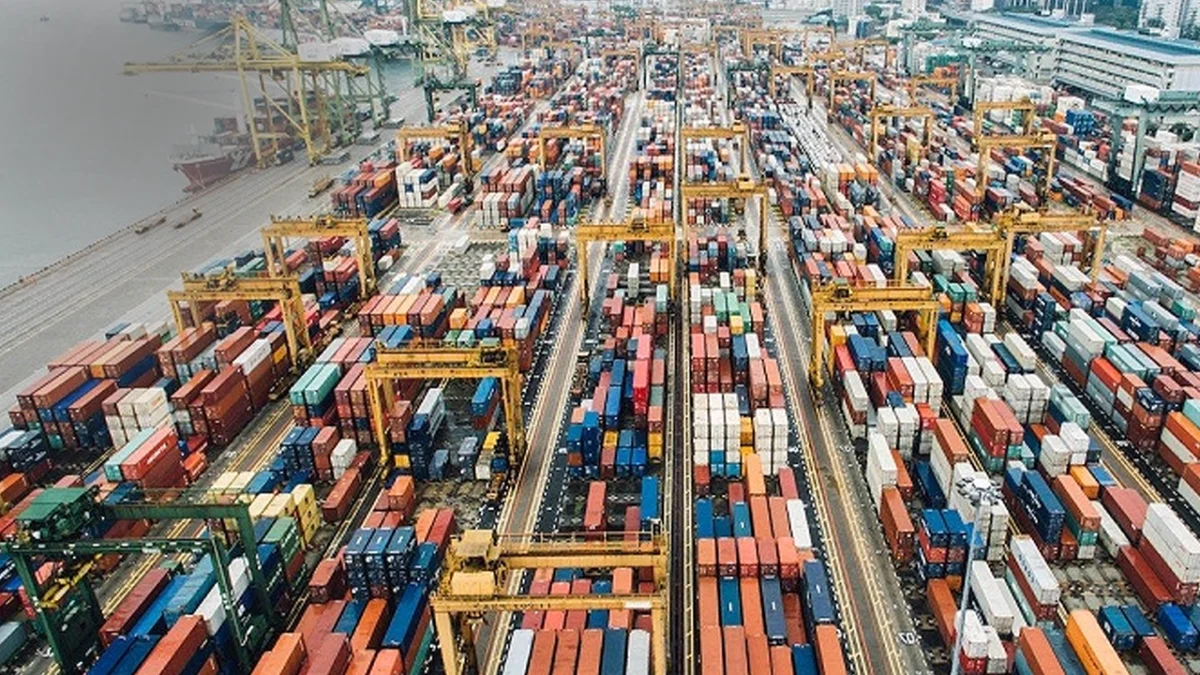
The Union Cabinet has approved a ₹45,060 crore package to support India’s exporters, especially micro, small, and medium enterprises (MSMEs), amid rising global trade challenges. The move aims to make credit easier for exporters and provide a unified framework for export promotion.

The package has two main components. The Credit Guarantee Scheme for Exporters (CGSE) will provide 100% government-backed guarantees to banks for up to ₹20,000 crore in collateral-free loans. This is expected to help MSMEs access working capital, manage export orders, and expand into new markets without the need for collateral.

The Export Promotion Mission (EPM), with an outlay of ₹25,060 crore for FY 2025-26 to FY 2030-31, consolidates multiple export support schemes into one streamlined mission. It has two sub-programs: Niryat Protsahan (~₹10,400 cr) offers financial support such as interest subvention, export factoring, and credit cards for e-commerce exporters. Niryat Disha (~₹14,660 cr) provides non-financial support, including testing, certification, branding, packaging, logistics, and assistance for exporters from low-export districts.

Officials said the initiatives will help exporters tackle rising global tariffs, diversify markets, and improve competitiveness. Labour-intensive sectors such as textiles, leather, gems & jewellery, engineering goods, and marine products are expected to benefit the most.

The Cabinet highlighted that a unified export support framework will reduce fragmentation, improve efficiency, and strengthen India’s position in global trade. By supporting MSMEs and key sectors, the government aims to sustain export growth, protect jobs, and build a more resilient export ecosystem.

Also Read: Jaishankar meets Rubio at G7, India-US ties strengthen

Categories
Beyond

Gold slips ₹10 to ₹1.25 lakh, Silver gains ₹100

Gold prices fell slightly in India on Thursday, while silver became a bit more expensive. The price of 24-carat gold dropped by ₹10 to ₹1,25,500 for 10 grams, and 22-carat gold also declined by ₹10 to ₹1,15,040.

In Delhi, 24-carat gold was selling at ₹1,25,650 for 10 grams, and in Chennai, at ₹1,26,550. Silver, on the other hand, gained ₹100 to reach ₹1,62,100 per kg in major cities like Delhi, Mumbai, and Kolkata, while it stood higher at ₹1,73,100 in Chennai.

Globally, spot gold slipped 0.1% to around $4,194 an ounce after touching a three-week high the previous day. The slight fall was mainly due to a stronger U.S. dollar and investors waiting for key U.S. economic data that could affect future interest rate decisions by the Federal Reserve.

Also Read: Sensex volatile, Nifty steady above 25,850

Categories
Beyond

India-US trade deal nears completion

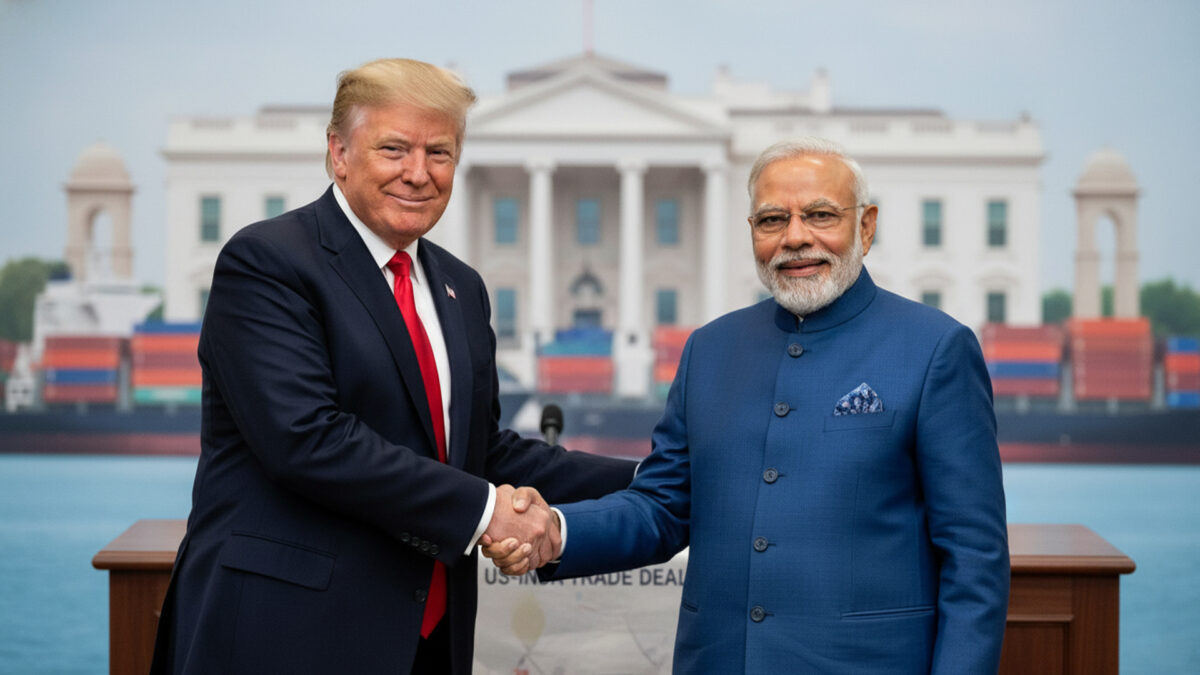
India and the US are on the verge of sealing a major trade agreement that could reshape bilateral commerce. Indian Commerce Minister Piyush Goyal described the deal as “fair, equitable and balanced,” emphasizing India’s focus on protecting domestic interests. While talks are largely complete, no fixed timeline has been set for signing.

US President Donald Trump acknowledged that tariffs on Indian goods are high and indicated plans to reduce them, describing a “fair deal” as close at hand. The agreement targets raising trade from the current $191 billion to approximately $500 billion by 2030.

Key sectors, including agriculture, dairy, and worker welfare, are central to India’s negotiating stance. So far, five official rounds of discussions have been held, involving top Indian officials, including External Affairs Minister S. Jaishankar. India is also exploring new markets in the Gulf and Russia to expand trade outreach.

If finalised, the deal is expected to strengthen economic ties, increase exports, and ease trade barriers, while ensuring domestic industries remain protected.

Also Read: Groww IPO lists at 12% premium

Categories
Beyond

600 quit Paramount Skydance over office return

Around 600 employees at Paramount Skydance Corp. have opted to leave rather than comply with a new full-time office return policy, underlining growing tensions over workplace flexibility in the post-pandemic era.

The decision comes after the August 2025 merger between Paramount Global and Skydance Media, when CEO David Ellison issued a memo emphasizing that in-person collaboration is “absolutely vital” for company culture and success. Employees in the Los Angeles and New York offices were told to work from the office five days a week or accept a severance package.

About 600 staff, mainly at VP level and below, chose the buyout, costing the company approximately US $185 million. In corporate filings, the severance was described as part of “restructuring expenses… associated with actions to align the business around our strategic priorities,” with total expected restructuring costs reaching US $1.7 billion.

This move highlights the significant financial and human-resource implications of rigid return-to-office policies. Analysts note that many employees, even at senior levels, now prioritize flexibility and are willing to leave jobs if forced into strict in-office schedules.

Paramount’s policy mirrors trends at other major firms. Dell Technologies recently ended hybrid work for near-office-based employees, while Uber CEO Dara Khosrowshahi faced internal pushback for increasing required office days.

The episode reflects a broader shift in workplace expectations. Companies are being forced to balance cultural goals and in-person collaboration against employee demands for flexibility. For employees, the decision to stay or leave increasingly factors in remote work options, workplace culture, and quality of life considerations.

Paramount Skydance’s experience offers a cautionary tale of a rigid office policy can trigger massive attrition and financial costs, showing that flexibility is now a strategic priority in the modern workplace.

Also Read: Neville Tata, Bhaskar Bhat join Sir Dorabji Tata Trust

Categories
Beyond

India urges rich nations on climate finance at COP30

India made a firm appeal at the COP30 climate summit on Monday, calling on developed nations to honour their legally binding obligations under the Paris Agreement. Representing developing countries, India said the fundamental “architecture” of the Paris pact must not be altered and that climate action must remain rooted in equity and the principle of common but differentiated responsibilities.

Speaking on behalf of the BASIC (Brazil, South Africa, India and China) and LMDC (Like-Minded Developing Countries) groups, India stressed that climate finance continues to be the biggest barrier to global progress. It reminded developed countries of their duty under Article 9.1 of the Paris Agreement to provide predictable and adequate funding to help developing nations adapt and transition to cleaner economies.

India called for a clear global definition of climate finance to ensure transparency and accountability. It also highlighted that funding for adaptation needs to increase at least fifteen-fold to meet the urgent needs of vulnerable communities.

On technology transfer, India demanded affordable, reliable and equitable access to green technologies. It urged the removal of intellectual property and market barriers that prevent developing countries from deploying cleaner solutions at scale.

New Delhi also cautioned against unilateral trade measures such as carbon border taxes, saying they could amount to disguised protectionism and undermine the spirit of multilateral climate cooperation.

India reminded developed countries of their historical responsibility for global warming and urged them to achieve net-zero earlier while investing in negative-emission technologies.

Reaffirming its commitment to the Paris Agreement, India said that global climate action must be built on trust and fairness, not through rewriting existing rules.

Also Read: Neville Tata, Bhaskar Bhat join Sir Dorabji Tata Trust

Categories
Beyond

Gold steady at ₹12,585 per gram, Silver at ₹160

Gold prices remained steady across India on November 12, 2025, with 24-carat gold priced at ₹12,585 per gram and 22-carat gold at ₹11,536 per gram, according to Mathrubhumi.

The 18-carat variety was sold at ₹9,436 per gram, showing little change from the previous day. Across major cities, rates varied only slightly, Delhi recorded ₹12,623 for 24-carat and ₹11,571 for 22-carat gold, while Mumbai, Kolkata, Bengaluru, Hyderabad, and Thiruvananthapuram maintained uniform prices of ₹12,585 and ₹11,536 respectively. Chennai saw a marginally higher rate of ₹12,765 for 24-carat and ₹11,700 for 22-carat gold.

Silver prices also held firm at ₹160 per gram or ₹1,60,100 per kilogram. Experts noted that gold continues to serve as a preferred safe-haven investment amid global economic uncertainty. Buyers were advised to check for BIS hallmark certification, compare rates across jewellers, and ensure their purchase invoices clearly mention purity, carat value, and weight.

With the festive and wedding season approaching, jewellers expect steady demand as consumers view gold not just as an ornament, but as a symbol of security and long-term value.

Also Read: Sensex opens 500 pts higher, Nifty above 25,800

Categories
Beyond

US, India ‘pretty near’ trade deal, tariffs could ease

US President Donald Trump said the United States and India are “pretty close” to finalising a trade deal that would benefit both countries. He made the remarks at the swearing-in of Sergio Gor as the US Ambassador to India, highlighting Gor’s strong ties with Prime Minister Narendra Modi.

Trump noted that US tariffs on Indian goods are currently high, mainly due to India’s earlier purchases of Russian oil. With those purchases now reduced, he indicated tariffs could be lowered in the future.

India’s Commerce Minister Piyush Goyal said trade talks are progressing well but cautioned that several sensitive issues still need resolution.

The proposed agreement aims to more than double bilateral trade, from around $191 billion currently to $500 billion by 2030. Analysts say a deal could improve market access for goods on both sides, though details on tariff cuts and timelines are yet to be finalised.

Also Read: Goldman Sachs turns bullish on India

Categories
Beyond

Singapore launches $32 green fuel levy on airfares

Singapore will become the first country to introduce a “green fuel levy” on departing flights, aimed at promoting the use of sustainable aviation fuel (SAF).

The levy will apply from 1 October 2026 for tickets sold from 1 April 2026. Passengers could pay up to S$41.60 (about $32 or ₹3,690), with higher charges for long-haul and premium-class flights. Short-haul economy passengers will see a minimal increase of around S$1.

Transit passengers will not be charged, while cargo flights will face a separate per-kilogram levy.

The funds collected will be used to buy SAF, made from waste oils and crops, with a goal of reaching 3–5% of Singapore’s aviation fuel mix by 2030. Currently, SAF accounts for just 0.3% of global jet fuel.

Also Read: Novo Nordisk, Emcure launch weight‑loss drug in India

Categories
Beyond

Gold ₹63,830, Silver ₹77,100, prices edge up

Gold prices in India rose slightly on Tuesday, with 24-carat gold trading at around ₹63,830 per 10 grams,  up by ₹10 from the previous day. Silver also saw a small uptick of ₹100, selling at ₹77,100 per kilogram.

The rise came as global investors turned cautious ahead of upcoming US inflation data, which could influence interest rate decisions by the Federal Reserve.

In Delhi, Mumbai, and other metro cities, gold prices stayed largely steady, reflecting a balanced demand from jewellers and retail buyers. Analysts say the market mood remains watchful, with traders keeping an eye on both global economic signals and festive-season buying trends in India.

Also Read: Sensex dips by 200 pts, Nifty below 25,550, Bajaj twins tumble 6%