Categories
Beyond

Delhi HC orders forensic audit In Fortis case

The Delhi High Court has ordered a six-month forensic audit into financial transactions involving Fortis Healthcare, its former promoters Malvinder Mohan Singh and Shivinder Mohan Singh, Malaysia’s IHH Healthcare and Singapore-based RHT Health Trust.

The court’s decision is part of the long-running legal battle between Japanese pharmaceutical company Daiichi Sankyo and the Singh brothers. Daiichi is seeking to enforce an arbitration award against the former Ranbaxy promoters, and the latest audit is aimed at tracing assets and transactions that could have been used to meet the award.

Justice Subramonium Prasad appointed chartered accountancy firm S Ramanand Aiyar & Co as the forensic auditor and directed it to complete the exercise within six months. The audit will reconstruct the movement of Fortis shares and funds and examine the sequence of transactions involving the companies and individuals connected with the dispute.

At the centre of the case is a ₹3,500-crore arbitration award in favour of Daiichi Sankyo. The dispute goes back to 2008, when Daiichi acquired Ranbaxy Laboratories from the Singh brothers for $4.6 billion. Daiichi later alleged that important information had been concealed during the transaction, leading to arbitration proceedings in Singapore.

A Singapore tribunal eventually awarded compensation to Daiichi. The Japanese company has since been pursuing enforcement of the award in India and has argued that assets linked to the Singh brothers were reduced or transferred during the enforcement process.

The Delhi High Court’s latest order seeks to establish what happened to those assets.

One major area of investigation will be the sharp decline in the Fortis shareholding held by Fortis Healthcare Holdings Pvt Ltd, the company through which the Singh brothers held their stake in the hospital chain. The auditor will examine the transfer and sale of these shares and trace where the money generated from those transactions went.

The court has also asked the auditor to examine transactions involving RHT Health Trust. Daiichi has alleged that ₹4,666 crore was transferred to the Singapore-based trust, which held hospital assets associated with the former Fortis promoters. The audit will examine the nature of the transfer, the flow of funds and their eventual utilisation.

Another important part of the investigation concerns IHH Healthcare’s acquisition of a controlling stake in Fortis. IHH acquired a 31% stake in Fortis for around ₹4,000 crore in July 2018 through a bidding process.

The court has directed the auditor to examine the entire transaction, including approvals, regulatory filings, the flow of consideration, the role of intermediaries and the subsequent changes in Fortis’ shareholding. It will also identify the people and entities that proposed, negotiated, approved, facilitated or recorded the transactions.

The audit will not stop with Fortis, IHH and RHT. The court has also permitted scrutiny of dealings involving the Singh brothers and companies belonging to the Religare Group, which they had founded.

Daiichi had additionally sought an examination of transactions involving 17 banks and financial institutions. The allegations include the sale of pledged Fortis shares and claims that some lenders acted despite court orders and undertakings given during the legal proceedings.

The Supreme Court had in September 2022 asked the Delhi High Court to consider forensic audits into transactions involving banks, financial institutions, Fortis, RHT and other related entities. The latest order follows that direction and seeks to create a detailed financial trail.

The High Court said a forensic audit would help reconstruct the chronology of transactions, trace the movement of shares and funds and provide a clearer factual record for deciding the competing claims.

The court also indicated that the audit could examine whether there was any involvement by Fortis or violations of SEBI regulations by companies, the Singh brothers or financial institutions. Any violations identified could potentially lead to separate consequences under applicable laws.

Fortis Healthcare has said the court order does not impose any monetary liability on the company. It pointed out that Fortis was neither a party to the original dispute nor a judgment debtor in the enforcement proceedings. The company said it was reviewing the judgment with its legal advisers.

IHH has also said it is not a party to the underlying legal proceedings. However, the court-monitored audit will examine aspects of its acquisition of the Fortis stake because of questions raised by Daiichi regarding the movement of funds and shares.

The case has been running for years, and the latest order reflects the court’s concern over the difficulty of enforcing the arbitration award. The court noted that despite years of proceedings, Daiichi has yet to receive the amount awarded to it.

The forensic audit could now provide a clearer picture of how Fortis shares, funds and other assets moved during the period under scrutiny.

 

Categories
Leaders

Sandhya Devanathan joins OpenAI

Meta’s India and Southeast Asia chief Sandhya Devanathan is leaving the social media company after more than a decade to join OpenAI, marking a significant movement of senior technology talent from social media towards artificial intelligence.

Devanathan will join OpenAI as vice-president for Southeast Asia and Australia in October. Based in Singapore, she will report to Kiran Mani, OpenAI’s managing director for Asia-Pacific. The newly created position will make her the company’s senior-most executive for the two markets.

Her responsibilities will extend beyond business growth. Devanathan will oversee consumer expansion, enterprise adoption, partnerships, regulatory engagement and operations across Southeast Asia and Australia. She will also work with businesses, institutions and governments to encourage wider adoption of OpenAI’s artificial intelligence products.

The move follows Devanathan’s decision to step down from Meta after a career spanning more than 10 years with the company. She announced her departure in a LinkedIn post on Friday, describing it as a difficult but important career decision. She did not initially disclose where she would be moving, before OpenAI confirmed the appointment.

Devanathan joined Meta in 2016, when the company’s Singapore operation was considerably smaller. During her tenure, she worked across ecommerce and gaming businesses in the Asia-Pacific region and helped expand Meta’s operations in markets including Singapore and Vietnam.

She later took charge of Meta’s Asia-Pacific gaming business before becoming Meta’s India head in 2023. Her responsibilities were subsequently expanded to include Southeast Asia, placing her at the centre of the company’s business strategy across several fast-growing digital markets.

Her departure comes at an important moment for Meta in India. The company has faced increasing scrutiny from Indian authorities over online safety, content moderation and the handling of material on its platforms.

Earlier this month, Meta apologised after Instagram mistakenly restricted a post by Prime Minister Narendra Modi. The incident led the Indian government to summon senior Meta executives, including Chief Global Affairs Officer Joel Kaplan, for an explanation.

Meta has also faced questions over child safety on its platforms. Indian authorities sought an explanation from the company after a report alleged that Instagram advertisements were being used to offer access to child sexual abuse material. Meta said it had removed the offending advertisements and accounts and disputed suggestions that it knowingly targeted such content.

The company said it had removed about 160,000 accounts in India over a six-month period after detecting signals associated with child-exploitative activity. The episode has added to broader concerns around content moderation and platform safety in one of Meta’s largest markets.

Following Devanathan’s exit, Meta India’s managing director Arun Srinivas will report directly to Benjamin Joe, the company’s vice-president for Asia-Pacific. Srinivas is expected to continue leading Meta’s India operations as the company reorganises its regional leadership structure.

For OpenAI, the appointment comes as the ChatGPT maker significantly expands its presence across Asia-Pacific. The company has opened offices in Singapore, Tokyo, Seoul, Sydney and Delhi during the past two years and is also expanding its operations in India.

OpenAI recently appointed former Uber India and South Asia president Prabhjeet Singh as its managing director for India. The appointment strengthened the company’s leadership in what has emerged as one of its most important international markets.

The company has been aggressively building its India business as ChatGPT adoption grows. OpenAI said earlier this year that it had more than 100 million weekly active users in India, with a large proportion using its free or lower-priced Go plans.

It has also announced plans to introduce advertising on ChatGPT’s free and Go tiers in India, initially involving 50 brands and partnerships with major advertising groups. The move signals a growing effort to turn its large Indian user base into a sustainable commercial business.

Devanathan’s appointment fits into that wider expansion strategy. Her experience working with consumers, businesses and regulators across India and Southeast Asia could help OpenAI navigate markets where government engagement and local partnerships are becoming increasingly important to the growth of artificial intelligence.

The shift also highlights the intensifying competition for senior technology talent. Meta has been investing heavily in artificial intelligence and building its own AI capabilities, while OpenAI is expanding beyond ChatGPT into enterprise services, partnerships and regional operations.

The two companies are therefore competing not only for users and technology but also for experienced executives who understand the fast-changing digital markets of Asia.

Devanathan’s move from Meta to OpenAI reflects that changing technology landscape. As artificial intelligence becomes increasingly central to consumer technology and business services, experienced leaders with knowledge of regional markets are becoming valuable assets.


Categories
Corporate

Sembcorp Green Infra files ₹3,750 cr IPO papers

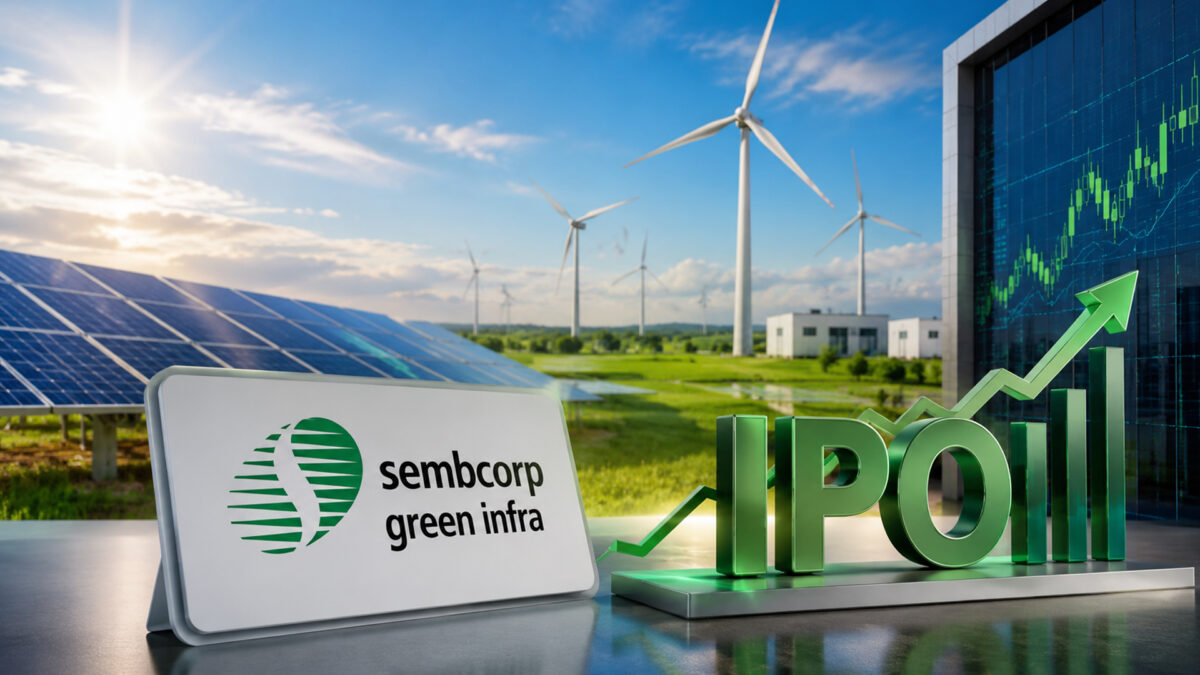
Sembcorp Green Infra has taken a major step towards becoming a publicly listed renewable energy company in India after filing its Draft Red Herring Prospectus (DRHP) with the Securities and Exchange Board of India (SEBI) for an initial public offering worth up to ₹3,750 crore.

The proposed Sembcorp Green Infra IPO will consist entirely of a fresh issue of equity shares. There will be no offer-for-sale component, meaning the proceeds raised from investors will flow directly to the company. The move is expected to strengthen its balance sheet while providing financial support for the expansion of its renewable energy portfolio.

A large part of the money raised through the public issue will be used to reduce debt. The company plans to deploy about ₹3,000 crore of the IPO proceeds towards repayment or prepayment of certain borrowings held by Sembcorp Green Infra and some of its subsidiaries.

As of June 30, 2026, the company and its subsidiaries had consolidated outstanding borrowings of about ₹12,522.68 crore, including accrued interest. The proposed debt reduction could therefore help lower financial costs and give the company greater room to invest in new projects.

The IPO also marks Sembcorp’s renewed attempt to bring its Indian energy business to the stock market. The company had previously initiated a listing process in 2018 under its earlier identity, Sembcorp Energy India. That proposal was subsequently withdrawn in 2019 as the group planned to inject additional equity into the business.

This time, the company is entering the market with a much larger renewable energy portfolio and a growing focus on newer forms of clean power generation.

Sembcorp Green Infra had 3.60 GW of operational renewable energy capacity as of March 31, 2026. Another approximately 4.04 GW/GWh of capacity was under construction, taking its overall portfolio to around 7.64 GW/GWh.

The construction pipeline includes around 2.61 GW of renewable generation capacity and 1,433 MWh of battery energy storage system (BESS) capacity. The company is increasingly moving beyond conventional wind and solar projects towards hybrid projects, storage-linked renewable energy, round-the-clock power and firm and dispatchable renewable energy, or FDRE, projects.

This shift is important as India’s electricity market increasingly needs renewable power that can be supplied beyond periods of strong sunshine or wind. Battery storage and hybrid projects can help address the intermittent nature of renewable generation and make clean power more reliable for large consumers and utilities.

Sembcorp Green Infra operates as a renewable independent power producer, developing, constructing, operating and maintaining utility-scale renewable energy projects. The company has 105 projects spread across 13 states and union territories, according to its IPO documents. Its electricity is sold to central and state government agencies as well as private power buyers.

The company’s financial performance has also strengthened. Revenue from operations increased to ₹2,652.50 crore in FY26, compared with ₹2,318.29 crore in FY25. Profit after tax stood at ₹371.08 crore, against ₹298.83 crore in the previous financial year. The improvement comes as the company’s operational renewable energy base continues to expand.

Sembcorp Green Infra is promoted by Sembcorp Utilities Pte Ltd, a wholly owned subsidiary of Singapore-listed Sembcorp Industries. Temasek Holdings is the largest shareholder in Sembcorp Industries, holding a 48.93% stake. This backing gives Sembcorp Green Infra access to the broader group’s financial strength and experience in renewable energy and infrastructure.

The company is also considering a pre-IPO placement of up to ₹750 crore. If such a placement takes place, the size of the fresh issue could be reduced accordingly. The final structure and other IPO details will depend on regulatory clearances and subsequent filings.

Sembcorp Green Infra’s listing plans come at a time when India’s renewable energy industry is attracting substantial capital. Rising electricity demand, government targets for clean power and the need for energy storage are encouraging developers to expand their portfolios.

The company intends to build on this opportunity through organic expansion as well as selective acquisitions. It also plans to increase its participation in round-the-clock and FDRE projects while expanding its capabilities in battery energy storage and other storage-integrated renewable solutions.

The company has reported a 77.32% bid success ratio for hybrid and storage-linked projects during FY24-FY26, highlighting its growing participation in more complex renewable energy projects.

Sembcorp Green Infra will compete with established listed renewable energy companies such as NTPC Green Energy, Adani Green Energy and ACME Solar Holdings. However, its focus on hybrid, storage-backed and dispatchable renewable power could help distinguish its business as India’s energy system moves towards greater integration of renewable sources.

The IPO is being managed by Axis Capital, Citigroup Global Markets India, CLSA India, HSBC Securities and Capital Markets India, ICICI Securities, IIFL Capital Services and Kotak Mahindra Capital Company.

With renewable power capacity, battery storage and flexible generation becoming increasingly important to India’s energy transition, Sembcorp Green Infra’s proposed IPO could become one of the more closely watched clean-energy listings in the country’s primary market this year.


Categories
Corporate

TCS, Porsche team up to drive AI-powered mobility

Tata Consultancy Services (TCS) and Porsche AG have entered into a five-year strategic partnership to expand the use of artificial intelligence across the German luxury carmaker’s operations. The agreement will focus on applying AI across engineering, manufacturing, business operations and customer experience as the automotive industry moves towards software-driven and connected mobility.

The partnership also includes TCS acquiring 100% of MHP Management- und IT-Beratung GmbH, Porsche’s Germany-based management and IT consulting subsidiary. The proposed acquisition has an enterprise value of €320 million, while the broader five-year strategic partnership between TCS and Porsche is valued at €1.25 billion ($1.46 billion). Both the acquisition and partnership remain subject to regulatory approvals.

TCS will establish a dedicated AI Mobility Centre of Excellence for Porsche. The centre will work on turning AI concepts into practical and scalable applications that can be used across the company’s value chain.

The focus will include intelligent manufacturing, engineering, operations and customer experience. The objective is to make AI useful in everyday business processes rather than treating it as a standalone technology project.

In manufacturing, AI can help companies analyse production data, identify potential problems and improve efficiency. In engineering, it can support product development and testing. For business operations, AI can assist with data-driven decision-making and process automation. On the customer side, the technology can help companies deliver more personalised digital experiences.

The companies said the partnership will bring together Porsche’s automotive engineering and brand expertise with TCS’s capabilities in artificial intelligence, product engineering, technology and business transformation. The aim is to develop secure and scalable AI solutions that can improve operational resilience, speed and competitiveness.

The MHP acquisition gives the deal another important dimension. Headquartered in Germany, MHP has more than 30 years of experience in management and IT consulting, with a strong focus on the automotive and industrial sectors. Its expertise covers AI, business transformation, SAP, manufacturing digitalisation, connected mobility and software-defined manufacturing.

MHP employs around 4,500 people worldwide. Its automotive expertise is expected to complement TCS’s global technology and engineering capabilities while helping the Indian IT company strengthen its position in Germany and among European automotive and industrial customers.

This acquisition for TCS, is also part of its broader effort to build its presence in AI and industry-specific technology services. The company has increasingly been positioning itself as an AI-led technology services provider as businesses move from experimenting with generative AI towards deploying it at scale.

The automotive sector is an important part of that transition. Vehicles are becoming more dependent on software, cloud platforms, data and connected systems. Modern cars already use software for functions ranging from infotainment and navigation to driver assistance, diagnostics and vehicle management.

The next phase is expected to involve greater use of AI throughout the vehicle lifecycle. That means AI could influence how vehicles are designed and tested, how factories operate and how manufacturers interact with customers.

TCS has already been developing capabilities in connected vehicles, autonomous driving, electric mobility and software-defined vehicles. Its mobility technology offerings cover areas such as cloud services, software development, data analytics, artificial intelligence and vehicle engineering.

TCS CEO and Managing Director K Krithivasan said the partnership would combine the company’s AI and engineering capabilities with MHP’s automotive consulting expertise. The goal is to scale AI across Porsche’s value chain and support the development of intelligent, software-defined mobility experiences.

Porsche CEO Michael Leiters said the transfer of MHP to TCS supports Porsche’s strategy of focusing more closely on its core automotive business. At the same time, the German carmaker will gain a strategic technology partner as mobility becomes increasingly shaped by software and data.

The agreement also comes as Porsche faces a challenging global automotive environment. Luxury carmakers are dealing with the cost of developing electric vehicles, changing consumer demand, tariffs and stronger competition, particularly from Chinese manufacturers. Porsche has been taking steps to streamline its operations and concentrate resources on its core business.

Selling MHP to TCS allows Porsche to change the ownership structure of its consulting arm while retaining a long-term business relationship with it through the new partnership.

The agreement provides access to a specialised automotive consulting business and strengthens TCS’s European footprint. The acquisition could also help the company work more closely with carmakers and industrial companies that are investing heavily in AI transformation, digital manufacturing and connected mobility.

The financial scale of the agreement makes it particularly significant. TCS is paying €320 million for MHP, while the five-year partnership with Porsche is worth €1.25 billion. Reuters reported that the acquisition is expected to close within the next three to four months, subject to regulatory clearance.

The partnership reflects a wider shift taking place across the automotive industry. The competition between carmakers is no longer based only on engine performance, design or manufacturing capacity. Software, data, artificial intelligence and digital services are becoming increasingly important in determining how vehicles are developed and how customers experience them.

With a five-year agreement and the planned acquisition of MHP, the partnership brings together Porsche’s automotive strengths and TCS’s technology expertise. Its success will ultimately depend on how effectively the companies can turn AI from an emerging technology into measurable improvements across engineering, manufacturing, operations and customer experience.

Categories
Corporate

Elan, Marriott sign deal for JW Marriott Gurugram project

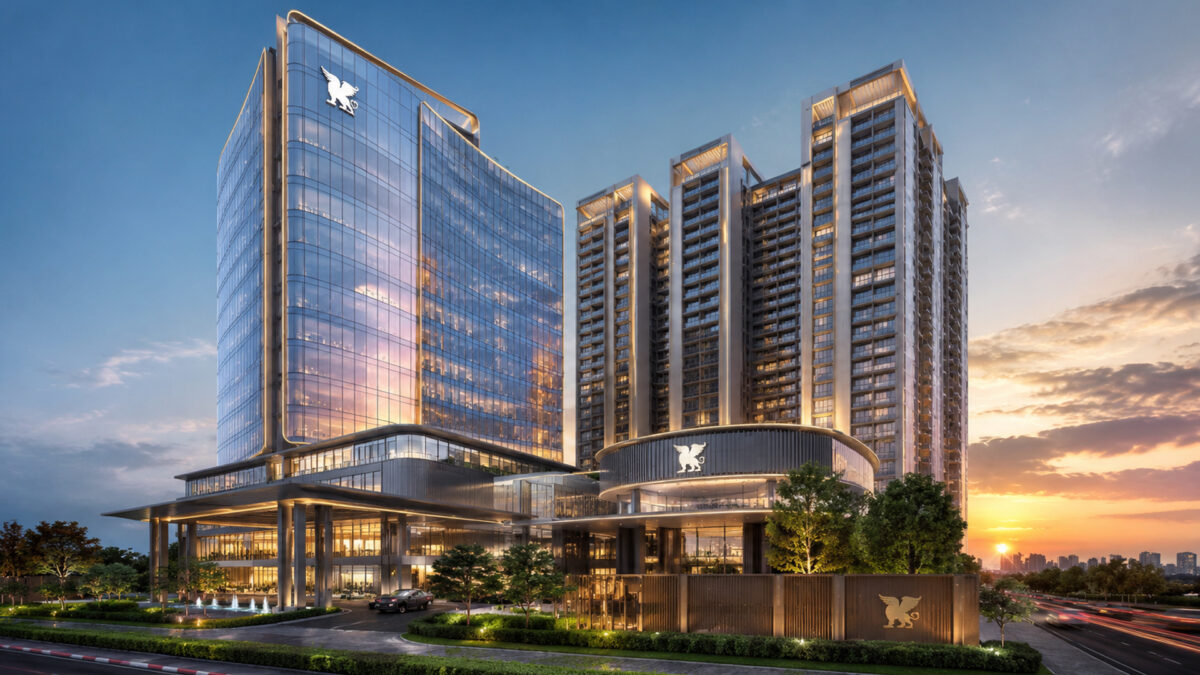
Elan Group and Marriott International have signed an agreement to develop a JW Marriott hotel and branded residences in Gurugram, adding a major luxury hospitality and residential project to the rapidly developing Dwarka Expressway corridor.

The project will come up in Sector 106, Gurugram, as part of Elan Group’s approximately 50-acre integrated township. It will include the JW Marriott Hotel Gurugram and JW Marriott Residences Gurugram, bringing together luxury hospitality, premium housing and lifestyle facilities within one large development.

Under the agreement, Elan Group will be responsible for the construction and development of both the hotel and residential components. Once the project is completed, Marriott Hotels India Private Limited will manage the hotel as well as the residences. The arrangement gives the development a globally recognised hospitality brand while allowing Elan to lead its execution and residential sales.

The residential component will comprise 3, 4 and 5 BHK luxury homes. However, the companies have not yet disclosed the total number of residences or hotel rooms planned for the development. Sales and marketing of the JW Marriott branded residences will begin only after Elan Group obtains the required RERA registrations.

The proposed project is part of Elan’s larger vision for its 50-acre township on the Dwarka Expressway. The integrated development is planned as a mixed-use destination combining luxury residences with hospitality, high-end retail, entertainment, wellness and lifestyle offerings.

For Gurugram, the project comes at a time when the Dwarka Expressway is emerging as one of the National Capital Region’s most important real estate corridors. Improved connectivity with Delhi, the airport and major commercial areas has attracted developers to the area, while rising demand for premium housing has encouraged the development of larger integrated townships.

The location in Sector 106 is particularly significant. The Dwarka Expressway has increasingly become an alternative growth corridor to established parts of Gurugram, with residential, commercial and hospitality projects expanding along the route. The arrival of a JW Marriott hotel and branded residences could further strengthen the area’s profile as a luxury destination.

The project represents a growing trend in India’s luxury real estate market in the branded residences category. These properties combine private homes with the services and standards associated with an international hotel brand. Instead of simply purchasing a premium apartment, buyers are offered a lifestyle built around hospitality, personalised services and professionally managed amenities.

This segment has been gaining traction in Delhi-NCR as affluent buyers increasingly look for homes that offer more than location and size. Concierge services, hospitality-led amenities, wellness facilities and high-end common spaces are becoming important selling points in the luxury housing market.

Elan Group’s partnership with Marriott also reflects the broader expansion of branded residences in the region. Several Delhi-NCR developers have entered the segment by partnering with international hospitality and lifestyle brands, seeking to tap demand from high-net-worth individuals and buyers looking for premium, managed living environments.

Elan Group Managing Director Ravish Kapoor said the collaboration represents an important milestone for the company’s luxury real estate strategy. The developer believes bringing the JW Marriott brand into its flagship development will allow homeowners to access the hospitality company’s service standards and lifestyle offerings.

Marriott International also sees the partnership as part of its continuing expansion in India’s luxury hospitality market. Rajeev Menon, president, Asia Pacific excluding China, Marriott International, said the agreement reflects a shared objective of creating a destination based on luxury, design, service and lifestyle experiences.

The partnership gives Marriott another opportunity to expand its footprint in India’s rapidly growing premium hospitality market. India has seen increasing interest from global hotel companies as business travel, domestic tourism and luxury consumption continue to support demand for high-end hotels.

The combination of a hotel and branded residences could also create a different proposition for the Gurugram market. Residents would be part of a development managed by a global hospitality company, while hotel guests would have access to a destination located within one of the NCR’s fastest-growing business and residential corridors.

Elan Group currently has a portfolio of 15 developments across Delhi-NCR, with a combined built-up area of around 25 million square feet, according to company information cited in reports. The Marriott partnership is therefore significant for the developer as it seeks to strengthen its position in the premium and luxury real estate segment.

However, several details about the JW Marriott Gurugram project are still awaited. The developers have not announced the hotel’s number of rooms, total residential inventory, project completion timeline or pricing. The launch of the branded residences will also depend on obtaining the necessary RERA approvals.

The development is nevertheless expected to add momentum to the luxury real estate activity around Dwarka Expressway. As infrastructure improves and more businesses and residents move towards the corridor, the demand for premium housing, hotels, retail and lifestyle destinations is expected to remain an important part of Gurugram’s growth story.

If executed as planned, the JW Marriott Hotel Gurugram and JW Marriott Residences Gurugram could become a prominent landmark in Sector 106, combining luxury homes, international hospitality and mixed-use development in one of Gurugram’s emerging real estate corridors.