Categories
Corporate

Sensex ends flat, Nifty holds above 26,100

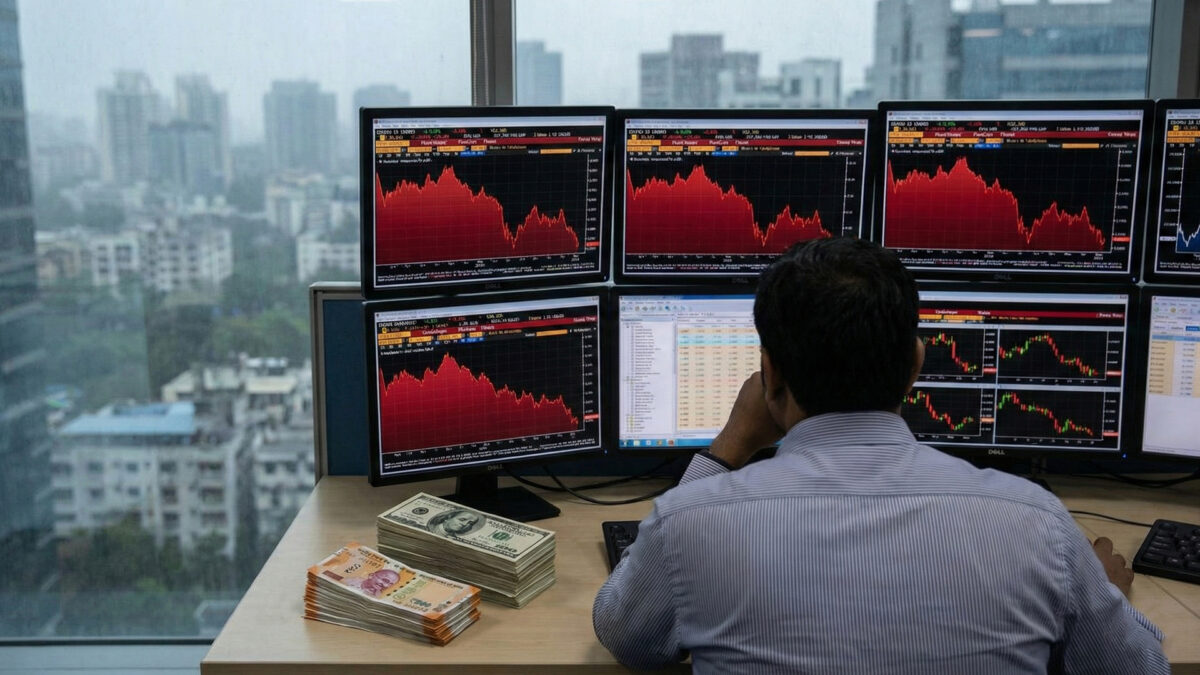
Markets ended largely unchanged on the first trading day of 2026, BSE Sensex closed almost flat at 85,188.60, while the Nifty 50 managed to stay above the 26,100 mark, finishing at 26,146.55.

The markets opened the year on a positive note, with early gains supported by IT and auto stocks, which benefitted from strong sector momentum and positive investor sentiment. However, these gains were largely offset by declines in FMCG and tobacco shares, dragged down by the government’s announcement of higher excise duties on cigarettes. ITC and its peers were among the most affected, putting pressure on the FMCG index.

Midcap stocks outperformed slightly, while smallcap shares showed mixed trends. Overall, sector performance was uneven, reflecting cautious positioning by investors amid limited fresh triggers.

Market participants also remained watchful of broader economic indicators and upcoming corporate earnings, which are expected to influence short-term trends. The rupee and commodities had little impact on the session, leaving domestic sentiment as the main driver of price movements.

Investors entered 2026 with selective optimism, favoring sectors with growth potential while avoiding areas exposed to new regulatory or tax developments. Analysts said the market is likely to remain range-bound in the near term until more clarity emerges on policy direction and corporate performance.

Also Read: Sensex up 100+ points, Nifty above 26,150
Categories
Beyond

India to hike tobacco taxes from February 1

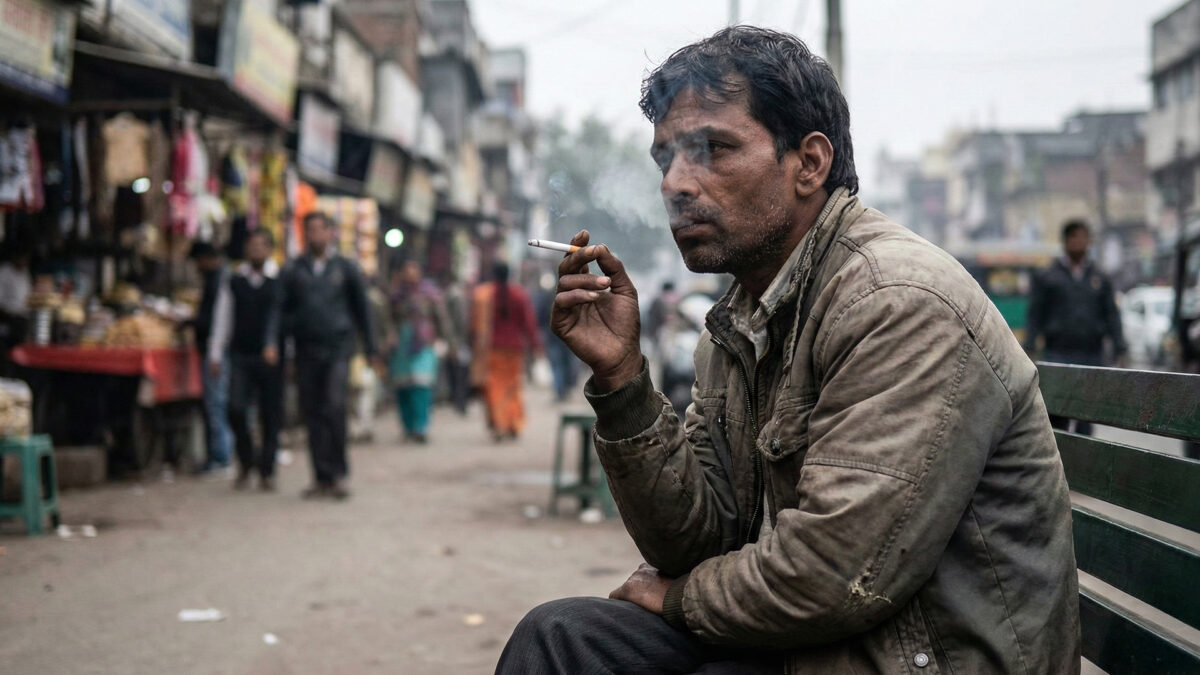
Government has announced that February 1, 2026, will mark the end of the GST compensation cess on tobacco products and the start of a new, higher tax regime covering cigarettes, pan masala, and other tobacco items. The move aims to boost revenue and discourage tobacco consumption.

Under the revised framework, the GST compensation cess will be withdrawn. In its place, most tobacco products will continue to face 40% GST, while traditional bidis will attract 18% GST. Additionally, cigarettes will see higher excise duties, and pan masala will incur a Health and National Security Cess. Excise duty on cigarettes will vary by type and length, ranging roughly from Rs 2,050 to Rs 8,500 per 1,000 sticks.

Officials said the changes are designed to maintain high taxation on products linked to health risks and to ensure stable government revenue now that the compensation cess is ending. Public health considerations were cited as a key reason for the higher levies.

The announcement immediately affected financial markets. Shares of leading tobacco companies, including ITC Ltd and Godfrey Phillips India, fell sharply as investors anticipated lower sales and higher pricing pressures. ITC hit multi-month lows, while Godfrey Phillips saw even steeper declines, impacting benchmark indices.

Analysts expect the new duties may prompt companies to raise retail prices, adjust production strategies, and rethink marketing plans. Despite potential industry challenges, the government emphasizes that the changes are part of its broader effort to curb tobacco use while safeguarding revenue.

The new regime marks a major shift in India’s tobacco taxation policy, replacing a long-standing compensation mechanism and signaling stronger government focus on health and fiscal sustainability.

Also Read: IGL slashes domestic PNG prices in Delhi‑NCR

Categories
1 Minute-Read

Vodafone Idea AGR dues frozen for 5 years

The Union Cabinet has approved a five‑year freeze on Vodafone Idea’s AGR dues, totaling around ₹87,695 crore.

Payments will be deferred until 2031‑32, with remaining 2017‑18 and 2018‑19 liabilities due by 2030‑31.

The move aims to ease financial pressure on the struggling operator and protect competition, while the government retains its 49 per cent stake in the company.

Categories
Leaders

Warren Buffett retires as Berkshire CEO After 6 decades

Warren Buffett, the iconic investor often called the “Oracle of Omaha,” has stepped down as Chief Executive Officer of Berkshire Hathaway, ending an extraordinary 60-year run at the helm of the conglomerate. Buffett, 95, officially retired as CEO on December 31, 2025, and passed the role to Greg Abel, a longtime lieutenant who has been widely seen as his successor. Buffett will continue to serve as Berkshire’s chairman and remain actively engaged from the company’s headquarters in Omaha, Nebraska.

Buffett took control of Berkshire Hathaway in 1965, when it was a struggling textile company. Over the decades, he transformed it into one of the world’s most valuable and diversified conglomerates, with businesses spanning insurance, railroads, energy, manufacturing, retail, and services. Under his leadership, Berkshire delivered exceptional long-term returns to shareholders, with its shares gaining roughly 6.1 million per cent over six decades, a performance that far outpaced broader market indices.

On Buffett’s final day as CEO, Berkshire Hathaway shares edged lower, reflecting routine market movement rather than any major shift in investor confidence. Analysts and shareholders have long anticipated this transition, as Buffett had clearly signalled his succession plans and gradually delegated more responsibility in recent years.

Greg Abel, 63, who joined Berkshire in 2000, now assumes day-to-day control as CEO. He previously served as vice-chairman overseeing non-insurance operations, including Berkshire Hathaway Energy and BNSF Railway. Abel is expected to preserve the company’s core philosophy of disciplined capital allocation, long-term investing, and limited corporate bureaucracy.

Ajit Jain will continue to lead Berkshire’s vast insurance operations, a cornerstone of the company’s financial strength, while other senior executives retain oversight of key subsidiaries. One area of close attention will be Berkshire’s massive equity portfolio, valued at hundreds of billions of dollars, which Buffett personally managed for decades.

Buffett’s retirement as CEO marks the end of a defining era in global business. Known for his plain-spoken wisdom, patience, and focus on fundamentals, he reshaped how generations of investors think about value and long-term wealth creation. As Berkshire enters its post-Buffett chapter, markets will watch closely how the company evolves under new leadership,, guided, for now, by the steady presence of its legendary founder.

Also Read: IGL slashes domestic PNG prices in Delhi‑NCR

Categories
Corporate

IGL slashes domestic PNG prices in Delhi‑NCR

Indraprastha Gas Limited (IGL) on Thursday announced a reduction in domestic piped natural gas (PNG) prices for households in Delhi and the National Capital Region (NCR). Effective January 1, 2026, rates have been lowered by ₹0.70 per standard cubic metre (scm), easing monthly cooking gas bills for thousands of residents.

Under the new rates, Delhi households will pay ₹47.89 per scm, Gurugram ₹46.70, and Noida, Greater Noida, Ghaziabad ₹47.76 per scm.

The reduction comes after reforms by the Petroleum and Natural Gas Regulatory Board (PNGRB) simplified pipeline tariffs, introducing uniform lower charges for domestic PNG and CNG users. IGL said the move aligns with its commitment to providing cleaner energy at affordable rates.

Other city gas distributors are also passing on the benefits of the new tariff structure, providing households across major cities with relief from rising energy costs.

The PNG price cut is expected to offer modest savings to Delhi‑NCR residents, making the start of 2026 slightly lighter on household energy bills.

Also Read: OYO parent Prism files confidential IPO to raise Rs 6,650 cr

Categories
Beyond

Rupee opens 2026 at 89.99 per dollar, down 11 paise

The Indian rupee began the first trading day of 2026 on a subdued note, slipping 11 paise to trade at 89.99 against the US dollar. Early trading indicated cautious sentiment, as the currency came under pressure from continued foreign fund outflows and lingering uncertainties in global markets. Analysts said that subdued trading volumes due to New Year holidays further limited market activity, while routine corporate demand for dollars added to the downward pressure.

At the interbank foreign exchange market, the rupee opened at 89.94 per dollar before weakening to 89.99. Traders observed that early-session volatility reflected a cautious start for both domestic and international investors, who remained wary of global trade uncertainties and geopolitical developments.

The rupee’s weak opening is in line with its performance over 2025, a year in which it recorded its steepest annual decline in three years. By December, the currency had fallen nearly 5 percent against the US dollar, driven by sustained selling by foreign institutional investors (FIIs) and the absence of major positive economic triggers, such as significant trade deals or fresh foreign investment inflows.

Experts said that continued selling in Indian equities by FIIs contributed to currency volatility, while the Reserve Bank of India (RBI) intervened at intervals to moderate extreme movements. Analysts highlighted the psychological significance of the 90-per-dollar level, warning that a breach above it could prompt increased demand for dollars and further pressure on the rupee.

Despite the soft start, a weaker currency could help Indian exporters by making goods more competitively priced in international markets. However, any meaningful strengthening of the rupee will likely depend on higher foreign capital inflows and stabilization in global financial markets.

For now, the rupee’s opening trend underscores the cautious sentiment prevailing in currency markets. Traders expect the first few weeks of 2026 to remain sensitive to global developments, foreign fund movements, and domestic corporate demand, keeping the rupee under close watch.

Also Read: Gold slips to ₹1,34,880; Silver falls to ₹2,38,900

Categories
Beyond

Gold slips to ₹1,34,880; Silver falls to ₹2,38,900

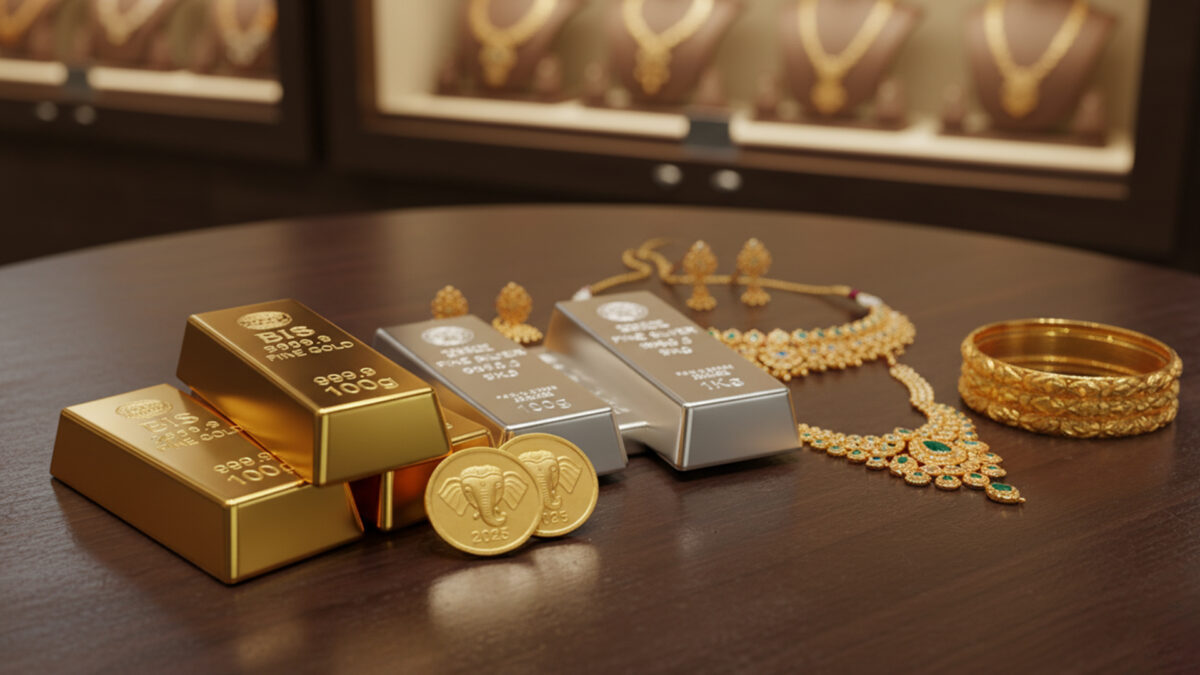
Gold and silver prices edged lower in Indian markets on Thursday, marking a cautious start to trading in the New Year. According to market data, the price of 24-carat gold slipped marginally by ₹10, with ten grams selling at ₹1,34,880 in major cities such as Mumbai and Kolkata. In Delhi, gold was priced slightly higher at ₹1,35,030 per ten grams, while Chennai continued to quote the highest rate at around ₹1,36,140.

The decline was also reflected in 22-carat gold prices, which eased by ₹10 to ₹1,23,640 per ten grams in cities including Mumbai, Kolkata, Bengaluru and Hyderabad. In Chennai, 22-carat gold was trading at about ₹1,24,790 per ten grams. Market participants said the minor correction follows a sharp rally seen towards the end of 2025, when gold prices hovered near record highs due to strong global demand and safe-haven buying.

Silver prices also weakened slightly. The metal fell by ₹100 per kilogram to trade at ₹2,38,900 in Delhi, Mumbai and Kolkata. Chennai once again reported higher prices, with silver quoted at around ₹2,56,900 per kilogram. Traders noted that silver, which saw significant gains last year driven by industrial demand and investor interest, is currently witnessing some profit-taking.

On the global front, precious metals traded lower in overseas markets as investors adjusted positions at the start of the year. International spot gold prices slipped marginally, while silver also moved off recent highs. Analysts said the dip is largely due to reduced trading volumes and cautious sentiment rather than any major shift in fundamentals.

For retail buyers, the current dip may offer limited relief, though prices continue to remain elevated compared to historical levels. Jewellers said demand is expected to pick up gradually as the wedding season approaches, which could provide support to prices in the coming weeks.

Experts believe the overall outlook for gold and silver remains positive in the medium to long term, supported by expectations of global economic uncertainty, central bank buying and steady investment demand. However, short-term price movements are likely to remain volatile as markets respond to global cues, currency movements and interest rate expectations.

Also Read: Sensex up 100+ points, Nifty above 26,150

Categories
Corporate

Bharat Forge secures record ₹1,662 cr small arms contract

Bharat Forge Limited has secured its largest-ever small arms contract with the Indian Ministry of Defence, valued at ₹1,661.9 crore. The deal, finalised on 30 December 2025, is for the supply of 255,128 Close Quarter Battle (CQB) carbines to the Indian Army over the next five years. The contract marks a major milestone for Bharat Forge in defence manufacturing and underlines the government’s focus on building self-reliance in critical defence equipment.

The 5.56 x 45 mm CQB Carbine is a compact, lightweight firearm designed for close-range operations, particularly in urban combat, counter-insurgency, and special operations. Its smaller size and enhanced manoeuvrability make it suitable for scenarios where traditional assault rifles may be less effective. The weapon has been jointly developed by the Defence Research and Development Organisation (DRDO) through the Armament Research & Development Establishment (ARDE) and Bharat Forge’s defence arm, Kalyani Strategic Systems Limited (KSSL).

As an indigenously designed, developed, and manufactured system, the CQB Carbine supports the Atmanirbhar Bharat initiative by reducing import dependence and strengthening India’s domestic defence industrial capacity. Bharat Forge has highlighted the “Made in India” nature of the programme, reaffirming its commitment to equipping the armed forces with advanced, locally produced weapons.

This contract is part of a broader modernisation push by the Ministry of Defence, which has recently approved procurement deals worth thousands of crores for carbines, artillery, and torpedoes for the Indian Army and Navy. The government aims to enhance operational readiness while fostering private sector participation in defence production.

The announcement was positively received by markets, with Bharat Forge’s shares rising to a 52-week high, reflecting investor confidence in the company’s expanding defence portfolio. Analysts see the order as a boost to Bharat Forge’s future defence opportunities and its growing role in India’s strategic defence ecosystem.

With this deal, Bharat Forge strengthens its position as a key domestic supplier of advanced small arms, enhancing infantry firepower while showcasing successful collaboration between government research institutions and private industry in delivering mission-critical defence equipment.

Also Read: India moves up to 4th spot in global economy rankings

Categories
Corporate

Sensex climbs 546 points, Nifty tops 26,100 in 2025 finale

Indian stock markets ended 2025 with a robust rally on Wednesday, as key indices recorded healthy gains in the year’s final trading session. The BSE Sensex jumped 546 points to close at 90,712, while the Nifty 50 crossed the 26,100 mark, driven by widespread buying across sectors.

Market sentiment was boosted by strong performances in metal, energy, and banking stocks, along with bargain hunting by investors. JSW Steel led the gains, rising nearly 5%, followed by Tata Steel (+2.4%), Kotak Mahindra Bank (+2.2%), and ONGC (+2%). Other notable gainers included SBI Life, Reliance Industries, and Titan Company.

On the downside, TCS fell about 1.3%, while Tech Mahindra, Grasim Industries, Wipro, Bajaj Finance, and Infosys saw modest losses. IT stocks underperformed, offsetting some of the broader market gains.

Sectoral trends showed metal, PSU banks, oil & gas, and banking indices leading the rally, while IT lagged. Broader markets also ended higher, with midcap and smallcap stocks outperforming, indicating widespread investor participation.

The Indian rupee closed slightly weaker at ₹89.87 against the US dollar, reflecting cautious foreign fund flows despite the positive market trend.

Also Read: Sensex gains 250 points, Nifty ends above 26000

Categories
Technology

Indian AI channel ‘Bandar Apna Dost’ tops YouTube

An India-based YouTube channel, Bandar Apna Dost, has become the world’s most-viewed channel producing AI-generated “slop” content, earning an estimated $4.25 million (₹35–38 crore) a year, according to a recent global study.

The finding is part of a report by video-editing platform Kapwing, which analysed nearly 15,000 popular YouTube channels worldwide to track the rise of low-effort, automated content. Such videos are typically created using AI tools with minimal human input and are designed mainly to maximise clicks, watch time, and advertising revenue.

Bandar Apna Dost topped the global list with over 2 billion views and several million subscribers. The channel features short animated videos centred on a cartoon monkey and a muscular, superhero-like character, placed in exaggerated, humorous situations. The videos are simple, repetitive, and easy to produce at scale.

The report identified 278 fully AI-driven channels on YouTube. Together, they have generated more than 63 billion views and attracted over 220 million subscribers, underlining how quickly AI-based content is expanding on the platform.

Kapwing’s analysis also pointed to the role of YouTube’s recommendation system. Around 20 percent of videos suggested to new users fall into the AI slop category. On YouTube Shorts, this share rises to nearly one-third, indicating that such content is strongly favoured by algorithms focused on engagement.

Industry observers say the success of channels like Bandar Apna Dost shows how AI has dramatically reduced the time, cost, and skill required to build a large online audience. At the same time, critics warn that the growing dominance of automated content could reduce visibility for original, human-created videos and reshape incentives for creators.

The rise of this Indian channel highlights a broader shift in digital media, where algorithm-friendly, AI-generated videos are becoming a major driver of views and revenue on global platforms.

Also Read: Warner Bros. Discovery set to reject Paramount’s $108bn bid