Categories
1 Minute-Read

LIC’s paper loss exceeds ₹11,000 cr as ITC stock dives

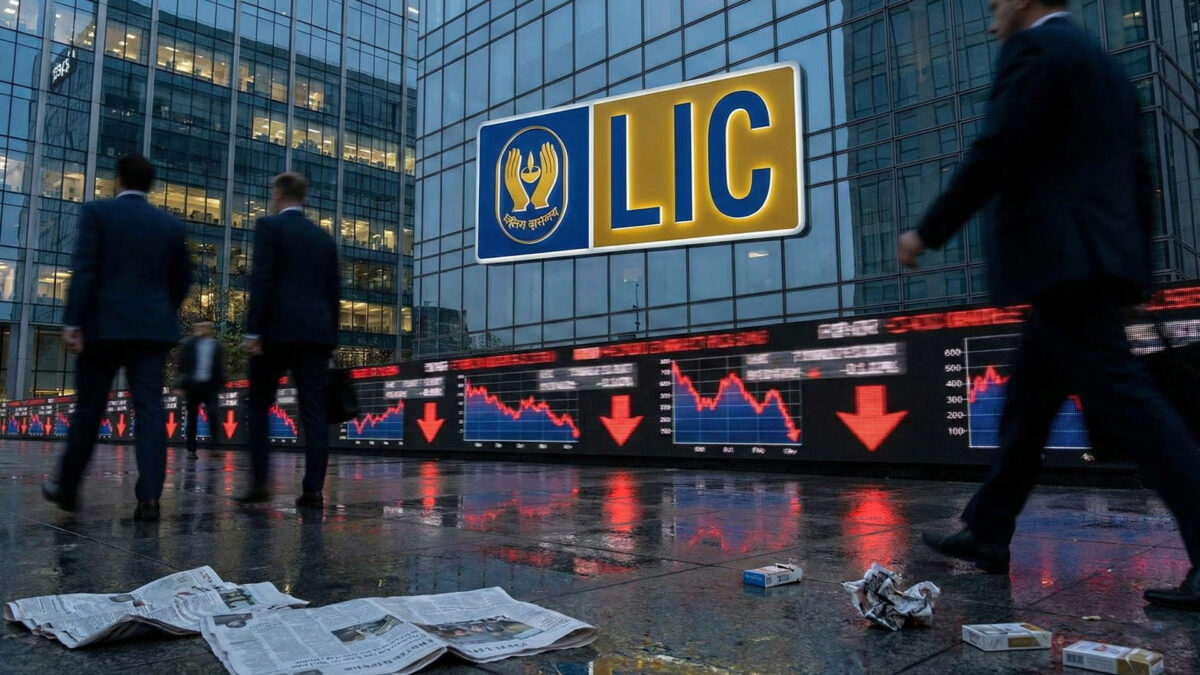
The Life Insurance Corporation of India (LIC) incurred a notional loss of over ₹11,000 crore after ITC shares fell nearly 14% in two trading sessions.

The decline followed the government’s move to raise excise duties on cigarettes, impacting tobacco companies. ITC’s share price touched a 52-week low near ₹345, slashing around ₹72,000 crore from its market value.

Other public insurers, including General Insurance Corporation and New India Assurance, also faced significant unrealised losses. The losses will materialise only if these shares are sold.

Categories
Corporate

SEBI clears 8 IPOs, Indira IVF among them

The Securities and Exchange Board of India (SEBI) has approved initial public offering (IPO) plans of eight companies, signalling steady activity in the primary market. The companies that received the regulator’s clearance include Indira IVF, Rays of Belief, RKCPL Ltd, Chartered Speed, Glass Wall Systems (India), Shriram Food Industry, Tempsens Instruments (India), and Jerai Fitness.

SEBI’s approval, referred to as regulatory “observations”, allows these companies to move ahead with their IPO process. They can now update their offer documents, finalise issue details, and plan market launches, depending on investor demand and market conditions.

Among the approved firms, Indira IVF stands out as a well-known fertility care provider with clinics across several Indian cities. The company had earlier withdrawn its IPO papers and later refiled them using the confidential route, which keeps draft documents private until SEBI grants its observations. Rays of Belief, which works in child development and therapy services, also used the confidential filing route and has now received approval.

The remaining companies filed their IPO applications through the regular process. RKCPL Ltd operates in the infrastructure and civil construction space, while Chartered Speed provides passenger transport and mobility services. Glass Wall Systems (India) is engaged in façade and building solutions, supplying products for commercial and residential projects.

Shriram Food Industry is involved in food processing and exports, and Tempsens Instruments (India) manufactures thermal engineering products and specialised cables used in industrial applications. Jerai Fitness, another company on the list, is known for making gym and fitness equipment for both commercial and home use.

The approvals were issued between late December and early January. Once SEBI observations are received, companies usually have a limited period to launch their IPOs, subject to market conditions.

Market participants see these approvals as a positive sign for India’s IPO pipeline. The presence of companies from diverse sectors such as healthcare, infrastructure, manufacturing, fitness, and food processing reflects broad interest in raising funds from public investors. Investors are now expected to closely watch the final offer details and timelines of these upcoming IPOs.

Also Read: Adani Enterprises opens Rs 1,000 cr NCD issue

Categories
Corporate

Adani Enterprises opens Rs 1,000 cr NCD issue

Adani Enterprises Limited (AEL), the flagship company of the Adani Group, has announced the launch of its third public issue of secured non-convertible debentures (NCDs), aiming to raise up to Rs 1,000 crore from the debt market. The issue offers investors returns of up to 8.90 per cent per annum, making it an attractive option for those seeking steady income through fixed-return instruments.

The NCD issue will open for subscription on January 6, 2026, and close on January 19, 2026, though the company may close it earlier depending on demand. The base issue size is Rs 500 crore, with a green shoe option of another Rs 500 crore, taking the total size to Rs 1,000 crore.

Each debenture has a face value of Rs 1,000, and retail investors can apply for a minimum of 10 NCDs, or Rs 10,000. The issue includes multiple series with tenures of 24, 36 and 60 months, allowing investors to choose between quarterly, annual or cumulative interest payout options, depending on their financial goals.

The NCDs are secured in nature and have been rated ‘AA-’ with a stable outlook by CARE Ratings and ICRA, indicating a strong capacity to meet financial commitments. Once allotted, the debentures will be listed on both the BSE and NSE, offering liquidity to investors.

According to the company, a large portion of the funds raised—at least 75 per cent—will be used to repay or prepay existing borrowings, helping strengthen the balance sheet. The remaining amount will be deployed for general corporate purposes.

Adani Enterprises’ earlier NCD offerings have seen robust interest. Its previous issue, launched in mid-2025, was reportedly fully subscribed within hours, highlighting growing investor confidence in the company’s debt instruments.

The current issue is being managed by Nuvama Wealth Management, Trust Investment Advisors, and Tipsons Consultancy Services, among others.

For investors looking for predictable returns backed by a well-rated corporate issuer, the latest Adani Enterprises NCD issue offers a structured and flexible investment opportunity.

Also Read: Fresh electronics projects to bring ₹41,800 cr investment, jobs

Categories
Corporate

Sensex climbs 573 points, Nifty hits new peak

Markets ended the week on a strong note, with both benchmark indices hitting fresh highs. The Nifty 50 closed at 26,328, up 182 points or 0.7%, while the BSE Sensex gained 573 points, ending at 85,762. This marked a robust start to the 2026 trading year.

Positive global cues, strong corporate earnings expectations, and healthy domestic buying supported the market rally. Banking and financial stocks led sectoral gains, while autos, metals, and energy also drew investor attention. Among individual stocks, Coal India jumped over 7%, and Hindalco rose around 4%, driving much of the upside.

On the flip side, FMCG stocks lagged, with some tobacco and consumer goods shares under pressure due to recent tax news. Despite this, broader market participation remained strong. Mid-cap and small-cap indices also closed higher, indicating buying interest beyond the headline companies.

Market experts noted that the rally reflected both optimism around domestic growth prospects and supportive global trends. Investors remained cautious on defensive sectors but favored cyclicals and commodity-linked stocks.

Overall, Friday’s session highlighted strong investor sentiment and healthy market breadth, setting a positive tone for early 2026 trading. Analysts expect the markets to remain volatile in the short term, but the current trend suggests continued optimism among domestic and foreign investors alike.

Also Read: Auto rally lifts Sensex 350 pts, Nifty crosses 26,250

Categories
1 Minute-Read

Indian Bank shares jump as Q3 FY26 business grows 13.4%

Indian Bank’s shares rose nearly 3 percent on January 2, 2026, following the release of its Q3 FY26 business update.

The bank reported a 13.4 percent increase in total business, reaching ₹14.3 lakh crore, led by a 14.5 percent rise in gross advances and a 12.5 percent growth in deposits.

Current account and savings account (CASA) balances also grew significantly, highlighting robust retail and corporate traction. The positive numbers boosted investor confidence, driving the stock higher on the BSE.

Analysts see this as a sign of continued operational strength and steady growth in India’s public sector banking segment.

Categories
Beyond

India’s GST up 6%, Andhra Pradesh records highest

India’s Goods and Services Tax (GST) collections showed moderate growth in December 2025, reflecting steady economic activity despite recent tax rate cuts. Gross GST collections reached around ₹1.74–1.75 lakh crore, a 6.1 per cent increase compared with December 2024. The rise highlights strong compliance and sustained revenue generation across sectors amid structural reforms.

Net GST revenue, after accounting for refunds, rose 2.2 per cent to about ₹1.45 lakh crore. Collections from domestic transactions grew modestly by 1.2 per cent to roughly ₹1.22 lakh crore. GST on imports remained a key driver, surging nearly 20 per cent to around ₹52,000 crore. In contrast, the GST compensation cess, used to support states’ revenues, dropped by over 60 per cent following the removal of several cess items under the GST 2.0 structure.

The September 2025 GST reforms rationalised rates on many goods and services, making essentials more affordable but slightly slowing revenue growth in some categories. Nevertheless, overall collections reflect resilience, aided by sustained economic demand and compliance.

At the state level, Andhra Pradesh recorded its highest-ever December SGST collection of about ₹2,652 crore, up 5.78 per cent from last year. Gross collections reached ₹3,137 crore, positioning the state second among southern states in December and demonstrating robust local economic activity.

The combination of steady national growth and record state collections indicates that India’s indirect tax system continues to perform well, even as the economy adapts to post-reform changes.

Also Read: KFC operators Sapphire Foods, Devyani to merge

Categories
Corporate

KFC operators Sapphire Foods, Devyani to merge

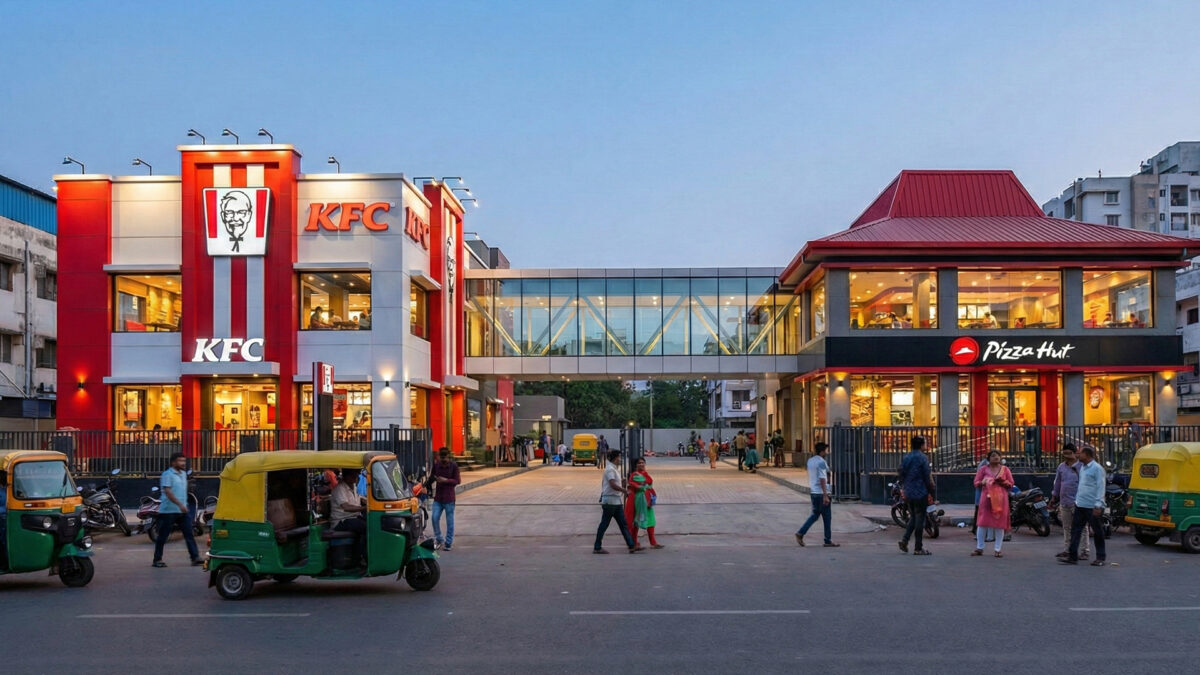
Sapphire Foods India Ltd and Devyani International Ltd, two of the largest franchise operators of KFC and Pizza Hut in the country, have announced a merger that will create India’s biggest quick-service restaurant (QSR) operator. The deal, approved by the boards of both companies, will be executed through a share-swap arrangement, with Devyani International becoming the surviving listed entity.

As per the merger terms, shareholders of Sapphire Foods will receive 177 shares of Devyani International for every 100 shares they hold. The combined entity will operate more than 3,000 restaurants across India and select international markets, making it a dominant player in the organised fast-food segment. The portfolio will include popular global brands such as KFC, Pizza Hut and Costa Coffee.

The merger is expected to take around 12 to 15 months to complete and will be subject to approvals from shareholders, regulators and other statutory authorities. The appointed date for the merger is April 1, 2026.

The move comes at a time when India’s QSR sector is facing pressure from slowing urban demand, rising input costs and intense competition. By combining operations, the two companies aim to achieve economies of scale, improve supply chain efficiencies, reduce overhead costs and strengthen their negotiating power with suppliers and landlords.

Sapphire Foods currently operates KFC and Pizza Hut outlets across India and Sri Lanka, while Devyani International runs a wide network of KFC, Pizza Hut and Costa Coffee stores in India and overseas markets. The merger will also simplify Yum! Brands’ franchise structure in India by bringing most of its key outlets under one large operator.

The stock market reacted swiftly to the announcement. Shares of Devyani International rose sharply, reflecting investor optimism about the benefits of scale and long-term growth prospects. In contrast, Sapphire Foods shares came under pressure, as investors assessed the share-swap valuation and near-term integration challenges.

Experts in the industry are of the opinion that this merger could strengthen profitability over the long term if synergies are executed well, though short-term challenges related to integration, demand recovery and cost control remain. Once completed, the combined company is expected to be better positioned to expand aggressively and compete with other major fast-food chains in India’s growing QSR market.

Also Read: China’s DeepSeek reveals efficient AI training

Categories
1 Minute-Read

India’s first bullet train set for 2027 launch

India will roll out its first bullet train on August 15, 2027, Union Railway Minister Ashwini Vaishnaw has announced.

The high-speed service will operate on the 508-km Mumbai–Ahmedabad corridor, connecting key cities such as Ahmedabad, Vadodara, Surat, Vapi, Thane and Mumbai.

Designed to run at speeds of up to 320 kmph, the bullet train will reduce travel time between Mumbai and Ahmedabad to less than three hours.

The project will be launched in phases, with select stretches opening first before full operations begin.

Categories
Beyond

Gold rises to ₹1,35,070, Silver dips to ₹2,37,900

Gold prices edged up slightly in early trade, while silver prices witnessed a small decline, reflecting mixed trends in the precious metals market at the start of the New Year. According to market data, the price of 10 grams of 24-carat gold rose by ₹10 to ₹1,35,070, indicating steady demand despite cautious investor sentiment. At the same time, silver prices slipped by ₹100 to ₹2,37,900 per kilogram, suggesting mild profit-taking after recent gains.

The price of 22-carat gold, commonly used for jewellery, also moved up by ₹10 and was trading at ₹1,23,810 per 10 grams. Gold prices varied slightly across major Indian cities. In Mumbai and Kolkata, 24-carat gold was quoted at around ₹1,35,070 per 10 grams, while Delhi saw prices close to ₹1,35,220. Chennai continued to report higher rates, with gold trading at approximately ₹1,36,130 per 10 grams.

Market experts said the modest rise in gold prices points to stability after recent declines, as investors continue to view the metal as a safe-haven asset amid global economic uncertainty. Gold had recently touched a two-week low before recovering marginally, supported by steady demand and cautious positioning in international markets.

Silver, on the other hand, saw a slight dip as traders booked profits following strong performance in the previous year. The metal had surged sharply in 2025 and touched record highs, leading to periodic corrections in prices.

Overall, precious metal prices opened the year on a measured note, with gold showing resilience and silver undergoing minor adjustments. Analysts expect prices to remain sensitive to global cues, including currency movements, inflation trends, and interest rate signals, which are likely to guide investor sentiment in the days ahead.

Also Read: Auto rally lifts Sensex 350 pts, Nifty crosses 26,250

Categories
Corporate

Auto rally lifts Sensex 350 pts, Nifty crosses 26,250

The equity markets extended gains on January 2, supported by strong buying in automobile and select banking stocks. The BSE Sensex rose around 350 points, while the Nifty 50 climbed above the 26,250 mark, reflecting cautious optimism among investors at the start of the New Year amid stock-specific action and limited broader participation.

Automobile stocks emerged as the clear outperformers after companies reported healthy December sales numbers. Hero MotoCorp and TVS Motor Company gained up to 3 per cent, benefiting from strong volume growth, while Maruti Suzuki also traded firmly, lending support to the benchmark indices. Other auto names such as Bosch and Motherson added to the momentum, pushing the Nifty Auto index higher.

The banking space also contributed to the upside, with PSU lenders showing buying interest. Shares of Punjab & Sind Bank and Indian Bank advanced, helping offset weakness in other pockets of the market. Investors remained selective, focusing on stocks with visible earnings momentum and positive business updates.

However, gains were capped by pressure in the FMCG sector. ITC declined close to 4 per cent, emerging as one of the top drags on the benchmarks amid concerns over higher taxes and near-term margin pressures. Other consumer stocks such as Godfrey Phillips, Zydus Wellness, and Parag Milk Foods also traded lower, keeping the Nifty FMCG index under pressure.

Shares of Hyundai Motor India slipped despite reporting year-on-year growth in sales, indicating cautious sentiment and some profit booking in the stock. Bajaj Auto traded marginally lower, reflecting mixed performance within the broader auto space despite overall sectoral strength.

Market participants also tracked global cues and commodity prices, while trading volumes remained relatively thin, a typical trend during the early days of the year. Analysts said investors are likely to remain stock-specific in the near term, with attention shifting gradually towards quarterly earnings announcements and macroeconomic data.

Overall, strength in auto and PSU bank stocks helped the Sensex and Nifty hold firm, even as FMCG and select consumer names limited the upside, underscoring a cautious but positive undertone in the market.

Also Read: Sensex ends flat, Nifty holds above 26,100