Categories
Corporate

Adani Power launches unit to enter nuclear energy

Adani Power has officially stepped into India’s nuclear energy sector with the creation of a wholly-owned subsidiary, Adani Atomic Energy Limited (AAEL). The Ahmedabad-based company announced the formation of AAEL on February 11, 2026, with an authorized capital of ₹5 lakh, divided into 50,000 equity shares, fully held by Adani Power. The new unit will focus on producing, transmitting, and distributing electricity from nuclear energy sources, marking the company’s first formal move into atomic power.

This strategic move follows the passage of the SHANTI Bill (Sustainable Harnessing and Advancement of Nuclear Energy for Transforming India), which allows private firms to participate in India’s previously state-controlled nuclear sector. Until now, the Nuclear Power Corporation of India Ltd (NPCIL) was the only operator of nuclear power plants in the country. The reforms aim to attract private investment, expand electricity generation, reduce carbon emissions, and diversify India’s energy mix.

While AAEL’s exact capacity plans, project timelines, and technology partners have not been disclosed, industry analysts say Adani Power is likely to explore partnerships with international firms to acquire nuclear technology and expertise. The company already has a strong presence in thermal and renewable energy, and this move signals a broader strategy to diversify into low-carbon, long-term energy solutions.

Financially, the market has responded positively to the news, reflecting investor confidence in the private sector’s entry into nuclear power. Government incentives, including customs duty exemptions on imported nuclear equipment and budget allocations for atomic energy, further support private participation.

Experts note that Adani Power is among the first private utilities to enter India’s nuclear sector, positioning it for potential long-term growth as the country scales up nuclear capacity.

Also Read: UBS opens Hyderabad hub, promising 3,000 jobs

Categories
Corporate

Sensex drops 559 points, Nifty slips under 25,850

On Thursday, the BSE Sensex dropped 559 points to close near 83,675, while the Nifty 50 slipped below 25,850, ending at 25,807. Investor sentiment weakened as global macro data and domestic sector pressures combined to trigger selling across most segments of the market.

Market participants reacted cautiously to stronger-than-expected US jobs data and the likelihood that the Federal Reserve may delay interest rate cuts. This prompted a risk-off mood globally, with Indian markets reflecting the cautious stance.

Technology stocks were the biggest drag on the indices. Heavyweights such as Tech Mahindra fell about 6%, while HCL Technologies declined nearly 5%. Other IT majors including TCS and Infosys also saw losses, dragging the Nifty IT index sharply lower and contributing significantly to overall market weakness.

Meanwhile, some financial and banking stocks showed resilience, with ICICI Bank, Bajaj Finance, and State Bank of India (SBI) recording modest gains. FMCG and metal stocks held steady but could not offset the broader losses across IT and other high-beta sectors.

On the corporate front, Muthoot Finance reported a near doubling of quarterly profit, offering a rare bright spot amid a generally negative market trend. Commodity markets saw slight gains in industrial metals such as copper and zinc, while the Indian rupee finished marginally stronger against the US dollar.

Also Read: Sensex falls 400+ points, Nifty below 25,850

Categories
1 Minute-Read

Ravi Nair jailed in Adani defamation case

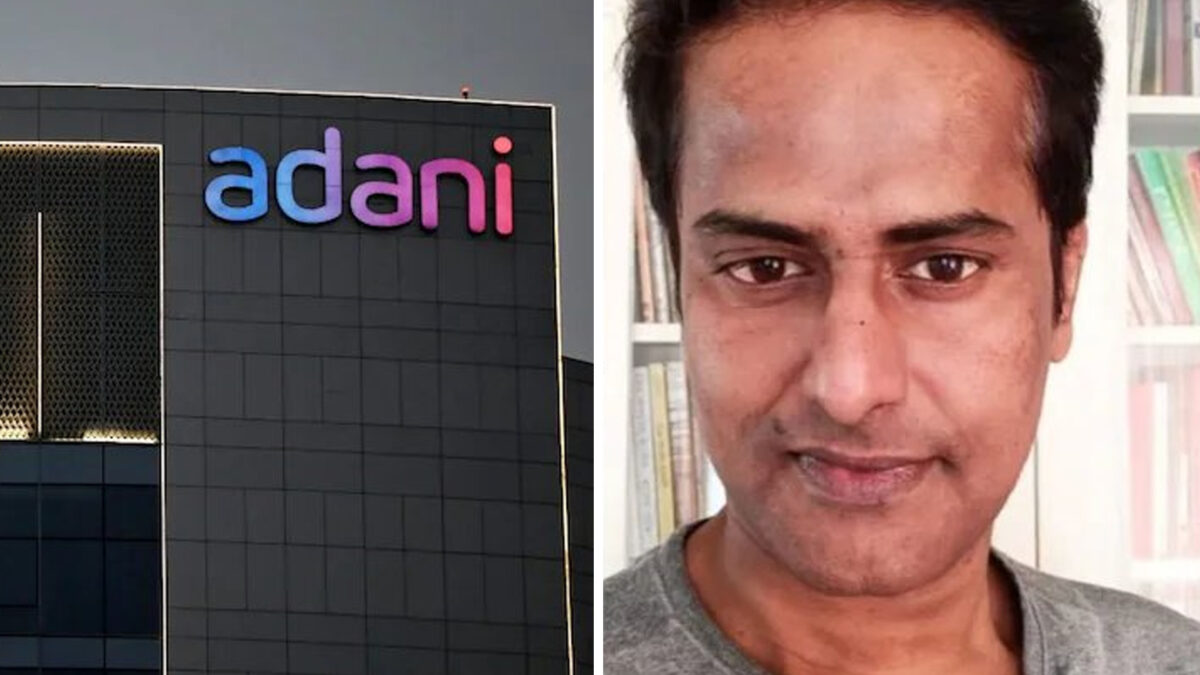
Independent journalist Ravi Nair has been sentenced to one year in jail and fined ₹5,000 by a magistrate court in Gandhinagar, Gujarat, in a defamation case filed by Adani Enterprises.

The case revolves around tweets and posts from 2020–21 that the court said harmed the company’s reputation. Nair’s lawyers maintained that his posts were meant as public-interest criticism.

The verdict has sparked wider conversations about press freedom and responsible reporting in India, highlighting the delicate balance between free speech and legal boundaries in the digital age.

Categories
Corporate

UBS opens Hyderabad hub, promising 3,000 jobs

Swiss banking major UBS has opened a new Global Capability Centre (GCC) in Hyderabad and plans to hire around 3,000 employees over the next two years. The decision boosts the bank’s presence in India and highlights Hyderabad’s growing role as a global business hub.

The new centre will support UBS’s global operations, especially in areas such as technology, digital services, and back-end financial operations. The company said the Hyderabad hub will play an important role in building advanced technology solutions and improving efficiency across its worldwide businesses.

Telangana IT and Industries Minister D. Sridhar Babu, who attended the inauguration, said the investment shows global companies’ trust in Hyderabad’s skilled workforce and strong infrastructure. He added that the state government continues to support international firms looking to expand in the region.

UBS officials said Hyderabad is a key location for the company’s long-term growth plans. The centre will focus on innovation, including digital platforms and advanced technologies such as artificial intelligence and data analytics. By expanding in India, UBS aims to strengthen its global delivery network and improve services for clients worldwide.

India has become a major destination for Global Capability Centres, with several multinational companies setting up large offices in cities like Hyderabad, Bengaluru, and Pune. These centres provide technology development, research, operations support, and other high-value services to global headquarters.

Industry experts say UBS’s expansion reflects the increasing importance of India in the global financial and technology ecosystem. The country’s large talent pool, competitive costs, and strong IT expertise continue to attract major global players.

With this new facility, UBS joins the growing list of international firms choosing Hyderabad as a strategic base for innovation and global operations.

Also Read: RBI targets bank mis-selling


Categories
Beyond

RBI targets bank mis-selling

The Reserve Bank of India (RBI) has proposed new draft rules to stop banks from mis-selling financial products to customers. The central bank wants to end incentive structures that push employees and agents to aggressively sell insurance, mutual funds and other third-party products.

Under the proposed guidelines, banks will not be allowed to design reward systems, sales competitions or performance targets that encourage staff to prioritise sales over customer needs. The RBI has made it clear that employees and direct sales agents must not receive direct or indirect incentives from third-party companies for promoting their products.

The move comes after concerns that customers are often pressured into buying products that may not suit their financial goals, income level or risk capacity. In some cases, products are bundled with loans or other banking services without giving customers a clear choice.

The draft rules define mis-selling as selling products that are unsuitable, failing to disclose important details, or using misleading tactics to influence customer decisions. If mis-selling is proven, banks will be required to fully refund customers and compensate them for any financial loss.

The RBI has also targeted unfair digital practices. The draft prohibits the use of “dark patterns”, design features in apps or websites that mislead or pressure customers into making purchases. Banks will need to review their systems and remove such tactics.

Another important proposal is that banks can contact customers for marketing only with explicit consent and during specified hours. This is aimed at reducing harassment through repeated calls and messages.

The central bank has invited public comments on the draft guidelines until early March 2026. If finalised, the new rules are expected to come into effect from July 1, 2026.

Also Read: RBI clears 9.95% stake IDFC first, then Federal Bank

Categories
Corporate

RBI clears 9.95% stake IDFC first, then Federal Bank

The Reserve Bank of India (RBI) has approved ICICI Prudential Asset Management Company (AMC) and ICICI Bank group entities to acquire up to 9.95% stake in IDFC First Bank and Federal Bank.

Both banks informed stock exchanges that they received the RBI’s approval on February 11, 2026. The approval allows ICICI Prudential AMC, along with related entities of the ICICI Bank group, to buy up to 9.95% of the paid-up share capital or voting rights in each bank.

The permission is subject to strict regulatory conditions. The stake purchase must comply with the Banking Regulation Act, 1949, RBI’s guidelines on shareholding in banks, SEBI regulations, and rules under the Foreign Exchange Management Act (FEMA), wherever applicable.

Importantly, the RBI has given a one-year deadline to complete the acquisition. If the stake is not acquired within this period, the approval may lapse.

A 9.95% stake is considered a significant minority holding in the banking sector. While it does not give control over the bank, it allows the investor to have meaningful financial exposure and influence as a large shareholder.

Following the announcement, market participants closely tracked the development, as institutional investments by large financial groups are often seen as a sign of confidence in a bank’s growth prospects.

Also Read: Strong Q3 drives M&M profit to ₹4,675 cr

Categories
1 Minute-Read

Strong Q3 drives M&M profit to ₹4,675 cr

Mahindra & Mahindra (M&M) reported a strong performance in the third quarter, with consolidated net profit rising 47% year-on-year to ₹4,675 crore. The company’s revenue grew 26% to over ₹52,000 crore, supported by solid demand across its automotive and farm equipment businesses.

SUV sales remained a key growth driver, helping the auto segment record healthy volume gains. Tractor sales also showed steady improvement. The company’s services businesses, including financial services, contributed to overall growth.

Improved operating margins and strong market demand helped boost profitability, reflecting M&M’s continued momentum across its core business segments.

Categories
Corporate

HUL Q3 profit jumps 136% to ₹7,075 cr

Hindustan Unilever Ltd (HUL) reported a sharp 136 percent rise in net profit for the third quarter of FY26, helped mainly by a one-time exceptional gain. The company posted a standalone net profit of ₹7,075 crore for the October–December quarter, compared to ₹3,001 crore in the same period last year.

A major part of this increase came from a one-time gain of ₹4,516 crore related to the demerger of its ice-cream business. This accounting adjustment significantly boosted the bottom line. Excluding this exceptional item, the company’s underlying profit growth was much more moderate.

Revenue from operations during the quarter rose 4 percent year-on-year to ₹15,805 crore, up from ₹15,146 crore in the corresponding quarter last year. The company’s EBITDA (earnings before interest, tax, depreciation and amortisation) increased 2 percent to ₹3,640 crore. However, EBITDA margin declined by 50 basis points to 23.3 percent, reflecting input cost pressures and competitive market conditions.

HUL said demand trends showed early signs of gradual recovery, with modest underlying volume growth during the quarter. The company continues to focus on driving growth through innovation, premiumisation, and strengthening its core brands.

On the strategic front, HUL’s board approved the acquisition of the remaining 49 percent stake in Zywie Ventures for ₹824 crore. Zywie owns the health and wellness brand OZiva. With this move, Zywie and its subsidiary will become wholly owned subsidiaries of HUL. The acquisition aligns with HUL’s strategy to expand its presence in the fast-growing health and wellbeing segment.

At the same time, the company approved the sale of its entire 19.8 percent stake in Nutritionalab Private Limited, which operates the Wellbeing Nutrition brand, as part of portfolio realignment.

Following the announcement of results, HUL shares fell around 2 percent, as investors assessed the impact of the one-time gain versus core operating performance.

Also Read: ₹2,834 cr Fractal Analytics IPO subscribed 2.66 times

Categories
Corporate

₹2,834 cr Fractal Analytics IPO subscribed 2.66 times

The ₹2,834-crore initial public offering (IPO) of Fractal Analytics closed with an overall subscription of 2.66 times on the final day of bidding, reflecting a mixed response from investors.

The IPO, priced in the band of ₹857 to ₹900 per share, saw stronger participation on the last day after a slow start. Qualified Institutional Buyers (QIBs) played a key role in lifting the issue, subscribing their portion over four times. However, retail individual investors and non-institutional investors showed relatively cautious interest, with their segments being subscribed just about one time each.

Fractal Analytics is one of India’s leading artificial intelligence (AI) and advanced analytics companies, serving global clients across industries such as healthcare, consumer goods, banking and technology. The IPO attracted attention as one of the first large pure-play AI companies from India to tap the public markets.

Despite the full subscription, market sentiment appeared guarded. The grey market premium (GMP), which indicates unofficial market expectations before listing, remained muted and even softened closer to the closing day. This suggests that investors are not expecting very strong listing gains.

The company had earlier reduced the size of its IPO compared to initial plans, possibly to improve investor appetite amid fluctuating market conditions. Analysts have pointed out that while Fractal operates in a high-growth AI segment, valuation concerns and broader market volatility may have tempered enthusiasm, especially among retail participants.

Funds raised from the IPO will be used for business expansion, investment in subsidiaries, repayment of borrowings, strengthening technology capabilities, and general corporate purposes.

Share allotment is expected to be finalised shortly, with the stock likely to list on the stock exchanges next week. Investors will closely watch the listing performance to gauge market confidence in AI-focused companies entering the public space.

Also Read: JSW Motors’ first car launch may be delayed

Categories
Corporate

Sensex falls 400+ points, Nifty below 25,850

Indian stock markets declined sharply, with heavy selling in technology shares dragging the benchmark indices lower. The BSE Sensex dropped over 400 points, while the Nifty slipped below the 25,850 mark during the session.

The fall was mainly driven by losses in major IT stocks. Infosys, TCS, HCL Tech and Tech Mahindra were among the biggest losers, falling between 2% and 4%. Investors turned cautious amid concerns about the impact of artificial intelligence on traditional IT services and uncertainties around future earnings growth. Weak global sentiment further added pressure to the sector.

Broader market sentiment was also affected by strong US economic data, particularly robust jobs numbers, which reduced expectations of early interest rate cuts by the US Federal Reserve. Higher-for-longer interest rate concerns typically reduce global risk appetite and weigh on emerging markets like India.

Despite the broad-based weakness, some stocks offered limited support to the indices. ICICI Bank, Axis Bank, NTPC and Power Grid were among the key gainers, posting modest gains during the session. However, their rise was not enough to offset the sharp decline in IT counters.

Other sectors showed mixed performance, with banking and select energy stocks holding relatively steady, while technology and some large-cap names remained under pressure.

Market analysts said that while India’s macroeconomic fundamentals remain stable, near-term volatility is likely due to global cues and sector-specific headwinds. Rising crude oil prices and cautious global trends also contributed to the subdued mood.

Also Read: Cisco launches AI networking chip