Categories
Corporate

Meesho IPO fully subscribed on Day 1, GMP ₹49

Meesho, the social commerce platform, saw its initial public offering (IPO) fully subscribed on the first day of trading on 3 December 2025. The IPO drew strong interest, especially from retail investors, who accounted for the largest share of demand.

The IPO was priced between ₹105 and ₹111 per share, with each lot comprising 135 shares. By the end of Day 1, the retail portion was subscribed 3.1 times, while non-institutional investors (NIIs) applied for 1.23 times their allocation. Qualified institutional buyers (QIBs) showed limited interest, subscribing only 0.16 times.

In the grey market, Meesho shares traded at a premium of ₹49, indicating a potential listing price of around ₹160 per share. This points to a possible 44% gain for early investors if the stock opens at the grey market price.

Meesho has established itself as a low-cost, high-volume e-commerce platform targeting value-conscious customers, particularly in smaller cities and towns. The company has achieved cash-flow positivity in FY25, although it is not yet profitable overall. Analysts say Meesho’s large user base and high transaction volume give it strong growth potential, but consistent profitability will be key for long-term success.

Brokerages and market experts generally recommend subscribing for the IPO, citing Meesho’s scale and market position. At the same time, they advise caution, as the company’s ability to convert growth into profits remains uncertain.

Meesho’s IPO has generated strong investor interest, driven mainly by retail demand and buoyed by a high grey market premium. The debut highlights the popularity of e-commerce platforms in India and reflects investor confidence in companies with rapid growth and a wide market reach.

Also Read: AI leader Anthropic prepares for possible IPO in 2026

Categories
Technology

OpenAI goes ‘Code Red’ as Gemini gains edge

OpenAI CEO Sam Altman has declared a “code red,” redirecting the company’s focus entirely to strengthening ChatGPT. The decision comes as Google’s Gemini 3 gains rapid traction, outperforming ChatGPT in speed, reliability, and user engagement.

To respond, OpenAI is putting several projects on hold, including ad-driven features, AI shopping assistants, and its personal assistant “Pulse.” All resources are now being focused on improving ChatGPT’s performance, personalization, and overall user experience. The decision highlights the high-stakes competition in the AI space, where even leading companies must act fast to maintain their edge.

This is a role reversal from late 2022, when ChatGPT’s launch had triggered a “code red” at Google. At that time, Google scrambled to adjust its AI strategy in response to OpenAI’s breakthrough. Now, OpenAI faces similar pressure as a competitor pulls ahead.

Industry experts say such “code red” moves reflect the intensity of the generative AI race, where rapid innovation can quickly shift user preference and market position. Altman’s strategy shows OpenAI’s commitment to staying at the forefront of AI, ensuring ChatGPT continues to lead in performance and adoption.

With Gemini 3 raising the bar, OpenAI’s urgent pivot underlines the company’s focus on innovation, speed, and user satisfaction. By prioritizing ChatGPT over other initiatives, OpenAI aims to secure its place as a global leader in AI development while responding decisively to emerging competition.

Also Read: YouTube launches ‘2025 Recap’ featuring top trends

Categories
Beyond

Rupee falls past ₹90 on trade and outflow pressure

The Indian rupee weakened further on Wednesday, slipping past the crucial ₹90-per-dollar mark for the first time. The currency opened lower and extended losses as persistent foreign fund outflows, strong demand for the US dollar, and uncertainty around India’s pending trade discussions pressured market sentiment.

Traders reported steady dollar buying from importers, especially in sectors like gold and electronics, which has added to the strain on the rupee. With India’s import bill rising, the demand for dollars continues to stay elevated even as global currency markets remain volatile.

Foreign investors have been pulling money out of Indian equities and bonds over the past few weeks, adding to the downward pressure. Many are staying cautious due to geopolitical tensions and concerns over global interest rate trends. This steady outflow has reduced dollar supply in domestic markets at a time when demand is already high.

Market participants also pointed to the lack of progress on the ongoing India–US trade discussions as another factor weighing on sentiment. With no clarity on when the deal might move forward, traders expect the rupee to remain under pressure in the near term.

Despite India’s strong macroeconomic backdrop, analysts say the rupee could weaken further if foreign inflows do not stabilise soon. Some expect the currency to hover near or slightly above the current levels unless global conditions improve or trade negotiations break the deadlock.

For now, the Reserve Bank of India is expected to step in when required to prevent excessive volatility, but traders believe the central bank will avoid aggressive intervention unless the rupee shows sharper swings. Overall, the mood in currency markets remains cautious as investors wait for clearer signals on trade and global risk trends.

Also Read: Gold hits ₹1.30 lakh mark, Silver climbs to ₹1.84 lakh

Categories
Beyond

Gold hits ₹1.30 lakh mark, Silver climbs to ₹1.84 lakh

Gold and silver prices continued their steady climb on Wednesday, offering yet another sign that investors are leaning heavily toward safe-haven assets amid global uncertainty. On the Multi Commodity Exchange (MCX), gold moved past ₹1.30 lakh per 10 grams, while silver surged to nearly ₹1.84 lakh per kilogram, marking a strong mid-week performance for the bullion market.

Gold opened with positive momentum and inched higher through the session. Traders say the metal is benefiting from growing expectations of an interest rate cut by the US Federal Reserve, an event that usually boosts gold’s appeal. At the same time, the Indian rupee’s weakness has added an extra push, making imports more expensive and naturally lifting local prices.

Silver’s rise has been even more striking. The white metal, supported by both investment demand and industrial use, rose around 1.5% during Wednesday’s session. Analysts note that global supply pressures and strong demand from sectors like electronics and renewable energy are helping silver maintain its sharp upward trajectory.

Market watchers say gold now finds support around ₹1.28 lakh, while immediate resistance lies close to ₹1.31 lakh. If prices hold above current levels, the metal could test new highs later this week. Silver, too, is expected to stay firm as long as it trades above the ₹1.84 lakh zone, with potential to move towards ₹1.86–₹1.88 lakh.

For everyday buyers, the latest jump may come as a mixed signal—good news for investors holding gold or silver, but slightly discouraging for those planning jewellery purchases. Still, the broader market mood suggests that bullion will remain attractive as long as global uncertainties linger and the rupee stays under pressure.

As the week progresses, traders will be watching key global data and central bank cues closely. For now, both gold and silver continue to shine brighter in the mid-week market.

Also Read: Sensex falls 250 Points, Nifty slips 80 as markets turn cautious

Categories
Beyond

Government says Sanchar Saathi optional

The Centre has clarified that the Sanchar Saathi mobile application, which recently triggered a political and public debate, will not be mandatory for smartphone users. Communications Minister Jyotiraditya Scindia informed Parliament that people are free to delete the app from their phones and that its installation is meant only to support citizens, not to monitor them.

The clarification comes days after the government directed smartphone manufacturers and importers to pre-install the app on all new devices and include it in upcoming software updates. This led to concerns that the app might collect sensitive data or open the door to state surveillance. Opposition leaders criticised the move, arguing that it risked turning smartphones into monitoring devices.

Scindia emphasised that these fears are unfounded. He stated that Sanchar Saathi neither listens to calls nor accesses private content, and that its purpose is limited to preventing telecom fraud. The app, developed by the Department of Telecommunications, provides tools that help users keep track of SIM cards issued in their name, report wrongly issued mobile connections, and block phones that have been lost or stolen.

One of its key features, the “Know Your Mobile” service, allows people to verify whether a device has a valid IMEI number — a step meant to curb the spread of cloned or fake phones often used in criminal activity. The app also connects users to the national portal where stolen devices can be blacklisted across networks, preventing their misuse. In addition, it supports reporting of spam calls and SMS, an issue that has grown alongside digital payment fraud.

While officials argue that the app strengthens digital safety, privacy experts worry about setting a precedent where government-backed apps could become compulsory in the future. They also question whether pre-installation will give citizens genuine choice.

By clarifying that Sanchar Saathi can be removed at any time, the government aims to ease public concerns and shift focus back to the app’s intended benefits. The debate, however, has highlighted a larger issue, the balance between improving cyber safety and ensuring that technological interventions do not compromise personal freedom. As smartphones continue to be central to daily life, this balance will remain under intense public scrutiny.

Also Read: Vodafone Idea shares jump 4% on relief hopes

Categories
Leaders

Apple names Amar Subramanya as new VP of AI

Apple has appointed Amar Subramanya as its new Vice President of Artificial Intelligence, marking a strategic step in the company’s efforts to strengthen its AI capabilities. John Giannandrea, Apple’s outgoing AI chief, will remain with the company as an advisor until his retirement in spring 2026.

Subramanya will report to Craig Federighi, Apple’s software-engineering head, and oversee key functions including Foundation Models, machine-learning research, and AI safety evaluation. Industry analysts say his appointment signals Apple’s intent to accelerate innovation in AI-powered products and services.

From Bengaluru to Silicon Valley

Amar Subramanya completed his Bachelor of Engineering in Electrical, Electronics, and Communications from Bangalore University before earning a PhD in Computer Science from the University of Washington. His research focused on machine learning, natural language processing, and large-scale AI systems.

Subramanya worked at IBM briefly before spending 16 years at Google, leading engineering for the company’s AI assistant, Gemini. Earlier this year, he joined Microsoft as Corporate Vice President of AI, developing foundation models for enterprise solutions such as Copilot. His shift to Apple underscores the company’s renewed focus on building cutting-edge AI technologies.

Apple’s AI ambitions

Apple has historically been cautious in rolling out AI features compared with peers like Google and Microsoft. Subramanya’s expertise in speech recognition, NLP, and multimodal AI is expected to accelerate Apple’s development of intelligent assistants and AI-driven applications.

CEO Tim Cook welcomed Subramanya, emphasizing that AI remains central to Apple’s future strategy. “Amar’s extraordinary AI expertise will help propel Apple forward,” Cook said.

With Subramanya at the helm, Apple aims to compete aggressively in the global AI race, enhancing Siri, machine learning across devices, and user experiences for millions worldwide.

Also Read: Bajaj Housing Finance shares drop 9% on promoter stake sale

Categories
1 Minute-Read

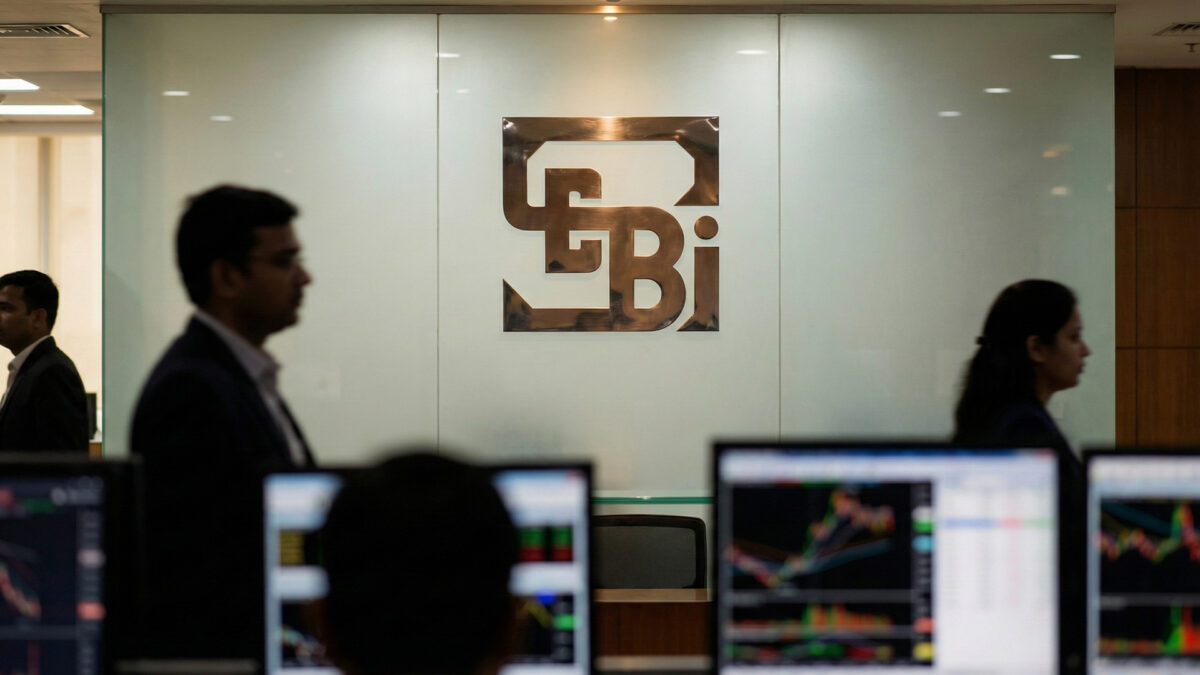
SEBI to release LODR review paper soon

The Securities and Exchange Board of India (SEBI) plans to issue a comprehensive consultation paper reviewing its Listing Obligations and Disclosure Requirements (LODR) within the next four to six months.

The initiative seeks to simplify complex regulations, remove redundant provisions, and ease compliance, particularly for new-age firms and small to medium enterprises.

Key proposals under consideration include streamlined disclosure processes, unified filing systems, and customized norms for different types of companies.

The review reflects SEBI’s focus on improving transparency, enhancing efficiency, and fostering a more business-friendly regulatory environment while maintaining investor protection.

Categories
Corporate

Bajaj Housing Finance shares drop 9% on promoter stake sale

Shares of Bajaj Housing Finance plunged around 9% on Tuesday, sliding to a 52‑week low of ₹94.90 following news of a large block deal by its promoter, Bajaj Finance. The announcement sparked investor concerns about dilution and the sudden sale weighed heavily on the stock.

Bajaj Finance intends to offload up to 2% of BHFL’s equity, roughly 16.66 crore shares, in one or more tranches. Market estimates suggest the deal could involve up to 2.35% stake, about 19.5 crore shares, at a price near ₹97 per share. The move is reportedly aimed at helping BHFL comply with minimum public shareholding norms, as Bajaj Finance currently holds 88.70% of BHFL’s total paid-up capital.

The divestment process may take place between December 2, 2025, and February 28, 2026, depending on market conditions and regulatory approvals.

Despite the stock reaction, BHFL has shown solid financial performance. For the quarter ended September 2025, it posted a net profit of ₹643 crore, up 18% from a year ago, and revenue of ₹2,755 crore, a 14% increase.

Since its listing in September 2024, the stock has declined about 23% and currently trades below both its 50‑day and 200‑day moving averages. Technical indicators suggest oversold conditions, but the large promoter sale has unsettled investors.

Analysts note that market confidence will likely hinge on how smoothly the stake sale is executed and whether the share price stabilizes post-transaction. For now, BHFL remains under close watch as the block deal progresses.

Also Read: Rupee hits record low, students and travellers feel pinch

Categories
Beyond

Rupee hits record low, students and travellers feel pinch

The Indian rupee touched a new all-time low against the US dollar this week, trading at around ₹89.85, raising concerns for students planning to study abroad and families planning international travel.

Despite India’s strong economic growth, with GDP expanding at 8.2% in the September quarter, the rupee has been under pressure. Analysts attribute the depreciation to weak foreign investment inflows, increased demand for dollars from importers, and uncertainty surrounding a potential US-India trade deal. The currency had earlier breached ₹89.49, and the slide shows no signs of immediate reversal.

For Indian students heading abroad, this depreciation has immediate financial implications. Tuition fees, accommodation, and daily expenses paid in foreign currencies now cost significantly more in rupees. Even modest fluctuations in exchange rates can add several lakhs to a student’s annual budget. Families planning holidays abroad are also likely to feel the pinch, as flight tickets, hotel bookings, and other travel expenses become costlier.

Economists note that this decline is partly a reflection of global market conditions, where the US dollar remains strong and capital inflows into emerging markets like India have slowed. Importers seeking dollars for essential commodities and trade also contribute to the rupee’s weakness. While some experts describe the depreciation as a “calibrated adjustment,” it nonetheless increases the financial burden on middle-class households managing overseas expenses.

The Reserve Bank of India (RBI) has traditionally intervened in currency markets to stabilize the rupee, but market participants suggest that the current pressure reflects broader structural trends that may persist in the near term. Investors and travellers are being advised to monitor currency movements closely and plan foreign expenditures accordingly.

For students and travellers, hedging options such as prepaid forex cards, forward contracts, or early currency conversion can help mitigate some of the costs associated with the falling rupee. Families may need to reconsider budgets for study programs, vacations, and other dollar-denominated expenses to adjust for the higher rupee cost.

The rupee’s fall is set to impact households across India, particularly students and families with plans abroad. Rising costs for education, travel, and imports are a direct consequence of the weaker currency, showing how global market movements can quickly affect everyday finances.

Also Read: Rupee slips to all-time low of 89.76 against dollar

Categories
Technology

WhatsApp Web to log out every 6 hours in India

WhatsApp Web users in India will soon face automatic logouts every six hours, following new regulations from the Department of Telecommunications (DoT). The rule, part of the Telecommunication Cybersecurity Amendment Rules, 2025, requires all messaging accounts to be tied to the SIM card used during registration. This means web and desktop sessions can no longer remain active all day, and users will need to log in again, typically by scanning the QR code.

Other popular messaging apps, including Telegram and Signal, are also expected to comply. Platforms have been given 90 days to implement the changes, after which the six-hour logout policy will be enforced.

The step is aimed at improving cybersecurity and reducing digital fraud. Regulators have highlighted that some scammers exploit messaging apps without active SIM links, sometimes operating from outside India. By enforcing SIM binding, authorities hope to make it easier to trace accounts back to the actual subscriber and prevent misuse.

For users, this change will have practical implications. People who rely on WhatsApp Web for work or personal use will face frequent session interruptions. Those using secondary devices, tablets, or phones without the registered SIM may lose access altogether. Travelers or users who frequently switch SIMs could also experience login difficulties, making continuous access more challenging.

Tech experts say the rule is a step toward safer digital communication, but it may require adaptation from millions of users accustomed to persistent web sessions. Messaging platforms are expected to update their systems soon to meet the government’s security requirements, ensuring compliance within the mandated 90-day period.

As the six-hour auto-logout becomes standard, users will need to remain aware of session limits and plan accordingly to avoid interruptions in both personal and professional communications.

Also Read: Ahmedabad’s GIFT City expands as $100 billion financial hub