Categories
Corporate

Dubai and Abu Dhabi stock markets halted for 2 days

Dubai and Abu Dhabi stock markets have suspended trading for two consecutive days in an unusual move as the Middle East conflict escalates following ongoing strikes involving Iran, United States and Israel. The closures reflect growing concerns over investor confidence, market volatility, and broader economic disruption tied to heightened geopolitical risks.

Authorities in the United Arab Emirates (UAE) announced that both the Abu Dhabi Securities Exchange (ADX) and the Dubai Financial Market would remain closed on Monday and Tuesday. Market regulators said the decision was taken to maintain financial stability and protect investors amid extraordinary uncertainty driven by the conflict, which has affected airspace, logistics, and economic sentiment across the region.

The two‑day halt marks one of the rarest interventions in recent UAE market history. Exchanges typically operate Sunday through Thursday, and closures are usually reserved for weekends and public holidays. However, with geopolitical developments intensifying, authorities opted to pause trading to prevent sharp market swings and protect capital.

The move comes as the UAE, a key financial hub linking Asian, European and African marke, navigates rising regional tensions and the potential economic fallout from the Gulf conflict. Traders and analysts have cited concerns over oil price volatility, flight disruptions, and wider economic uncertainty as factors that could drive extreme price movements if markets remained open.

Investor sentiment was already fragile following a series of attacks and counter‑attacks in the Middle East, including missile and drone exchanges that have rattled regional security. The temporary closure of the ADX and Dubai Financial Market shows how geopolitical developments can directly impact financial infrastructure and daily market operations in one of the world’s major energy and investment centres.

While regular trading is expected to resume after the two‑day break, market participants will be closely watching opening prices and liquidity conditions, as suppressed demand and supply imbalances could result in significant price adjustments.


Also Read: Magellan to merge with Barrenjoey in $1.1bn deal

Categories
Corporate

Magellan to merge with Barrenjoey in $1.1bn deal

Australian investment manager Magellan Financial Group is set to acquire full ownership of Barrenjoey Capital Partners in a landmark deal valued at approximately A$1.62 billion (US$1.1 billion). The all‑stock transaction, announced Monday, is expected to close in the second quarter of 2026, subject to regulatory approvals and shareholder consent.

Magellan already owns roughly 40% of Barrenjoey, which it helped establish in 2020. As part of the acquisition, Magellan will issue new shares to purchase the remaining equity, including about 10% held by Barclays, moving toward full ownership of the rapidly growing investment banking and advisory firm.

Since its launch, Barrenjoey, co‑founded by Brian Benari and other former banking executives, has built a strong presence in capital markets, equities, fixed income, private capital, and advisory services. The company has posted solid revenue and profit growth, cementing its reputation in Australia’s financial sector.

Following the merger, Magellan shareholders will retain majority control, while Barrenjoey’s founders and employees will maintain significant ownership. Leadership changes include Brian Benari taking over as CEO of the combined group, with Magellan’s Sophia Rahmani continuing to lead its investment management division. Barrenjoey co-founders will also serve as co‑executive chairs.

The board will see new appointments, with corporate veteran David Gonski becoming the independent chair of the merged entity, Magellan’s current chairman as deputy chair, and other Barrenjoey directors and a Barclays executive joining to strengthen governance.

The merger is part of Magellan’s strategic push to diversify beyond traditional funds management, blending recurring management fees with transactional revenue from investment banking and capital markets. Analysts note that the combined group will have broader capabilities, enhanced talent, and greater scale, enabling it to compete more effectively with larger Australian and global financial firms.

Also Read: Adani Ports confirms Haifa port safe, fully operational

Categories
Corporate

Aditya Birla’s jewellery brand “Indriya” celebrates 50 stores

In less than two years since its launch, Indriya, the premium jewellery brand from the Aditya Birla Group, has reached a major milestone: 50 stores across India. From bustling metros to smaller towns, the brand is quickly becoming a household name in the jewellery market, combining traditional craftsmanship with contemporary design and shopping experiences.

Indriya’s growth is powered by a design-led, customer-first approach. Its in-house design team creates collections that reflect local tastes, making jewellery that resonates with the culture and lifestyle of each city. This strategy has struck a chord with modern Indian consumers, helping the brand carve out a niche in a market long dominated by legacy players like Tanishq.

The brand is now gearing up for an ambitious expansion, aiming to double its footprint to around 100 stores in the coming year. While metros remain a focus, Indriya is also bringing its curated collections to Tier-2 and Tier-3 cities. Markets such as Haldwani in Uttarakhand and Gaya in Bihar are now part of the brand’s growth story, showing that premium jewellery is no longer limited to big cities.

In Bengaluru, Indriya recently opened its third city store and plans to more than double its presence in the city by the end of the year. These stores are designed as immersive spaces where shoppers can explore jewellery collections, seek personalized advice, and experience the craftsmanship behind every piece.

The milestone of 50 stores represents the brand’s vision, execution, and the trust it has earned from customers. Leaders at Indriya say the rapid expansion is a testament to the growing appetite for organized, experience-driven jewellery retail in India.

For Indriya, the journey has just begun, and the next chapter promises more cities, more designs, and more customers discovering their perfect piece.

Also Read: Deepinder Goyal raises $54mn for brain‑monitoring wearable

Categories
Corporate

Dell shares jump 17% on AI server growth forecast

Shares of Dell Technologies climbed sharply in US markets this week as investors reacted to bullish forecasts tied to artificial intelligence demand and expanding data-centre business. The stock reached roughly a three-month high, with gains supported by optimism around AI-related server sales and improving enterprise spending trends.

Dell’s latest quarterly earnings underscored resilience in key segments of its business, particularly infrastructure solutions and data-centre products. While the personal computer market has remained subdued, the company’s pivot toward higher-margin enterprise hardware is gaining traction. Industry analysts pointed to the AI server market, where Dell competes to supply systems that power generative AI and large-scale machine-learning workloads, as a critical growth driver.

Management forecasts released in the earnings update suggested that AI server revenue could roughly double over the coming year, a projection that far outpaced earlier expectations. This outlook contrasts with broader tech hardware headwinds, including a global slowdown in memory chip availability that has weighed on some of Dell’s competitors. Despite that constraint, Dell’s diversified supply chain and longstanding enterprise relationships have helped it secure orders in what remains a competitive field.

Investor confidence was also buoyed by commentary from the company’s leadership, who highlighted improving demand from corporate customers looking to upgrade data-centre infrastructure to support new AI initiatives. The increasing importance of on-premise and hybrid cloud deployments has encouraged many large organisations to refresh legacy systems with more capable servers, a trend from which Dell appears to be benefiting.

 While some parts of the technology sector remain sensitive to macroeconomic uncertainty, companies with credible paths to capitalise on generative AI, particularly at the infrastructure layer, have drawn renewed investor interest.

Also Read: Gaudium IVF lists at 5% premium on IPO debut

Categories
Corporate

Gaudium IVF lists at 5% premium on IPO debut

Shares of Gaudium IVF and Women Health made a steady debut on the stock exchanges, listing at ₹83, which is about 5% higher than the issue price of ₹79 per share. The modest premium came as a positive signal for investors, particularly given cautious sentiment in segments of the broader market.

The company’s initial public offering (IPO), valued at approximately ₹165 crore, had drawn strong interest during the subscription window. Retail investors and high-net-worth individuals led the demand, resulting in the issue being subscribed multiple times over. The listing performance exceeded muted expectations in the grey market, where informal indications had suggested a flatter start.

Gaudium IVF operates in the assisted reproductive technology space, offering fertility treatments including in-vitro fertilisation (IVF). The company follows a hub-and-spoke operating model, with main centres supported by satellite clinics to widen patient reach. It currently runs centres across key urban markets and plans to deepen its footprint.

According to its stated plans, proceeds from the IPO will primarily be used to fund expansion, including the launch of new IVF centres in different parts of the country. A portion of the funds will also go toward debt reduction and general corporate purposes, strengthening the balance sheet as it scales operations.

The fertility services market in India has been expanding, driven by rising awareness, lifestyle changes, and improving access to specialised healthcare. Industry analysts believe organised players with established brands and clinical track records are well positioned to benefit from this structural growth trend.

Also Read: US halts use of Anthropic AI

Categories
Beyond

US halts use of Anthropic AI

US President Donald Trump has ordered federal agencies to stop using artificial intelligence tools developed by Anthropic, marking a sharp escalation in tensions between the administration and the fast-growing AI sector.

The directive requires departments to begin phasing out Anthropic’s systems, including those already embedded in administrative and defence operations. According to officials familiar with the decision, the move follows weeks of disagreement over limits placed on the company’s flagship AI model, Claude, particularly in military contexts.

At the heart of the conflict are safeguards built into Anthropic’s technology. The company has imposed restrictions designed to prevent applications such as mass domestic surveillance and fully autonomous weapons. Representatives from the Department of Defense have argued that those constraints reduce operational flexibility and complicate legitimate national security planning.

Trump described the decision as necessary to protect executive authority and ensure that government agencies are not constrained by private-sector policies. The administration is reportedly reviewing existing contracts and examining whether additional regulatory steps could follow.

Anthropic’s chief executive, Dario Amodei, defended the company’s approach, stating that its safety guardrails are central to responsible AI deployment. He warned that removing such protections could lead to unintended and potentially dangerous outcomes. The firm has indicated it may pursue legal avenues if further punitive measures are imposed.

The dispute has drawn significant attention across Silicon Valley, where AI companies are increasingly partnering with government agencies.

Also Read: OpenAI wins Pentagon deal as Donald Trump clashes with Anthropic

Categories
Corporate

OpenAI wins Pentagon deal as Donald Trump clashes with Anthropic

OpenAI has taken a big step into government work by signing a deal with the US Department of Defense, bringing its artificial intelligence tools closer to national defence applications. The move comes just days after President Donald Trump publicly criticised Anthropic, a rival AI company founded by former OpenAI employees, highlighting the growing tensions in the AI industry.

The agreement with the Pentagon will allow OpenAI to provide advanced AI technology and expertise for various defence projects. While the exact financial terms are not public, sources say the deal is broad in scope and emphasizes safe, responsible use of AI in government operations. It’s one of OpenAI’s largest collaborations with the US government to date.

CEO Sam Altman has been meeting with defence officials over the past months, pushing for a model where AI development and government oversight go hand in hand. “We need collaboration to make sure AI is used safely and ethically,” Altman has said, reflecting his vision of responsible innovation. This partnership aims to put those principles into practice by embedding OpenAI’s technology in programmes with strict ethical and safety standards.

The announcement comes amid a public clash between Trump and Anthropic. Trump criticised Anthropic’s leadership and suggested it was slowing down AI progress, stirring debate about competition, safety, and the government’s role in shaping the industry. OpenAI’s Pentagon deal, by contrast, signals a move toward cooperation with authorities rather than confrontation.

Also Read: Block lays off 4,000 employees due to AI shift


Categories
Beyond

DGCA allows 48‑hour free flight cancellations

Air travel just got a lot more flexible for passengers in India. The Directorate General of Civil Aviation (DGCA) has announced new rules allowing travellers to cancel or change their flight bookings within 48 hours of purchase without paying any fees. This means if you book a ticket and quickly realise your plans have changed, you can cancel or modify it without worrying about losing money.

Previously, many airlines charged cancellation or change fees even for tickets cancelled soon after booking. Under the new regulation, all domestic airlines must honour this 48‑hour free window, giving passengers a fair chance to adjust their plans, especially if flights were booked in a hurry or prices changed shortly after purchase.

The DGCA has also introduced a clear refund timeline. Airlines are now required to process all refunds within 14 days, whether it’s a cancellation under the 48‑hour rule or other situations like flight delays, schedule changes, or airline-initiated cancellations. This ensures travellers don’t have to wait weeks to get their money back.

Industry experts say the move will make air travel less stressful and boost confidence among passengers, particularly during peak travel periods or when booking last-minute trips. Airlines are updating their systems to comply, and passengers are encouraged to check their airline’s policies and reach out to customer service if there’s any delay in refunds.

For travellers, this change means more control, transparency, and peace of mind. Whether it’s a sudden change in plans, an unexpected work commitment, or a better deal elsewhere, flyers now have the freedom to manage their bookings quickly and easily.

Also Read:  Block lays off 4,000 employees due to AI shift

Categories
1 Minute-Read

UK ends visa-free travel without pre-approval

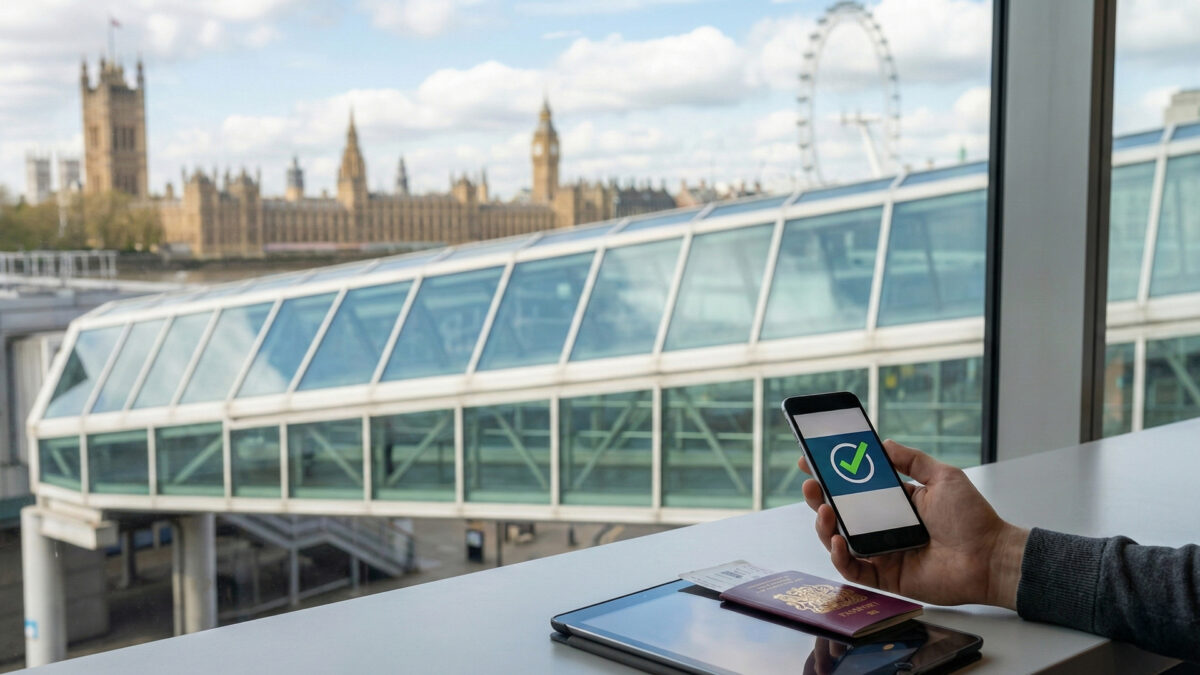
Travelling to the United Kingdom will now require an extra step for millions of visitors. The country has made its new Electronic Travel Authorisation (ETA) system compulsory, meaning visa-free travellers must get online approval before they even start their journey.

The rule applies to people from dozens of countries who were earlier allowed to enter Britain without a visa for short stays. From now on, they must fill out an online application, pay a fee and receive clearance before boarding a flight, train or ferry. Those who arrive at the airport without an approved ETA will simply not be allowed to travel.

The permit is not a visa. It is a digital pre-check that allows visits of up to six months for tourism, business or family trips. Once granted, it is valid for two years and can be used for multiple visits, as long as the passport remains valid.

UK authorities say the system is designed to make borders more secure and more efficient. By screening travellers in advance, officials can decide who is allowed to travel before they reach the country. The move also brings Britain in line with countries such as the United States and Australia, which already run similar pre-travel authorisation programmes.

The rollout has been gradual. The ETA was first introduced for a smaller group of nationalities and later extended to European travellers. With the transition period now over, the requirement has become fully mandatory.

British and Irish citizens, along with people who already hold a UK visa or residency, do not need to apply.

For travellers, the biggest change is the loss of last-minute trips. Travel industry experts say planning ahead is now essential, even for short holidays or quick business visits.

Also Read: Dr Reddy’s eyes March launch of low-cost Ozempic copy

Categories
Corporate

Dr Reddy’s eyes March launch of low-cost Ozempic copy

Dr Reddy’s Laboratories is preparing to roll out a more affordable version of semaglutide in India as early as March, aiming to bring down the cost of one of the world’s most talked-about diabetes and weight-loss treatments.

The Hyderabad-based drugmaker has applied for the trademark “Obeda,” a name widely seen as the likely brand for its generic rival to Ozempic. The timing is significant. Semaglutide’s patent in India expires in March, opening the door for local pharmaceutical companies to launch cheaper alternatives for the first time.

If priced aggressively, the new injection could cost up to 60% less than the original product. That would make the therapy accessible to far more patients in a country that has one of the world’s largest diabetes populations and a rapidly growing obesity burden.

People familiar with the company’s plans say Dr Reddy’s is gearing up for a day-one launch and has already built manufacturing capacity. The company is targeting sales of millions of pre-filled pens in the first year itself, signalling how big the opportunity could be.

So far, semaglutide has remained out of reach for most Indian patients because of its high price and limited availability. A lower-cost version could change that almost overnight, not just for diabetes care but also for weight management, where demand has surged globally.

The launch will also intensify competition in India’s fast-growing market for metabolic drugs. Danish drugmaker Novo Nordisk, which pioneered semaglutide, and US-based Eli Lilly, whose Mounjaro has already gained strong traction, are both expanding their presence in the country.

Also Read: Users report fraud after Yes Bank’s BookMyForex breach