Categories
Corporate

UltraTech Q2 profit rises 21% despite higher costs

UltraTech Cement reported strong earnings growth for the September quarter, with net profit rising more than 21% year-on-year and revenue increasing nearly 19%. However, higher raw material, power and fuel expenses weighed on the company’s performance, while its profit fell short of market expectations. The results highlight the strength of cement demand in India, even as manufacturers face pressure to control costs.

The Aditya Birla Group company reported consolidated net profit attributable to the owners of the parent at ₹1,493.8 crore for the second quarter of the 2026-27 financial year, compared with ₹1,231.6 crore in the corresponding period last year. Revenue from operations rose 18.8% to ₹23,295.1 crore from ₹19,606.9 crore a year earlier.

The company’s consolidated profit after tax, including the relevant share of non-controlling interests, stood at ₹1,501 crore, against ₹1,238 crore in the year-ago quarter. Consolidated net sales increased 18.9% to ₹23,024 crore.

Despite the double-digit growth, UltraTech Cement shares came under pressure after the results were announced on October 19. Investors were concerned that the profit figure had missed analyst estimates. The company’s shares fell during the session, reflecting worries about rising operating expenses and their impact on future margins.

Cement sales volumes provide support

Higher sales volumes played a major role in UltraTech Cement’s quarterly performance. Domestic grey cement sales volumes rose 13.8% year-on-year to 35.94 million tonnes, compared with 31.58 million tonnes in the same quarter last year.

The increase points to stronger demand across the company’s markets, supported by infrastructure spending, construction activity and housing requirements. Cement consumption often benefits from road building, urban development and government-backed infrastructure projects, although demand can vary across regions and seasons.

Capacity utilisation also improved to 71% from 66% a year earlier. Better utilisation allows manufacturers to spread fixed costs across higher production volumes, potentially supporting profitability.

UltraTech said its performance remained resilient despite a monsoon-affected quarter and continuing geopolitical tensions in West Asia. The company attributed its growth to execution, a wider market presence, cost optimisation and a greater focus on premium cement products.

Rising expenses remain a concern

The increase in expenses remains an important factor for investors tracking UltraTech Cement’s earnings. Total expenses rose 17.8% year-on-year to ₹21,338.9 crore during the quarter, compared with ₹18,119.6 crore in the corresponding period last year.

Power and fuel expenses increased 24% to ₹5,511.1 crore. The cost of materials consumed climbed 24.4% to ₹4,208.2 crore, while freight and forwarding expenses rose 16.5% to ₹4,809.7 crore.

Higher energy prices, transportation costs and raw material expenses can reduce the benefits of rising cement sales. Companies generally try to manage these pressures through operational efficiencies, improved product mix and price increases. However, their ability to pass on additional costs depends on demand and competition.

UltraTech’s profit before interest, depreciation and tax increased 17.3% to ₹3,832 crore. Its operating margin on this measure narrowed to 16.6% from 16.9% a year earlier, showing that costs continued to absorb part of the revenue growth.

The company’s operating performance therefore presents a mixed picture: stronger sales and improved production utilisation supported earnings, but expenses continued to limit the improvement in margins.

Capacity expansion and new business plans

UltraTech is continuing to expand its manufacturing capacity to meet expected demand growth. During the September quarter, it commissioned 3.6 million tonnes per annum of new integrated cement capacity at Petnikota in Andhra Pradesh. It also added one million tonnes per annum through debottlenecking at existing plants in Visakhapatnam, Patratu and Nathdwara.

As of September 30, its domestic grey cement capacity stood at 204.7 million tonnes per annum. Including overseas capacity of 5.4 million tonnes, its global capacity reached 210.1 million tonnes per annum.

The company remains on track to increase its capacity to more than 240 million tonnes per annum by March 2028. The expansion is intended to strengthen its position in India’s cement market and prepare it for future demand.

UltraTech has also moved beyond its traditional cement business with the launch of UltraVolt, its wires and cables brand. The company commissioned a manufacturing facility at Jhagadia in Gujarat as part of its entry into the building products segment. The move gives it an opportunity to serve customers involved in housing and construction through a wider range of products.

Green energy gains importance

The company continued to invest in renewable energy and waste heat recovery during the quarter. It added 117 megawatts of renewable energy capacity and 10 megawatts of waste heat recovery capacity.

Its installed waste heat recovery capacity reached 444 megawatts, while renewable power capacity stood at 1,580 megawatts. Green power accounted for 48% of its total power mix during the quarter.

These investments are significant for cement manufacturers because production requires substantial energy. Greater use of renewable power and recovered heat can help improve energy efficiency and reduce exposure to conventional fuel costs over time.

Looking ahead, UltraTech Cement’s performance will depend on whether sales volumes remain strong, cement prices improve and input costs become more manageable. The company’s capacity expansion provides room for growth, but investors will continue to watch profit margins closely.

The September-quarter results underline the opportunities in India’s construction and infrastructure market. However, sustained earnings growth will require UltraTech to balance higher production and sales with tighter cost control. Its ability to manage this balance will be crucial as it expands capacity and develops new building products businesses.
 

Categories
Corporate

Aditya Birla Group sets 0.25% royalty for brand usage

The Aditya Birla Group has introduced a formal brand royalty framework under which some of its major operating companies will pay the promoter group for using the “Aditya Birla” brand name. The arrangement, effective from June 1, 2026, covers listed group companies including Grasim Industries and Hindalco Industries, along with Hindalco’s US-based subsidiary Novelis.

Under the new framework, the companies will pay a royalty equivalent to 0.25% of revenue, subject to an annual ceiling of ₹225 crore for each entity. The move marks a shift in how the group formally recognises and accounts for the value of its corporate brand across businesses.

The royalty will be paid to Birla Group Holdings Private Limited (BGH), which owns the Aditya Birla brand. Until now, group companies had been able to use the brand without paying a formal royalty. The new arrangement effectively puts a financial value on the brand that is used across the group’s diverse businesses and international operations.

For Grasim Industries, the impact is expected to be relatively manageable. Grasim Managing Director Himanshu Kapania said the company expects revenue of around ₹50,000 crore, which would translate into an annual royalty payment of approximately ₹125 crore at the 0.25% rate. This remains well below the ₹225-crore annual cap.

Brokerage estimates suggest the additional cost is unlikely to materially affect Grasim’s overall financial performance. Jefferies has estimated the annual royalty outgo at around ₹100-120 crore, equivalent to less than 5% of the company’s EBITDA, while Citi has also estimated the royalty based on 0.25% of standalone revenue.

For Hindalco Industries, the royalty will apply to its India operations, while Novelis will also come under the arrangement from FY27. Both will pay 0.25% of revenue, subject to the ₹225-crore annual ceiling for each entity. The framework therefore extends beyond India and brings a major overseas business of the group into the formal brand licensing structure.

The issue came into sharper focus after investors sought clarification during Hindalco’s first-quarter FY27 earnings call on August 7. Questions were raised after a royalty-related disclosure appeared in Novelis’ regulatory filing in the United States.

Hindalco Managing Director Satish Pai explained that the Aditya Birla brand is owned by BGH and had historically been made available to group companies without a charge. He described the new arrangement as part of a move from family-driven stewardship towards a more structured governance framework. According to Pai, the royalty proceeds will be used to invest in and strengthen the Aditya Birla brand.

The introduction of a brand royalty is significant because the Aditya Birla name is used across a wide range of businesses, from metals and chemicals to financial services, fashion, building materials and paints. The group’s scale means that the brand itself carries considerable value beyond the individual businesses that operate under it.

Grasim, for instance, has expanded substantially beyond its traditional textiles and chemicals businesses. The company is now building newer growth platforms, including Birla Opus in paints and Birla Pivot, its business-to-business building materials marketplace. Grasim reported record consolidated revenue of ₹1.75 lakh crore in FY26 and EBITDA of ₹25,872 crore.

Hindalco, meanwhile, has a major global presence through Novelis. Novelis is the world’s largest producer and recycler of aluminium flat-rolled products, with operations across North America, Europe and Asia. Its customers include companies in the beverage packaging, automotive, aerospace and speciality markets.

The royalty framework could therefore be viewed as an attempt to create a more formal relationship between the central brand owner and operating companies. Instead of treating the Aditya Birla name simply as a common group identity, the arrangement recognises it as an intellectual property asset that provides value to individual businesses.

However, for shareholders, the key question is whether the payments will have a meaningful impact on profitability and capital allocation. Hindalco’s management has indicated that the royalty remains below its materiality threshold and is not expected to affect its capital allocation plans or dividend policy. The company is also expected to disclose the transaction as a related-party transaction in its exchange filings due in October.

The timing of the change is also notable. The Aditya Birla Group has been investing heavily in expansion across its businesses, while companies such as Grasim and Hindalco are pursuing new growth opportunities. Hindalco reported FY26 consolidated revenue of ₹2.75 lakh crore and EBITDA of ₹38,097 crore, while continuing to expand its aluminium, copper and downstream businesses.

The move comes against the backdrop of the group’s broader expansion across businesses and markets, making it part of a wider set of corporate developments shaping India’s major business groups. Explore more corporate developments in our Corporate News section.

The group is also seeking to strengthen the Aditya Birla brand globally as its companies expand across markets. A formal royalty mechanism could provide a dedicated pool of funds for brand building, marketing, reputation management and other activities aimed at increasing the value of the group identity.

Categories
Corporate

Aditya Birla’s jewellery brand “Indriya” celebrates 50 stores

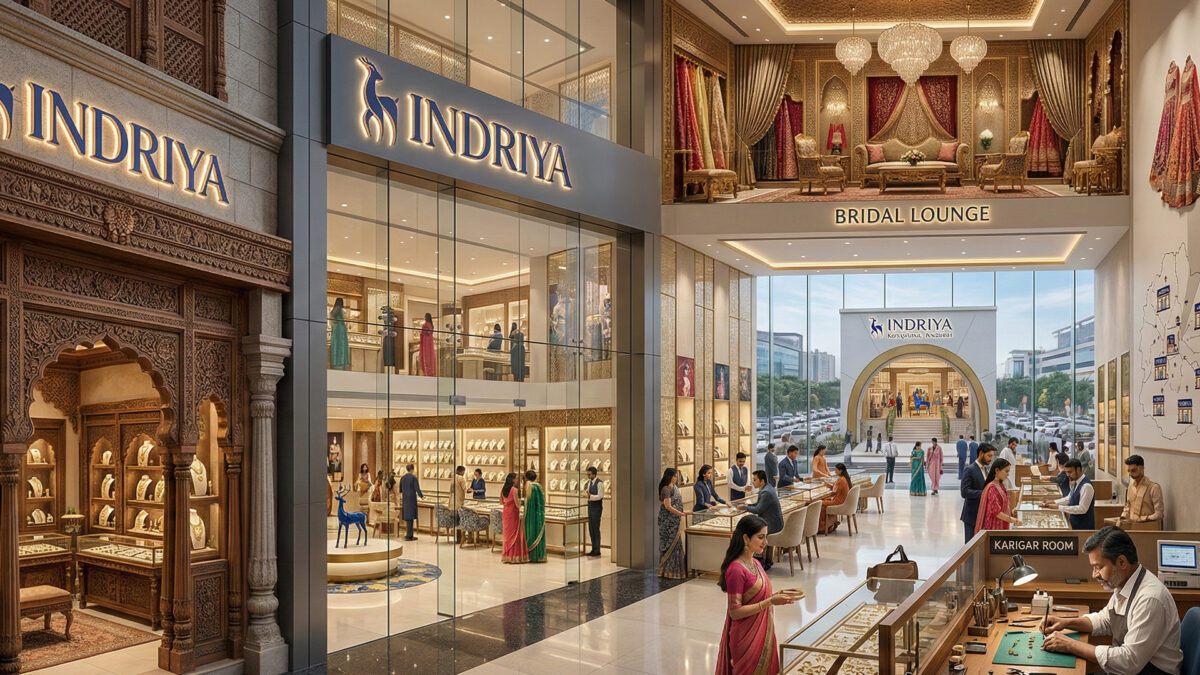
In less than two years since its launch, Indriya, the premium jewellery brand from the Aditya Birla Group, has reached a major milestone: 50 stores across India. From bustling metros to smaller towns, the brand is quickly becoming a household name in the jewellery market, combining traditional craftsmanship with contemporary design and shopping experiences.

Indriya’s growth is powered by a design-led, customer-first approach. Its in-house design team creates collections that reflect local tastes, making jewellery that resonates with the culture and lifestyle of each city. This strategy has struck a chord with modern Indian consumers, helping the brand carve out a niche in a market long dominated by legacy players like Tanishq.

The brand is now gearing up for an ambitious expansion, aiming to double its footprint to around 100 stores in the coming year. While metros remain a focus, Indriya is also bringing its curated collections to Tier-2 and Tier-3 cities. Markets such as Haldwani in Uttarakhand and Gaya in Bihar are now part of the brand’s growth story, showing that premium jewellery is no longer limited to big cities.

In Bengaluru, Indriya recently opened its third city store and plans to more than double its presence in the city by the end of the year. These stores are designed as immersive spaces where shoppers can explore jewellery collections, seek personalized advice, and experience the craftsmanship behind every piece.

The milestone of 50 stores represents the brand’s vision, execution, and the trust it has earned from customers. Leaders at Indriya say the rapid expansion is a testament to the growing appetite for organized, experience-driven jewellery retail in India.

For Indriya, the journey has just begun, and the next chapter promises more cities, more designs, and more customers discovering their perfect piece.

Also Read: Deepinder Goyal raises $54mn for brain‑monitoring wearable