Categories
Corporate

Dell cuts 11,000 jobs as workforce shrinks 10%

Dell Technologies has reduced its global workforce by around 11,000 employees in fiscal year 2026, shrinking its staff by nearly 10% as the company continues a strategy focused on cost control and organisational restructuring.

According to the company’s latest annual filing, Dell’s employee count dropped to about 97,000 as of January 31, 2026, compared with roughly 108,000 employees a year earlier. The reduction highlights the company’s continued efforts to streamline operations and manage expenses in a challenging technology market.

Dell described the move as part of “disciplined cost management”, saying the company is restructuring teams and adjusting its workforce to align with evolving business priorities. The cuts include a mix of layoffs, hiring slowdowns and natural attrition rather than a single large round of job cuts.

The workforce reduction also reflects a broader shift within the technology industry, where companies are increasingly reorganising operations while investing heavily in emerging technologies such as artificial intelligence.

Dell spent about $569 million on severance payments during the fiscal year as part of the workforce reduction process. The figure is lower than the approximately $693 million the company spent on severance the previous year, indicating a gradual approach to trimming its workforce.

The company has been steadily reducing its employee numbers in recent years. Since early 2023, Dell’s total workforce has declined significantly as the firm adjusts to slower growth in parts of the personal computer market and reallocates resources toward new growth areas.

Despite the job cuts, Dell remains optimistic about opportunities in artificial intelligence infrastructure. The company has been expanding its portfolio of AI-focused servers and data centre technologies, which are seeing growing demand as businesses increase investment in AI capabilities.

Dell expects its AI-optimised server business to play a key role in future growth, with demand expected to rise as organisations scale up computing infrastructure needed for artificial intelligence workloads.

Also Read: Nithin Kamath questions banking app permissions

Categories
Corporate

Dell shares jump 17% on AI server growth forecast

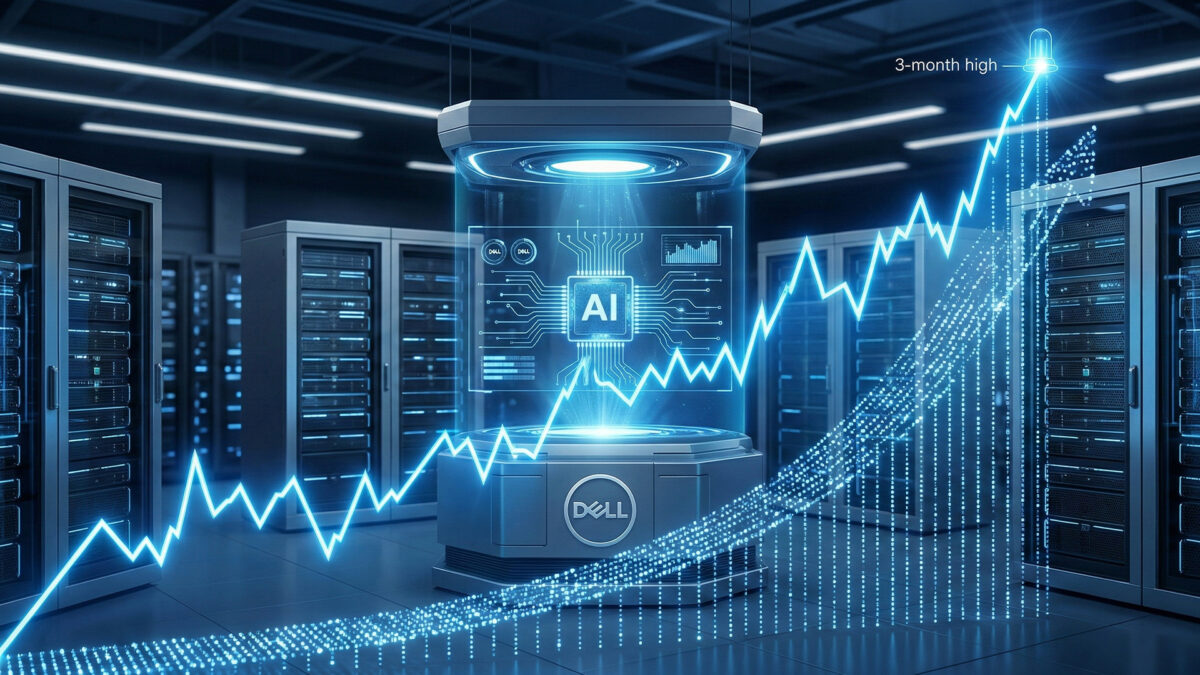
Shares of Dell Technologies climbed sharply in US markets this week as investors reacted to bullish forecasts tied to artificial intelligence demand and expanding data-centre business. The stock reached roughly a three-month high, with gains supported by optimism around AI-related server sales and improving enterprise spending trends.

Dell’s latest quarterly earnings underscored resilience in key segments of its business, particularly infrastructure solutions and data-centre products. While the personal computer market has remained subdued, the company’s pivot toward higher-margin enterprise hardware is gaining traction. Industry analysts pointed to the AI server market, where Dell competes to supply systems that power generative AI and large-scale machine-learning workloads, as a critical growth driver.

Management forecasts released in the earnings update suggested that AI server revenue could roughly double over the coming year, a projection that far outpaced earlier expectations. This outlook contrasts with broader tech hardware headwinds, including a global slowdown in memory chip availability that has weighed on some of Dell’s competitors. Despite that constraint, Dell’s diversified supply chain and longstanding enterprise relationships have helped it secure orders in what remains a competitive field.

Investor confidence was also buoyed by commentary from the company’s leadership, who highlighted improving demand from corporate customers looking to upgrade data-centre infrastructure to support new AI initiatives. The increasing importance of on-premise and hybrid cloud deployments has encouraged many large organisations to refresh legacy systems with more capable servers, a trend from which Dell appears to be benefiting.

 While some parts of the technology sector remain sensitive to macroeconomic uncertainty, companies with credible paths to capitalise on generative AI, particularly at the infrastructure layer, have drawn renewed investor interest.

Also Read: Gaudium IVF lists at 5% premium on IPO debut