Categories
Corporate

Sensex rallies 2,073 points, Nifty tops 25,700

Markets rallied sharply on Tuesday as optimism over the newly announced India-US trade deal lifted investor sentiment where the BSE Sensex jumped 2,073 points to close above 91,000, while the Nifty50 crossed 25,700.

The trade agreement, which eases tariffs and strengthens bilateral trade, spurred buying across key sectors, particularly banking, IT, and autos. Heavyweights like Reliance Industries, HDFC Bank, and Infosys led the gains, while mid-cap and export-oriented stocks also saw strong momentum.

Welspun Living, LT Foods, Aarti Industries, Ather Energy, and Trident saw significant gains, along with IT and auto stocks such as Infosys, HCL Tech, and TCS.

Some counters lagged amid profit booking, including Aegis Vopak, PB Fintech, Global Health, NALCO, MRPL, and Campus. Heavyweights like ONGC and Coal India also closed lower despite the broader rally.

This surge reflects renewed investor confidence, fueled by expectations that the trade deal will boost exports and attract foreign investments.

Also Read: India eyes higher 49% FDI in public banks

Categories
1 Minute-Read

India eyes higher 49% FDI in public banks

The Indian government is considering raising the foreign direct investment (FDI) limit in public sector banks (PSBs) from 20% to 49% to attract capital and strengthen state-owned banks.

Officials say the proposal is under discussion, and the government would still retain majority control. Currently, private banks allow up to 74% foreign ownership.

Raising the limit for PSBs is part of efforts to boost capital, support growth, and make public banks more competitive, while keeping government oversight intact.

Categories
Beyond

Oil slides as US-Iran talks ease supply fears

Global oil prices declined sharply after fresh signals suggested a possible easing of tensions between the United States and Iran, calming fears of supply disruptions that had driven prices higher in recent weeks.

Brent crude futures slipped by nearly 5%, falling back to around $66 a barrel, while US West Texas Intermediate (WTI) crude also dropped by a similar margin. The decline marked one of the steepest daily falls this year, as traders rushed to lock in profits after a strong rally in January.

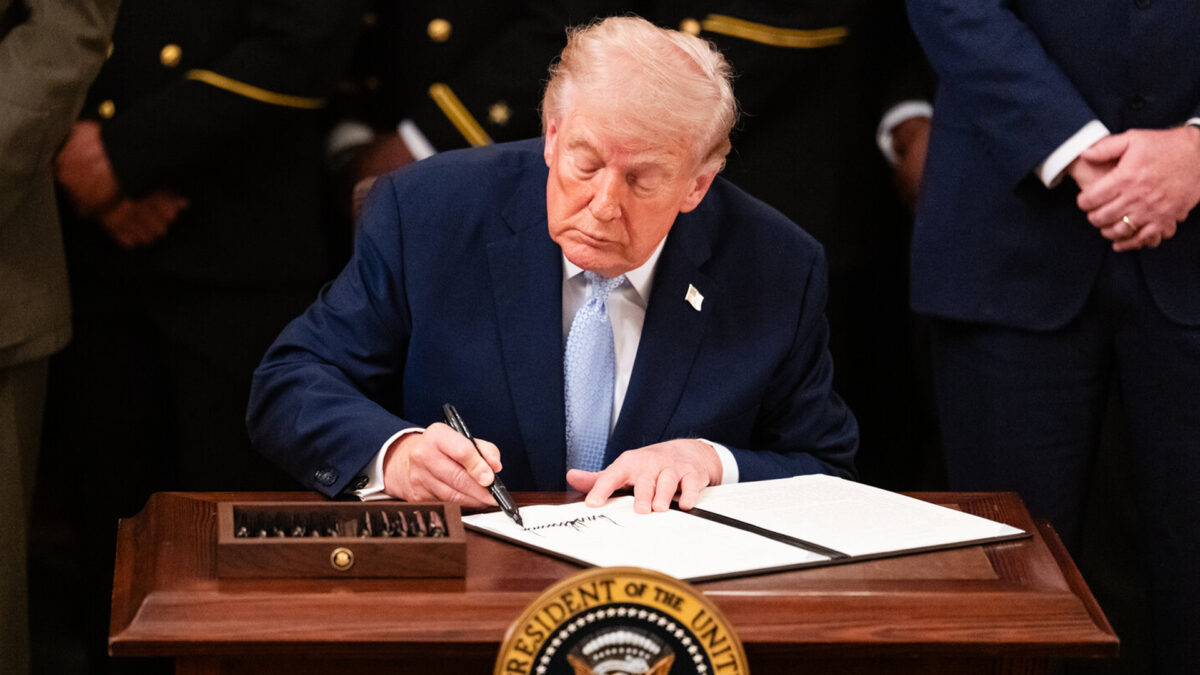
The sell-off followed comments from US President Donald Trump indicating that Washington and Tehran were “seriously negotiating” over Iran’s nuclear programme. These remarks raised hopes that diplomatic engagement could replace confrontation, lowering the risk of conflict in the Middle East, a region critical to global oil supplies.

Until now, oil prices had been supported by fears that escalating tensions could disrupt shipments through key routes such as the Strait of Hormuz. Those concerns eased after there were no new military developments over the weekend and no signs of immediate escalation from either side.

Market analysts said the fall was driven by a sharp unwinding of the geopolitical risk premium that had been built into crude prices. Brent and WTI had climbed more than 10% last month amid worries over potential supply shocks.

A stronger US dollar also weighed on oil prices, making commodities more expensive for buyers using other currencies. In addition, broader commodity markets softened, with gold and silver giving up recent gains as investors moved away from safe-haven assets.

Supply-side factors added to the pressure. OPEC and its allies, including Russia, have signalled no immediate change to production plans, reducing concerns about tighter supply in the near term. Meanwhile, expectations of steady global demand growth have kept traders cautious about pushing prices higher.

Despite the decline, analysts warned that oil markets remain highly sensitive to geopolitical headlines. Any setback in talks or renewed tensions could quickly reverse the current trend.

Also Read: Capgemini to exit US unit linked to migrant tracking

Categories
Technology

Snowflake, OpenAI seal $200 million AI deal

Snowflake has entered into a $200 million multi-year partnership with OpenAI to bring advanced generative AI capabilities directly to its enterprise data platform, marking a major push to capture the fast-growing corporate data intelligence market.

Under the agreement, OpenAI’s latest models, including GPT-5.2, will be embedded into Snowflake’s AI Data Cloud. This will allow businesses to analyse, query and act on their own data using natural language, without moving sensitive information outside Snowflake’s secure environment.

The integration will enable companies to build AI-powered applications and automated “AI agents” that can reason over enterprise data, generate insights, and support tasks such as reporting, forecasting and operational decision-making. Snowflake says the move is aimed at making advanced AI accessible to business users, not just data scientists.

A key aspect of the partnership is that OpenAI models will be available natively within Snowflake’s ecosystem, including its Cortex AI and Snowflake Intelligence products. This reduces reliance on third-party platforms and allows customers to deploy AI tools across major cloud providers such as Amazon Web Services, Microsoft Azure and Google Cloud.

Executives from both companies stressed that data security, governance and compliance remain central to the offering. Enterprise data will stay within Snowflake’s controlled environment, addressing concerns around privacy and regulatory requirements as companies scale AI adoption.

Several early users, including design platform Canva and fitness technology company WHOOP, have already begun using the integrated tools to speed up data analysis and automate internal workflows.

The announcement was welcomed by investors, with Snowflake shares rising after the deal was made public. Analysts view the partnership as a strategic move that strengthens Snowflake’s position against rivals in the enterprise data and AI space, as companies increasingly seek ways to combine trusted data platforms with powerful generative AI.

Also Read: SC tells WhatsApp to follow law or exit India

Categories
Technology

SC tells WhatsApp to follow law or exit India

The Supreme Court has sharply criticized WhatsApp and Meta over their privacy policies, warning that foreign tech firms must follow Indian laws or exit the country. Chief Justice Surya Kant said: “If you can’t follow our Constitution, then leave India.”

The case relates to WhatsApp’s 2021 privacy update, which required users to share data with Meta. The Competition Commission of India (CCI) fined WhatsApp ₹213 crore for abusing its market dominance, and this decision was partially upheld by the NCLAT. Meta has challenged the penalty in the Supreme Court.

The court raised concerns about informed consent, noting that millions of users may not fully understand complex privacy terms. It stressed that private user data cannot be exploited commercially for targeted ads.

As an interim measure, WhatsApp has been ordered not to share user information with Meta until the case is resolved. The government, through the Ministry of Electronics and IT, has been made a party to the case to ensure compliance with India’s Digital Personal Data Protection Act.

The bench emphasised that fundamental privacy rights cannot be compromised for business gains, and the matter will be heard further in the coming weeks.

Also Read: Palantir Q4 revenue $1.41bn, stock jumps 8%

Categories
Corporate

Palantir Q4 revenue $1.41bn, stock jumps 8%

Palantir Technologies Inc. reported a strong fourth-quarter performance, beating Wall Street expectations and pushing its shares higher in after-hours trading. The company posted Q4 revenue of $1.41 billion, up 70% year-on-year, with adjusted earnings per share of $0.25, above analyst estimates of $0.23.

CEO Alex Karp called the results exceptional, highlighting Palantir’s focus on scaling AI-driven operations to meet growing demand.

Following the earnings release, shares rose 8% in after-hours trading, reflecting investor confidence in Palantir’s growth trajectory. The US market was a key driver, with total revenue up 93% year-on-year to roughly $1.08 billion. US commercial sales climbed 137% to $507 million, while US government revenue increased 66% to $570 million.

The company closed 180 deals worth $1 million or more in the quarter, bringing total contract value to $4.26 billion, up 138% year-on-year. These figures highlight Palantir’s expanding presence across enterprise and government sectors.

Looking ahead, Palantir expects full-year 2026 revenue of $7.18–$7.20 billion, a 61% increase from 2025, surpassing analyst projections. For Q1 2026, revenue is projected at $1.53–$1.54 billion, also above expectations.

Also Read: Bitcoin faces sharp fall during market chaos

Categories
Beyond

Bitcoin faces sharp fall during market chaos

Bitcoin has fallen to its lowest level since the 2025 tariff shock, dropping roughly 7% to $76,500 before slightly recovering to $78,000, about 11% below early-year levels.

The decline highlights growing caution among investors as geopolitical tensions and expectations of tighter monetary policy weigh on markets.

Long seen as “digital gold,” Bitcoin is increasingly behaving like a risk-sensitive asset. The downturn has also affected major altcoins, prompting corporate and institutional investors to carefully reassess exposure and balance potential opportunities against market volatility.

Categories
Beyond

Viksit Bharat banking panel proposed in Union Budget

In her Union Budget 2026–27 speech, Finance Minister Nirmala Sitharaman announced the formation of a High-Level Committee on Banking for Viksit Bharat. The panel will conduct a comprehensive review of India’s banking sector and align it with the country’s long-term economic vision, especially towards 2047, the centenary of independence.

Sitharaman highlighted that India’s banks have made significant progress, demonstrating strong balance sheets, record profitability, better asset quality, and extensive financial coverage across the population. These achievements provide a solid foundation for further reforms.

The committee will focus on the banking sector’s structure, governance framework, credit delivery, technological adoption, risk management, and financial inclusion. Ensuring consumer protection while maintaining stability is also a priority.

The minister stressed that the panel’s recommendations will help design a reform roadmap for banks capable of supporting a larger, technology-driven economy, guiding future policy and regulatory decisions.

The budget also includes measures for non-banking financial companies (NBFCs), which are crucial in providing credit to underserved segments. It proposes restructuring major public sector NBFCs, including the Power Finance Corporation and Rural Electrification Corporation, to boost efficiency and scale.

Also Read: India extends GIFT City tax holiday to 20 years

Categories
Corporate

India extends GIFT City tax holiday to 20 years

In the Union Budget 2026‑27, the Indian government announced a major extension of tax benefits for businesses operating in the Gujarat International Finance Tec‑City (GIFT City) International Financial Services Centre (IFSC). The tax holiday, which previously lasted 10 years, will now be extended to 20 years to make the financial hub more appealing to both domestic and international firms.

Under this new rule, new companies in the GIFT City IFSC will get a 100% tax exemption on their income for 20 years out of a 25-year period. After this period, these companies will pay a reduced tax rate of 15%, which is much lower than the normal corporate tax rates in India, which range from 25% to 38%.

This change is especially important for banks and financial firms whose initial 10-year tax breaks were about to end. Big banks, including the State Bank of India and Bank of Baroda, had asked for clarity on future tax rules. Extending the tax holiday gives companies long-term certainty, encouraging them to continue and expand operations in GIFT City.

Industry leaders welcomed the move, saying it will strengthen India’s position as a global financial hub. The extended tax break is expected to attract more banks, asset managers, reinsurers, and investment firms to set up offices or grow their business in the IFSC. GIFT City has already been growing steadily, with more companies registering in banking, investment, and fund management sectors.

The new tax incentives will apply starting April 1, 2026, covering the 2026‑27 financial year and beyond. This step is part of a wider effort in the budget to boost India’s financial markets, attract international investment, and make the country more competitive globally.

Also Read: Seven new high‑speed rails announced in budget

Categories
Beyond

Seven new high‑speed rails announced in budget

The Union Budget 2026–27 unveiled an ambitious plan to build seven new high‑speed rail corridors, marking one of the largest infrastructure initiatives in recent years. Finance Minister Nirmala Sitharaman highlighted the corridors as a step toward faster, safer, and environmentally sustainable travel between India’s major cities.

The proposed routes include Mumbai–Pune, Pune–Hyderabad, Hyderabad–Bengaluru, Hyderabad–Chennai, Chennai–Bengaluru, Delhi–Varanasi, and Varanasi–Siliguri, covering nearly 4,000 kilometres in total. Officials describe these lines as “growth connectors,” expected to boost regional economic activity while reducing congestion on highways and flights.

The total estimated cost for these projects is ₹16 lakh crore, demonstrating the government’s focus on modernizing inter‑city transport. The corridors will slash travel times significantly; for example, Chennai to Bengaluru could take about 1 hour 15 minutes, while Bengaluru to Hyderabad may take around 2 hours.

The Budget allocates ₹2.93 lakh crore to Indian Railways, with ₹1.20 lakh crore earmarked for safety improvements, including advanced signalling systems, electrification, and automatic train protection technologies.

Alongside passenger corridors, the government announced a 2,052-km East–West Dedicated Freight Corridor connecting Dankuni in West Bengal with Surat in Gujarat, aimed at enhancing cargo efficiency and reducing congestion on passenger lines.

Also Read: Defence budget nears 2% of GDP, gets ₹7.85 lakh cr