Categories
Leaders

Elon Musk becomes first person worth $600 billion

Elon Musk has become the first person in history to reach a net worth of $600 billion, according to Forbes. The sharp rise in his wealth is mainly due to growing expectations that SpaceX, his private space company, is preparing for an initial public offering (IPO) in the coming years.

SpaceX’s valuation has surged sharply as investor interest in the space industry grows. Reports suggest the company could be valued at around $800 billion when it goes public, possibly by 2026. Musk owns about 42 percent of SpaceX, making it the single largest contributor to his personal wealth. If the IPO goes ahead at the expected valuation, his net worth could rise even further.

Apart from SpaceX, Musk’s fortune is also supported by his stake in Tesla, the electric vehicle maker. He owns roughly 12 percent of Tesla, whose shares have performed strongly in recent months. Tesla remains one of the most valuable carmakers in the world and continues to play a key role in Musk’s financial standing.

Musk’s other ventures also add to his growing wealth. These include his artificial intelligence company xAI and his social media platform X. While these businesses are still evolving, investors see long-term value in Musk’s technology-driven approach and ambitious projects.

Earlier this year, Musk had already crossed the $500 billion mark, another first for any individual. The latest milestone places him far ahead of other global billionaires and sets a new benchmark for personal wealth. Market watchers say no individual in modern history has accumulated wealth at this scale.

Experts note that Musk’s fortune is closely tied to market valuations rather than cash holdings. Most of his wealth is invested in company shares, which can rise or fall with market conditions. Still, with SpaceX’s IPO on the horizon and strong investor interest in his companies, Musk’s financial influence continues to grow.

While Musk has not officially commented on the Forbes estimates or IPO plans, the numbers highlight the massive global impact of his businesses.

Also Read: SEBI starts ₹18 cr recovery against finfluencer ‘Baap of Charts’

Categories
1 Minute-Read

SEBI gives a go-ahead to 7 companies for IPO Launch

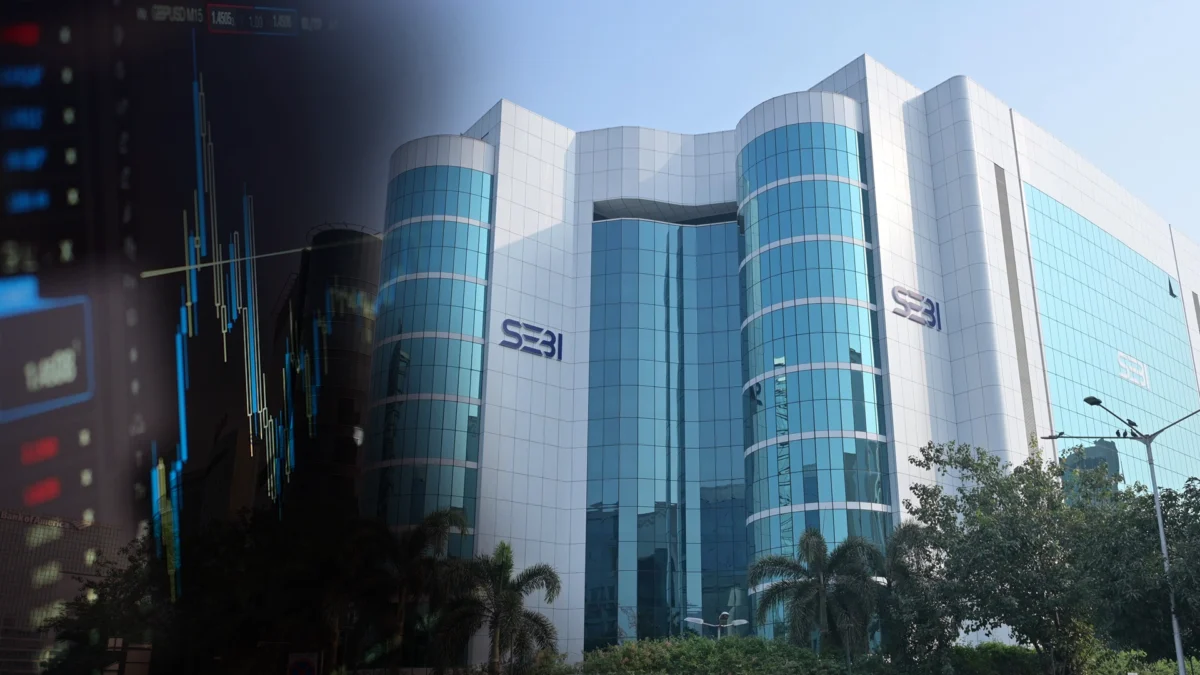
Capital markets regulator SEBI has cleared the draft IPO papers of seven companies, moving them closer to listing on the stock exchanges.

The firms include Turtlemint Fintech Solutions, Yashoda Healthcare Services, Fusion CX, SFC Environmental Technologies, RSB Retail India, Orient Cables India and Lohia Corp. SEBI issued its observations on their draft prospectuses between December 8 and 12.

Receipt of these observations allows companies to file final offer documents and launch their public issues within the prescribed timeline. Details such as issue size, pricing and exact IPO launch dates will be announced separately by the companies.

Categories
Corporate

Meesho shares soar 13%, market cap crosses ₹85,000 cr

Shares of Meesho Ltd soared 13.3 percent to ₹193.50 on Tuesday, taking the company’s market capitalization past ₹85,000 crore. The sharp rise comes just weeks after its IPO, where shares had opened 46 percent above the issue price of ₹111.

Since listing, Meesho has delivered around 74 percent gains to early investors, reflecting strong confidence in its growth story. The platform, which connects small entrepreneurs and resellers with customers through social channels, has rapidly expanded in tier‑2 and tier‑3 cities, standing out in India’s competitive e-commerce sector.

The rally has also made co-founder and CEO Vidit Aatrey a billionaire, based on the paper value of his stake in the company. This milestone highlights the enormous wealth-creation potential of India’s tech start-ups and the financial rewards for visionary founders.

Trading in Meesho shares has remained robust, supported by both retail and institutional investors. Analysts say the strong post-IPO momentum underlines optimism about the company’s long-term prospects.

With its growing user base, unique business model, and expansion plans, Meesho is expected to remain a closely watched stock, symbolizing India’s booming digital commerce and entrepreneurial spirit.

Also Read: Meesho founder Vidit Aatrey joins the billionaire club

Categories
Beyond

SEBI to review key mutual fund, broker and IPO rules

The Securities and Exchange Board of India (SEBI) is set to take up a wide range of regulatory proposals at its upcoming board meeting, with a focus on mutual funds, stock brokers, IPO regulations and credit rating agencies. The discussions are expected to influence how key segments of India’s capital markets operate in the coming months.

One of the major areas under review is the mutual fund industry. SEBI is examining changes to existing norms to improve transparency in costs charged to investors. This includes a closer look at commissions and brokerage fees paid by mutual fund houses to distributors, as well as possible refinements to the total expense ratio framework. The regulator’s aim is to ensure that investors have a clearer understanding of charges and that costs remain reasonable across schemes.

The board will also deliberate on proposals related to stock brokers. These are expected to focus on rationalising compliance requirements and reducing regulatory burden, particularly for smaller intermediaries, while maintaining adequate safeguards for investors. Simplified norms could help improve operational efficiency without diluting market integrity.

Another key item on the agenda is a review of IPO lock-in rules. SEBI may consider the use of technology to streamline lock-in monitoring, especially in cases where shares are pledged. Any changes in this area could make the public issue process smoother for companies while ensuring that lock-in conditions are enforced more efficiently.

The role and mandate of credit rating agencies (CRAs) will also come under discussion. SEBI is looking at ways to strengthen the credit rating ecosystem by clarifying responsibilities and improving oversight, with the objective of enhancing the quality and reliability of ratings in the debt market.

In addition, the board may review measures related to dematerialisation of older share certificates, updates to conflict-of-interest norms for SEBI officials, and possible incentives for public debt issuances. Collectively, these proposals reflect SEBI’s ongoing effort to balance ease of doing business with robust investor protection and market transparency.

Also Read: SBI bets big on new YONO app

Categories
1 Minute-Read

Flipkart gets approval to shift base back to India

Flipkart has received approval from the National Company Law Tribunal (NCLT) to move its legal domicile from Singapore back to India, clearing an important hurdle ahead of its initial public offering (IPO).

The Walmart-owned e-commerce company had shifted its headquarters to Singapore in 2011 to attract global investors. With India’s capital markets deepening, Flipkart is now restructuring its corporate setup to enable a domestic listing.

The approval allows the company to begin the process of consolidating its overseas entities under an Indian holding company. While Flipkart has not announced an IPO timeline, the move signals strong intent to list in India.

Categories
Corporate

SBI bets big on new YONO app

State Bank of India (SBI) is stepping up its digital push with a clear goal: to double the number of users on its YONO platform after rolling out a new and improved version of the app. From the current base of around 9.6 crore users, the country’s largest bank wants YONO to reach 20 crore customers in the coming years.

The new version of YONO has been designed to make everyday banking simpler and more intuitive. According to SBI Chairman C.S. Setty, the upgraded app brings together services across mobile phones, the web, and physical branches, offering customers a more seamless and consistent experience. Whether it is checking balances, applying for loans, or making payments, the bank wants customers to feel that digital banking is easy, reliable, and time-saving.

To ensure that customers are comfortable with the transition, SBI is not relying on technology alone. The bank plans to deploy nearly 10,000 staff members across its branches to help customers download the app, register, and learn how to use its features. This hands-on support is especially aimed at first-time digital users and customers who may be hesitant to move away from branch-based banking.

SBI believes that increasing digital transactions through YONO will also help reduce operating costs. Transactions carried out on mobile phones or online platforms are far cheaper than those handled at branches. By encouraging customers to shift routine activities online, the bank expects to improve efficiency while freeing up branch staff to focus on more complex customer needs.

The new YONO app also offers personalised insights, quicker approvals for loan limit enhancements, and the ability to handle a high volume of digital activity smoothly. These features are part of SBI’s broader strategy to strengthen its digital ecosystem and stay competitive in a fast-evolving banking landscape.

Also Read: Bond market ignores RBI rate cut, PSUs pause

Categories
1 Minute-Read

Bond market ignores RBI rate cut, PSUs pause

India’s bond market remained largely unresponsive to the Reserve Bank of India’s recent rate cut, keeping yields high and forcing public sector issuers to delay fundraisings.

Indian Railway Finance Corporation (IRFC) became the third PSU in a week to withdraw a bond issue due to weak investor appetite at expected pricing.

Earlier, Power Finance Corporation and SIDBI also shelved sales as bids came in higher than anticipated. Analysts say stress across the yield curve, global uncertainty, and subdued foreign inflows, rather than RBI easing, are driving the cautious market response.

Categories
Corporate

RBI clears HDFC Group to buy 9.5% in IndusInd

The Reserve Bank of India (RBI) has granted approval to HDFC Bank and its group companies to acquire a combined stake of up to 9.5 per cent in IndusInd Bank. This regulatory clearance, issued on December 15, 2025, is valid for one year, until December 14, 2026, and comes with specific conditions regarding investment limits and timing.

The approval allows HDFC group entities, including HDFC Mutual Fund, HDFC Life Insurance, and HDFC Pension Fund, to invest in IndusInd Bank shares. However, the RBI has mandated that the total holding at any point must not exceed 9.5 per cent of the bank’s paid-up capital or voting rights, ensuring a cap on control while allowing strategic investments.

HDFC Bank clarified that it does not plan to invest directly, but the combined investments by its affiliates required the regulatory nod. The acquisition must be completed within the one-year approval period, or the permission will lapse, emphasizing the RBI’s requirement for timely execution.

This move comes amid heightened investor focus on IndusInd Bank. The private sector lender has faced challenges in recent years, including governance issues and fluctuations in performance. With HDFC group companies increasing their shareholding, it signals a vote of confidence in IndusInd Bank’s prospects and governance structure.

Market analysts view the RBI’s clearance as a strategic step that allows HDFC group entities to deepen their presence in the private banking sector without breaching regulatory norms. The development is also expected to provide stability to IndusInd Bank’s shareholding pattern, which has been under scrutiny due to previous changes in large stakes held by institutional investors.

RBI approval strengthens HDFC Bank’s group investment strategy, giving its affiliated firms the flexibility to participate in IndusInd Bank’s growth while maintaining regulatory compliance. Investors and market observers will likely watch closely as the group executes its stake acquisition over the coming months.

Also Read: ICICI AMC IPO gets 1.5× subscription in 2 days

Categories
Beyond

Gold down ₹450, Silver slides ₹2,100

Gold and silver prices in India declined on Tuesday after reaching record highs in the previous session. The fall came as investors booked profits and stayed cautious ahead of important global economic updates.

On the Multi Commodity Exchange (MCX), gold futures fell by about ₹450 per 10 grams, easing from an all-time high hit a day earlier. Silver prices dropped more sharply, falling nearly ₹2,100 per kilogram, after briefly crossing the ₹2 lakh level. The decline marks a pause following a strong rally seen over recent weeks.

Market experts said such a correction was expected after the sharp rise in prices. Investors are now waiting for key economic data from the United States and policy decisions from major central banks, including the Bank of Japan. These developments are expected to influence interest rate expectations and currency movements, both of which impact gold and silver prices.

A slightly stronger US dollar and higher bond yields also put pressure on precious metals. When interest rates rise, gold and silver become less attractive compared to interest-bearing assets, leading to short-term selling.

Despite the dip, analysts believe the overall outlook for bullion remains supportive. Gold continues to attract buyers as a safe-haven asset during periods of global uncertainty. Silver, meanwhile, is benefiting from strong industrial demand and limited supply, which has helped it outperform gold in recent months.

In physical markets across Indian cities, gold and silver prices softened in line with futures markets, though buying interest remained mixed. Jewellers and retail buyers are closely tracking price movements, waiting for stable levels before making fresh purchases.

Also Read: Sensex slips over 350 pts at open, Nifty below 25,950

Categories
1 Minute-Read

MUFG nears $3.2 billion deal for 20% of Shriram Finance

Japanese banking powerhouse Mitsubishi UFJ Financial Group (MUFG) is reportedly close to securing a significant stake in Shriram Finance, one of India’s leading non‑bank financial companies.

The investment, estimated at over 500 billion yen ($3.2 billion), would give MUFG roughly 20% ownership, enhancing its foothold in India’s growing credit market.

Negotiations are advanced, though final terms are yet to be confirmed. Shriram Finance, known for loans to vehicles, small businesses, and consumers, saw a rise in its share prices on the news, reflecting investor optimism over the potential strategic partnership and capital inflow.