Categories
Beyond

Bitcoin slumps to $60,000 as crypto market shakes

Bitcoin plunged sharply this week, falling to around $60,000, marking its lowest level in over a year and highlighting one of the steepest declines in the cryptocurrency’s history. The world’s largest digital asset has now lost more than 50% of its value from its record high of approximately $126,000 in October 2025.

The sudden drop sent shockwaves through the broader crypto market, with Ethereum and other major tokens also seeing steep declines, collectively erasing trillions of dollars in market value since late 2025. The sell-off accelerated Thursday and Friday as Bitcoin broke through several key technical levels. It first slipped below $70,000, then fell under $65,000, and eventually traded around $60,000 before briefly rebounding.

The sudden movement reflects growing investor caution, as many have retreated from risky assets, including cryptocurrencies and technology stocks, amid mounting market volatility. Institutional withdrawals from Bitcoin exchange-traded funds and the forced liquidation of large long positions have further intensified the decline, contributing to a sense of panic among traders.

This downturn comes after months of strong gains, fueled in part by regulatory optimism and increased institutional interest. However, recent developments, including heightened market uncertainty and investor nervousness, have undermined that momentum. Analysts warn that this slump could signal the start of a prolonged bear market, though some note that extreme volatility is a hallmark of cryptocurrency trading, and temporary rebounds remain possible.

Also Read: AI tools set to transform software jobs
Categories
Corporate

Sensex ends 266 points lower, Nifty near 25,700

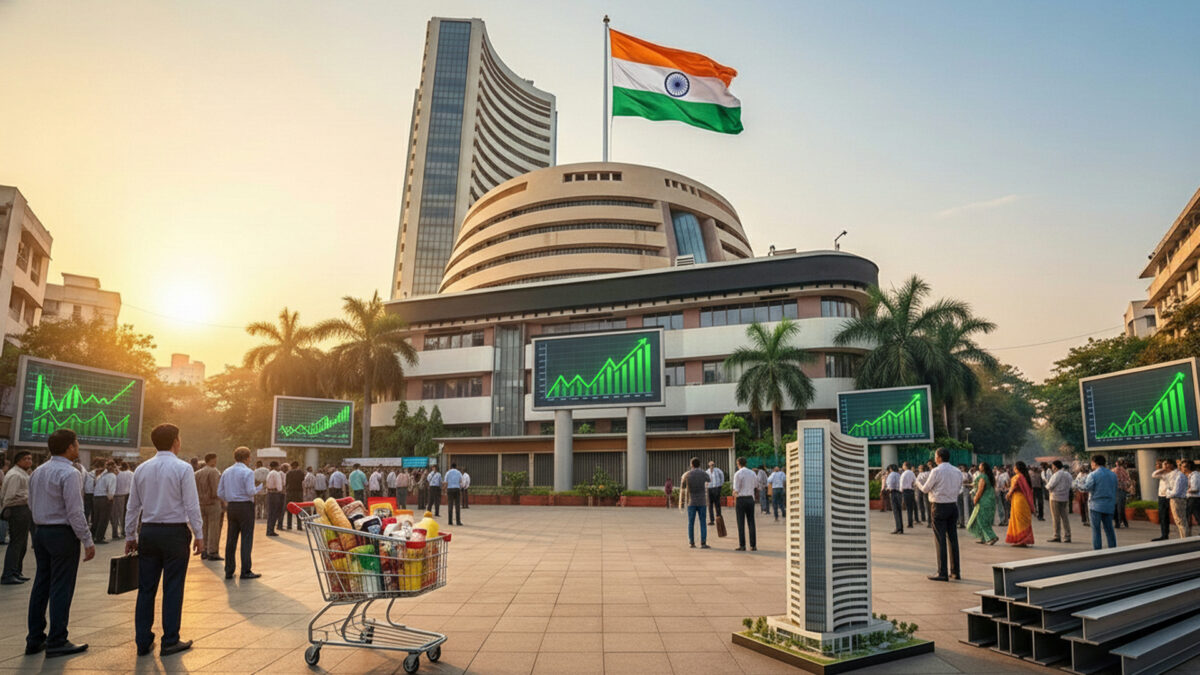
Markets ended the day on a weak note, with the Sensex falling 266 points to 86,120 and the Nifty 50 closing near 25,700. Investors remained cautious amid volatility in domestic indices and weak global cues from the US and Asian markets.

Among individual stocks, HDFC, Infosys, and Reliance Industries led the gainers, showing resilience despite broader market weakness. On the other hand, Tata Steel, Titan, and Bharti Airtel dragged the indices lower, reflecting selective profit-taking in cyclical and high-beta stocks. Sectoral indices mirrored this mixed trend, with IT and financials outperforming while metals and consumer durables lagged.

Foreign institutional investors (FIIs) continued as net sellers, while domestic institutional investors maintained selective buying, indicating cautious optimism in certain pockets of the market. Analysts noted that short-term volatility could persist as traders await clearer cues from domestic and global developments.

On the global front, markets in the US and Asia recorded sharp declines, particularly in technology and risk-sensitive sectors, which added pressure on Indian benchmarks. This comes as investors remain attentive to inflation trends, interest rate expectations, and geopolitical developments.

Corporate earnings updates also influenced sentiment. Nykaa reported a strong quarterly profit, while Bharti Airtel’s pre-exceptional profits rose, although net profits fell due to one-off expenses. Such results highlight selective sectoral strength even as the broader market remains under pressure.

With the Reserve Bank of India’s policy signals looming, market participants are advised to monitor key support and resistance levels before taking fresh positions.

Also Read: Tim Cook talks succession, denies retirement plans

Categories
1 Minute-Read

Adani Mangal Seva completes one year

The Adani family, including Jeet Adani and Diva Shah, marked the first anniversary of Adani Mangal Seva in Ahmedabad.

Launched before their wedding, the initiative provides 500 differently-abled brides annually with ₹10 lakh fixed deposits, ensuring financial stability and independence.

Run by the Adani Foundation in partnership with SBI, the programme will continue for at least five years, empowering women aged 25–40 with dignity and long-term support.

Categories
Leaders

Tim Cook talks succession, denies retirement plans

Apple CEO Tim Cook has addressed speculation about his retirement and the company’s leadership future at a rare all-hands meeting, reassuring staff that succession planning is ongoing but he is not stepping down anytime soon.

Cook, who turned 65 in 2025, noted that planning for future leadership is a key responsibility for any large organization. While thinking about who will lead Apple in the coming years is important, he emphasized that his focus remains on current operations.

The meeting also highlighted recent departures of senior executives, including Lisa Jackson, Jeff Williams, and Katherine Adams. Cook described these as planned transitions, stressing that Apple’s leadership bench remains strong and capable.

Industry observers point to John Ternus, senior VP of hardware engineering, as a likely future CEO, noting his increased responsibilities and visibility within the company.

Cook’s comments come amid tech industry speculation about a near-term retirement, but he reinforced that Apple is focused on long-term strategy and stability, not abrupt leadership changes. The all-hands also touched on Apple’s upcoming 50th anniversary, signaling reflection on the company’s legacy alongside succession planning.

Also Read: India plans $80 bn Boeing aircraft purchase

Categories
Beyond

India plans $80 bn Boeing aircraft purchase

India is preparing to place one of its largest-ever aircraft orders with US aerospace giant Boeing, following a major trade agreement between the two countries. Commerce and Industry Minister Piyush Goyal said India’s planned purchase could be worth $70–80 billion, potentially exceeding $100 billion when engines, spare parts, and long-term support contracts are included.

The proposed Boeing order is part of a broader push by India to expand imports of American goods across key sectors, including aviation, energy, and advanced technology. Officials have described the demand as “ready,” signaling that negotiations with Boeing could move quickly once the trade deal is formally signed.

The US–India trade agreement is expected to be finalized in March 2026, with a joint statement likely in the coming days. As part of the deal, the United States has agreed to reduce tariffs on Indian exports, which currently average around 50%, while India will commit to purchasing roughly $500 billion worth of US products over five years, including aircraft, engines, and other high-tech equipment.

Analysts say the Boeing order could have a significant impact on both countries’ economies. For the US., it would represent one of the largest single-country sales in Boeing’s history, providing a boost to manufacturing and the aerospace supply chain. For India, the aircraft purchases will support the growth of its civil aviation sector, expand fleet capacity for airlines, and strengthen economic ties with a key trade partner.

While the deal signals a major step in bilateral trade, final details on the number of planes, delivery schedules, and pricing are still being finalized. Officials say discussions with Boeing and US authorities are ongoing to ensure that both countries maximize the benefits of the agreement.

Also Read: RBI says most ₹2,000 notes returned, still legal tender


Categories
Corporate

Suzlon Energy Q3 revenue rises 42% to ₹4,228 cr

Suzlon Energy delivered a strong set of numbers in the third quarter of FY26, showing clear signs of operational recovery and balance-sheet strength. However, despite the improved performance, the market reaction remained subdued, with the company’s shares slipping after the results announcement.

For the quarter ended December 2025, Suzlon reported revenue of ₹4,228 crore, a sharp 42% increase year-on-year, supported by record wind turbine deliveries. The company executed 617 MW of projects during the quarter, its highest ever in a single quarter, compared to 447 MW in the same period last year. This reflects faster project execution and improved on-ground momentum.

Net profit for the quarter stood at ₹445 crore, marking a 15% rise from a year ago. Operating performance also improved, with EBITDA climbing to ₹739 crore, up nearly 48% year-on-year. Margins expanded to around 17.5%, indicating better cost efficiencies and operating leverage as volumes increased.

Suzlon’s order book remained healthy at 6.4 GW, even after large deliveries during the quarter. Of this, around 2.4 GW is under active execution, providing good revenue visibility for the coming quarters. The company also highlighted a strong project pipeline of over 25 GW, reflecting growing demand for wind energy amid India’s renewable push.

On the financial front, Suzlon ended the quarter with a net cash position of about ₹1,556 crore, underlining its improved balance sheet after years of stress. Management reiterated confidence in meeting its FY26 execution guidance, supported by stable demand and ongoing projects.

Despite these positives, Suzlon’s shares fell 4–5% on the day of the results. Analysts pointed out that investor sentiment was tempered due to a sequential dip in profit, as the previous quarter had benefited from a one-time tax gain. Some concerns also remain around project timelines, site readiness, and grid connectivity.

Also Read: RBI approves Blackstone’s 9.99% stake in Federal bank

Categories
1 Minute-Read

ElevenLabs raises $500 mn, valuation jumps to $11 bn

ElevenLabs, a fast-growing artificial intelligence startup focused on voice technology, has raised $500 million in fresh funding, pushing its valuation to $11 billion.

The Series D round was led by Sequoia Capital, with existing investors such as Andreessen Horowitz and ICONIQ also participating, along with new backers. The company is known for its advanced text-to-speech and voice cloning tools used in media, gaming, and enterprise applications.

ElevenLabs plans to use the funds to strengthen research, develop new AI products, and expand globally, reflecting growing demand for realistic and scalable voice AI solutions.

Categories
Beyond

Gold above ₹1.50 lakh, Silver dips to ₹2.35 lakh

Gold prices in India remained firm above ₹1.50 lakh per 10 grams on Friday despite early selling pressure triggered by weak global cues. On the Multi Commodity Exchange (MCX), gold futures slipped marginally but held key support levels, supported by steady domestic demand.

Silver prices, which fell sharply in early trade, rebounded to around ₹2.35 lakh per kilogram as investors stepped in to buy at lower levels following the initial slump caused by profit-booking.

City-wise prices reflected the overall firmness in bullion markets. 24-carat gold traded above ₹1.54 lakh per 10 grams in major cities such as Delhi, Mumbai, Bengaluru and Kolkata, while Chennai quoted slightly higher rates. 22-carat gold hovered between ₹1.41 lakh and ₹1.43 lakh per 10 grams across key urban centres. Silver prices were largely steady across metros, trading in the range of ₹2.46–2.47 lakh per kilogram in cities including Mumbai, Delhi, Chennai and Bengaluru.

Market sentiment remained cautious as traders tracked global economic indicators, particularly upcoming US jobs data and interest-rate cues, which could influence precious metal prices in the near term.

Also Read: Sensex slips 300+ points, Nifty dips below 25,550

Categories
1 Minute-Read

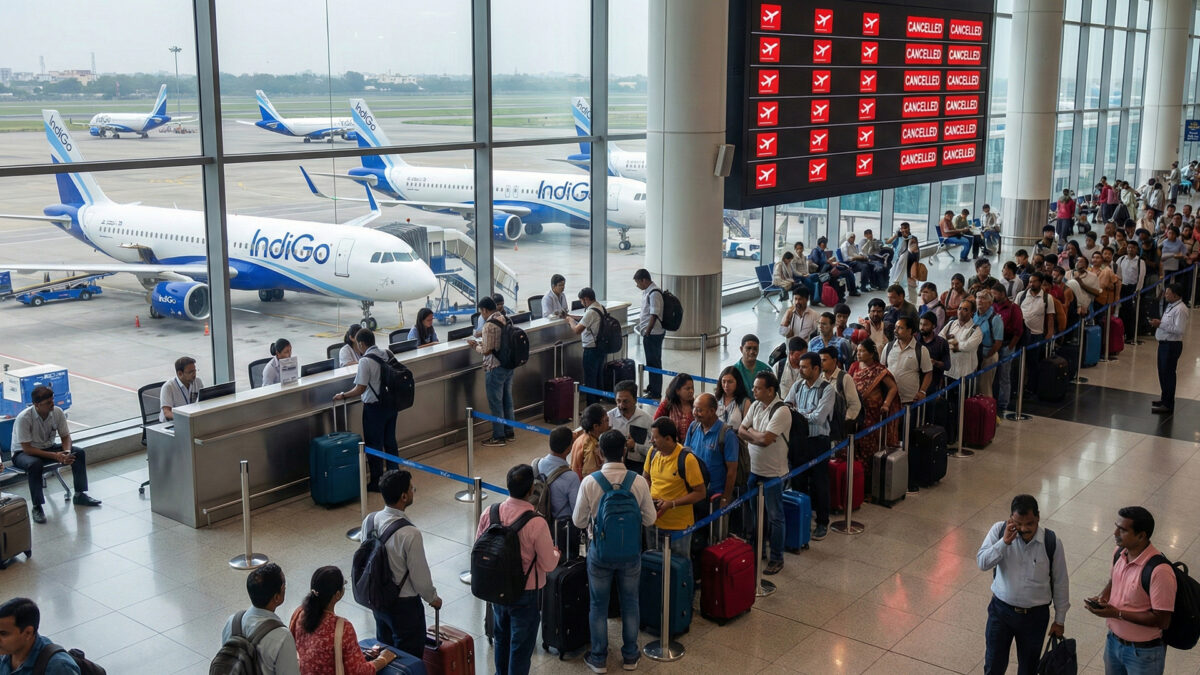
IndiGo faces CCI probe after ₹22 cr flight disruptions

India’s largest airline, IndiGo, is under a detailed CCI investigation following widespread December 2025 flight cancellations that affected 9.82 lakh passengers.

The airline reportedly spent ₹22 crore on refunds, rebookings, and passenger facilitation. The CCI is examining whether IndiGo abused its 65% domestic market dominance, restricting services and harming competition.

The probe comes alongside DGCA fines of ₹22.20 crore and directives for a ₹50-crore bank guarantee. Following the announcement, IndiGo shares fell nearly 4%, reflecting investor concern over regulatory and operational risks.

Categories
Corporate

Tata Motors PV Q3 loss ₹3,486 crore

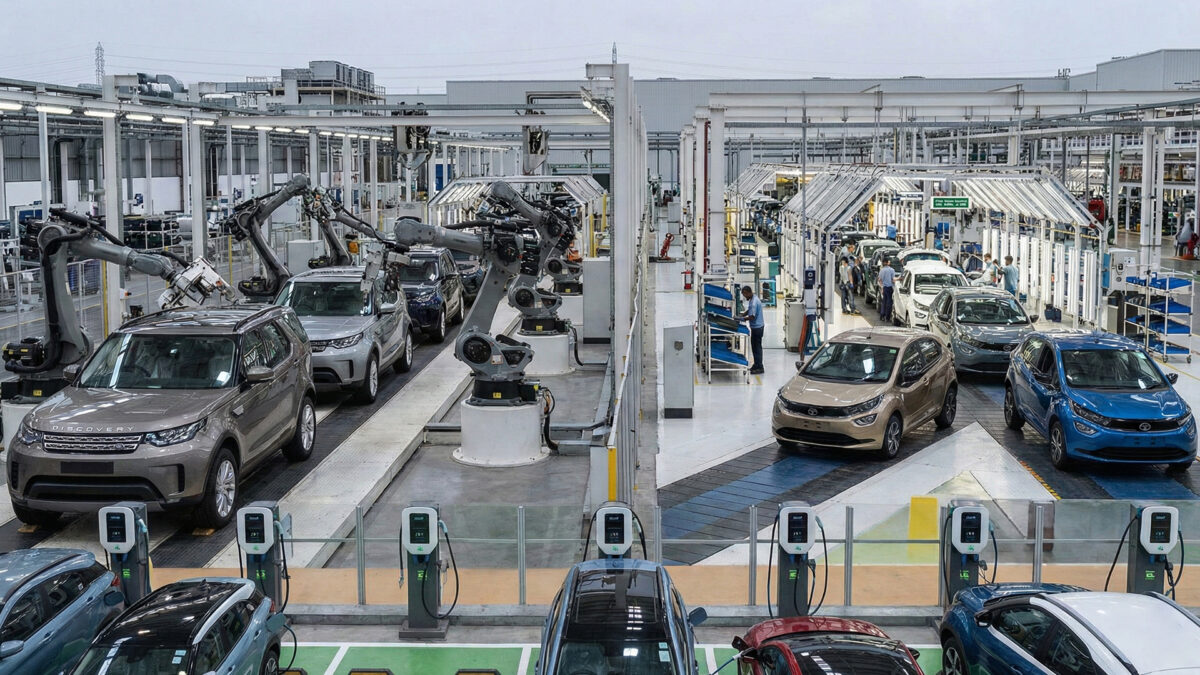
Tata Motors Passenger Vehicles Ltd (TMPVL) reported a consolidated loss of ₹3,486 crore for the third quarter of FY26, a sharp reversal from a profit of ₹5,406 crore in the same period last year. Revenue from operations fell 26% to ₹70,108 crore, reflecting pressure across its business segments.

The decline was mainly driven by Jaguar Land Rover (JLR), Tata Motors’ UK-based luxury car subsidiary. JLR faced a cybersecurity breach that disrupted production and distribution for several weeks, resulting in lost sales and a significant one-time charge. Weak global demand, higher US tariffs, and challenging conditions in China further impacted performance.

For JLR, revenue and profits tumbled, with its EBIT (earnings before interest and tax) turning negative, wiping out last year’s gains. Tata Motors expects JLR to recover gradually, but now anticipates a modest EBIT margin of 0–2% for the full year and continued free cash outflows. The British government has extended a £1.5 billion loan guarantee to support JLR’s operations and investment plans.

Despite international challenges, Tata Motors’ domestic passenger vehicle business performed well. Sales and exports in India rose 22% year-on-year, aided by lower GST rates, stronger market demand, and strategic incentives. This helped offset some losses from JLR and improved sequential performance quarter-on-quarter.

The company’s management said it expects production at JLR to normalise in the coming months, which should boost revenues and cash flows. Tata Motors is also focusing on new product launches, operational efficiency, and brand initiatives to strengthen both domestic and global segments.

Also Read: Anthropic’s AI Agents raise market concerns for Indian IT