Categories
1 Minute-Read

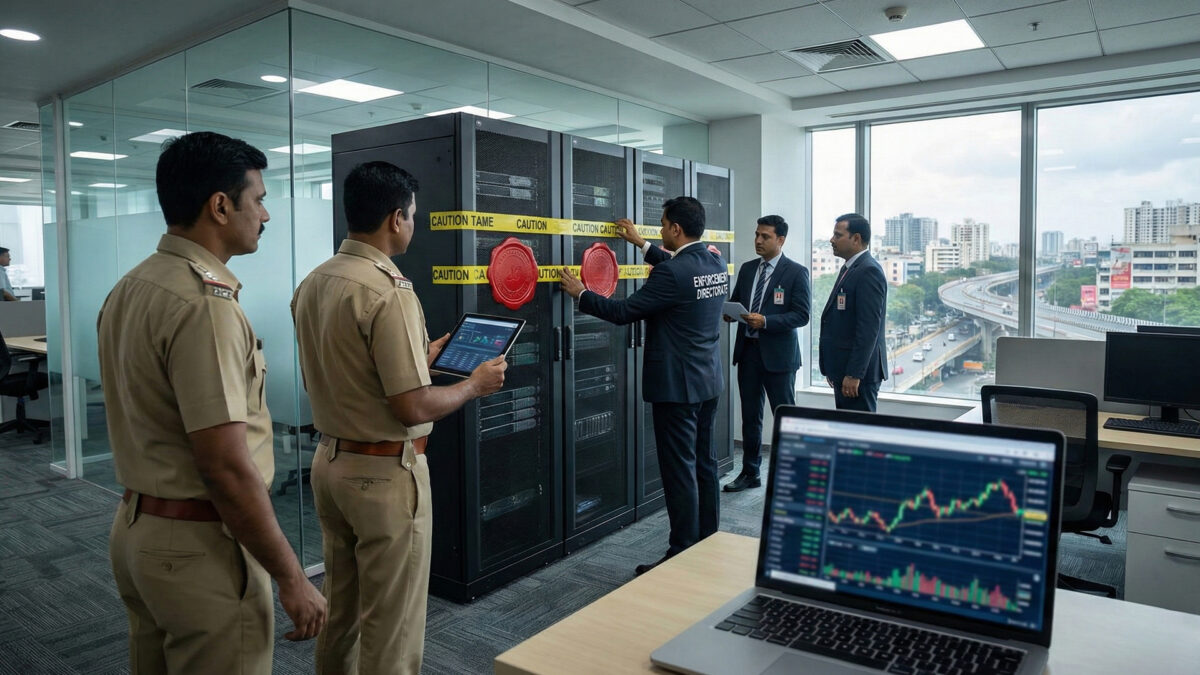
ED freezes ₹520 crore in WinZO, Gameskraft Assets

The Enforcement Directorate (ED) has frozen over ₹520 crore in assets linked to real-money gaming companies WinZO and Gameskraft.

The move comes after a week-long investigation under the Prevention of Money Laundering Act (PMLA). Around ₹505 crore of WinZO’s assets, including bank balances, fixed deposits, bonds, and mutual funds, have been frozen. Gameskraft and its Poker arm Pocket52 had about ₹18.75 crore in eight bank accounts, which are also attached.

The probe followed complaints about cheating, blocked accounts, misuse of PAN cards, and impersonation. The ED continues to investigate the firms’ financial dealings.

Categories
Technology

Google AI can solve math in your handwriting

Google AI is taking homework help to a whole new level. A tech enthusiast from Pune, Siddhant Choudhary, recently demonstrated how Google’s Nano Banana Pro can solve a handwritten math problem  and reproduce the answer in his exact handwriting.

Choudhary snapped a photo of a math question from his notebook, fed it into the AI, and watched in amazement as the solution appeared, perfectly mimicking his penmanship. “By far the best AI I’ve tried,” he said, joking that “students are going to love this.”

The demo, however, has sparked a debate online. While many are excited about the AI’s capability, others worry about its implications for students. Could this make homework or exam cheating easier? With answers that look perfectly handwritten, teachers may struggle to tell human work from AI-generated work.

Nano Banana Pro is part of Google’s Gemini 3 AI family and uses advanced tools to read sketches, notes, or rough handwriting, and then convert them into polished visuals, or, in this case, neatly written answers. The feature demonstrated by Choudhary uses a Flow tool from Google’s Gemini Ultra plan.

Also Read: India’s GDP to grow 6.5% in FY26

Categories
1 Minute-Read

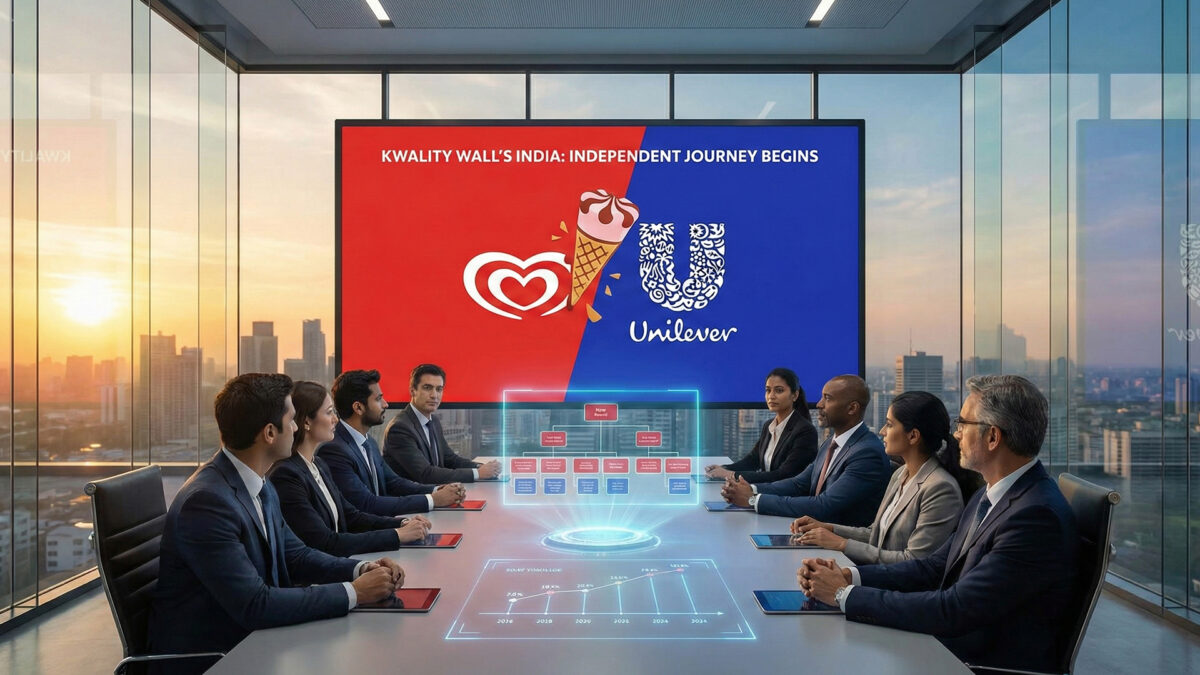
Kwality Wall’s India appoints new board ahead of HUL split

Kwality Wall’s India has announced a new board as it prepares to separate from Hindustan Unilever (HUL) on December 1.

The board includes Chitrank Goel as Deputy Managing Director and Executive Director, and Prashant Premrajka as Chief Financial Officer. Four independent directors, Ravi Pisharody, Madhavan Hariharan, J.V. Raman, and Shukla Wassan, along with non-executive director Ritesh Tiwari, will provide oversight.

Hindustan Unilever says the new team, with experience in consumer goods, finance, and corporate strategy, will lead Kwality Wall’s India through its transition into a standalone, publicly listed company.

Categories
Corporate

Indian Navy commissions INS Mahe

The Indian Navy has officially commissioned INS Mahe, a new anti-submarine warfare ship, at a ceremony in Mumbai. The event was attended by Chief of Army Staff General Upendra Dwivedi, highlighting cooperation between India’s armed forces.

INS Mahe is the first ship of the Mahe-class shallow water vessels, designed and built in India at Cochin Shipyard Limited. Around 80% of its parts are indigenous, reflecting India’s push for self-reliance in defense manufacturing. The ship is 78 metres long, weighs about 1,100 tonnes, and is built for coastal and shallow water operations, where larger ships cannot operate effectively.

The ship’s name, Mahe, comes from a coastal town in Kerala, connecting it to India’s maritime heritage. Its crest shows an “Urumi”, a flexible sword from the Kalarippayattu martial art, symbolizing agility and precision. The ship’s mascot is a cheetah, representing speed, and its motto is “Silent Hunters”, reflecting its quiet operations under the sea.

The ship uses a diesel-engine water-jet propulsion system, giving it speed, agility, and stealth. Its main mission is anti-submarine warfare, but it can also carry out underwater surveillance, mine-laying, coastal patrols, and low-intensity operations. INS Mahe is equipped with lightweight torpedoes and anti-submarine rockets to engage enemy submarines. It also has modern sonar and radar systems, along with noise-reducing technology for stealthy operations.

Naval officials said the commissioning of INS Mahe strengthens India’s coastal defense and demonstrates the country’s ability to build modern warships locally. INS Mahe is the first of eight Mahe-class ships planned by Cochin Shipyard, which will gradually replace older vessels in the Navy’s shallow-water anti-submarine fleet.

Also Read: Adani’s H1 FY26 EBITDA hits ₹47,375 cr, capex surges

Categories
Corporate

AdaniConneX buys Trade Castle Tech Park for ₹231 crore

AdaniConneX, a joint venture between Adani Enterprises and global data-centre operator EdgeConneX, has acquired Trade Castle Tech Park Pvt Ltd for ₹231.34 crore, marking a significant step in its plan to expand India’s digital infrastructure. The deal was formalised through a Share Purchase Agreement on 21 November 2025, and the transaction is expected to be completed by 25 November 2025.

Although Trade Castle Tech Park has not yet generated commercial revenue, it comes with a substantial landholding and all the necessary regulatory approvals to kick-start infrastructure development. This makes it an ideal platform for AdaniConneX to set up new technology facilities or data centres without delays from regulatory hurdles.

The acquisition aligns with AdaniConneX’s broader ambition to develop a 1 GW national data-centre platform over the next decade. The company already operates in key Indian cities including Chennai, Navi Mumbai, Noida, Pune, and Hyderabad. By adding Trade Castle Tech Park to its portfolio, AdaniConneX aims to meet growing demand for high-performance computing, cloud services, and AI-driven applications.

In a statement, Adani Enterprises highlighted that the objective behind the acquisition is “to set up infrastructure facilities,” underlining the company’s focus on building modern, scalable tech infrastructure. Partnering with EdgeConneX, AdaniConneX can leverage global expertise to accelerate construction and bring world-class facilities to the country.

The deal also reflects the rising importance of digital infrastructure in India, where demand for data centres and technology parks is growing rapidly as businesses increasingly rely on cloud computing, AI, and advanced digital solutions. For AdaniConneX, Trade Castle Tech Park is more than just a property purchase as it represents a strategic move to strengthen its foundation for future growth in India’s tech ecosystem.

With this acquisition, AdaniConneX is well-positioned to expand its presence and contribute to India’s push toward a more connected and technologically advanced future. The addition of Trade Castle Tech Park is expected to fast-track the company’s plans and support its long-term vision of becoming a leading provider of digital infrastructure solutions in the country.

Also Read: TotalEnergies eyes ₹10,200 crore stake sale in Adani Green

Categories
Corporate

TCS faces $194 million penalty in US trade-secrets case

Tata Consultancy Services (TCS) has run into a major legal challenge in the United States. A federal appeals court has upheld a $194.2 million penalty in a trade-secrets dispute with Computer Sciences Corporation (CSC), which is now part of DXC Technology.

The court confirmed the damages awarded by a lower court in Dallas, including $56 million in direct compensation, $112 million in punitive damages, and $25.8 million in pre-judgment interest. On the brighter side for TCS, the appeals court overturned a ban on using certain CSC-owned software and sent that part of the case back to the lower court for review.

The dispute dates back to 2019, when CSC alleged that TCS misused confidential software while onboarding employees from Transamerica, who had previously worked on CSC systems. According to CSC, TCS used this insider knowledge to develop a competing insurance software platform.

TCS has expressed disagreement with the ruling and is considering its next legal moves, including possible further appeals. The company also said it will reflect the financial impact of the judgment in its accounts.

While the $194 million penalty still stands, the temporary lifting of the software-use ban gives TCS some breathing room as the lower court re-examines the injunction.

This case brings to light, the growing scrutiny faced by global IT firms handling sensitive client information and highlights the high stakes of intellectual property disputes in the technology sector.

Also Read: Excelsoft IPO sees massive demand, subscribed 43×

Categories
Beyond

Gold dips to ₹1.23 lakh, Silver falls to ₹1.51 lakh

Gold and silver prices in India softened at the start of the week, reflecting a shift in market sentiment as investors grew doubtful about the chances of a policy rate cut in the upcoming RBI meeting. After several weeks of steady gains, bullion prices showed a mild pullback, signalling a more cautious mood among traders.

In the domestic market, 24-carat gold was quoted at around ₹1,23,146 per 10 grams for 999 purity in the evening trade on November 21. The metal had touched its recent peak earlier in the month, climbing to ₹1,26,554 per 10 grams on November 13, before gradually cooling. The latest decline suggests that buyers are now waiting for clearer cues from the central bank on whether monetary conditions will ease next month. A rate cut typically boosts gold demand by lowering opportunity costs, but the fading likelihood of such a move has slowed retail and wholesale interest.

Globally, the sentiment was also muted. Gold prices in the international spot market hovered close to US$4,056 per ounce, slipping slightly from the previous session. This global softness added to the downward pressure seen in domestic benchmarks.

Silver followed a similar direction but showed a sharper drop. Widely used in both industry and jewellery, silver was priced at ₹1,51,129 per kilogram for 999 purity in the evening session on November 21. This marked a significant fall from the afternoon price, where it traded near ₹1,55,840 per kilogram, indicating nearly a 2% decline within hours. In the global market, silver was trading just above US$50 per ounce, staying relatively subdued.

The combined movement of gold and silver highlights how sensitive bullion markets have become to policy expectations. With inflation still being watched closely and global monetary trends shifting, traders appear unwilling to take aggressive positions until the RBI clarifies its stance.

Also Read: Sensex rises 100 points, Nifty tops 26,100

Categories
Corporate

Sensex rises 100 points, Nifty tops 26,100

The stock market opened firm on Monday as the Sensex gained over 218 points to trade near 85,450, while the Nifty rose about 69 points to move past 26,137. Strong buying in IT and banking stocks supported the early uptrend, helping markets shrug off mixed global cues.

Technology shares led the rally, with Infosys, Tech Mahindra and HCL Technologies emerging as the top gainers in the opening session. Steady demand in large-cap IT counters helped boost sentiment across the broader market.

However, the advance was tempered by weakness in auto and defence-linked stocks. Bharat Electronics, Eternal and Mahindra & Mahindra were among the key losers, slipping in early deals as investors booked profits in select pockets.

Despite the mixed sectoral trend, overall sentiment remained constructive, with traders eyeing global market signals and domestic data releases to gauge whether the current momentum can sustain through the week.

Also Read: US court orders Byju Raveendran to pay $1 billion

Categories
Technology

Google unveils Nano Banana Pro image AI

Google has launched Nano Banana Pro, a refreshed and more powerful version of its viral image-generation tool, and this time, it’s backed by the company’s newest Gemini 3 engine. What began as a fun internet trend has now evolved into a serious creation tool, blending accessibility with near-professional capabilities.

At the heart of the upgrade is better understanding. Thanks to Gemini 3, Nano Banana Pro can now interpret complex prompts, recognise context more accurately and generate images with improved realism. Text inside visuals, often a pain point for AI models, now appears much cleaner, supporting multiple languages with far fewer distortions.

Users also get far greater creative control. The model supports 2K and 4K image generation, offering crisp detail for posters, product shots, teaching material or social media visuals. New camera-style features let users adjust lighting, depth, focus and colour tone, giving them the feel of working with a lightweight digital studio.

One standout upgrade is its ability to blend multiple images and objects,  up to 14 in a single frame, and even keep characters consistent across shots. For designers, educators, storytellers or marketers, this means smoother workflows and more reliable AI-assisted content creation.

Another major shift is its real-time connection to Google Search, making the model better at producing images based on current data or up-to-date references. For a tech tool born out of a social media trend, this marks a move into practical, everyday utility.

The Pro version will be available via the Gemini app, NotebookLM, Google Workspace, Search AI mode, and through developer APIs. Google continues to emphasise responsible AI use — every output carries invisible SynthID watermarks, with visible ones applied depending on subscription level.

Slower processing speeds compared to the original Nano Banana are expected, but the trade-off is clear: more power, more control and more possibilities.

Also Read: Skoda‑VW India hits 2 million vehicle milestone

Categories
Leaders

US court orders Byju Raveendran to pay $1 billion

A US bankruptcy court in Delaware has ordered Byju’s founder, Byju Raveendran, to pay over $1 billion after ruling that he failed to comply with repeated court orders in a case involving alleged diversion of funds from the company’s US unit, Byju’s Alpha.

The court passed a default judgment, a strict legal action taken when a party does not cooperate with the judicial process, saying Raveendran repeatedly ignored instructions to submit financial documents, bank statements and details of large money transfers.

The dispute centres on two major fund movements: about $533 million transferred out of Byju’s Alpha in 2022 and another $540.6 million linked to a hedge fund investment in 2023. Lenders and the US entity alleged these transfers were made without proper explanation and may have been routed to other companies or accounts abroad. The judge criticised what he described as Raveendran’s “extensive and repeated pattern of delay and obstruction,” noting that the unusually large financial penalty was justified given the lack of cooperation.

As part of the order, Raveendran must also provide a full and accurate accounting of where the funds were sent, including tracing money that may have been moved to Singapore or to firms linked to Byju’s parent company, Think & Learn Pvt Ltd. Earlier, the court had also fined him $10,000 per day for civil contempt after he failed to comply with discovery requirements.

Raveendran has denied all allegations of personal misuse of funds. His legal team said the money was used by the parent company for business activities and not for his personal benefit. They claim they were not given adequate opportunity to present evidence and have announced plans to file counter-claims in the US accusing certain lenders of “racketeering and obstruction of justice,” while seeking at least $2.5 billion in damages.

The ruling comes at a time when Byju’s is already dealing with multiple challenges, including a funding crunch, layoffs, mounting debt, and governance concerns raised by investors. Once valued as India’s most successful ed-tech startup, the company now faces one of its most serious legal and financial crises, with the court order likely to have far-reaching implications for its future operations and credibility.

Also Read: Kotak Bank approves 5‑for‑1 stock split, first since 2010