
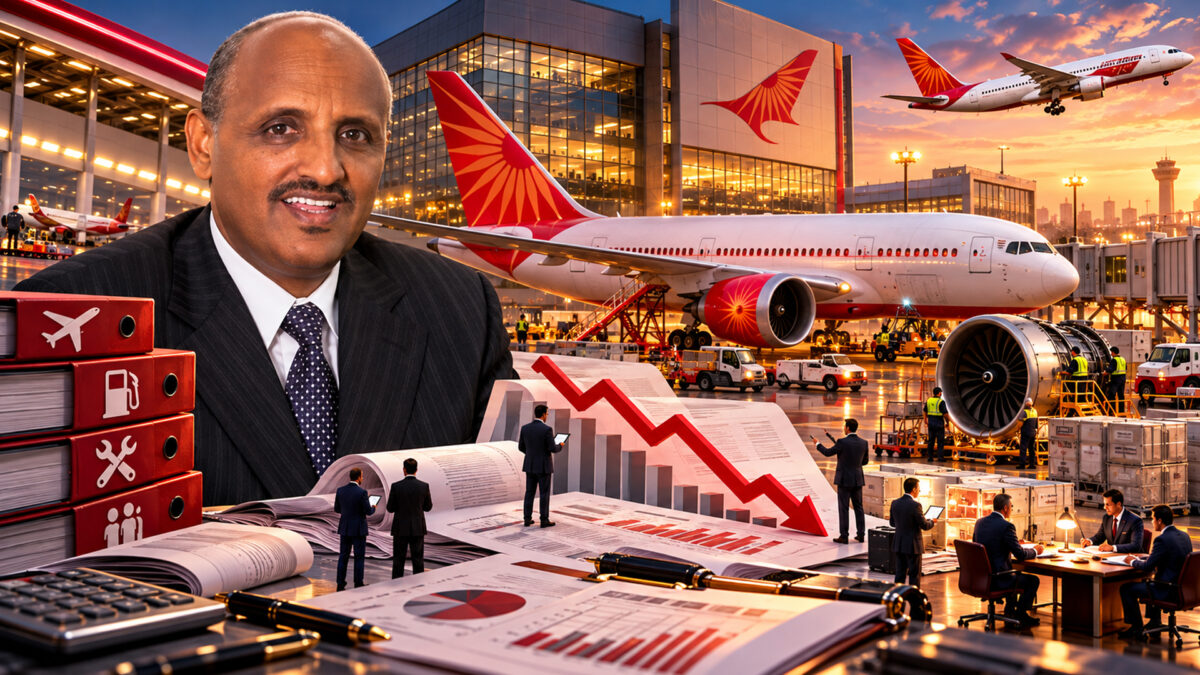
Air India has launched a fresh cost-cutting drive as its new chief executive, Tewolde Gebremariam, looks to bring the loss-making airline back on track. The airline has formed a dedicated team to identify savings across its operations, tightened spending approvals and plans to reward employees who suggest practical ways to reduce costs or increase revenue.
The measures come at a difficult time for the Tata Group-owned airline. Air India reported a consolidated loss of ₹22,238 crore in the financial year ended March 2026, more than double the ₹10,859 crore loss recorded a year earlier. Its total income also declined, falling to ₹71,870 crore from ₹78,636 crore in FY25.
Gebremariam, who took charge as chief executive officer and managing director on October 1, has asked employees to make cost awareness part of their everyday work. In a message to staff, he said every rupee saved could be reinvested in areas that matter to the airline, including operational performance and customer experience.
The initiative reflects a shift in focus from expansion alone to building a more efficient and financially sustainable airline. Air India has been investing heavily in aircraft, cabin upgrades, technology and customer service as it works to compete with established international carriers. The challenge now is to manage those investments while reducing losses.
A full-time, multidisciplinary team has been established to review expenditure across the organisation. The group will examine spending across departments and identify opportunities to improve efficiency, reduce waste and make better use of existing resources.
The team is expected to look at several areas, including procurement, supplier contracts, internal processes and the use of staff and equipment. Renegotiating contracts, improving resource utilisation and bringing certain outsourced activities in-house are among the options being considered.
Air India is also preparing to introduce PRABHAV – The Value Creator Award, an initiative designed to encourage employees to come forward with cost-saving and revenue-generating ideas.
The airline wants suggestions from staff who understand the practical challenges of daily operations. Employees may be able to identify unnecessary steps in a process, reduce waste, improve the use of equipment or find more efficient ways to purchase goods and services.
Ideas that are implemented will be rewarded, according to the company’s communication to employees. The programme will also encourage staff to identify new revenue opportunities and generate greater value from the airline’s existing products and services.
Gebremariam has stressed that cost reduction cannot be left to a single committee. The airline needs participation across departments, with employees taking responsibility for spending decisions and looking for more effective ways to complete their work.
The approach could help Air India find savings that are difficult to identify through central reviews alone. However, the impact will depend on whether the ideas lead to measurable improvements without affecting flight operations, safety or passenger service.
The airline has also tightened its approval process for Staff On Duty (SOD) arrangements. Under the revised system, effective October 1, approvals must pass through the head of department, the chief experience officer and the CEO.
The change is intended to bring greater scrutiny, transparency and accountability to spending decisions. It also gives senior management closer oversight of expenditure at a time when the airline is under pressure to improve its financial position.
The controls are part of a wider effort to make spending more disciplined across Air India’s operations. The company must balance the need to save money with the demands of running a large airline, where aircraft maintenance, training, staffing, airport operations and passenger support are essential costs.
Air India’s financial challenges are not limited to internal spending. High aviation turbine fuel prices, airspace restrictions and conflict-related disruption in West Asia have increased pressure on airlines.
Restrictions on the use of Pakistani airspace have forced Indian carriers to take longer routes on some international services. The conflict in the Middle East has also disrupted flight operations, leading to route changes, cancellations and reduced services on some routes.
Longer journeys can increase fuel consumption and crew-related costs, while disruptions can affect aircraft utilisation and schedules. These pressures make cost control more difficult, particularly for an airline operating an extensive international network.
Air India is also dealing with the impact of the fatal crash of flight AI171 in June 2025, which killed 260 people. The airline has faced increased scrutiny over safety and compliance, making operational reliability and restoring passenger confidence important priorities alongside financial recovery.
Reports have also indicated that Air India is seeking around $1.5 billion in fresh equity funding from its owners, Tata Sons and Singapore Airlines. The airline has been working to manage aircraft-related costs, with shortages of seats and other components delaying some cabin upgrades. It is also looking at ways to adjust aircraft delivery schedules to conserve resources.
Gebremariam brings extensive aviation experience to the role. He previously led Ethiopian Airlines for 11 years as group CEO and helped expand it into one of Africa’s largest and most profitable airline groups.
At Air India, he inherits an ambitious transformation programme that includes fleet renewal, improved cabins, technology investments and changes to the airline’s operations. The company returned to private ownership in 2022 after the Tata Group acquired it from the government, but it has yet to report a profit since the takeover.
The latest cost-saving drive suggests that Air India’s next phase will place greater emphasis on efficiency and financial discipline. The aim is not simply to spend less, but to ensure that money is used where it delivers the greatest benefit to passengers and the business.
The results will take time to emerge. The key test will be whether Air India can reduce operating costs, improve revenue and strengthen safety and service standards while continuing its transformation into a competitive global airline.