
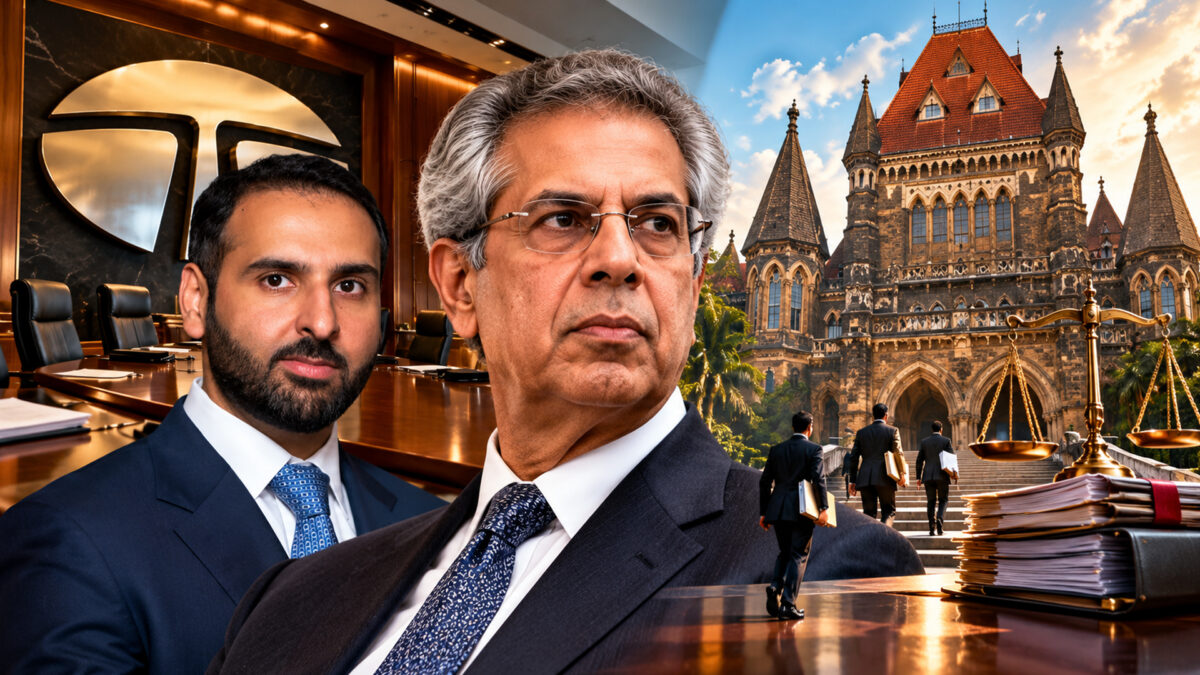
Noel Tata and his son Neville Tata have approached the Bombay High Court and Mumbai City Civil Court with caveat petitions amid an escalating governance dispute within Tata Trusts. The move is intended to ensure that they are given an opportunity to present their side before either court passes an order in proceedings involving fellow trustees.
The caveats were filed on October 7, according to court records cited in media reports. The development follows complaints by trustees Venu Srinivasan and Vijay Singh to the Maharashtra Charity Commissioner, seeking an inquiry into the administration and governance of the Sir Dorabji Tata Trust (SDTT).
The dispute has brought questions surrounding trustee appointments, leadership responsibilities and the role of Tata Trusts in the affairs of Tata Sons into sharper focus. The outcome could have implications for the governance of the charitable institutions that play a central role in the Tata Group’s ownership structure.
A caveat is a preventive legal filing that asks a court to hear the person filing it before granting certain orders in a matter. It does not, by itself, amount to a lawsuit or establish that the allegations made by another party are correct. By approaching both courts, Noel and Neville Tata are seeking to protect their opportunity to respond if legal proceedings arise from the ongoing dispute.
The filings name Srinivasan and Singh, along with fellow SDTT trustees Darius Khambata and Bhaskar Bhat. Reports citing people familiar with the matter said the inclusion of Khambata and Bhat was procedural.
At the centre of the dispute are questions raised by Srinivasan and Singh about Noel Tata’s position as a perpetual trustee, the basis of his chairmanship of Tata Trusts and the appointment of Neville Tata as an SDTT trustee. Srinivasan has also questioned whether he was adequately involved in decisions concerning the trust.
The complaints seek scrutiny of the trust’s administration and decision-making processes. They also raise concerns about the extent of the charitable institution’s involvement in Tata Sons’ commercial and strategic affairs.
The Maharashtra Charity Commissioner has given SDTT, Noel Tata and others until October 19 to submit their responses to the complaints. The original deadline was October 12, but the trust and the trustees sought additional time. The regulator is expected to consider the submissions before deciding how to proceed under the applicable public trust laws.
SDTT occupies a significant position in the Tata Group’s ownership structure. It holds approximately 28% of Tata Sons, the holding company of the conglomerate, making it the company’s largest individual shareholder. The wider network of Tata Trusts collectively holds a majority stake in Tata Sons and supports charitable activities across areas such as healthcare, education and community development.
This ownership structure gives the trusts an important role in the group’s long-term direction, while also placing their governance practices under close scrutiny. Questions about how trustees are appointed, how decisions are taken and where the boundary lies between charitable oversight and commercial matters can have consequences beyond the trusts themselves.
The latest developments also come against the backdrop of disagreements over Tata Sons’ future, including its listing status and leadership. At a board meeting on September 17, Tata Sons directors backed N Chandrasekaran for another term as chairman, a move that Noel Tata opposed, according to media reports. Discussions about the company’s future structure and the interests of its shareholders have added another dimension to the tensions.
Srinivasan and Singh have raised concerns about the trust’s involvement in commercial decisions and the potential implications for its charitable objectives. These remain allegations and issues for the relevant authorities to examine; the filing of caveats does not resolve them.
The dispute has also unfolded amid separate regulatory proceedings involving other Tata Trusts. Earlier restrictions affecting the Sir Ratan Tata Trust have added to the uncertainty surrounding the administration of the wider trust network. The separate matters underline the growing importance of regulatory oversight and compliance in the governance of these institutions.
The caveats filed by Noel and Neville Tata signal that they are preparing to defend their position if the dispute moves into the courts. However, they do not mean that a court has ruled against any trustee or that a formal legal challenge has already been decided.
With the Sir Dorabji Tata Trust holding a substantial stake in Tata Sons, the dispute is being watched closely across corporate India. Its eventual resolution could influence discussions about trustee accountability, institutional governance and the relationship between the Tata Group’s charitable foundations and its business leadership.