
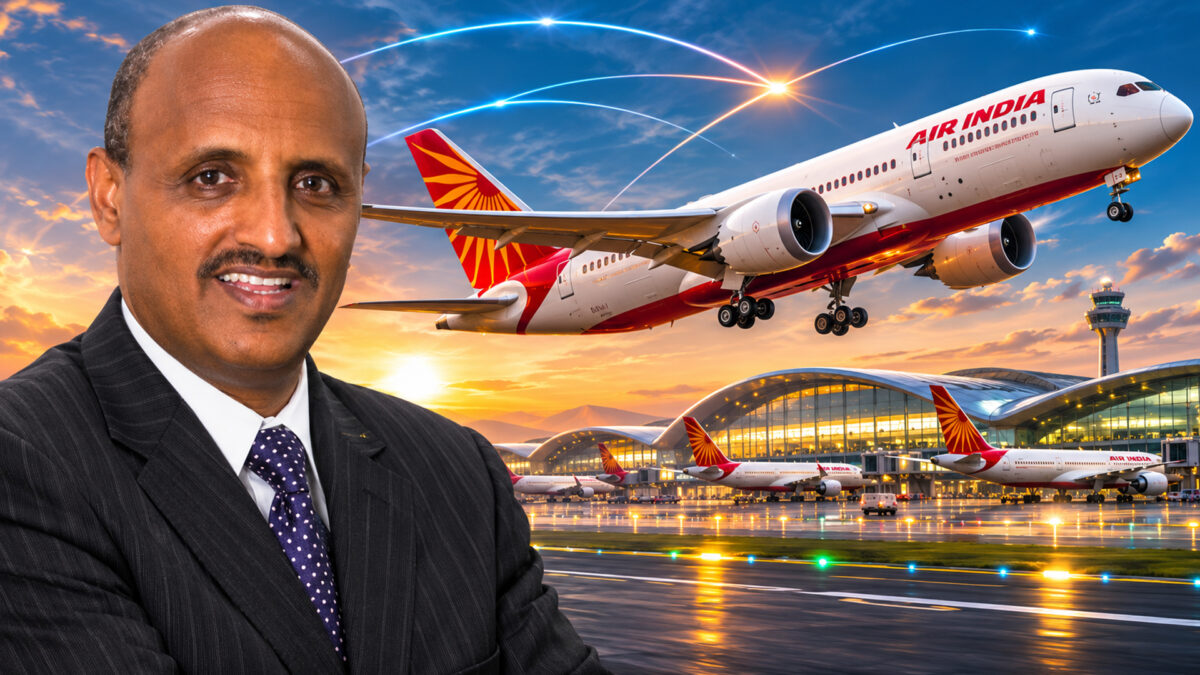
Air India is preparing for a bigger international presence, with plans to increase its orders for wide-body aircraft as the Tata Group-owned airline looks to regain market share from foreign carriers and strengthen its position in global aviation. Chief Executive Officer and Managing Director Tewolde Gebremariam outlined the airline’s long-term ambitions at the Aviation India and South Asia 2026 conference in New Delhi on November 3. He indicated that Air India was in discussions with aircraft manufacturers Airbus and Boeing to explore additional wide-body aircraft orders.
The proposed expansion comes despite the airline already having a substantial aircraft order book. Air India has placed orders for around 600 aircraft, including approximately 80 wide-body jets. However, its management believes the existing commitments may not be sufficient to support the airline’s international growth ambitions.
The airline is also considering changes to its flight network, developing additional international hubs and cutting operating costs as it works towards returning to profitability.
“We want to increase our order of wide-bodies. Our network and our strategy demand more,” Gebremariam said, underlining the importance of expanding long-haul capacity.
Wide-body aircraft, which typically have two aisles and greater passenger capacity, are particularly important for long-distance international routes. They allow airlines to connect major cities across continents while carrying more passengers and cargo. For Air India, a larger fleet could help introduce additional international services, improve connectivity and compete more effectively with established global airlines.
The airline currently operates 61 wide-body aircraft, while around 10 of the 80 wide-body jets in its existing order book have reportedly been delivered. Its fleet includes Airbus A350s and Boeing 787 and 777 aircraft. The airline is also evaluating the economics of operating older aircraft, which can involve higher maintenance and fuel expenses.
The expansion strategy is closely linked to Air India’s ambition to recover international passenger traffic that currently flows through foreign airlines, particularly major aviation hubs in West Asia and Southeast Asia.
A significant number of Indian travellers flying to Europe, North America and other international destinations use connecting services offered by overseas carriers. Airlines based in Dubai, Doha, Singapore and Kuala Lumpur have benefited from their established networks and convenient connections.
Gebremariam wants Air India to capture a larger share of this traffic by offering more direct international flights and improving connections between overseas destinations through India.
The airline is also looking to increase international-to-international connecting passengers. This means attracting travellers who fly into an Indian airport from one country and continue to another international destination without entering India as their final destination.
Building this segment will require a stronger long-haul fleet, better airport infrastructure, convenient flight schedules and an extensive international network.
“We have been punching below our weight in the market. That is going to change,” the CEO said, signalling a more aggressive approach towards international expansion.
The expansion will also involve a rethink of Air India’s hub strategy. Geopolitical tensions and restrictions on the use of Pakistani airspace have affected several long-haul routes, particularly those operating from Delhi. Disruptions in parts of the Gulf region have added further pressure on international flight operations.
To address these challenges, the airline is considering shifting a larger share of its Europe and North America services to Mumbai. Routes from Mumbai are relatively less affected by the airspace restrictions to India’s west, making the city a more practical departure point for certain long-haul destinations.
Delhi, meanwhile, could see greater connectivity with regions such as Southeast Asia, East Asia and Australia, where flights are less affected by the current disruptions. Air India is also exploring Bengaluru as a potential third operational hub.
The proposed changes are aimed at making its international network more efficient while reducing the impact of geopolitical developments on flight schedules, operating expenses and passenger connectivity.
However, expanding the fleet and network is only one part of the airline’s turnaround plan. Bringing down costs and improving operational efficiency remain equally important priorities.
Air India reported a consolidated loss of more than Rs 22,000 crore in the financial year 2025-26, more than double the loss recorded in the previous financial year. Higher jet fuel prices, airspace restrictions, operational challenges and the financial impact of the June 2025 Air India Flight AI 171 crash have added to the airline’s difficulties.
Gebremariam has made it clear that improving profitability cannot be postponed indefinitely. He said he was even more impatient than the shareholders to see Air India become profitable and expressed confidence that the airline could achieve the goal through higher revenues and better cost management.
Since taking charge, the CEO has established a cross-functional team to identify savings across the organisation. The airline is also looking at closer operational integration between Air India and its low-cost subsidiary, Air India Express.
Sharing corporate functions, improving operational coordination and using resources more efficiently are among the measures being considered. The objective is to reduce duplication, control expenses and create stronger business synergies across the airline group.
The strategy also involves positioning the two brands to serve different passenger segments. Air India will focus on full-service international and domestic operations, while Air India Express will continue to strengthen its presence in the low-cost aviation market.
For the Tata Group, the airline’s international ambitions represent a long-term investment rather than an immediate expansion exercise. Tata owns approximately 75% of Air India, while Singapore Airlines holds the remaining stake.
Air India’s transformation began after the airline returned to Tata Group ownership in January 2022. The group subsequently placed a major aircraft order with Airbus and Boeing, initially covering 470 aircraft, before expanding its commitments to around 600 planes.
The transformation programme has also included upgrading aircraft interiors, introducing a new brand identity, investing in technology and consolidating the group’s airline operations. Its four-airline structure was reorganised into two principal brands, Air India and Air India Express.
Gebremariam now faces the task of taking these initiatives into the next phase. His experience leading Ethiopian Airlines, which developed into Africa’s largest carrier and established Addis Ababa as a major international aviation hub, is expected to be relevant to Air India’s ambitions.
India is already the world’s third-largest aviation market, after the United States and China. Its growing passenger base and large overseas diaspora offer significant opportunities for domestic airlines to expand international operations.
Air India’s challenge will be to convert that demand into sustainable business growth while competing with established international carriers.
With additional wide-body aircraft under consideration, a possible third hub in Bengaluru and a renewed focus on operational efficiency, the airline is preparing for a larger role in global aviation. Whether these plans translate into stronger market share and consistent profitability will depend on how effectively it manages expansion alongside its financial and operational challenges.