
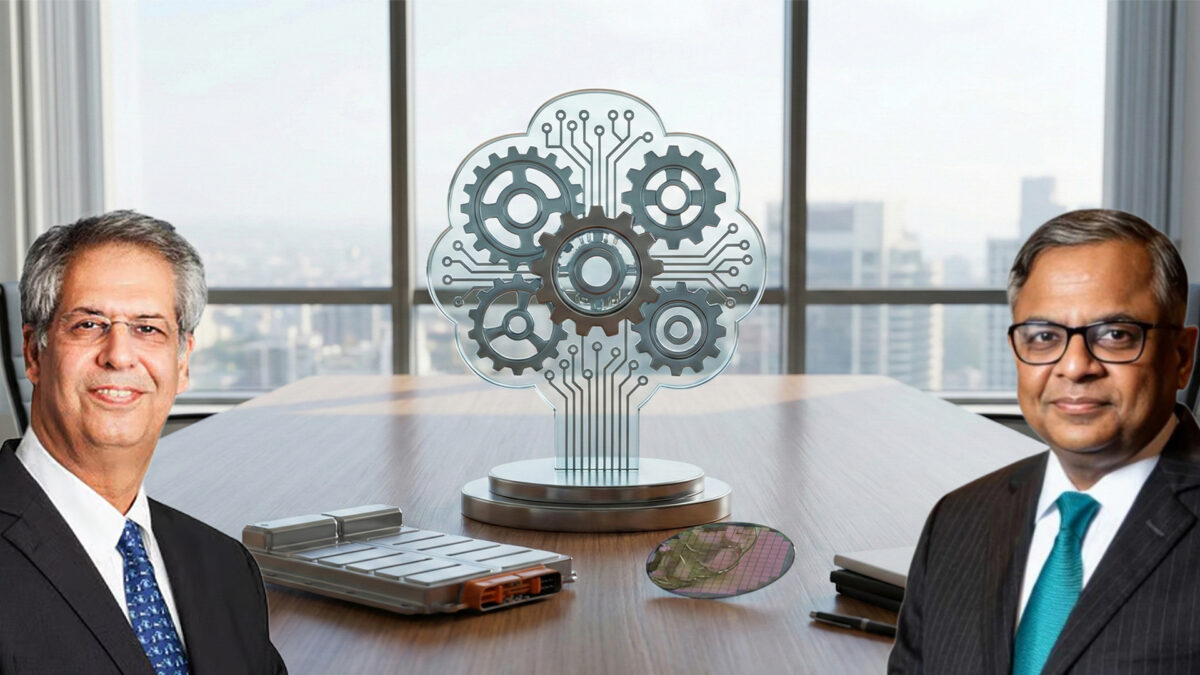
Tata Sons has rejected Tata Trusts chairman Noel Tata’s objections to N Chandrasekaran’s reappointment, saying the decision to give the chairman a third five-year term was legally valid and followed the company’s Articles of Association. The company has backed its position with legal opinions from former Supreme Court judges and senior counsel, deepening an ongoing corporate governance dispute within the Tata Group.
The latest development follows the September 17 meeting of the Tata Sons board, where Chandrasekaran’s reappointment was approved. Four directors voted in favour, while Noel Tata, one of the Tata Trusts’ nominee directors, voted against it. The other Trusts nominee, Venu Srinivasan, supported the proposal. With the two Trust nominees split, Harish Manwani, who was chairing the meeting after Chandrasekaran recused himself from the discussion, used his casting vote in favour of the reappointment.
Noel Tata subsequently questioned both the voting process and the legal basis for the decision. Tata Trusts has argued that the support of a majority of its nominee directors was separately required under Tata Sons’ Articles of Association. Since the two nominees voted differently, the Trusts said that condition was not met and could not be overcome by a chairman’s casting vote. Tata Trusts collectively owns about 66% of Tata Sons.
Tata Sons has now taken a different legal view. In a letter to Noel Tata, the company cited opinions from former Chief Justice of India Uday U Lalit and former Supreme Court judge B N Srikrishna. It also relied on an opinion from senior advocate Sudipto Sarkar, which had been obtained before the board meeting. The opinions support the validity of the board resolution and the use of the casting vote.
Justice Lalit’s opinion said that because there was an equality of votes among the directors appointed under Article 104B, the presiding chairman could exercise a casting vote under Article 121. Justice Srikrishna similarly concluded that the proceedings were consistent with the wording and intent of Article 121. His opinion also said a director’s statutory fiduciary duty to the company would take precedence over a contractual duty to the entity that nominated the director if the two came into conflict.
That interpretation also addresses why Venu Srinivasan voted in favour of Chandrasekaran despite Noel Tata opposing the move. Srikrishna’s opinion said Srinivasan had acted in accordance with his fiduciary responsibility to Tata Sons. Tata Trusts, however, has maintained that Srinivasan’s vote could not remove the requirement for affirmative support from the Trusts’ nominee directors.
The dispute also centres on Article 118 of Tata Sons’ Articles of Association, which deals with the selection of a chairman. Noel Tata’s position is that this provision should have governed Chandrasekaran’s reappointment and that a five-member selection committee, including three Trust nominees, should have been involved.
Tata Sons has rejected that interpretation. Sarkar’s legal opinion said Article 118 refers specifically to the selection of a “new chairman” and does not apply to the reappointment of an incumbent chairman. Chandrasekaran remains chairman until the end of his current term in February 2027, according to the legal reasoning cited by Tata Sons.
The disagreement has also brought two different legal opinions into focus. Noel Tata had presented an opinion from former Chief Justice of India D Y Chandrachud, which supported the Tata Trusts’ interpretation that the affirmative support of the Trust nominees was necessary and that a casting vote could not substitute for that requirement. Tata Sons has relied instead on the opinions of Lalit, Srikrishna and Sarkar.
The issue is now expected to move beyond the boardroom. Chandrasekaran’s reappointment as a director will require shareholder approval at Tata Sons’ annual general meeting, which is expected in the coming weeks. The outcome of that process could become an important next step in determining how the dispute develops.
Chandrasekaran, who became Tata Sons chairman in 2017, began his second five-year term in 2022. His third-term reappointment comes at a time when the relationship between Tata Sons and Tata Trusts is facing closer scrutiny over governance, shareholder rights and the balance of authority within the group.
The immediate disagreement is centred on a narrow question of corporate law — how Tata Sons’ Articles of Association should be interpreted when Trust nominees disagree and whether a casting vote can resolve that difference. But the dispute has wider implications for the governance structure of one of India’s largest business groups.
Tata Sons has maintained that its directors acted in accordance with their fiduciary duties and that the September 17 resolution was valid. Tata Trusts, meanwhile, continues to challenge that interpretation and the validity of the reappointment process. With competing legal opinions now on record, the next stage of the Chandrasekaran reappointment row is likely to play out through the shareholder process and potentially further legal scrutiny.