
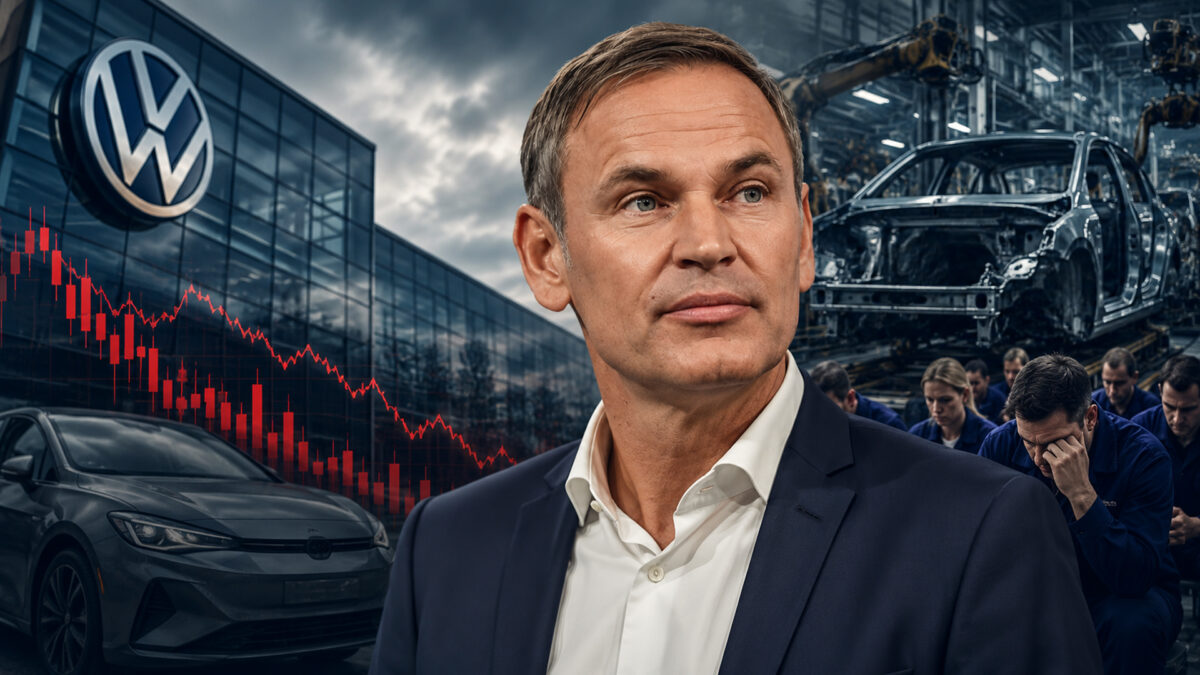
Volkswagen is facing a major turning point, with Chief Executive Officer Oliver Blume warning that the German automaker’s situation is “more than critical” as it struggles with rising costs, weak profitability, excess production capacity and intensifying competition from Chinese carmakers.
Blume’s warning comes as Volkswagen prepares for a fresh round of discussions with employees over cost-cutting measures, possible job reductions and the future of several German factories. The company is already undergoing one of the biggest restructuring programmes in its history, but management believes the measures taken so far are not enough to restore the group’s competitiveness.
The Volkswagen Group is under pressure from several directions at once. Its business in China, one of its most important markets, has weakened sharply, while Chinese manufacturers are increasingly entering European markets with competitively priced electric and hybrid vehicles. At the same time, US tariffs have made it more expensive for Volkswagen to sell vehicles in America.
Blume said Volkswagen’s operating return of around 3.8 per cent was respectable given the difficult market environment, but still too low to generate the money needed for new technologies, products and production facilities.
China has become one of Volkswagen’s biggest challenges. The Chinese auto market has contracted by more than 20 per cent since the beginning of the year, according to Blume, while hundreds of new models have entered the market.
Chinese automakers are also expanding rapidly outside their home market. Volkswagen says Chinese manufacturers are gaining market share in Europe, where they can compete aggressively on price, particularly in electric vehicles and plug-in hybrids. The pressure is forcing European manufacturers to rethink their costs, production strategies and product portfolios.
For Volkswagen, the problem is not simply falling sales. The company has a large manufacturing network and significant fixed costs, making it difficult to adjust quickly when demand changes. Blume has warned that Volkswagen is producing around 500,000 vehicles more than the European market can absorb, highlighting the scale of its excess capacity.
The company’s German factories are at the centre of the restructuring debate. Blume is scheduled to meet employees at several locations, including the Volkswagen headquarters in Wolfsburg and plants in Zwickau and Emden, to explain the company’s plans.
Volkswagen has not announced that any specific plant will be closed. However, Blume has said the company currently cannot see how facilities in Emden, Hannover, Zwickau and Neckarsulm could remain profitable into the 2030s under present conditions.
Factory closures would be a major step for Volkswagen and its workforce. Blume has described closures as the “last and most expensive solution”, with the company also considering alternative industrial uses for some sites.
The issue has already created tension with powerful German labour representatives. Unions have criticised management’s savings plans and are expected to resist measures that could result in further job losses or changes to production locations.
Volkswagen has already agreed to significant employment reductions in Germany. The group has ordered cuts involving around 50,000 jobs, with agreements already reached with approximately 37,000 employees, according to Blume.
However, recent reports indicate that the company is considering further measures as part of its broader restructuring. Reuters reported that the potential scale of additional action could involve up to another 50,000 positions, although this figure should not be treated as a confirmed final job-cut target.
Volkswagen is also looking at reducing its model range and production capacity to better match demand. The aim is to lower overheads and free up funds for electric vehicles, software and other technologies that will shape the next phase of the automotive industry.
Volkswagen is also facing a tougher business environment in the United States. The company says US tariffs alone are costing the group approximately €5 billion a year. Vehicle tariffs have risen sharply compared with two years ago, increasing the cost of European-built vehicles entering the US market.
That adds another layer of pressure at a time when Volkswagen is already trying to improve margins. The company has been forced to balance investment in electric vehicles and new technology with the need to reduce costs across its traditional manufacturing operations.
Despite the challenges, Volkswagen says its transformation is beginning to produce results in some areas. The company reported strong demand for its newer electric models in Europe, with its European order bank for fully electric vehicles increasing by more than 50 per cent in the first half of 2026. Its new electric urban car family also received more than 70,000 orders in its first few weeks.
Volkswagen expects a difficult period ahead, but management maintains that the company has the financial strength and products needed to recover if it can improve its cost structure.
For employees, investors and the wider German auto industry, however, the next few weeks could be crucial. Volkswagen is expected to use upcoming staff meetings to explain the scale of the restructuring and seek support for further savings.
Volkswagen cannot rely on its traditional strengths alone. Rising Chinese competition, changing consumer demand, US tariffs and high European production costs are forcing one of the world’s biggest automakers to make difficult decisions.
The company now faces the challenge of cutting costs without weakening its ability to invest in the electric and digital technologies needed to compete in the future.