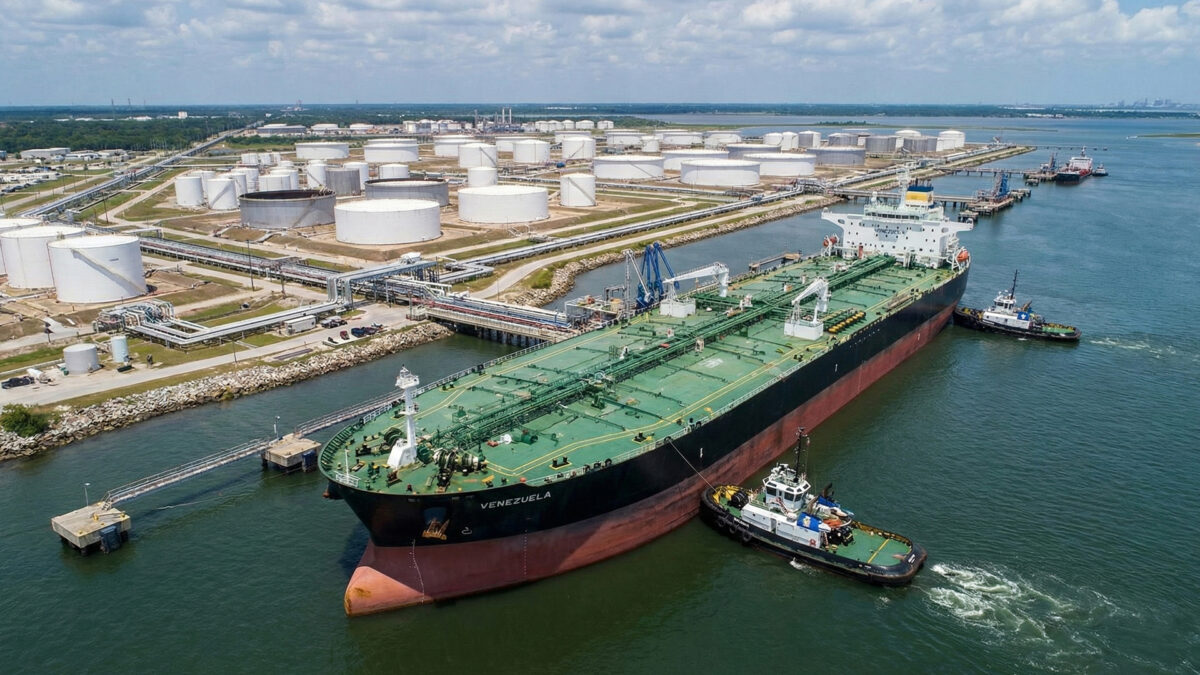
In a move that could reshape global energy flows, President Donald Trump announced that Venezuela will hand over 30 to 50 million barrels of crude oil to the US. Speaking on his Truth Social platform, Trump said the oil would be sold at market prices, and the proceeds would be under US control, a step he described as benefiting both Americans and Venezuelans.
The transfer comes after recent political turmoil in Caracas, including a US operation that led to the capture of Venezuelan President Nicolás Maduro. The announcement marks a rare moment of direct cooperation with Venezuela’s interim authorities, who confirmed the handover but criticized foreign involvement, insisting their sovereignty must be respected.
Trump directed Energy Secretary Chris Wright to begin the process immediately. The plan is to move oil from Venezuelan storage ships directly to US ports, ensuring a smooth flow of high-quality crude. Experts say this injection of oil into the US supply chain could slightly ease prices at a time when energy markets remain volatile. At current rates, the transferred oil could be valued at around $2.8 billion, though final figures will depend on market conditions.
Beyond the numbers, the deal carries broader geopolitical implications. Analysts note that oil previously headed to other countries, including China, may now be redirected to the US, signaling a potential shift in global energy alliances. Trump framed the move as part of a strategy to stabilize markets and assert US influence in Venezuela’s energy sector.
As the first shipments prepare to leave Venezuelan ports, both nations are watching closely, aware that this deal could set the tone for future energy, trade, and diplomatic relations in the region.
It reflects a rare moment where political maneuvering and energy policy intersect in a tangible way, promising both economic impact and a test of how international agreements are executed in a tense, rapidly changing landscape.
Also Read: Reliance shares slide over 4%