Categories
Beyond

India team to visit US to finalise trade pact

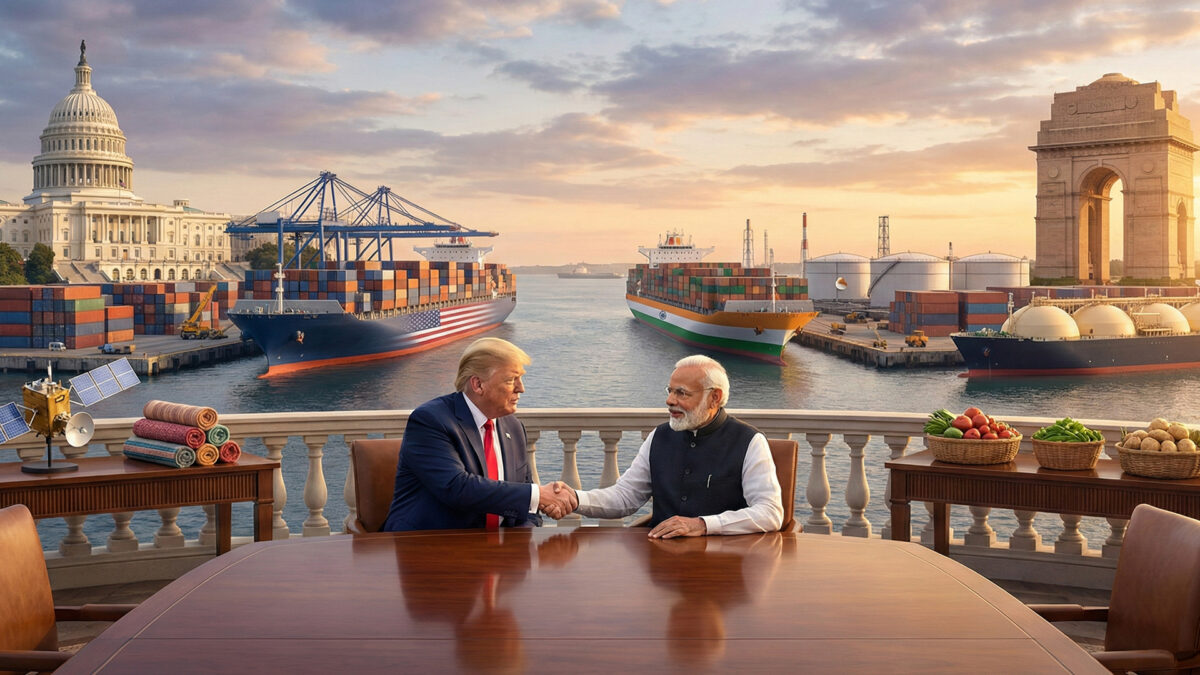
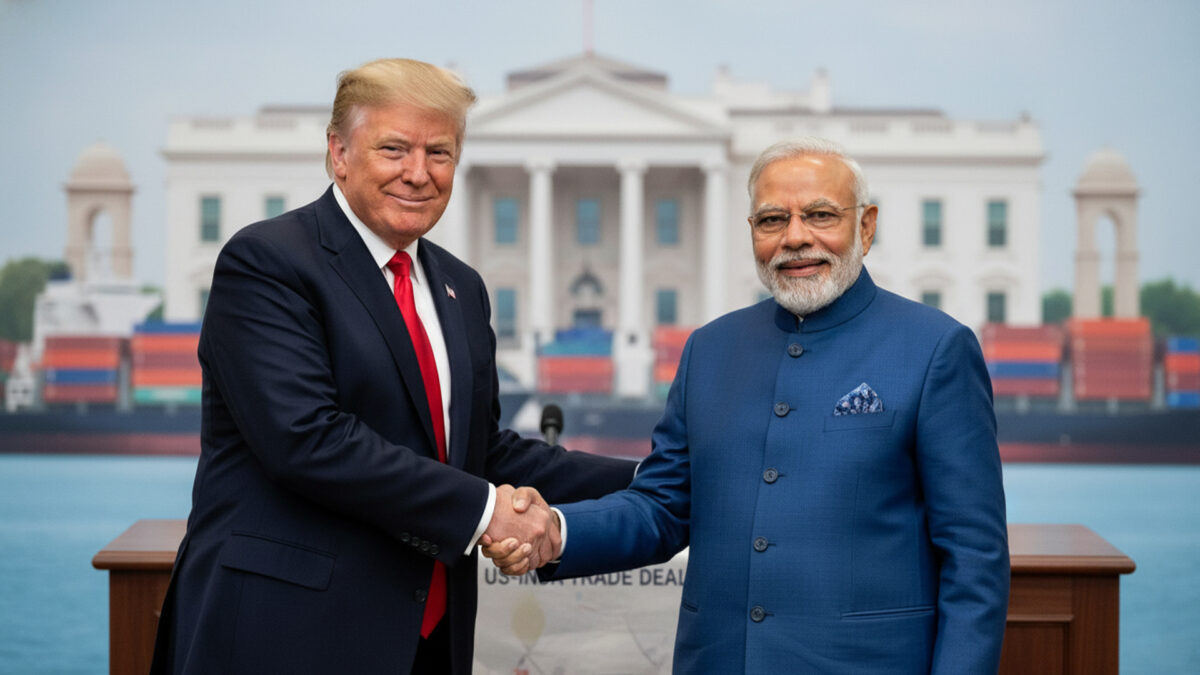
India will send a high-level delegation to Washington next week to give the proposed interim trade agreement with the United States its final legal shape, a key step that could lead to the deal being signed as early as March. The visit signals that negotiations have moved into the last and most technical phase after both sides agreed on the broad contours of the pact.

The delegation will be led by India’s chief trade negotiator along with senior commerce ministry officials. They will hold in-person meetings with their US counterparts to convert the agreed terms into a formal and legally binding document. Officials from the two countries are already holding virtual discussions to resolve technical issues before the face-to-face talks begin.

Commerce Secretary Rajesh Agrawal said the framework of the agreement has been largely settled and the upcoming meetings will focus on finalising the legal language. The benefits under the pact will come into force only after the agreement is signed.

The interim trade deal is expected to provide tariff relief and improved market access for select goods traded between the two countries. For India, this is particularly important for labour-intensive sectors such as textiles and other export-oriented industries that depend heavily on the US market.

The United States is one of India’s largest trading partners, and the proposed agreement is seen as a step towards deepening economic engagement. It is also expected to reduce trade barriers and make it easier for companies in both countries to do business.

Officials believe the limited pact could eventually pave the way for a broader and more comprehensive bilateral trade agreement in the future. If the legal text is finalised on schedule, the deal will mark a significant milestone in India-US trade ties and open new opportunities for exporters while strengthening overall economic cooperation.

Also Read: Summit marks India’s big play in AI
 

Categories
Beyond

US edits India trade deal factsheet

The White House has revised its factsheet on the proposed India-US interim trade deal, making key changes to language on agricultural imports, investment commitments and digital taxation following concerns flagged by New Delhi.

In the earlier version of the document, the US had stated that India would cut or eliminate tariffs on a list of American agricultural products, including tree nuts, fruits, soybean oil, wine, spirits and “certain pulses.” The mention of pulses,  a politically sensitive crop in India,  drew attention because India is the world’s largest producer and consumer of lentils, chickpeas and other pulses, and domestic farmers depend heavily on tariff protection.

In the updated factsheet, the specific reference to “certain pulses” has been removed. Instead, the language now broadly mentions improved access for a “wide range of US agricultural products,” without naming individual commodities.

Another notable revision relates to India’s proposed purchases of American goods. The original text said India was “committed” to buying more than $500 billion worth of US products over the next five years, including energy, coal and technology equipment. The revised version softens this to say India “intends” to purchase such goods, signalling that the figure is indicative rather than a binding obligation. Mentions of agricultural goods within this purchase commitment have also been omitted.

Changes were also made to the section on digital trade. The earlier draft suggested India would remove or roll back its digital services tax. The revised document now says both countries will work toward negotiating digital trade rules, bringing the language in line with prior joint statements.

Sources indicated that the corrections were made to accurately reflect what had been mutually agreed upon.

Also Read: Rupee declines 6 paise to ₹90.62 in early trade

Categories
Beyond

India-US interim trade deal cheers stock markets

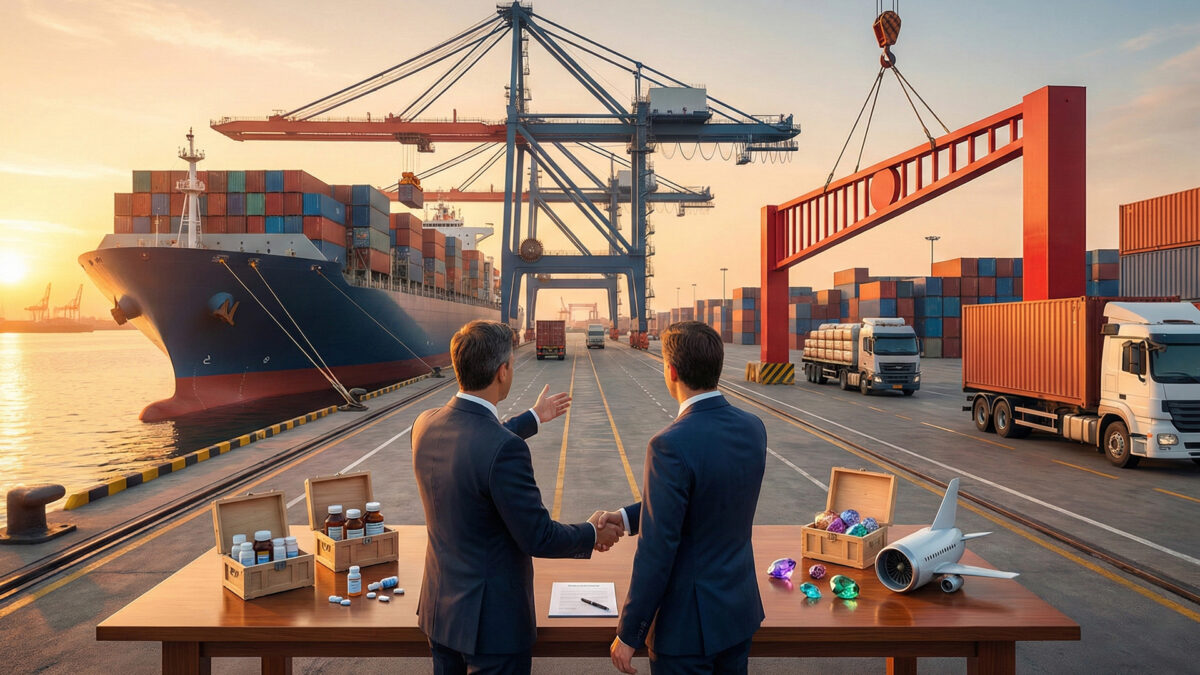
Indian stock markets are seeing fresh optimism after India and the United States agreed on an interim trade deal framework, a move that has eased concerns around tariffs and trade barriers. Though not a full free-trade agreement, the interim pact offers near-term clarity for businesses and exporters, lifting overall market sentiment.

Early signals indicate that Sensex and Nifty 50 are likely to trade higher, supported by strong global cues and hopes of improved India-US trade relations. Market experts say the agreement reduces uncertainty for Indian companies that depend heavily on the US market, especially exporters.

According to market analysts and brokerage reports, export-focused sectors are expected to benefit the most. Stocks that have come into focus include:

In pharmaceuticals, companies such as Sun Pharma, Dr Reddy’s Laboratories, Lupin, Aurobindo Pharma and Divi’s Laboratories are seen gaining due to their strong US exposure.

In IT services, firms like Infosys, HCL Tech, Wipro and LTI Mindtree are expected to benefit as US demand remains steady.
The textiles and apparel sector has also drawn attention, with stocks such as Gokaldas Exports, KPR Mill, Welspun Living, Indo Count Industries and Kitex Garments seen as potential gainers.
In manufacturing and engineering, analysts have highlighted Dixon Technologies, Syrma SGS Technology, Bharat Forge, Sona BLW, Samvardhana Motherson, Sansera Engineering and Avalon Technologies.

Some traders are also tracking Torrent Power, Jindal Steel, ITC, Bharti Airtel and Kotak Mahindra Bank for short-term opportunities, as overall sentiment remains positive.

Despite the upbeat mood, experts caution that the trade deal alone may not drive a long-lasting rally.

Also Read: Sensex up 300 points, Nifty near 25,800

Categories
Corporate

Trump announces India–US trade deal

US President Donald Trump has said that the United States and India have agreed on a new trade deal that would change how goods move between the two countries. As per Trump’s statement, American products would be allowed into India without paying any tariffs, while Indian exports to the US would attract an 18% charge.

Trump said the move is aimed at making trade more balanced and fair for American businesses. He claimed that US companies have long faced higher duties in India and that the new arrangement would open up greater opportunities for American manufacturers, farmers, and technology firms.

Under the proposed deal, India would continue to export to the US, but at a fixed tariff rate of 18%. Trump described this as a reasonable level that still allows Indian goods access to the American market while offering better protection to US industries and jobs.

The announcement comes amid ongoing global trade uncertainty and renewed focus on protecting domestic industries. India and the US are among each other’s key trading partners, with strong links in sectors such as IT services, pharmaceuticals, energy, defence, and manufacturing.

However, no official confirmation or detailed response has yet come from the Indian government. Trade analysts say the impact of the deal, if finalised, could be uneven. While US exporters may gain from duty-free access to India, Indian exporters, especially in labour-intensive sectors, could see higher costs and tighter margins in the US market.

Also Read: India–US deal cheer lifts Sensex 2,250 points, Nifty above 25,750

Categories
Beyond

US, India ‘pretty near’ trade deal, tariffs could ease

US President Donald Trump said the United States and India are “pretty close” to finalising a trade deal that would benefit both countries. He made the remarks at the swearing-in of Sergio Gor as the US Ambassador to India, highlighting Gor’s strong ties with Prime Minister Narendra Modi.

Trump noted that US tariffs on Indian goods are currently high, mainly due to India’s earlier purchases of Russian oil. With those purchases now reduced, he indicated tariffs could be lowered in the future.

India’s Commerce Minister Piyush Goyal said trade talks are progressing well but cautioned that several sensitive issues still need resolution.

The proposed agreement aims to more than double bilateral trade, from around $191 billion currently to $500 billion by 2030. Analysts say a deal could improve market access for goods on both sides, though details on tariff cuts and timelines are yet to be finalised.

Also Read: Goldman Sachs turns bullish on India