Categories
Corporate

Swiggy Q3 loss widens to ₹1,065 cr despite 54% revenue growth

Food delivery and quick-commerce platform Swiggy reported a consolidated net loss of ₹1,065 crore in the third quarter (Q3) of FY26, up 33% from ₹799 crore in the same period last year. The widening losses reflect heavy spending on expansion, marketing, and operational costs, even as the company’s revenue showed strong growth.

Swiggy’s revenue from operations jumped 54% year-on-year to ₹6,148 crore, compared with ₹3,993 crore in Q3 FY25. Sequentially, revenue also increased from ₹5,561 crore in the previous quarter, signaling robust demand across its services.

The food delivery business remained the main revenue driver. Its gross order value (GOV) grew 20.5% YoY to ₹8,959 crore, marking the fastest growth for this segment in three years. Monthly transacting users rose 22% to 18.1 million, showing sustained consumer adoption. Margins improved modestly, with adjusted EBITDA for food delivery reaching about 3% of GOV, the highest in two years.

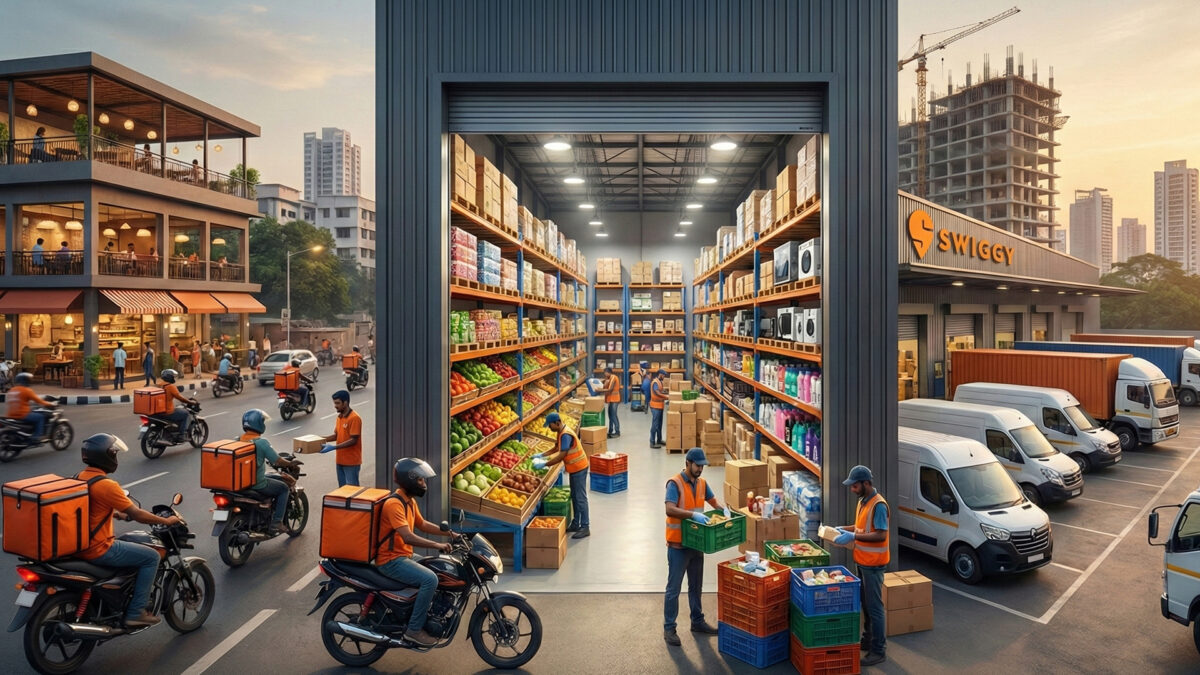
Swiggy’s Instamart quick-commerce division also posted strong growth, with GOV more than doubling to ₹7,938 crore. The network expanded to 1,136 dark stores across 131 cities, adding 34 new stores in the quarter. Average order value increased 40% YoY to ₹746, driven by higher demand for groceries and other essentials. However, Instamart continues to operate at a loss, contributing to the overall widening net loss.

Also Read: Apple earnings soar as iPhone sales jump in China
Categories
Corporate

Swiggy’s Instamart opens first mini-offline store in Gurugram

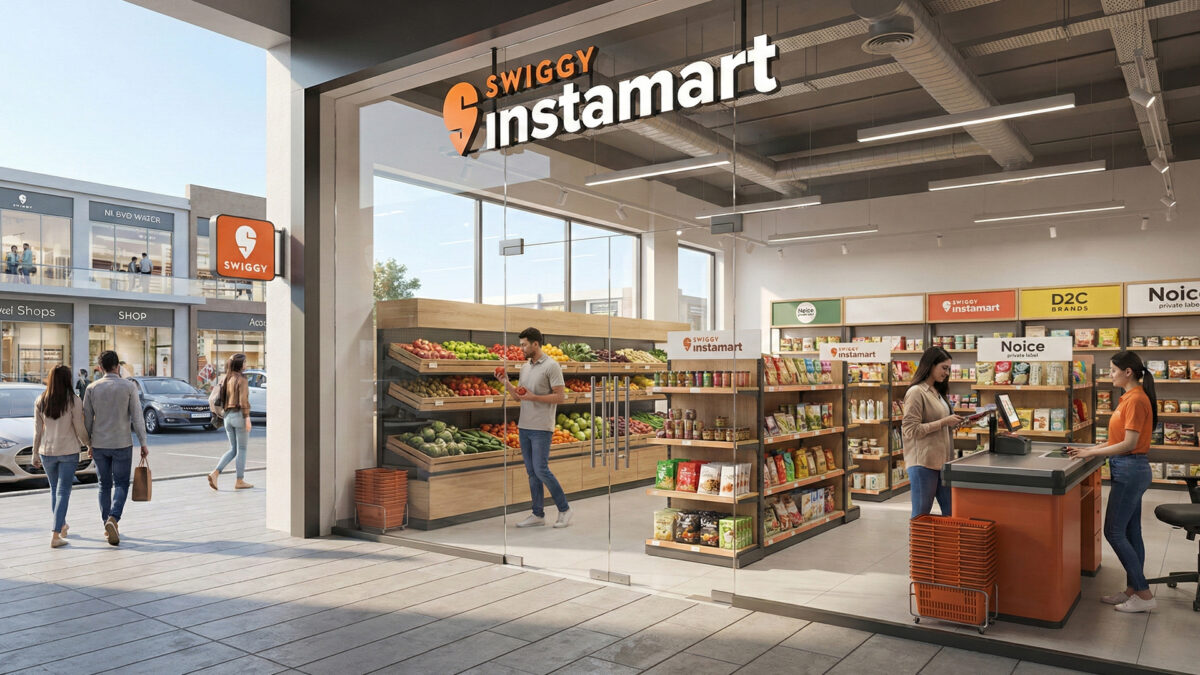
Swiggy’s quick-commerce platform, Instamart, is trying something new. For the first time, it has opened a small offline store in Gurugram, giving customers a chance to browse and pick products in person rather than just ordering through the app. The store is located at M3M 65th Avenue and is about 400 square feet, much smaller than Instamart’s usual dark stores that stock thousands of items.

The offline store carries a limited selection of 100–200 products, focusing on items that people often like to check physically before buying, fresh fruits and vegetables, daily essentials, new product launches, private-label items, and select D2C brands. Customers can see the quality, compare products, and get a feel for them before deciding to purchase.

Unlike traditional retail stores, this outlet is seller-operated under the Instamart brand. This means sellers directly receive the sales proceeds, instead of money going through the app’s usual transaction process. It also helps Swiggy test the concept without heavy operational investment.

The move comes at a time when India’s quick commerce sector is evolving. Companies like Instamart have grown popular for ultra-fast deliveries, but now they are exploring ways to build stronger connections with customers. By opening an offline store, Instamart aims to combine the convenience of online shopping with the trust and experience of physical retail.

For now, this is just a pilot store, and there’s no plan to open many more immediately. Swiggy will see how customers respond before deciding the next steps. If successful, more experience stores could appear, offering a unique way to shop while still enjoying the speed and convenience of quick commerce.

Categories
Corporate

Swiggy raises ₹10,000 crore through fresh share sale

Swiggy, India’s leading food and grocery delivery platform, has kicked off a ₹10,000 crore Qualified Institutional Placement (QIP) to raise funds from institutional investors. The floor price for the shares is set at ₹390.51, and reports indicate that investor demand is already strong, with the subscription book fully covered.

The company is offering 269.5 million new shares, roughly 10.8% of its pre‑issue equity base. This is Swiggy’s first major capital-raising effort since its IPO in November 2024, which raised around ₹11,327 crore. Analysts say the fresh capital gives the company the firepower to scale operations and strengthen its foothold in India’s competitive food-tech market.

Swiggy plans to channel the funds into expanding its delivery network, upgrading technology systems, and boosting its quick-commerce services, including groceries and essentials. The company has already been investing in warehouses and dark stores nationwide to ensure faster, more reliable deliveries. The QIP also gives Swiggy financial flexibility for strategic initiatives, including potential acquisitions.

The strong response from domestic and international institutional investors signals confidence in Swiggy’s growth strategy. Industry experts see the move as a vote of trust in the company’s ability to capture a larger share of India’s booming online food and grocery delivery market.

Facing competition from rivals like Zomato and Dunzo, Swiggy’s diversified services and quick-commerce focus provide a clear edge. With this infusion, the company aims to improve efficiency, expand coverage, and innovate further in the digital delivery space.

This QIP marks a key milestone, reinforcing Swiggy’s position as a market leader and preparing it to meet the rising demand for online food and grocery deliveries across India.

Also Read: Hinge CEO steps down to lead new AI dating app